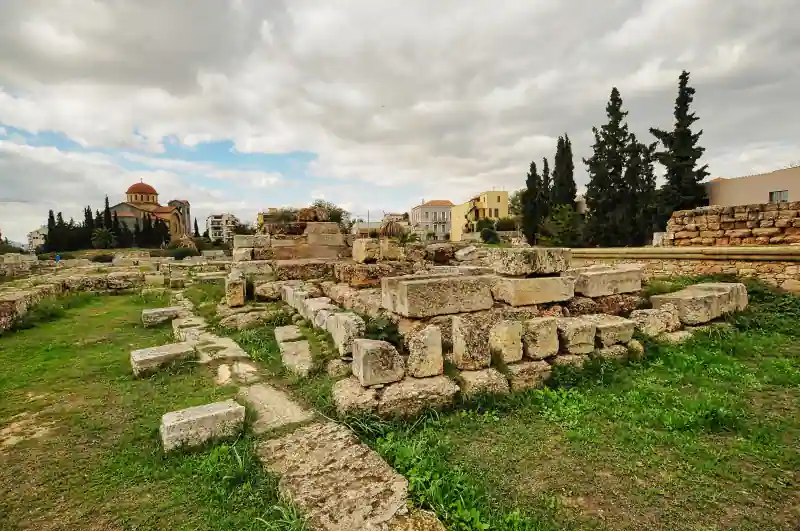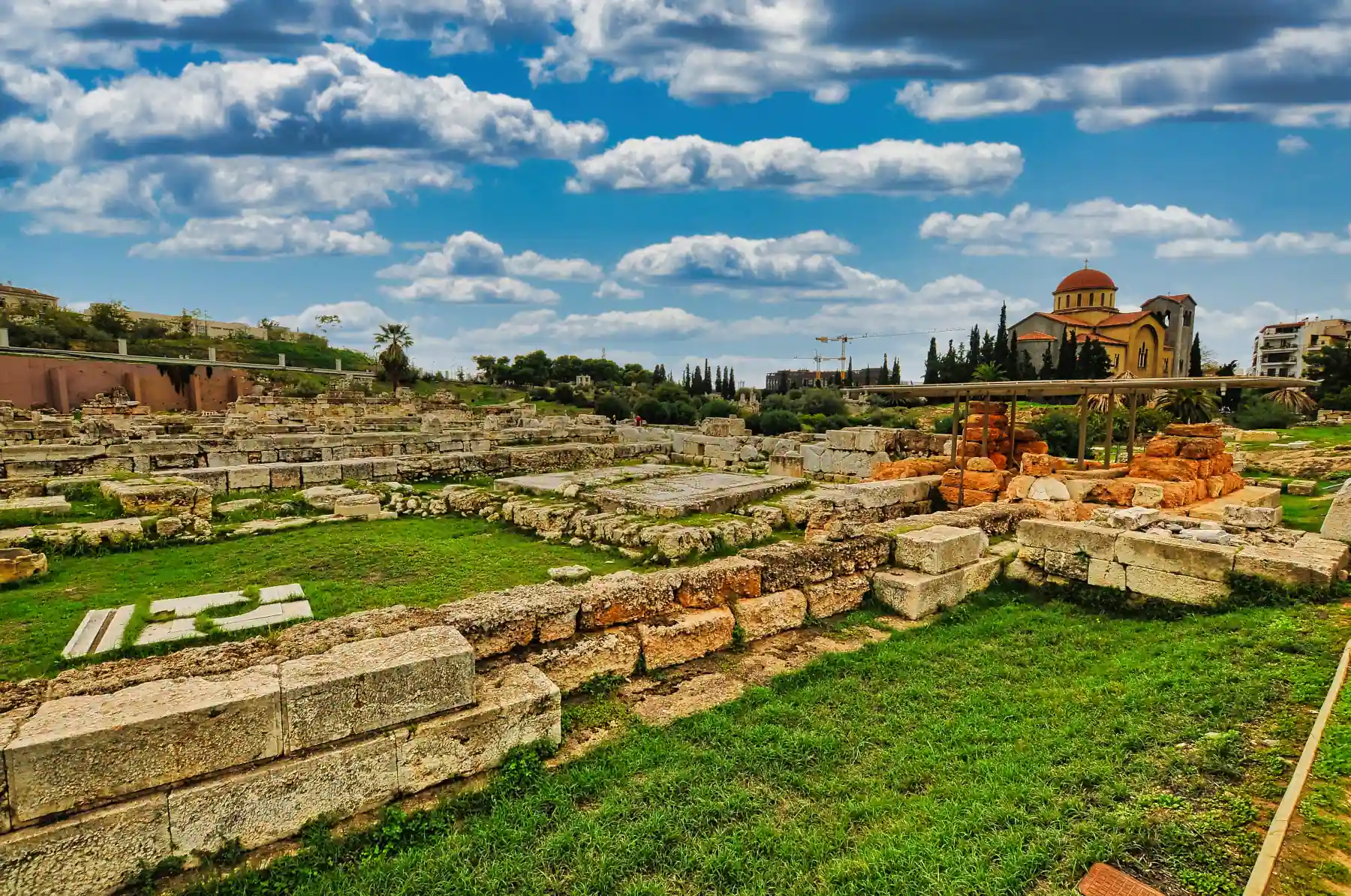
Is Kerameikos cemetery worth visiting? Well, it is one of those must-visit places in Athens that many tourists have never heard of. It doesn’t have famous monuments like the Acropolis. However, as someone who has called this city home for years, I can tell you that if you go to Athens, you really should go to Kerameikos. This place has something that the Acropolis can never offer. It has stillness. It has stories whispered by stone.
The ancient site of Kerameikos is set at the edge of the city, far away from the crowds that throng at the Parthenon. In a place shaded by cypress trees and olive groves, is the largest necropolis of ancient Greece. A burial ground that served the city of Athens for nearly 1,500 years. A place where potters once made their clay by the banks of the Eridanos river and warriors found their final rest.
Most visitors to the city don’t make it to this archaeological site. They rush from one well-known monument to the next, checking items off a list. But if you are a person who wants to feel the soul of this city. If you want to stand where Pericles once gave his famous funeral oration, then this peaceful corner of the city awaits you.
Table of Contents
How Old Is Kerameikos Cemetery?
The oldest graves in this cemetery are from the Early Bronze Age, about 2700 BC. That is 4,900 years ago. This ground has been covering the dead for 5,000 years. This is the ground you walk on. Human history is embedded in this dirt longer than the Pyramids have been in Egypt.
Burials continued in the Keramikos until the 6th century AD. This is an astonishing span of about 3,000 years of use. It is rare in the world to have a cemetery that has been used so continuously for so long. Athenians brought their dead to the Keramikos from the Bronze Age, the Classical Age, the Roman Age, and the early Christian Age.
The Keramikos cemetery (it will be spelt either way, with a ‘K’ or with a ‘C’, because it is also known by the Latin name Ceramicus) was the burial ground for potters. The ancient Greek word ‘keramos’ means pottery clay. This is also the root of our English word ‘ceramic’. The Eridanos River flowed past this location, bringing silt and clay deposits.
What happened to Kerameikos over time?
The history of this necropolis is also the history of Athens: glory, destruction, reconstruction and finally oblivion. The Persians, led by Xerxes, burned the city to the ground in 480 BC, destroying everything and earlier cemeteries with their monuments.
However, the Athenians returned. In 478 BC, the statesman Themistocles had a large perimeter of defensive walls built. The space enclosed by the two circuits of walls was thus naturally divided into two areas. The area closest to the city continued to be a craftsmen’s neighbourhood. The outer area, however, became the official cemetery.
During the Classical period (5th-4th centuries BC), large and sumptuous tomb monuments were erected along the roads leaving the city. The Sacred Way to Eleusis and the Street of Tombs became open-air galleries of funerary sculpture. It is the time of the necropolis’s splendour.
Later, in 86 BC, the Roman dictator Sulla pillaged Athens. The historian Plutarch reports that there was so much blood that it “ran through the gates and flooded the suburbs”. The Pompeion was razed to the ground, as were many buildings near the Sacred Gate.
At the end of the 6th century AD, after successive raids by Avars and Slavs, the place was definitively forgotten. Athens forgot the past, buried under its streets. The discovery in April 1863, by a Greek worker digging for the construction of Pireos Street, of a carved gravestone gave rise to the rediscovery of the ancient cemetery. The site continues to reveal its secrets.
Who was buried in Kerameikos?
This necropolis was the last resting place of everyone from the most lowly citizen to some of the greatest leaders of the ancient world. The stories these tombs tell us are as much a testament to Athenian society as any textbook.
Here, soldiers who died fighting for democracy were given full military honours in death. Monuments were erected by the state with the fallen's names written on them by tribe so as not to let any sacrifice go forgotten. Statesmen and leaders who had shaped the city's course also rest in this sacred ground.
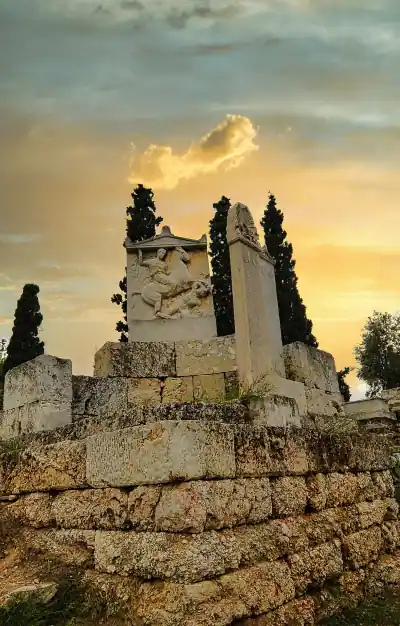
Pericles lies here, along with Cleisthenes, the lawgiver who is considered the founder of Athenian democracy. Private monuments on the Street of Tombs mark the graves of wealthy Athenian families. The grave of Dexileos, the horseman who died at 20 in 394 BC in a battle against the Spartans, is a masterpiece.
In other places, simple graves of potters, craftsmen, and their families have been uncovered. Children's tombs contain skeletons and the toys they were buried with.
In one mass grave, 89 skeletons were found that had been buried in a hurry during the Plague of Athens (430 to 426 BC). Among the remains is that of an 11-year-old girl. Scientists have worked to reconstruct her face, and now we have a name for this young victim: Myrtis.
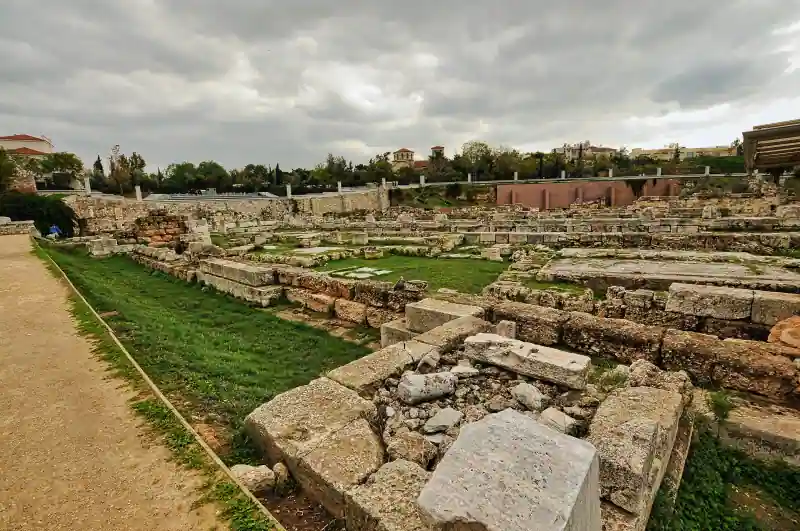
Why Was Kerameikos Important in Ancient Times?
This section of Athens was not just a cemetery. It was a place of life and death. A place of business and spirituality. A place for everyday life and religious ritual.
The Dipylon Gate was the largest gate of the ancient world. It was the main entrance to Athens. All travellers from Greece enter here. Merchants and goods, armies and diplomats, all arrived at the Dipylon Gate. To the left of the gate was a fountain house, which provided water to visitors as they entered the great city.
Every four years, the great Panathenaic procession would start from here. Citizens would meet at the Pompeion, where the sacred ship, upon which Athena’s new robe was stored, was kept. They would march out through the Dipylon Gate and down the Panathenaic Way all the way up to the Acropolis. This was the most important religious festival in Athens, and it would start here, amongst the tombs.
The Sacred Gate, which led to the Sacred Way, the road to Eleusis, was nearby. Each year thousands of initiates would walk this road as they made their way to Eleusis for the Eleusinian Mysteries. These were the most important secret religious rites in the Greek world. To go from Athens to Eleusis to participate in this spiritual experience, the initiates would first have to pass through the city of the dead.
And it was here, in the Demosion Sema, where Athens publicly mourned its dead soldiers. Pericles gave his famous funeral oration here, in 431 BC. In it, he praised not just the dead, but the very idea of democracy itself. It was recorded by Thucydides and still resonates through the ages. The ground you are walking on is the ground where he spoke these words.
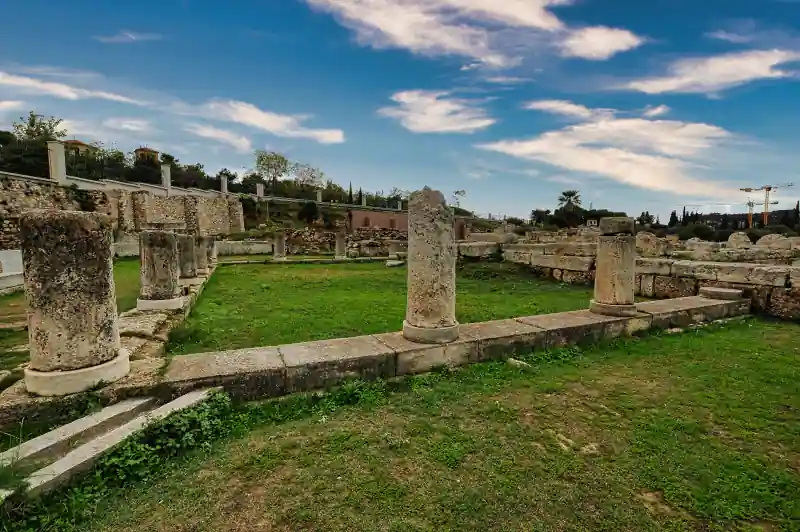
What does visiting Kerameikos feel like?
This place is not a place of spectacle. The place has no columns or temples. If you come expecting the look of the Acropolis, you might feel let down at first.
I feel peace here. Busy tourist spots cannot give peace. I notice the cypress trees casting shadows over the paving stones. I hear the olive trees rustle in the wind. I see the small Eridanos stream still trickling past, as it did when potters drew water from it 3,000 years ago. I watch the tortoises sun themselves on marble slabs, and the visitors walk by without disturbing them.
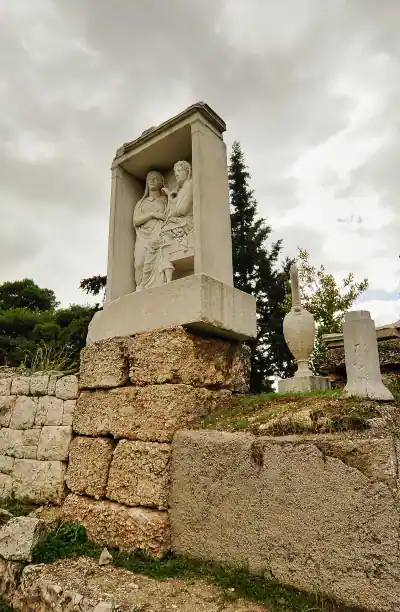
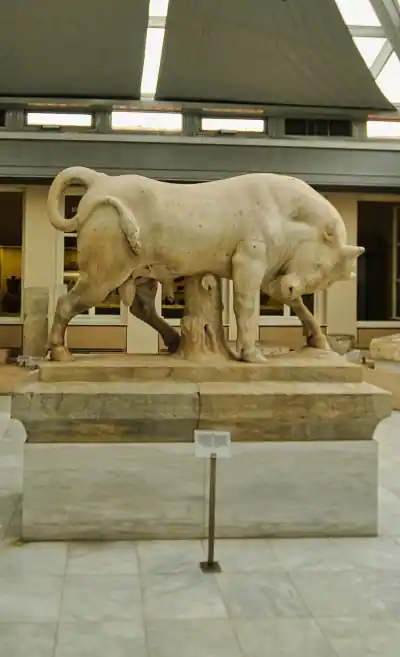
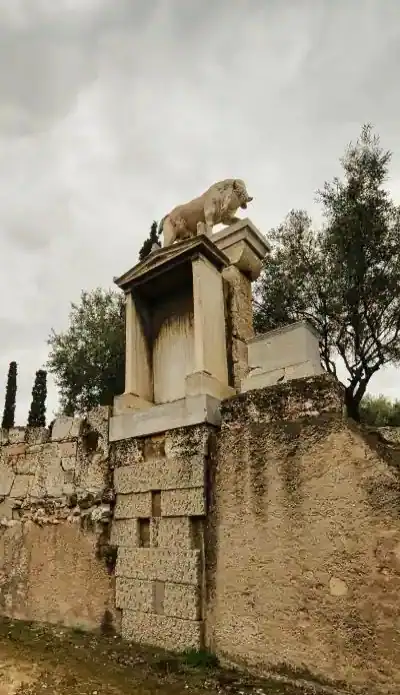
When I walk along the Street of Tombs, I feel the power of the funerary monuments. I see a young horseman standing frozen forever in the moment of the horseman's courage. I see a marble bull guarding a man who died alone. The funerary monuments are not myths, but they show people with names, families' lives cut short or stretched long.
I often visit in the morning. The light shines golden through the trees. I walk the Sacred Way. I imagine the thousands who walked the Sacred Way before me. Soldiers heading to battle initiate seeking truth mourners carrying the dead. The past feels closer than anywhere else in Athens.
Visiting this ancient site feels like stepping outside of time. The modern city is just steps away, but it might as well be in another century. Here, death and memory and the slow work of archaeology have created a pocket of stillness in the heart of a busy capital.
What you can see in the archaeological site
The archaeological site spans roughly 10 acres of quiet beauty. Here is what awaits you when you visit this special corner of Athens.
The Themistoclean wall: Stones that told two stories
The remains of the ancient city wall built by Themistocles in 478 BC are here. The wall has a macabre history.
The Athenians built this fortification quickly after the Persian destruction. As they scavenged materials to build, they incorporated what was available. Funeral sculptures, broken statues, and pieces of earlier tombs were all used in the wall. The dead were protecting the living.
The wall encircled the city for about 8.5 kilometres. It was 8 to 10 meters high. The limestone blocks used as its foundation are still visible at the base. As you walk alongside these ancient blocks, you begin to understand how Athens grew from ashes to become a great city.
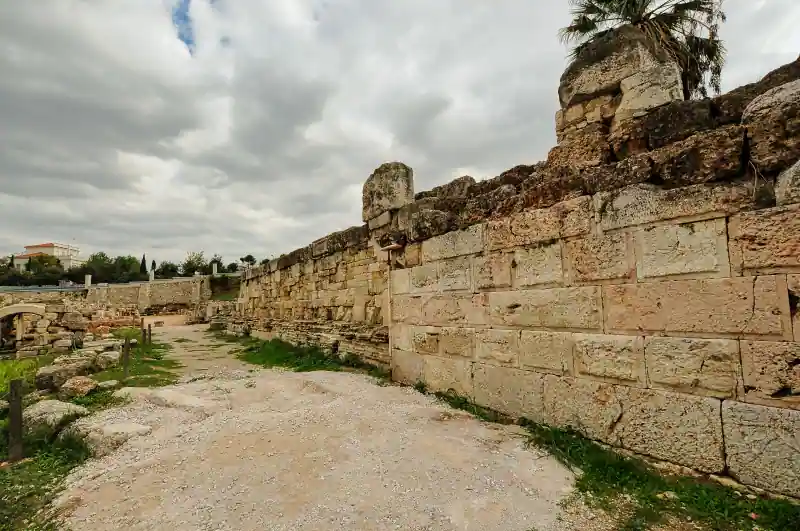
The Dipylon Gate: The largest gate of the ancient world
The Dipylon, meaning the double gate in Greek, was the main entrance to ancient Athens. Covering roughly 1,800 square meters, it was the largest gate in the entire ancient world. Through this gate passed the great Panathenaic procession every four years, carrying the sacred peplos to the goddess Athena on the Acropolis.
The original gate was built in 478 BC, then rebuilt in grander form around 307 BC. Four massive towers guarded its corners. Inside was a courtyard where soldiers could trap enemies in a killing ground if invaders breached the outer doors. But in times of peace, this courtyard held altars to Zeus and Hermes, who was the protector of travellers.
The Sacred Gate: Where mystery began
Immediately to the south of the Dipylon is the Sacred Gate, through which the Sacred Way passed on its way to Eleusis. It was through this gate that thousands of initiates passed each year on their way to participate in the Eleusinian Mysteries, the most important of the secret religious rites in the ancient Greek world.
The Eridanos River (now a small stream, but still visible in places) flowed through the gate. On either side of the Sacred Way, wealthy Athenian families built elaborate tomb monuments, and the road became an open-air gallery of funerary art.
The Pompeion: Where sacred processions began
In the space between the two gates, along the stretch of ground covered by the city wall, stood a building called the Pompeion. Constructed around 400 BC, this was where Athenians made preparations for their most important religious festivals.
The building was an open courtyard surrounded by columns, with dining rooms along the sides where the noble Athenians would dine on meat from sacrifices after religious ceremonies. The sacred ship that was used in the Panathenaic procession was stored in this building. Young men carved their names on the walls while they were waiting for the processions to start.
The Fountain House: Where travellers found rest
Near the Dipylon Gate, inside the city entrance, I saw a fountain house where tired travellers could stop, drink, and cool off. The fountain house that stands there now was built between 350 and 325 BC. An earlier fountain stood on the spot for many centuries.
Water meant life in the ancient world. Public fountains were places where people gathered, shared news, and made connections. When I arrived in Athens for the first time, I noticed water and public fountains as the first things I saw.
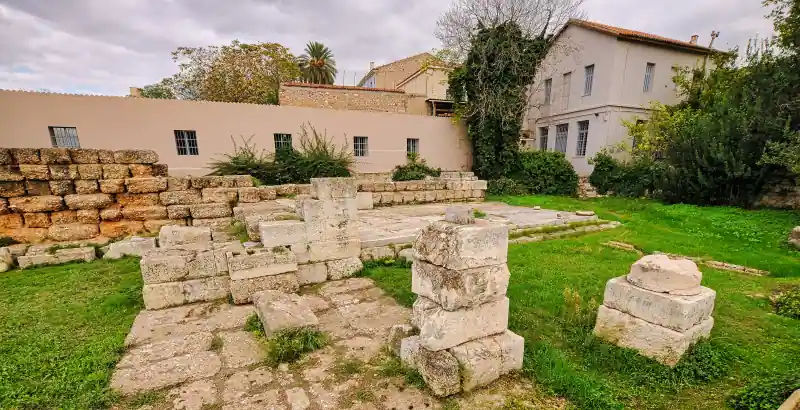
The Warriors' Tombs and Street of Tombs: Marble monuments to courage
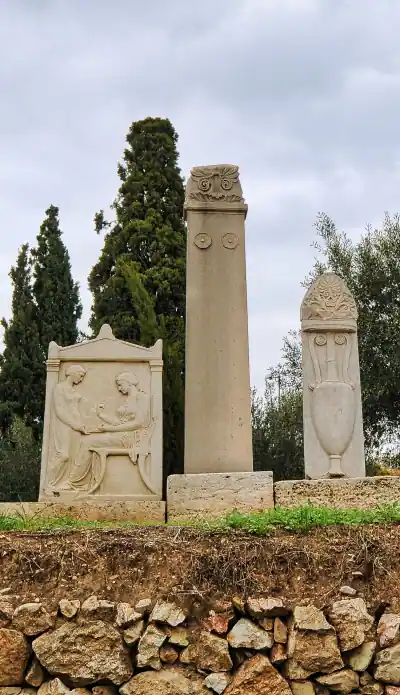
I walked along what archaeologists call the Street of Tombs. I saw some of the funerary monuments in Greece. Funerary monuments date from the 5th and 4th centuries BC, a golden age of Athenian sculpture.
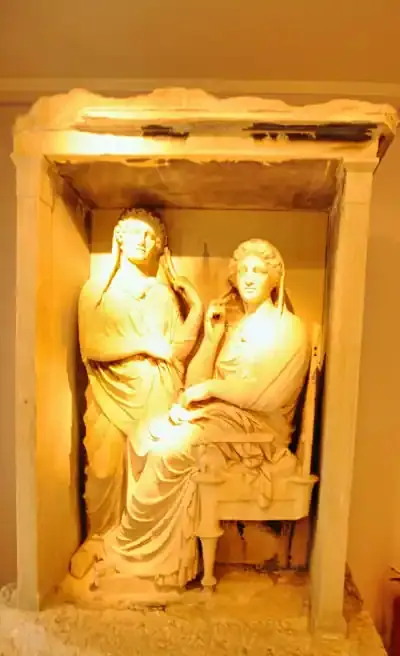
The relief of Dexileos shows him on horseback, spear raised, striking down an enemy. It captures forever a moment of courage and youth cut short. Nearby, family tomb enclosures contain steles showing peaceful farewell scenes: a wife clasping her husband's hand, a mother saying goodbye to a child.
The Kerameikos Museum: Where Artifacts Tell Human Stories
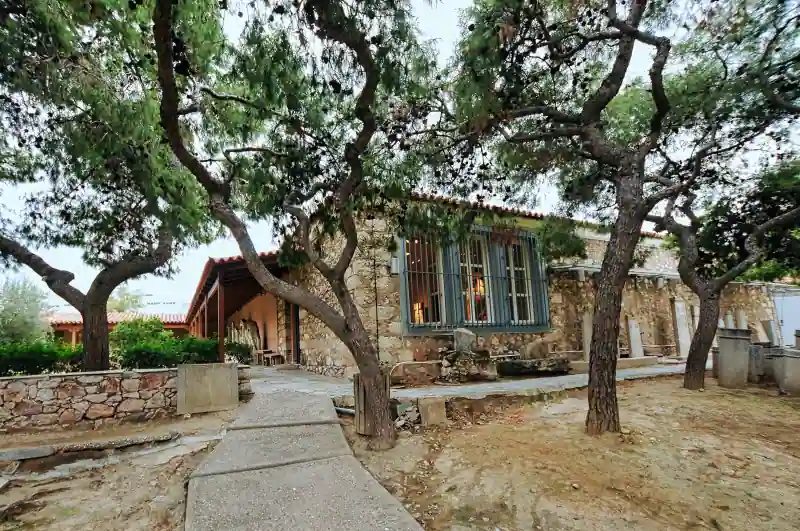
When I step inside the entrance to this small museum, I see an old-style building that houses Greece's most important collection of burial artefacts.
I always recommend visiting the museum first. It helps you understand what you will see in the cemetery. The collection includes the original sculptured tomb monuments, pottery with geometric patterns, jewellery buried with the dead, children's toys, and the stunning 7-foot-tall Kouros discovered in 2002.
Finding the way to the cemetery
The entrance is at the end of Ermou Street. It is a five-minute walk from Thissio metro station on the Green Line, and a ten-minute walk from Kerameikos metro station on the Blue Line.
I prefer walking from Monastiraki Square along the pedestrian Ermou Street. The walk takes ten minutes. The walk moves from the shopping district into quieter, more authentic neighbourhoods.
Questions that come up
Is the Kerameikos cemetery free?
No, you have to pay a ticket, but there are some days of the year when the entrance is free.
How much is the ticket?
The standard ticket costs 8 euros for adults.
How long does it take to visit the ancient place?
If you want to stroll slowly and visit the museum, allow about 1.5 hours.
If Kerameikos moved you, these places will too
If Kerameikos has sparked your interest in Athens’ ancient history, there’s plenty more of the city to explore. A short walk to the east will bring you to the Roman Agora. Explore the Tower of the Winds and the agora, which was the city's marketplace during the time of Roman rule. A few meters away you will find the Ancient Agora, the main marketplace of Ancient Athens.
Just past the agora is Hadrian’s Library, named for the emperor who famously adored Greece. From its enormous outer walls, you can imagine the scale of the reading rooms where 9,000 scrolls would have been kept.
On the southern slope of the Acropolis sits the Theater of Dionysus. It was on this stage that the genre of Greek tragedy was born, and plays by Sophocles and Euripides were performed. Nearby, the modern stone seats of the Herodes Atticus Theatre are packed on summer evenings for performances. Guests watch plays under the stars, just as the ancient Athenians would have.
If you are like me and love seeing huge ruins that dwarf the people in the space, the Temple of Zeus is at the entrance to the National Gardens. You can see 15 columns from the largest temple in Greece. If you have an entire day to explore, take a trip out to the Temple of Poseidon at Cape Sounion for a sunset you will never forget over the Aegean Sea.
If you’d like to understand some of the many artifacts strewn across these sites, two museums are a must. The Acropolis Museum features the sculptures and votives from the sacred rock, on view in a modern structure designed to let you see the Parthenon through its windows. The National Archaeological Museum houses the jewels of Greece: Mycenaean gold and bronze statues recovered from the depths of the sea, and pottery that reveals how common people lived for thousands of years.
Final Thoughts: The Quiet Poetry of Ancient Stones
I come to the place often. I come in seasons. I come at times of day. In spring, wildflowers bloom between the graves. In autumn, fallen leaves gather in the sarcophagi. The visit feels different each time. The sense of standing at the edge of time remains the same.
I stand among the ruins. Hear what the archaeology tells me about ancient Athens. The archaeology tells me how the ancient Athenians built the walls. The archaeology tells me where the ancient Athenians buried the dead. The feeling of this place reminds me that every name carved in stone was once a living person. The living person had hopes and fears. The living person had someone who loved the person enough to remember.
Is the Kerameikos cemetery worth visiting? Arrive early, in the morning when light passes through the cypress trees. Bring your curiosity and a little patience. Let Kerameikos cemetery reveal itself to you slowly. You will leave with something you cannot find at places: a quiet wonder and a feeling that you have touched the real Athens.