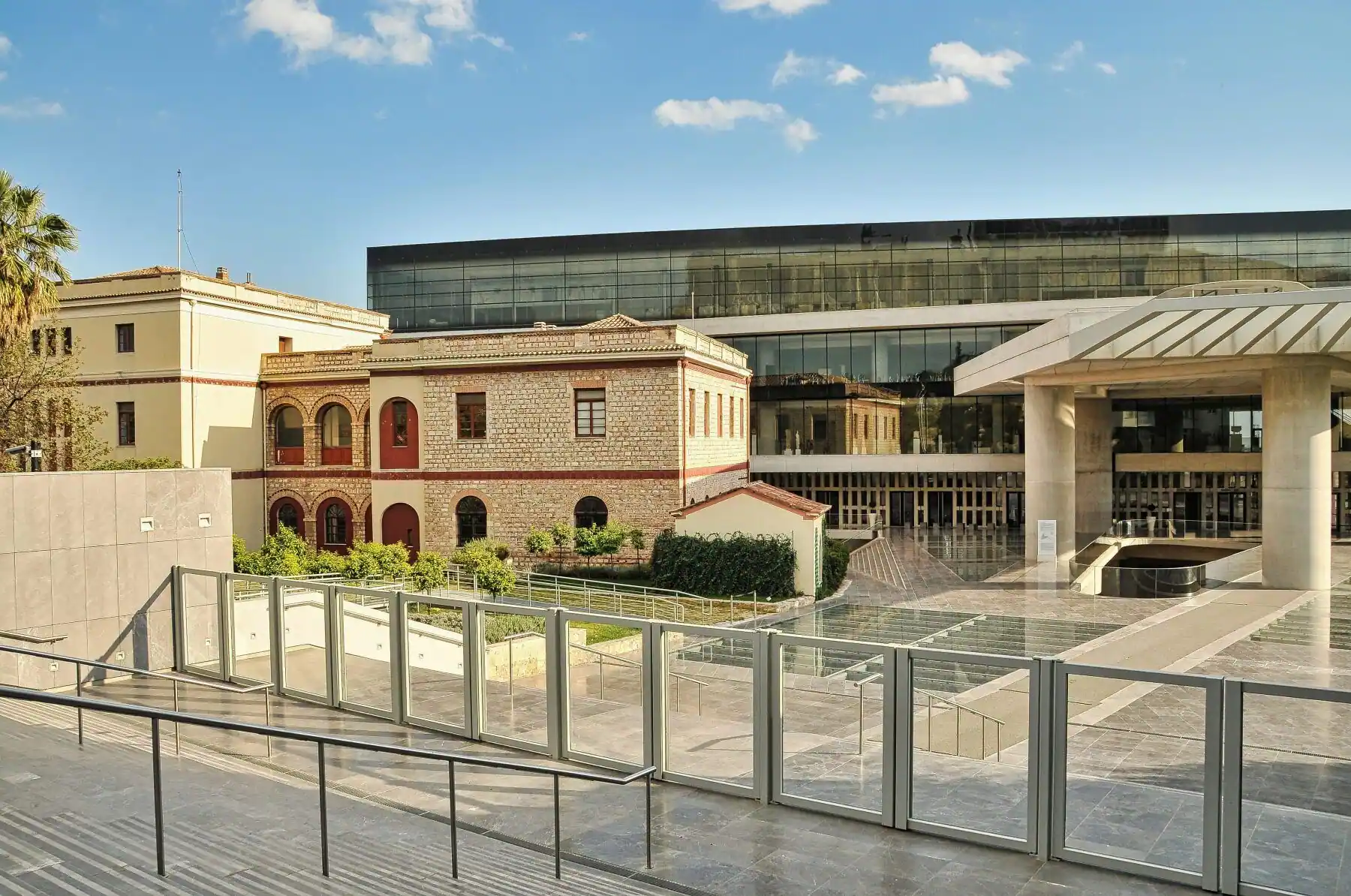
Some museums teach you things. Others change the way you feel about a place. The Acropolis Museum in Athens did that for me.
Is the Acropolis Museum worth it? I think it’s the most honest answer Athens has to offer to the question, “What did ancient Greece look like?” Not through open-air ruins as beautiful as they are, but through the faces and hands and carved fabric folds that once adorned them. It is, quite literally, where the Acropolis comes inside. Where marble turns to people.
I first passed through this museum’s doors on a quiet winter morning, just a few weeks after it opened. I’d seen the Parthenon a hundred times from my neighborhood rooftops, from the backseat of my father’s car. But never had I stood face to face with the sculptures that once crowned the temple. And for the first time, alone on the top floor with low winter sun pouring through the glass to light them from above, I got what that building must have looked like, whole. It has never left me since.
In this guide, I’ll show you how to share that moment with me. I’ll tell you what you can find inside, how long you should plan to stay, what it costs, and when to go. But more than that, I’ll tell you why this place matters. Not just as a museum, but as a room full of light, where the ancient world feels tangible enough to touch.
Table of Contents
Is the Acropolis Museum worth it?
Yes. Without hesitation. For the history buff, the casual traveler, or anyone who just wants a quiet, beautiful place to slow down, the Acropolis Museum is a must-see. It’s one of those rare places where everything is perfectly in sync – the architecture, the light, the artifacts, the story they tell. You don’t need to know much about ancient Greece to feel something here. The sculptures do that work for you.
I remember walking in for the first time years before I started writing about travel. Hoping for a good museum, I instead found something much more. Glass cases, labels, silence. This was something else entirely. Sunlight flooded in through glass walls. Beneath my feet, on a transparent floor, sat the ruins of an ancient neighborhood. On the top level, the Parthenon itself sat on a neighboring hill, watching over the gallery through floor-to-ceiling windows. It felt as if it had never let go of the treasures we’d come to see.
For the curious, the quiet, and the wide-eyed
You do not have to love ancient Greece to love this museum. I have brought friends here who do not know any Greek god and watched them stop in front of the Caryatids with their mouths slightly ajar. I have walked these galleries with people who visit museums every week and with people who never set foot in them. The reaction is always the same. Something slows them down. Something makes them look a little longer than they meant to.
This is a place for the curious, the people who like to lean in and read the small text at the bottom of a sculpture. It is a place for the quiet ones, the ones who would rather sit on a bench and let a room wash over them than race through with a checklist. And it is a place for the wide-eyed, the travelers who still believe that one building can change the way they see a city.
If you love architecture, the building itself will hold you. If you love photography, the light on the top floor will have you reaching for your camera before you even realize it. If you travel with children, you will find things here to make their imaginations run in ways a classroom never could. And if you are simply someone who walked up the Acropolis and felt something you could not name and wanted more of it, this is where that feeling lives.
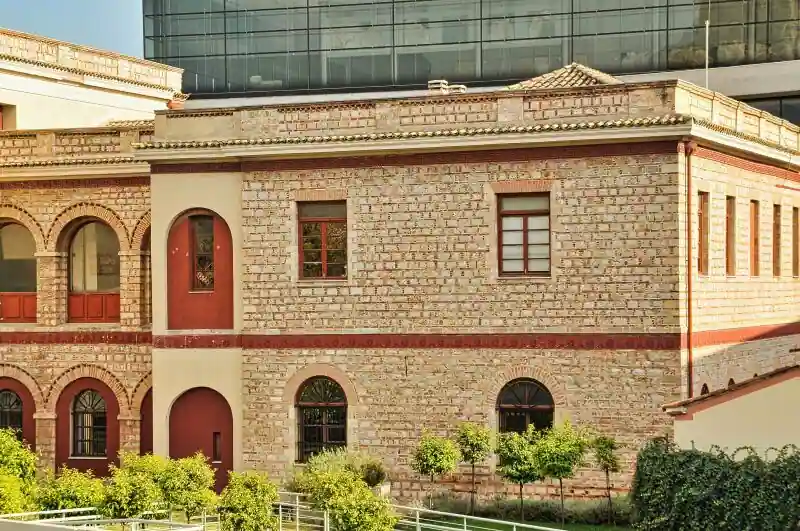
The hill and the museum, two halves of one story
The Acropolis Museum and the Acropolis itself are not two separate things to do. They are one story, told in two different places. On the hill, you get the sky and the scale and the wind that has blown across that rock for thousands of years. You wander among the columns and try to imagine how they looked in their wholeness, painted in bright colors, with sculptures running along every inch of surface.
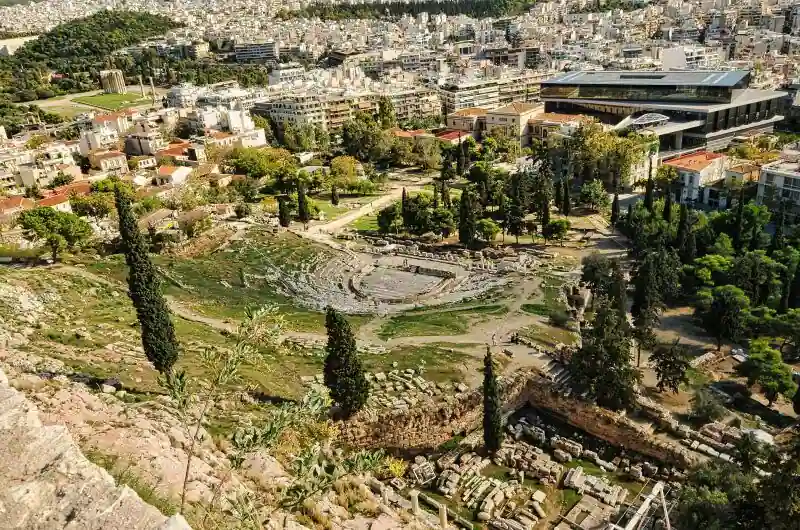
Then you walk down the hill, through the trees, past the ancient theaters (Dionysus theater and Odeon), into the museum. And there they are. Faces. Hands. Pieces that must have crowned that temple, now propped at eye level in a room full of light. What the hill lets you dream, the museum allows you to see.
One without the other feels half finished. The hill without the museum is powerful, but quiet. The museum without the hill is beautiful but adrift. If you only have time for one, go to the Acropolis. But if you have an entire morning, do both. Walk the hill first, then come down and let the museum translate what you just felt.
Built for what was hidden and what was taken
The old Acropolis Museum at the site, a squat little building on the hilltop that dates from the 1870s, could not contain the thousands of pieces that have been excavated over the years, or display them as they should be. Hundreds of boxes and crates were sitting in storage while visitors gazed at them through windows.
The new museum was designed to give the works the space and the light they need and deserve. But it has another purpose, one that is deeply emotive for many Greeks. The museum is also designed to house the Parthenon sculptures, such as the ones that are in the British Museum in London. Empty spaces on the top-floor gallery are where the missing marbles will be if and when they are returned. Visiting that gallery and seeing those empty spaces is one of the most moving experiences in the whole museum. It's a powerful story, not just of art, but of loss.
What to see in the Acropolis Museum
The museum has more than 4,000 objects, but you do not have to see everything to feel the weight of this place. Some of the pieces will stay with you for years. This is what to look for.
What are the must-see highlights?
The Caryatids are the highlights of the collection. The originals are the five women who once held up the roof of the Erechtheion temple on the Acropolis. Five of the six originals stand here, in a glass case, serene and powerful, their pleated robes carved so intricately that the fabric seems to ripple in an imaginary breeze. One is missing in the British Museum. Her empty plinth is the loudest silence in the room.
The Parthenon Gallery on the top floor is the beating heart of the museum. It circles a central core and features the surviving fragments of the Parthenon frieze, metopes, and pediments, in exactly the same arrangement as on the original temple. Where originals are missing (i.e., in London), there are white plaster casts in their place. The contrast is visceral.
The Archaic Gallery on the first floor is a room full of early korai, young women whose clothing and hair still bear traces of the original paint. Some of them are smiling. That archaic smile, faint and enigmatic, is one of the most beautiful things in all of ancient Greek art.
And do not miss the glass floor near the entrance. Looking down at the excavated ruins below your feet is a quiet, almost private experience, like staring through a window that opens backward through time.
Each floor is a different shade of ancient Athens
The museum consists of three floors. On the ground floor are the galleries, which cover the lower slopes of the Acropolis and where the finds from the sanctuaries and settlements of the communities that surrounded the hill are displayed. This includes household items, votive offerings, and sculptures found in the lesser temples.
On the first floor, also sometimes referred to as the Archaic Gallery, are the works from the period before the Parthenon was constructed, some dating back to around the 6th century BC. The korai, fragments from early temples, and the oldest surviving examples of Greek monumental sculpture are all housed here. This is also the floor where the Caryatids are located.
The top floor is the Parthenon Gallery. The space is vast with a high ceiling, and the natural light coming in through the windows creates a view of the Acropolis that seems to show the temple and the gallery as part of the same building. A visit to the museum just to see this room would be worthwhile.
What are the most famous artifacts inside?
In addition to the Caryatids and Parthenon sculptures, you will also want to search out the Moschophoros(the Calf Bearer), a marble statue of around 570 BC. It shows a young man carrying a calf on his shoulders. This sculpture is among the first examples of Greek sculpture to appear really, really alive. The muscles. The balance. The calm expression.
Another favorite is the Nike Adjusting Her Sandal, a small relief from the Temple of Athena Nike. It shows the goddess bending down to fix her shoe. The way her robe clings to her body is transparent and fluid. It was carved from solid marble over 2,400 years ago. The artistry behind it still leaves me speechless.
The heart of the museum and the soul of the Acropolis
The Parthenon Gallery is on the museum's top floor and its primary attraction. The room is modelled on the Parthenon's dimensions and orientation. The original frieze panels, placed on the walls at the same height and in the same sequence as they once were on the temple, surround the room. The effect is not only educational, but deeply moving, as the power of the building can be felt even as you stand in the museum.
The frieze depicts the Panathenaic procession, a grand festival procession that was held every four years to honour the goddess Athena. There are horsemen, musicians, sacrificial animals, and gods sitting in council. It is one of the greatest artistic achievements of the ancient world, a 160-meter-long ribbon of carved marble that once encircled the Parthenon like a crown.
The marbles that still divide two nations
The Parthenon Marbles are the sculptures that decorated the Parthenon temple: the frieze, the metopes (square panels with mythological battles), and the pediment sculptures (the figures that filled in the triangles at each end of the roof).
They created the most ambitious artistic program of the ancient Greek world. Half of the surviving marbles are in Athens. The others are in the British Museum in London, taken in the early 1800s by Lord Elgin, a British diplomat. Greece has long been asking for their return. The debate continues and is deeply felt.
Practical information about the museum
Where is it located?
The museum is located at the southeast foot of the Acropolis hill, Dionysiou Areopagitou street. It is one of the most beautiful pedestrian streets in Athens, with trees and views of the ancient rock rising above. The museum's entrance faces a small plaza with a direct view up toward the Parthenon.
The nearest metro station is Acropoli, line 2 (the red line). The station exit puts you almost at the museum's front door. It is one stop from Syntagma and two stops from Omonia. If you are staying anywhere along the red line, this is the easiest way to arrive.
Opening hours
1 November - 31 March
- Monday - Thursday 9 am - 5 pm / Last entry: 4:30 pm
- Friday 9 am - 10 pm / Last entry: 9:30 pm
- Saturday & Sunday 9 am - 8 pm / Last entry: 7:30 pm
1 April - 31 October
- Monday 8 am - 4 pm / Last entry: 3:30 pm
- Tuesday - Sunday 8 am - 8 pm / Last entry: 7:30 pm
- Friday 8 am - 10 pm / Last entry: 9:30 pm
How much does it cost to enter?
As of 2026, the price of a standard admission ticket is 15 euros. There is a lower price for students and senior citizens. Admission is free for children under 5. It is a fair price for what you receive, and is even cheaper when you compare it to many of the great museums in other European capitals.
There is a combo ticket that also includes admission to the Acropolis archaeological site. If you are going to visit both, you get a better value with the combo ticket. There are some dates throughout the year when the museum offers free entry.
How long do you need to visit it?
Most people stay between one and a half and three hours. That's plenty of time to see every level, read the important descriptions, and linger a while in front of the pieces that speak to you. If you are pressed for time, you can make an efficient visit in about an hour.
If you love art history and want to linger, you could easily spend half a day. I have had visits that lasted two hours and visits that lasted twenty minutes. Both were great. The museum will not demand a set amount of time from you. It will give you what you bring to it.
Photography rules
Photography is allowed (without flash) in most areas of the museum. Tripods and selfie sticks are not allowed. Some of the temporary exhibitions may have different rules, so watch for signs. You won't need a flash anyway: the light in the museum is fantastic, particularly on the top floor.
Is there a cafe or restaurant?
Yes. The museum has a cafe and restaurant on the second floor, with a terrace that looks out at the Acropolis. The food is decent (Greek dishes, coffee, pastries), but the view is one of the best in the city.
Contact info
- Address:Dionysiou Areopagitou 15, Koukaki
- Phone: + 30 210 900 0900
- Email: info@theacropolismuseum.gr
- Official Web site of the Museum
Acropolis Museum vs. Other Museums in Athens
Athens has dozens of great museums, but the two you’ll often hear people compare are the Acropolis Museum and the National Archaeological Museum. Both are different in scope, size, and ambiance.
Is it better than the National Archaeological Museum?
Depends on what you’re looking for. The National Archaeological Museum is one of the biggest and most important museums in the world. It has a collection from all over Greece, from every period of ancient history (think Mycenaean gold masks, Roman-era sculptures, etc.). It’s enormous, awe-inspiring, and it will take you at least a full day to see it.
The Acropolis Museum is more focused, more modern, and more moving. It tells a single story—the story of the Acropolis—, and it tells it masterfully. If you’re looking for breadth, visit the National Archaeological Museum. If you’re looking for depth and emotion, start at the Acropolis Museum.
For most first-timers, I recommend the Acropolis Museum first. It’s easier to digest, it’s closer to all of the other major sights, and it ties in directly to the Acropolis visit you’ll likely be making anyway.
More museums to add to your Athens list
If the Acropolis Museum leaves you wanting more, the city has plenty to offer. The Museum of Cycladic Art is a personal favorite. It holds one of the best collections of Cycladic figurines in the world, those smooth, minimal marble forms that seem oddly modern for objects made 5,000 years ago.
The Byzantine and Christian Museum takes you into a different chapter of Greek history, through icons, mosaics, and centuries of faith.
The National Historical Museum, housed in the old Parliament building on Stadiou Street, tells the story of modern Greece from the fall of Constantinople to independence. And the War Museum, right on Vasilissis Sofias avenue, covers Greece's military history with uniforms, weapons, and aircraft displayed in its courtyard.
Each one adds a different layer to the city. Together, they give you a picture of Athens that stretches far beyond the ancient world.

The feeling you take with you when you leave
You will not remember every statue. You will not remember every date on every label. That is fine. But you will remember something.
Maybe it will be the Caryatids, five women holding a roof up with their arms. They stand in a row, so serene, so untroubled, that you wonder what they know that you do not. Maybe it will be the top floor, where the sun streams in through glass, lighting up marble that has not been this close to natural light for centuries. Or maybe it will be something smaller. A hand. A fold of a stone garment. A face that looks just like someone you know.
That is what this museum does. It does not try to overwhelm you. It does not try to impress you. It simply puts ancient things in a good light and leaves them to find you.
Is the Acropolis Museum worth it? I have been asked this question more times than I can count. My answer has never changed. It is worth your time. It is worth your stillness. It is worth the kind of looking where you forget that you are in a museum, and just stand there, quiet, in front of something made by hands just like yours, a very long time ago.
Go. You will leave with something you did not carry in.