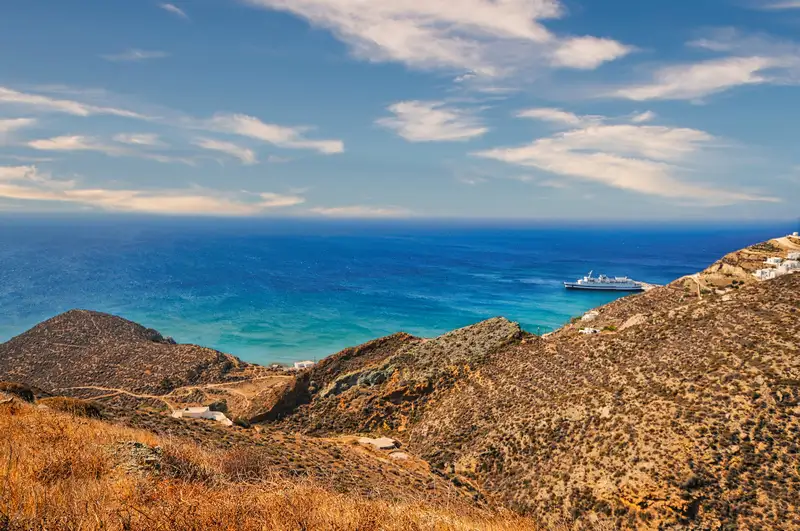
There are islands in the Cyclades that belong to everyone. And then there is Anafi. A small, silent rock in the southern Aegean that barely makes it on the map of most travelers, and that is exactly why I love it. This Anafi travel guide is my attempt to tell you about what I found there: a place with no crowds, no noise, no haste. Just the sea, the sun, the wind, and a silence so total it’s almost holy.
I first learned of Anafi from an old fisherman on Santorini who, waving his hand toward the horizon, said only “over there, nothing changes.” And he was right.
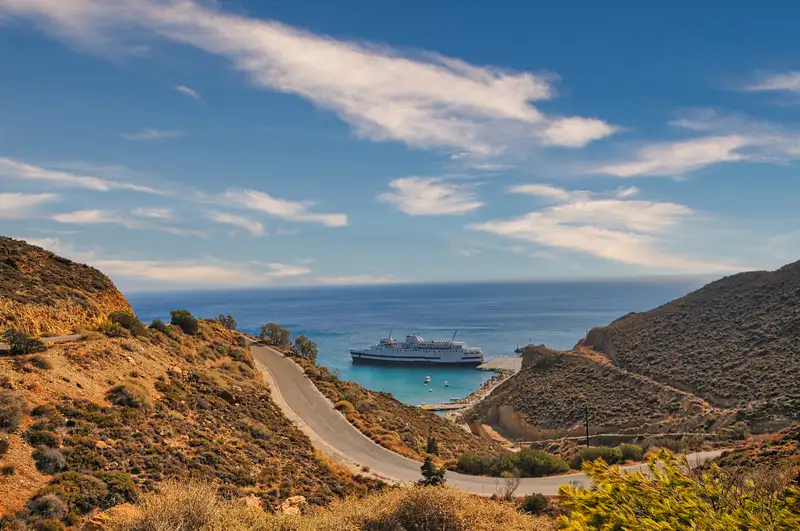
Table of Contents
A small island at the edge of the world
Anafi is a small island in the southern Aegean Sea, 22 kilometers east of Santorini. A Cycladic island, which means that it is part of the same island chain that gives Mykonos, Paros, and Naxos life, but a different world entirely.
It’s also very, very small. 38 square kilometers. Barely three hundred inhabitants in the winter months. No traffic lights. No big hotels. No nightclubs. Just rock. Sea. A few whitewashed houses. Silence.
The first time I landed on the island, I remember getting off the ferry at the Agios Nikolaos port and thinking that there couldn’t be many people living there. It looked almost abandoned. A few rooms-to-let signs. One road leading uphill. A cat, sleeping in the shade. That was it. And that was the moment I realized that I was going to love it.
It helps that Anafi is at the very end of the Cyclades. At least part of the reason why it remains so quiet is that it’s hard to get there. The journey is a kind of filter. The people who choose to come here usually come on purpose.
What makes Anafi different from everywhere else
Because it is real. That is the only way I can answer this. I have spent years traveling around the Greek islands and wherever the ferry goes. What I have realized is that most of the islands are crowded now; some have become stage sets of tourism, beautiful but performed. Anafi is different. It is not a performance. There is no performance here. The owner of the taverna is not putting on an act. The fisherman mending his net at the harbor is not posing. The sunsets are not performances with cocktail bars beneath them, scheduled into your holiday calendar.
Anafi is for you if you have been to Santorini, found the place absolutely stunning, but hated the crowds. It is the quiet alternative to Santorini that nobody tells you about. The volcanic cliffs. The deep blue sea. The golden light. All of these things are here. But without the cruise ships and the selfie sticks.
Should you visit Anafi? Oh yes. Is it worth going to Anafi? Yes, a thousand times yes. But only if you know what you are going to. This is not an island for partying, for clubs, for the high life, or even for luxury. This is an island where you wake up, walk to a beach, swim in water so clear it looks unreal, eat some simple food, watch the sun go down, and fall asleep early because there is nothing else to do. And in some ways, that is enough.
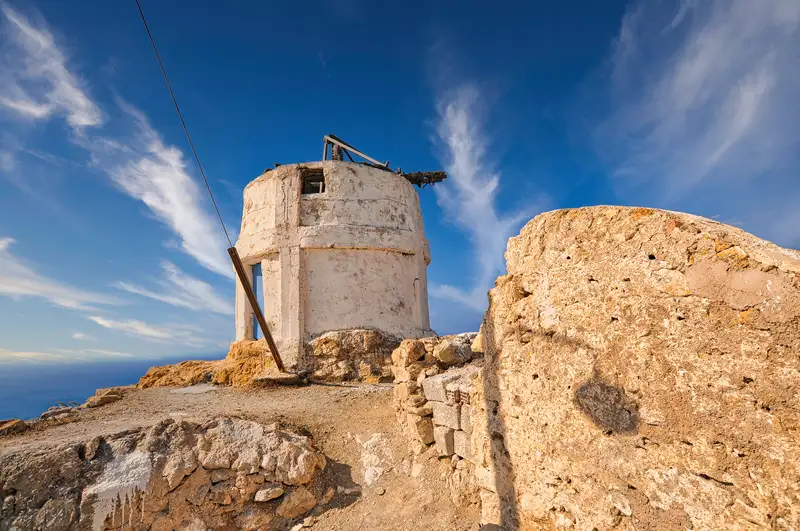
What is Anafi best known for?
There are three things that are instantly memorable about the island: Kalamos Rock, the Monastery of Panagia Kalamiotissa, and a certain rawness to the island itself.
Kalamos is a huge rock outcropping on the eastern side of Anafi that juts up from the sea approximately 460 meters above sea level. It’s one of the largest monoliths in the Mediterranean and has been compared in size to Gibraltar. It can be seen from nearly anywhere on the island and looms over the land like a great stone sentinel.
Near the summit of the rock is the Monastery of Panagia Kalamiotissa. Nestled precariously into the side of the cliff face, it was built in a way that seems structurally impossible. It’s a strenuous hike to get there, but the view from the top is one of the most breathtaking I’ve seen in Greece.
And, finally, there is the island of Anafi itself. Anafi is one of the least developed of the Greek islands in the Cyclades. There are no large resorts. No chain restaurants. This kind of rawness and a lack of tourist infrastructure may be off-putting to some travelers, but it is exactly what will appeal to others, those who prefer their travel experiences less “cultured” and more real.
What the island keeps for those who come
Anafi doesn't have much in the way of sights. There are no museums with ticket lines and no monuments fenced off behind barriers. It has a few places so quietly beautiful they stay in your mind for months.
Chora: A village made of white walls and slow evenings
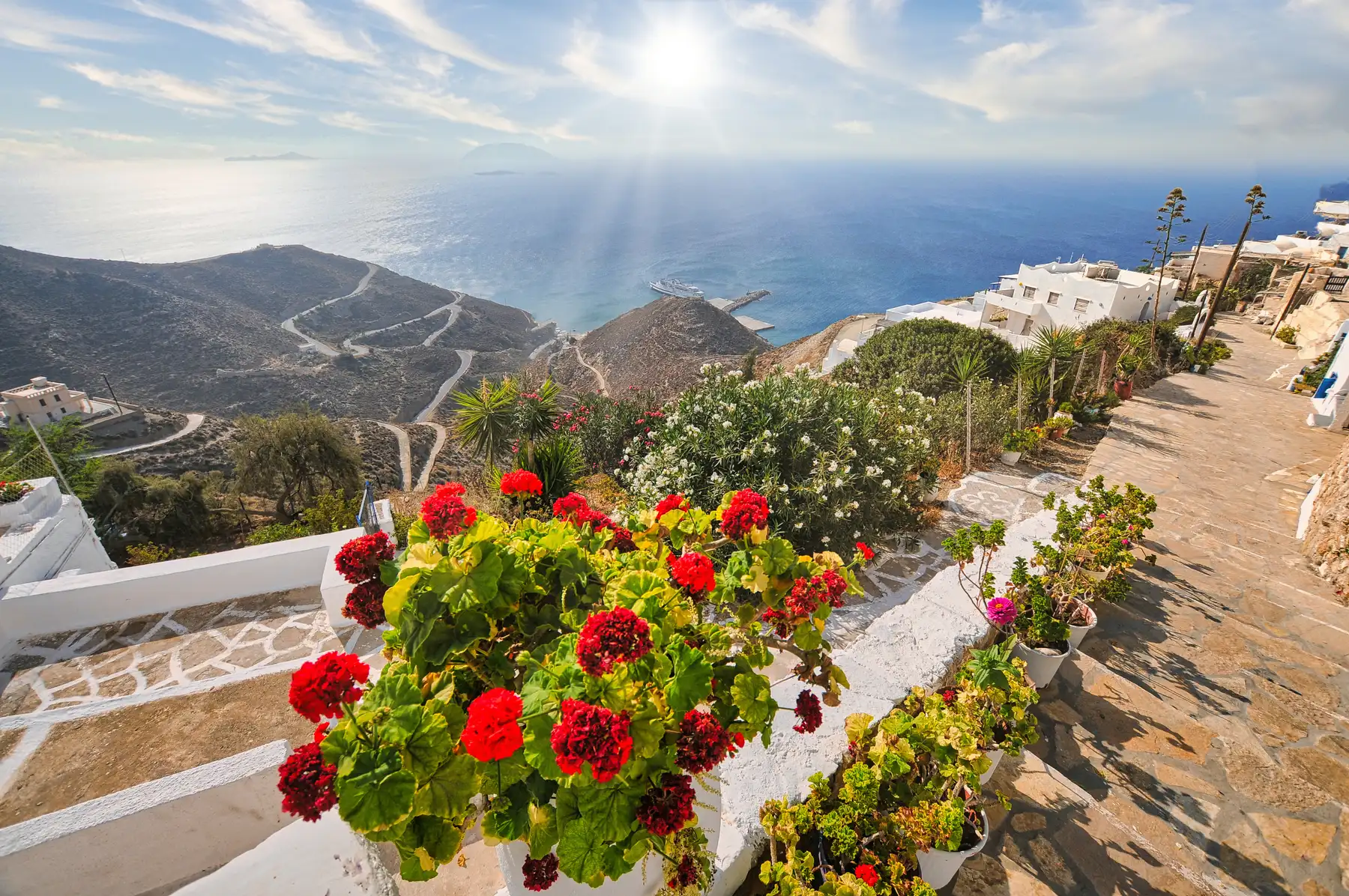
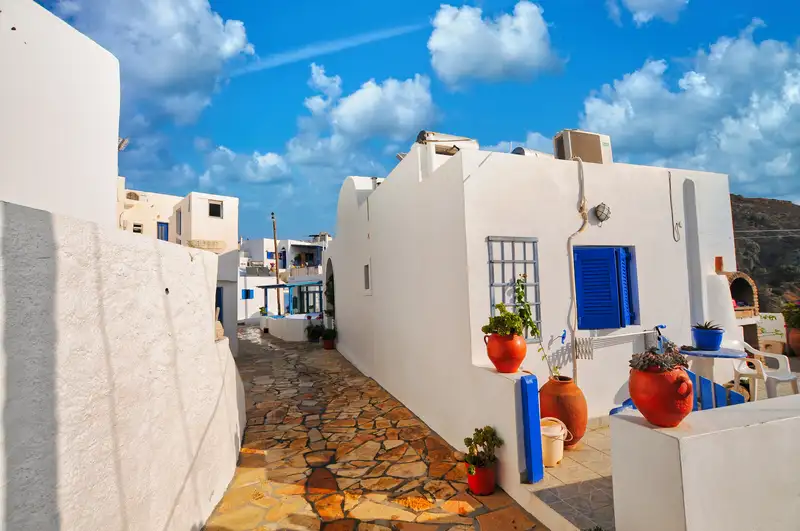
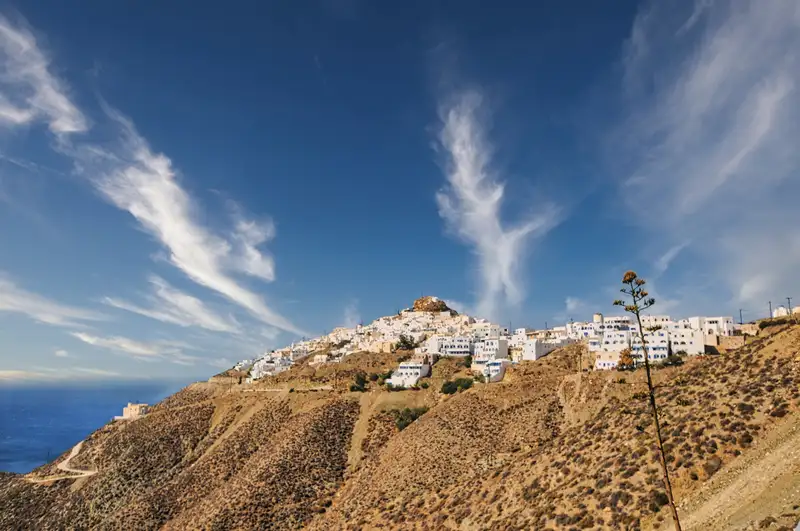
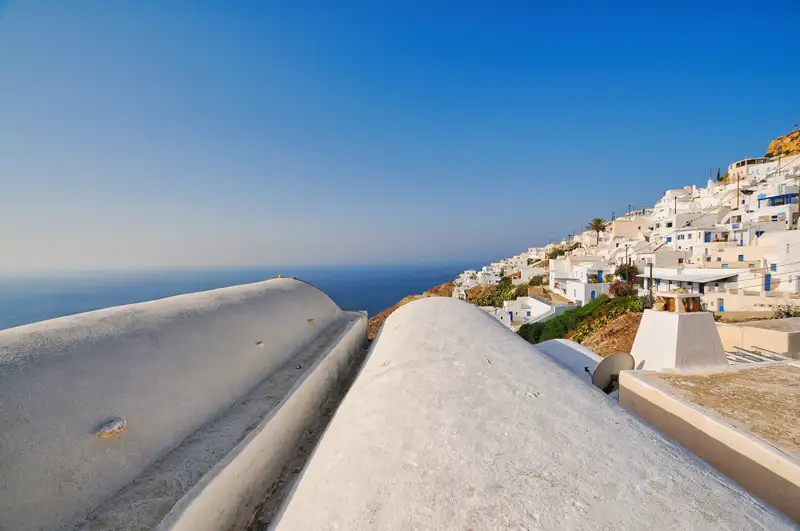
Chora is the island’s only real village, and it’s one of the most charming traditional Cycladic villages I’ve walked through. Perched on a hilltop around 3km above the port, it’s connected to the rest of the island by a windy road or (if you’re up for a climb) a steeper footpath.
The architecture is traditional Cycladic. Cube houses painted white, doors painted blue, narrow alleys so narrow they can accommodate only two people, tiny churches tucked into hidden corners, bougainvillea tumbling over whitewashed walls. But unlike the Choras of Mykonos or Santorini, this feels lived in rather than staged. You’ll see laundry drying on washing lines. Old women sitting on doorsteps. Cats are sleeping everywhere.
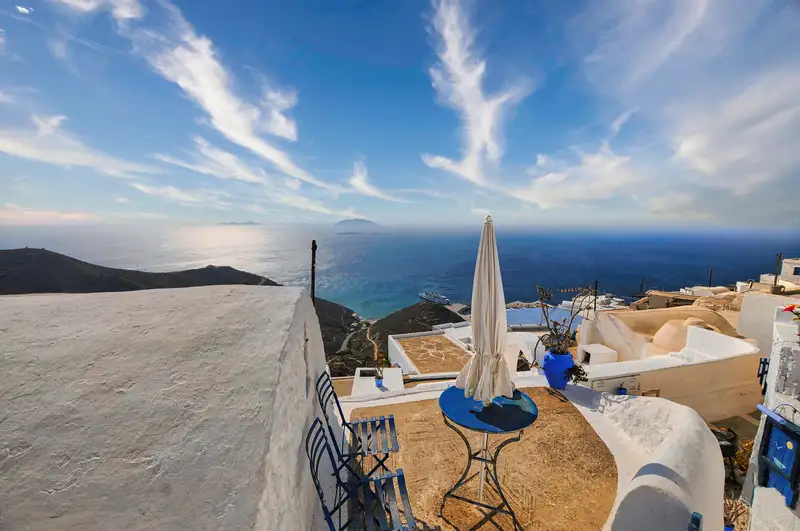
There are a couple of small cafes in the main square where you can sit with a coffee and watch the entire social life of the island play out in front of you. In the evening, locals and visitors sit here together, and the conversation feels easy and unhurried.
The views from Chora are spectacular. To the south, the sea spreads out towards Crete. To the east, Kalamos rises above all else. At sunset, the whitewashed houses turn gold and pink, and the entire village seems to glow.
There’s a small folklore museum if you want to take a peek, and a couple of shops if you need to buy any supplies. But really, Chora is all about the atmosphere. It’s a place to walk slowly, to sit down often, and to let the quiet wash over you.
Monastery of Panagia Kalamiotissa: A chapel at the top of everything
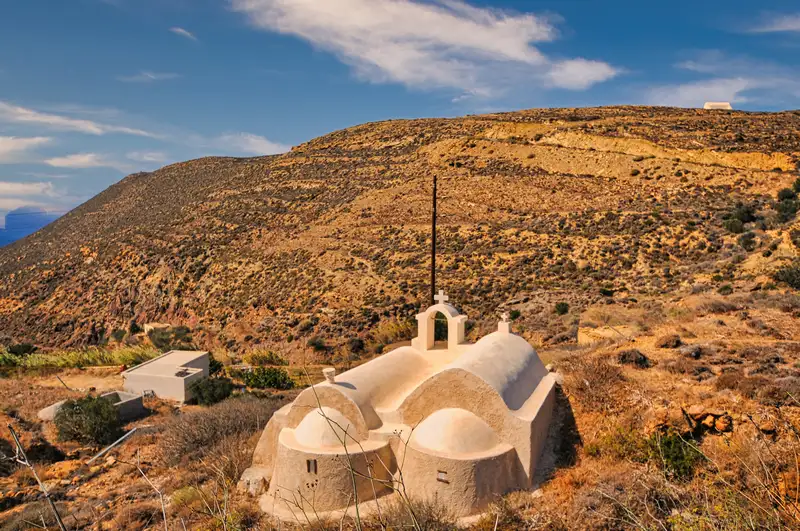
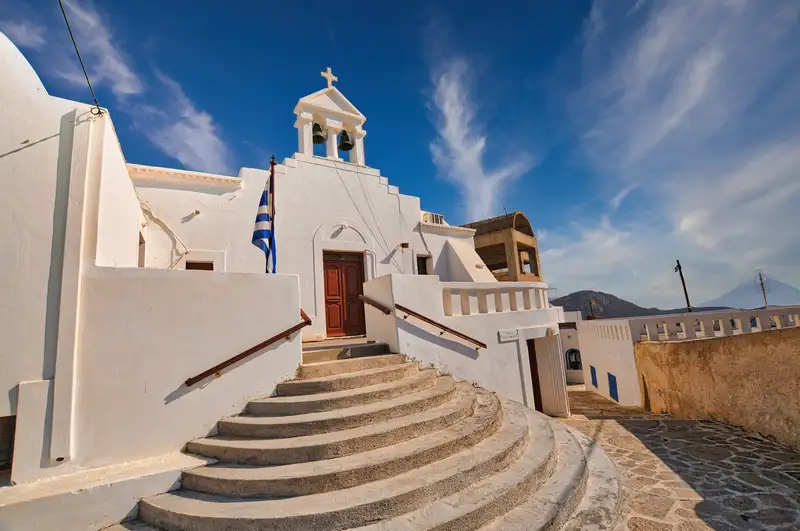
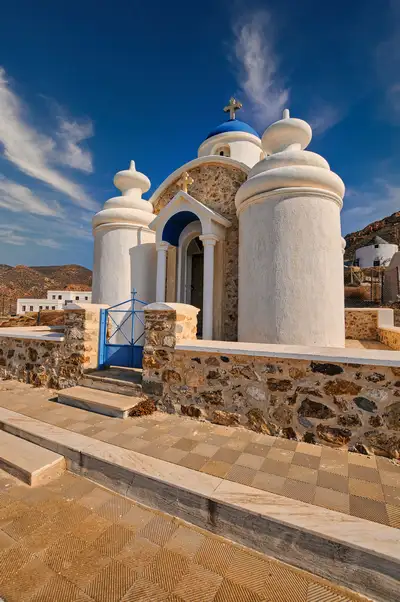
The Monastery of Panagia Kalamiotissa is a small, white chapel perched near the summit of Kalamos Rock on the eastern side of Anafi. It is dedicated to the Virgin Mary and is said to be centuries old, although the precise date is disputed.
What's remarkable about it is the view. The monastery is built against the rock at a height that seems impossible. You reach it by hiking from Chora, or from Zoodochos Pigi Monastery, along a trail which ascends steeply through scrub and rock. The final part of the path is very steep and open, but is not too challenging provided you are moderately fit and wearing suitable footwear.
I was breathless and sweating when I got there, but the view stopped me dead. The Aegean Sea stretched out in all directions. In the distance, the islands of Santorini, Ios, and Amorgos could be seen. The cliffs fell away dramatically below, into deep blue water. It was one of those views where you just stand and let the picture do all the work.
Zoodochos Pigi Monastery, the quiet stop on the way up
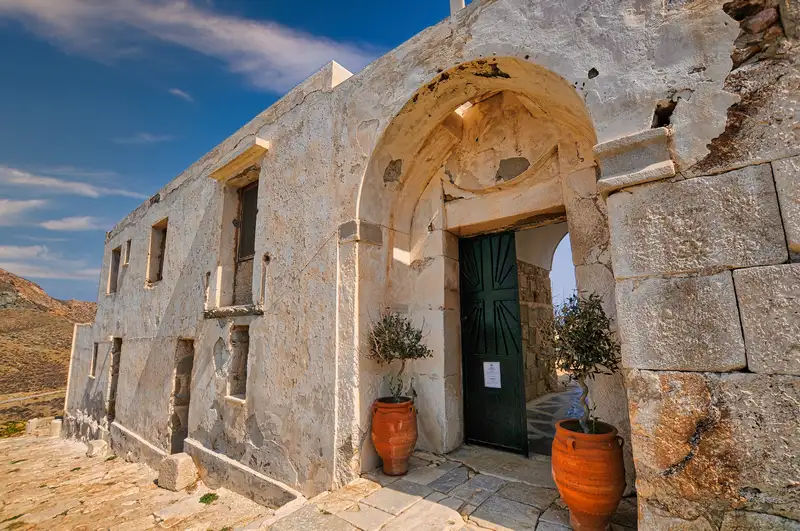
Halfway up the trail to Kalamiotissa, the path emerges onto a small clearing, and there it is, the Monastery of Zoodochos Pigi. A low cluster of whitewashed walls, tucked up against the base of Kalamos Rock. Easily overlooked if you’re gunning for the summit. Don’t do that. This is the kind of place that makes the slowing down worthwhile.
It was constructed in the 17th century, on the ruins of a much older temple to Apollo. Bits of ancient marble are visible in the whitewashed walls, bits of reused stone that remember two thousand years. The name, Zoodochos Pigi, means “life-giving spring,” and the spot has been linked to a fresh water source for longer than can be traced.
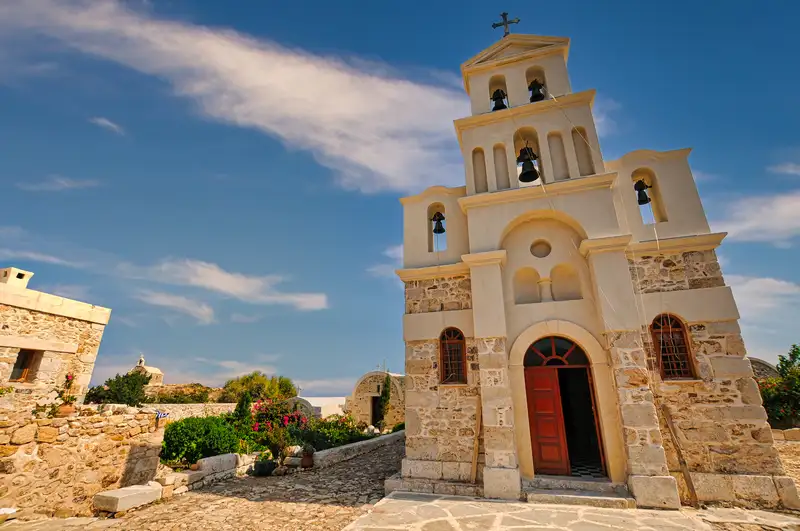
Walk inside the gate, and the world quiets down. A small courtyard with a stone fountain. The main chapel is whitewashed and simple. A few wooden benches in the shade. I sat there, both on the way up to Kalamiotissa and on the way down, each time for longer than I meant to. Cool stone. Running water. A stillness that seems older than the building. Rarely anyone there, just a monk or a caretaker or sometimes a cat.
Nothing to buy, no tour to take, no schedule to keep. Just a quiet pause in the middle of the hike, and the sense that this place has been offering exactly that, century after century.
Kalamos rock: The first thing Apollo raised from the waves
Kalamos is the defining feature of Anafi's landscape. It's a massive limestone monolith that rises 460 meters from sea level on the island's eastern tip, making it one of the tallest rock formations in the Mediterranean.
From a distance, it looks like a separate mountain attached to the island. Up close, it's even more impressive, sheer cliffs dropping into the sea, layers of stone shaped by thousands of years of wind and water.
For ancient Greeks, Kalamos had mythological significance. According to legend, Apollo raised Anafi from the sea to shelter the Argonauts during a storm, and Kalamos was the first thing to appear from the waves. Whether you believe the myth or not, standing at its base and looking up, you can understand why ancient people thought this rock was placed here by a god.
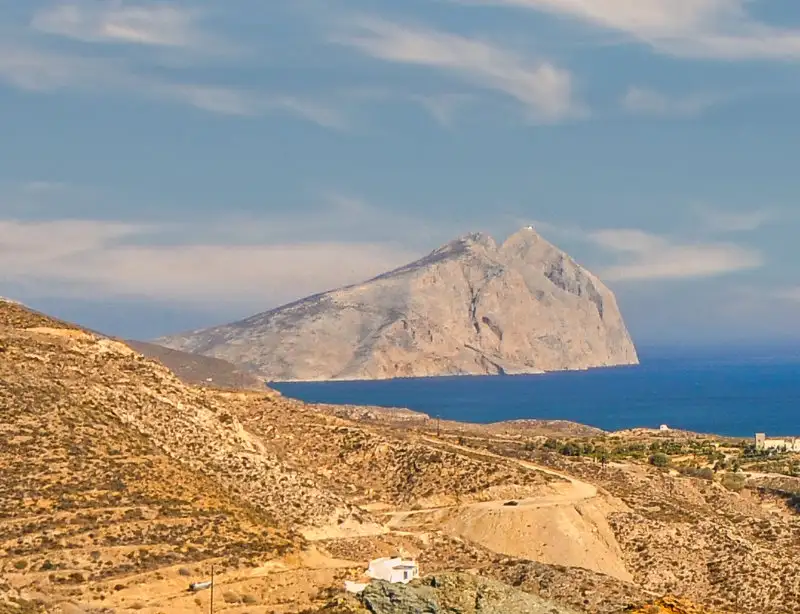
The Kalamos rock hike is the island's most popular trail. It takes about 2.5 to 3 hours from Chora to the monastery at the top. The path is marked but basic, mostly a dirt trail with some rocky stretches. Bring water, sunscreen, a hat, and start early in the morning to avoid the midday heat. There's no shade on the upper sections.
Is Kalamos difficult to hike? It's moderate. You don't need climbing experience, but you do need reasonable fitness and sturdy footwear. The final approach to the monastery involves some scrambling over rock, and the drop-offs can feel exposed if you're not comfortable with heights.
What are the best beaches in Anafi?
Anafi's beaches are some of the most beautiful and least crowded I've found anywhere in the Cyclades. The coastline mixes golden sand with rocky coves, and the water is that impossible shade of blue-green that photographs never quite capture.
Roukounas beach, the long golden stretch that keeps calling me back
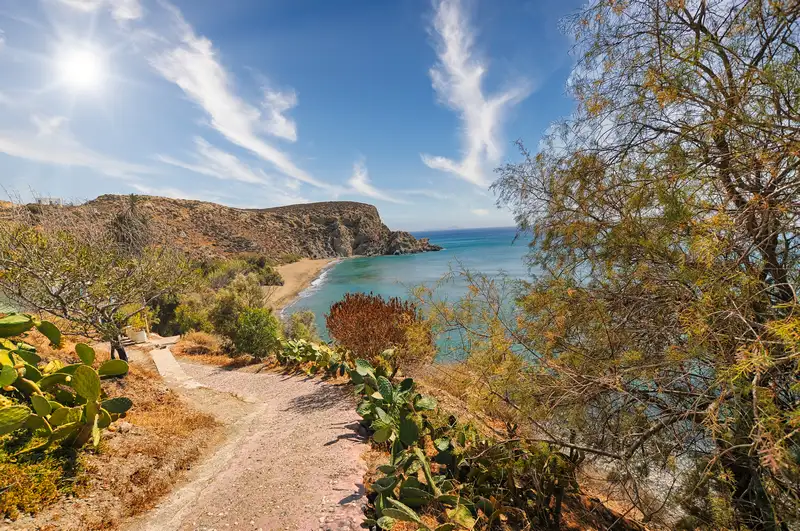
Roukounas is the beach that I find myself returning to in my memory, months after I left it. A long and wide stretch of golden sand, low-lying dunes behind it, and a line of cedar trees that are so bent over by decades of wind that they form an arched passageway. No sunbeds. No beach bars. No umbrellas to rent. Just sand, stretching on for as far as the eye can see, warm underfoot, and a sea so blue it almost appears as if someone has turned up the saturation.
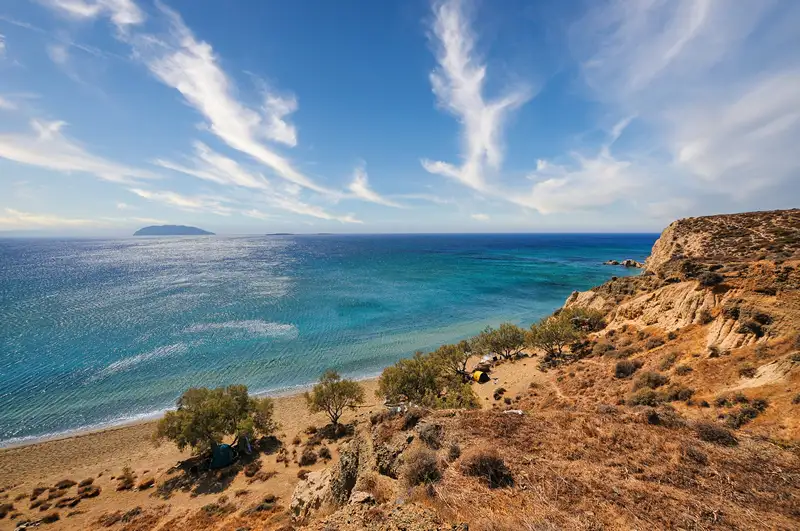
I arrived there in the morning, with a towel, a bottle of water, and a sandwich wrapped in paper. I didn't leave until the sun started to sink toward the horizon. In between, I swam four or five times, slept in the shade of the cedars, watched small waves lapping on the sand, and barely thought at all. The water is calm and shallow at the edge of the beach, making it easy to wade in gradually and float effortlessly. Even in August, Roukounas never seemed crowded. I estimated there were thirty people at most, spread out over a couple of hundred meters, each group far enough away from the next that you could pretend you were alone.
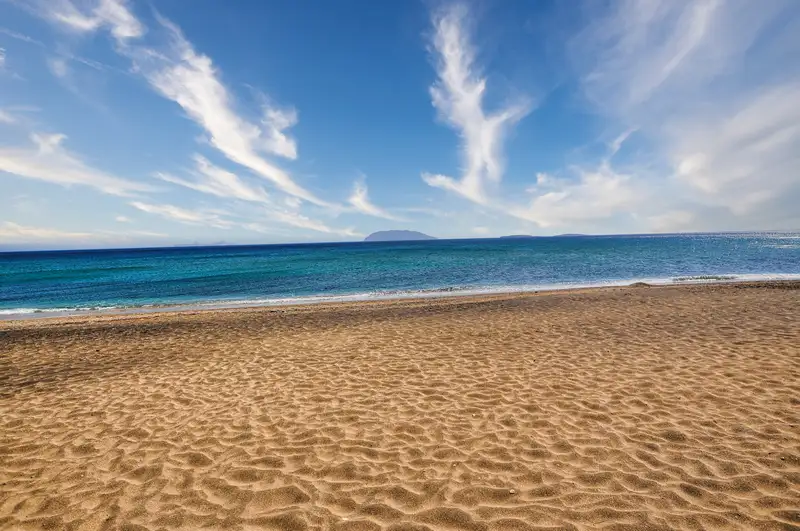
Kleisidi beach, where the island greets you first
The first beach most visitors see is Kleisidi, and it sets the tone nicely. Nestled next to the port in Agios Nikolaos, Kleisidi hugs a small cove with calm, clear water and a gradual slope down into the sea. It's not particularly dramatic or wild like the beaches a bit to the east. But it does have an easy, hospitable quality that makes it hard to pass by.
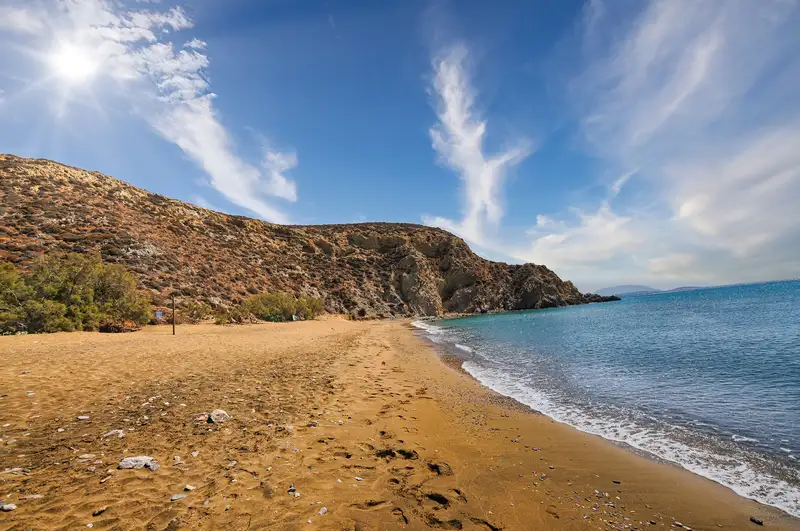
I pulled up here on my first afternoon, bag still in tow, and not yet familiar with where anything was. I sat on the sand and kicked off my shoes, and went wading in. The water was cool and clear, the kind of water where you can still see your toes clearly even when you're waist-deep. There were a few other people about, a couple reading in a tree, a man swimming slow laps back and forth, but the atmosphere was relaxed and unhurried.
Kleisidi is the beach you go to if you don't want to walk far. It's nice for a morning dip before coffee, or a late afternoon swim as you wait for the ferry. It won't be the beach you talk about most when you get home. But it might be the one you visit most often while you're there.
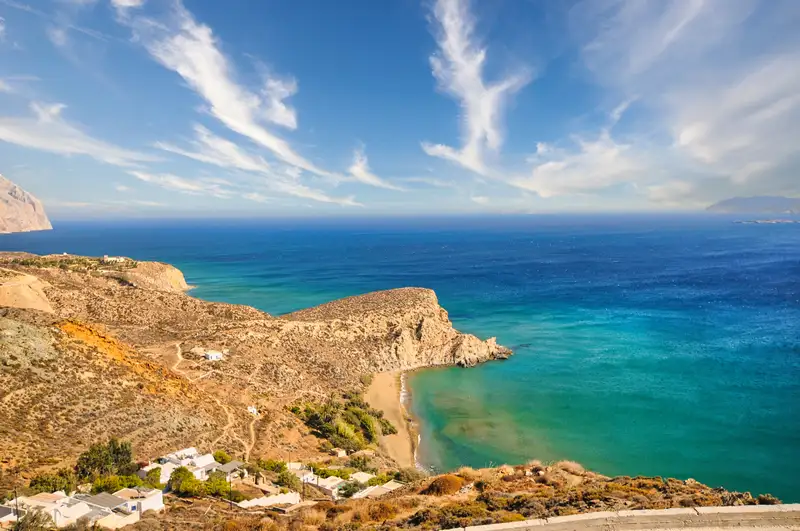
Flamourou beach, hidden behind the hill
Flamourou is where you end up when Roukounas is too populated. It’s telling that you have to seek out the quietest place on the island to find this much silence. It’s on the south coast and can be reached by a footpath that begins at the far end of Roukounas and meanders along the hillside for twenty minutes or so. The trail is scrubby and dry with low bushes that part when you pass, the occasional lizard darting across your path, and then suddenly the beach appears below you.
Flamourou is smaller than Roukounas, more rock than sand, and feels wild, untamed. The water is deep and crystal clear, that deep blue-green that shifts and changes based on the angle of the sun. I scrambled down and spread my towel across a flat stone before realizing that I had the beach entirely to myself. There were no footprints in the sand except for mine. No sound except for the water and the wind.
I spent most of the afternoon there. Swam out further than I normally would because the water beckoned. I fell asleep on a warm rock and woke with salt drying on my skin and the sun lower in the sky than I thought possible. Flamourou is the kind of beach that makes you forget you have a phone in your bag. It asks nothing of you and provides exactly what you didn’t know you were missing.
Katsouni and Megas Potamos, the beaches the road never reached
These beaches are both on the east of Anafi, near Kalamos. Getting to them is a challenge. The paths that lead there are not asphalted, there is no signage, just small footpaths that zigzag across dry and stony terrain. It takes 30 to 45 minutes to reach them from Roukounas, depending on which beach you want to visit and your pace. Bring water and appropriate footwear. The ground is uneven, and the sun is strong.
Visiting them is a reward for the effort you put in to reach them tenfold. Katsouni is a small cove with pebbles and coarse sand. Rocks shelter it on both sides, while the sea water is a darker blue and deeper, so you really feel like you are at the open sea. Megas Potamos is slightly wider, and you will walk down a small dry riverbed to reach it. On one side, you are sheltered by impressive cliffs. Both beaches are impressively wild, the kind of place where you expect to be the first person standing on them, but of course, you know that is not the case.
They are the truly wild beaches of the Cyclades that travel writers write about but very rarely visit. I didn’t see a single soul at Katsouni the afternoon I visited it. I was leaving Megas Potamos when a couple was just reaching it. If you are the kind of traveler who values a beach not by its facilities but by its quietness, these two beaches will stay with you.
Monastiri beach, cold water under a white monastery
Monastiri sits below the Zoodochos Pigi Monastery, about halfway along the trail to Kalamos. It's a small pebble cove, nothing grand, but what it lacks in size it makes up for in setting. The water is deep, dark blue, and startlingly clear. Above you, the white monastery sits on the hillside. Further east, Kalamos rises like a wall against the sky. The scale of the landscape around this tiny beach makes you feel both small and strangely peaceful.
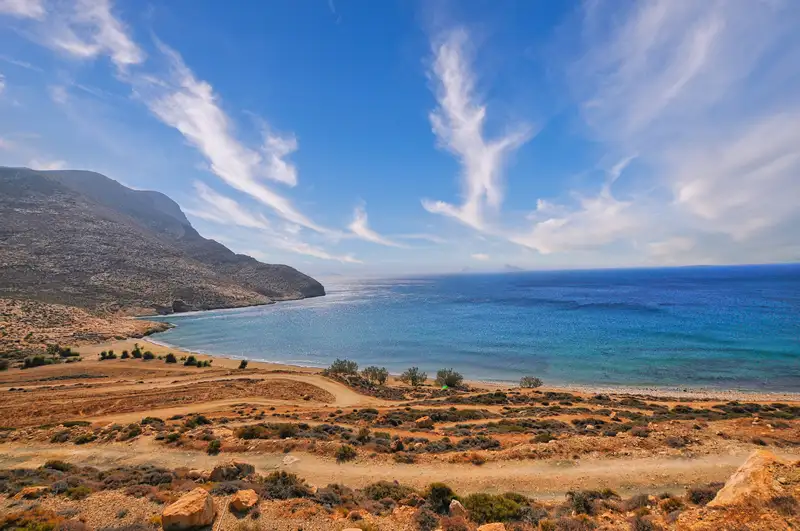
I reached Monastiri after hiking for about an hour from Chora. My legs were tired, my shirt was soaked through, and the sight of that water pulled me in before I had time to think. I dropped my bag on the stones and waded in. The cold hit my ankles first, then my chest, and then everything felt right. Swimming here after a hot hike is one of the best physical sensations I've had while traveling. Your body cools down, your breathing slows, and the view from the water, looking up at the monastery and the rock, is something you carry with you.
The pebbles are smooth and rounded, making them easy to walk on once you get used to them. There's no shade unless you tuck yourself against the rocks, so bring a hat if you plan to stay. Monastiri isn't a beach for a full day, but as a reward between hikes, it's perfect.
Chora, the village that feels like home after two days
I arrived in Chora that first evening. I had taken the old footpath up from the port rather than the road. It was steep in parts, going up over the dry scrub and low stone walls that hemmed it in. By the time I reached the top, my legs were trembling with the effort. But then I saw the village. White and silent against the deepening sky, and for a moment I forgot about my legs entirely.
Chora is the only village on Anafi, and it’s only a village by the loosest of definitions. A few whitewashed houses. Alleys so narrow you can touch both walls with your outstretched arms. Blue doors. Cracked plaster. Bougainvillea in every gap. Tiny churches that spring into view unexpectedly around corners. It’s the Cyclades of old photographs come to life, but nothing here has been scrubbed clean for the tourists. The paint is peeling. The chairs set outside the front doors are mismatched. The laundry hangs drying on lines between balconies. It's life here, not a set, and knowing that changes the way you look at everything.
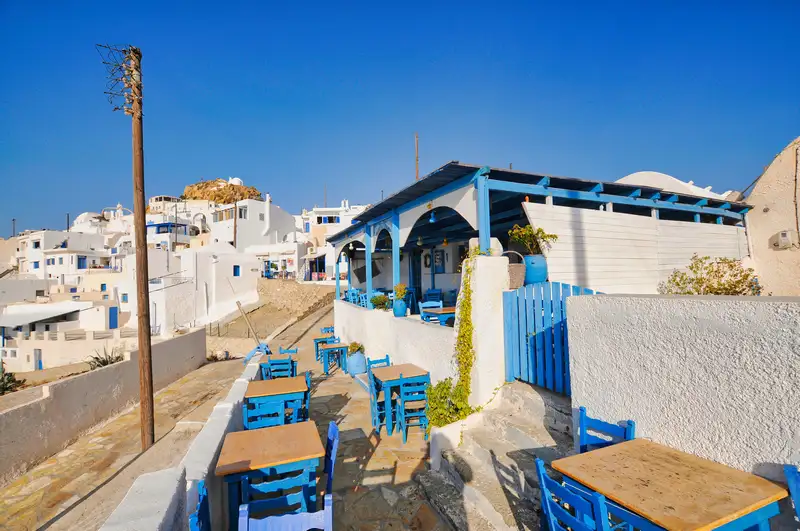
The square has two cafes and a few tables, which fill up slowly each evening. I returned every night. Coffee turning to wine. Light moved from gold to pink while no one watched the time. On the third evening, the man at the cafe nodded at me when he saw me, the way you nod at someone you already know.
Views from the edge of Chora defy adequate description without florid hyperbole. South of the sea runs flat to Crete. East Kalamos drinks the last light and flames orange against the sky. At sunset, the white walls turn warm, and the village seems to breathe.
Planning your trip to Anafi
How to get to Anafi
Departing from Athens, the ferry to Anafi sails from the port of Piraeus. The travel time is typically 9 to 11 hours, depending on stops along the way, and ferries depart in the late afternoon and arrive at Anafi in the late evening or early morning. I arrived on the overnight ferry, my first time, and woke up on the pier to Anafi's dramatic rocky coastline, basking in the first light of day. The entire journey was worth that first view.
If you are already in Santorini, it is just 1 to 1.5 hours. There are typically 3 or 4 connections per week in the height of summer. In July and August, connections can become more frequent. Outside of these two months, it's common for there to be just 2 connections per week. Connections are not always consistent, so always verify in advance and don't plan a tight itinerary around the connection schedule.
When is the best time to visit the island?
May and June: the island is green, the wildflowers are in bloom, and the weather is warm without being too oppressive. The sea is on the chilly side, but swimmable by mid-June.
July and August see the most visitors (though “most” visitors is still a minuscule number) and, correspondingly, the best ferry connections. But also high summer, meaning midday hiking is no fun in the heat, and the meltemi can keep ferries from running on time.
September is my favorite time of year. The heat recedes. The sea is at its warmest. The light is at its most magical, and the island as a whole seems to sigh with relief that summer is over.
Is it possible to visit Anafi all year round? Yes. But out-of-season ferry connections are patchy, and many businesses shut up for the winter. Is it a good idea to visit in spring or autumn? Very much so. Both seasons are perfect for hiking, and the combination of wildflowers in spring and golden light in autumn is well worth visiting alone.
How do you get around?
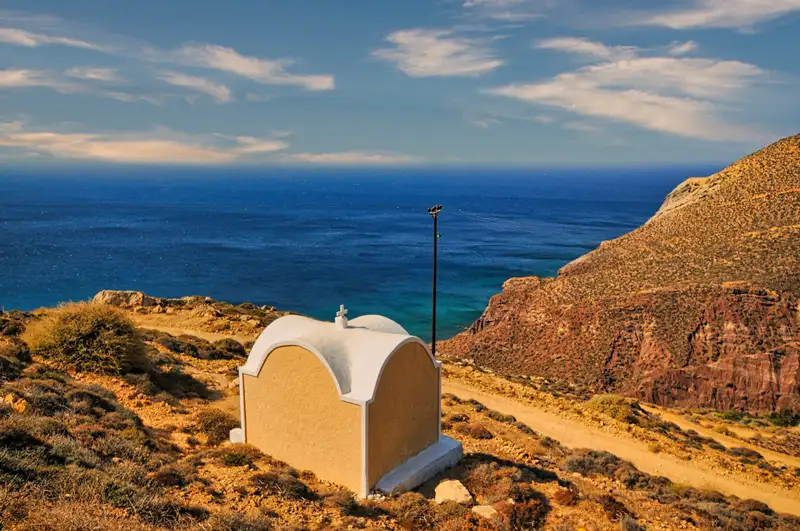
On foot, for the most part. And that’s part of the point.Anafi is small enough to walk between all of its points of interest. Chora to the port takes 20 to 30 minutes. Chora to Roukounas takes 40 to 50 minutes. It’s 2.5 to 3 hours from Chora to Kalamiotissa on foot.
Can you visit Anafi without a car? Yes! In fact, a car is a largely unnecessary luxury for most visitors. There’s a small bus that runs between the port, Chora, and Roukounas in the summer, but the schedule is fairly limited.
If you prefer more flexibility, there are a few scooter or ATV rental shops in Chora. But there aren’t that many roads, and the distances are short. On foot, you connect to the landscape in a way that you don’t when you’re driving. The paths between destinations are beautiful, and walking sets a pace that suits the island.
Frequently asked questions
Is Anafi good for couples or just solo travelers?
Anafi is great for both. Couples will enjoy the deserted beaches and romantic dinners. Solo travelers will find peace and quiet, along with a relaxed pace. With its small size, Anafi is a safe and easy island to explore on your own.
Is Anafi a good island for families?
It depends on the ages of your children. Anafi works best with older kids who enjoy hiking and beach days. Very young children might find the island a little challenging – many of its beaches are only accessible via rough paths, and there’s a small amount of other facilities. There are no playgrounds or other kids’ entertainment.
Does Anafi get crowded in the summer?
Not really. Even in the height of August, Anafi is one of the quietest islands in Greece. Its remote location and infrequent ferry connections naturally limit the number of visitors.
Is it a tourist island?
Far from it. Anafi is one of the most authentic islands you can visit in the Cyclades. It has some tourism, but it hasn’t changed the island.
How long does it take to get to Anafi from Athens?
The ferry takes around 9 to 11 hours from Piraeus, depending on the route and stops en route.
Are there places to watch sunsets on Anafi?
Yes! The best spots are the upper terrace of Chora, any of the beaches facing west, and the ridge above Roukounas. The lack of crowds on Anafi really does make every sunset feel like a private performance.
Final thoughts
I left Anafi on the morning ferry, the island getting smaller in the distance until Kalamos was just a dark blur against the sky. It was one of those moments when you realize something you rarely feel when you leave a place: that you have been somewhere real. Not a destination. Not a brand. Just a speck of rock in the Aegean where time stands still and the silence is full, not empty.
This Anafi island guide is my attempt to show you what I found. But no guide can give you the heat of the sun on the rocks at Roukounas, the sound of the wind whipping around the top of Kalamos, or the taste of tomatoes from someone’s garden.
If you’re looking for a remote Greek island destination that hasn’t been smoothed out for tourists, Anafi is waiting for you. It doesn’t shout about itself. It just sits there, quietly beautiful, and hopes you’ll discover it.