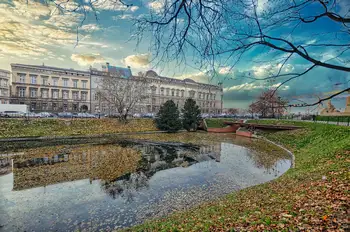
Krakow
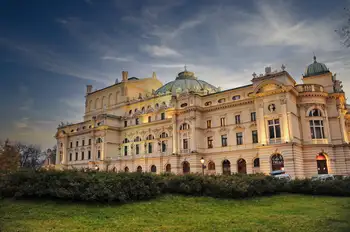
Krakow, where medieval magic survived the centuries, perfectly and untouched
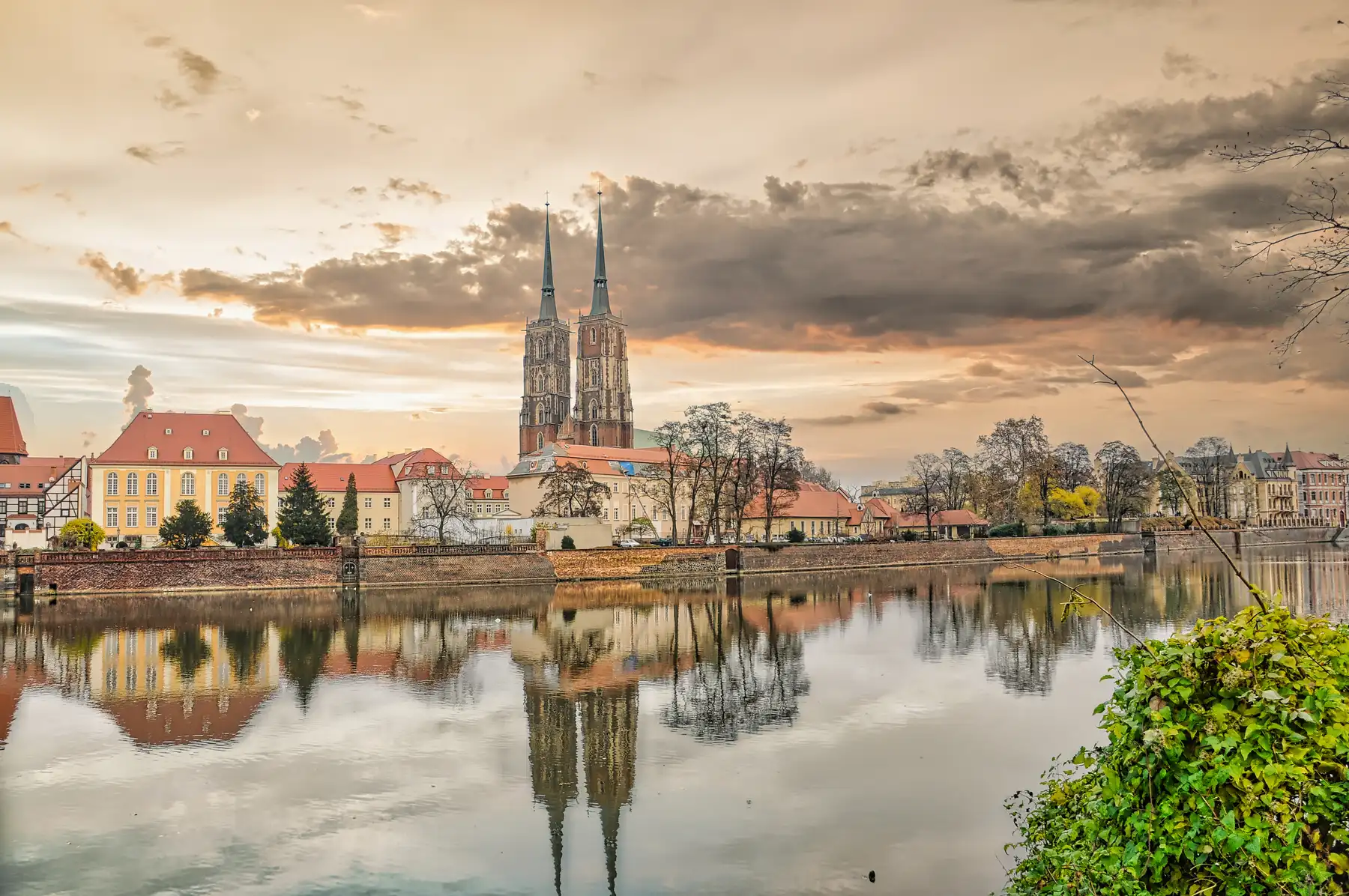
History, warmth, and quiet strength, at a price still wonderfully gentle
Poland is one of the most rewarding and underrated travel destinations in Europe. It's at the heart of the continent, a big country of medieval cities, rebuilt capitals, Baltic beaches, deep forests, and high mountains, all of it still shockingly affordable and so much less crowded than the western countries that border it.
What makes Poland special is its depth. This is a country with a long and often traumatic history, and one that wears its history on its sleeve. You sense it in Krakow's ancient streets, left untouched by the war, and in Warsaw's Old Town, rebuilt from the rubble. You sense it again in the warmth of its people, the comfort of its food, and the quiet pride that runs through everyday life.
In this Poland travel guide, I cover everything you need to plan your trip with confidence. I'll show you the best time to go, how much it costs, how to get there, and how to travel around, where to go, what to eat, and the small practical details that make a real difference once you arrive.
Whether it's the history, the landscapes, the food, or simply the value that has drawn you here, Poland has a way of delivering more than you might expect. Here's how to make the most of it.
The best times to visit Poland are late spring (May and June) and early autumn (September and October), when the weather is pleasant, the parks and squares are at their loveliest, and the crowds are thinner than at high summer.
Summer (July and August) is peak season. The days are long and warm, beer gardens and outdoor cafés are full, and the Baltic coast and the mountains are full of life. It's a very nice time to visit, though places like Krakow become busy and prices increase.
Springtime brings blossoms and a fresh, hopeful vibe after the long winter. Early autumn is golden, with mushroom season in the forests and a gentle calm as visitors thin on the ground.
Winter is cold, and often grey and bleak. Snow is common, especially in the south. But December is magical, with the Christmas markets filling old squares in Krakow and Wroclaw with the scent of mulled wine and roasting chestnuts. January and February are the cheapest months to travel in, if you can manage the chill.
Poland is one of the cheapest countries in Europe, with prices typically 40 to 60 percent lower than in Western Europe, like France or Germany. You can stretch your money here a long way.
On a budget, you can live on €35 to €45 per day in Poland. This will cover hostels, milk bars, and public transport. A mid-range traveler would be closer to €50-€75 per day for more comfortable hotels and restaurant meals. Even fine dining and good hotels are a fraction of the price further west.
Food, in particular, is an outstanding value. Bary mleczne (milk bars) are no-frills cafeterias serving wholesome traditional fare for a few euros, a pleasant relic of the past. A decent restaurant dinner is rarely pricey, and beer is notoriously cheap.
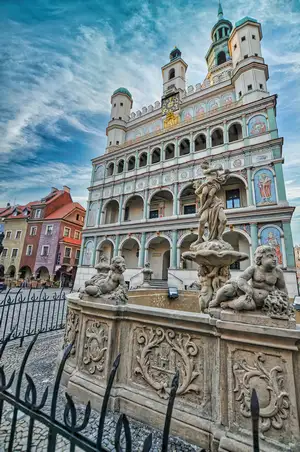
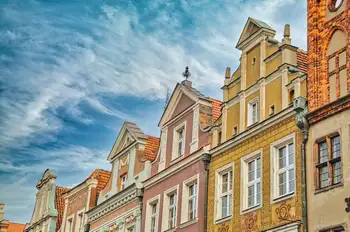
Kraków is where most visitors start, and it is the heart of old Poland. It escaped the war largely intact, and the medieval core is one of the most beautiful in Europe: the vast Main Market Square, the Gothic towers of St. Mary's Basilica, and the royal castle on Wawel Hill, overlooking the river. The old Jewish quarter, Kazimierz, buzzes with cafés and memory. Nearby are the sobering grounds of Auschwitz and the astonishing Wieliczka Salt Mine.
Warsaw is a different story altogether. Leveled in the war and painstakingly rebuilt from paintings and photographs, the Old Town is a near-miraculous act of remembrance and defiance. But Warsaw is also Poland's ambitious modern capital, a city of glass towers, leafy parks, riverside beaches, and restless creative energy.
Beyond the two great cities, Poland keeps surprising. Gdansk glows with Hanseatic charm on the Baltic coast. Wroclaw scatters its little bronze dwarves across a city of bridges and islands. And the Tatra Mountains rise sharp and wild in the south, around the resort town of Zakopane.
Warsaw Chopin Airport is by far the busiest international airport and is well served from most European and international cities, as is Krakow's John Paul II Airport. Discount airlines serve these airports as well as Gdansk, Wroclaw, Katowice, and Warsaw's smaller Modlin airport, often for a nominal fee.
The central train station and city center are 20 to 30 minutes away by train or bus from Warsaw Chopin Airport. In Krakow, a direct train takes under 20 minutes from the airport to the main station. Both are simple, inexpensive, and much more convenient than a taxi. By land, it is easy to get to Poland if you are already in Central Europe. Trains and buses link it to Berlin, Prague, Vienna, and Budapest, and improved services in recent years have made these journeys quicker and more comfortable.
The bus is especially often remarkably cheap. Arriving by rail and watching the flat green landscape drift by is a suitably quiet introduction to the country.
Travel in Poland is convenient and cheap: a good rail network links the big cities, and public transport within cities is excellent. The national operator PKP Intercity runs the fast EIC and EIP trains that connect Warsaw, Krakow, Gdansk, and Wroclaw, frequently at 200 km/h. A seat reservation is included with, or required for, these trains, so it is important to book well in advance through the PKP Intercity website or the excellent koleo.pl. TLK and regional trains are much slower, but very cheap.
FlixBus connects the country cheaply and with relative comfort if you're not in a hurry. Within cities, trams and buses are frequent and cheap, and Warsaw has a modern metro system. The Jakdojade app is the easiest way to plan a route and purchase tickets.
A rental car is really only worth it for the mountains, the lake districts, or rural areas off the rail network, where the freedom to explore makes it pay for itself.
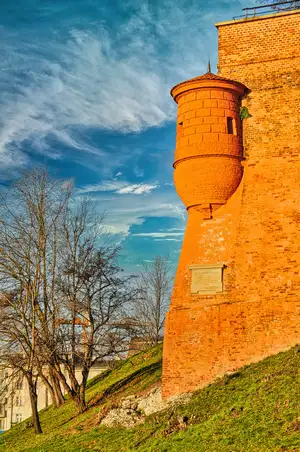
If there's one place in Poland you will never forget, it is Auschwitz-Birkenau, the former camp near Krakow which now serves as a memorial and museum. It is a site, rather than a sight, somber and necessary, and it asks something of everyone who enters.
Poland's other monuments are freighted with history, too. In Krakow, the city is topped by Wawel Castle and its cathedral, the seat of the Polish kings for centuries. The Main Market Square, the largest medieval square in Europe, is centered on the Renaissance Cloth Hall and the twin towers of St. Mary's Basilica.
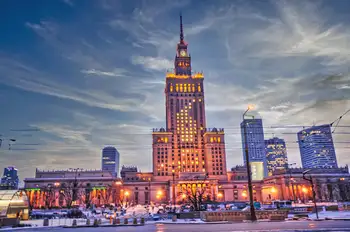
Warsaw's rebuilt Old Town is a UNESCO monument to that city's resilience, painstakingly raised from the ruins. The Royal Castle was restored to its former glory, and the communist-era Palace of Culture and Science looms large over the modern skyline. And near Krakow, the Wieliczka Salt Mine has chapels, entirely carved from salt, deep beneath the earth.
Polish food is simple, robust, and made to keep you warm on cold days and nights with good friends and family. Think of it as food that nurtures and nourishes.
Begin with pierogi, stuffed dumplings of everything from potato and cheese to meat, mushrooms, and sweet fruit. Sample żurek, sour rye soup, typically served in a bread bowl, and bigos, the slow-simmered hunter's stew of cabbage and meat. Order placki ziemniaczane (crisp potato pancakes) and a plate of good Polish kielbasa.
For an authentic local experience, dine at a bar mleczny, a milk bar, which generations of Poles have frequented for affordable, home-style cooking served without pomp and circumstance. For a fast-food experience, sample zapiekanka, the open-faced toasted baguette sold on the street.
And then there is vodka. Poland treats the amber stuff as a national art form, which is best drunk cold, straight up, and with good company. Or try the rising tide of tasty Polish craft beer. Do it. But don't rush.
Poland is a safe country with low levels of violent crime. It's one of the safest countries in Europe, and you'll feel very safe even in the largest Polish cities at night. The only crime to be aware of as a traveler is petty theft.
Pickpockets operate in crowded tourist areas in Krakow and Warsaw, as well as busy trams and at main train stations, so ensure your bag is closed and be aware of your belongings in crowds.
Exercise a little caution around nightlife districts late at night, as you would in any city. Decline all unofficial taxis, which sometimes overcharge tourists egregiously, and use ride apps like Bolt, Uber, or Free Now, which are cheap and reliable. Tap water is safe to drink throughout the country. Solo travelers, including women, should feel very comfortable.
Just a couple of quirks that make the difference between feeling like a tourist and feeling at home.
Poland is a lot more card-friendly than you might expect, in many ways more so than in Western Europe (contactless and the domestic BLIK system are accepted pretty much anywhere). But take a few coins with you to pay in milk bars, at markets, and in smaller-town shops.
Handy quirk: When paying, don't say dziękuję (thank you) as you give your money to a Polish waiter/waitress, because that means "keep the change". Say it when you have your change back.
Public toilets, even at stations, typically cost a few złoty, so keep some coins. And remember a few words: dzień dobry (good day), dziękuję (thank you), proszę (please). It's not easy to pronounce them, but they'll be met with a smile.
I arrived in Poland with low expectations. I will admit, I am almost embarrassed to write this, but it is true. I left touched in a way I did not expect.
The beauty was part of it, yes. (Krakow's square at dusk, Warsaw's improbably rebuilt streets, I will not forget.) But it was more the sense of a nation that has known the absolute worst and somehow chose, again and again, to rebuild and to remember instead of forgetting. A quiet strength that makes your own trivial preoccupations seem to fall away.
I was sitting in the Main Market Square on my last night as the lamps were being lit and the pigeons settling for the night, a warm drink in my hand, and I felt that familiar pang of leaving a place too soon. The knowledge that a part of me will always stay there, at that table, watching that square, long after the rest of me has returned home.
Poland does not put on a show for tourists. It simply opens, gradually, to those who approach with curiosity and respect. Go. Let it surprise you. And do not be surprised if, somewhere between the history and the warmth, it quietly takes up residence in your heart as well.
If you go, allow it time. Allow it to be grey. Allow it to be quiet. Allow it to surprise you the way it surprised me. And do not be surprised if, at some point, it begins to feel like home.