All of my Greek friends are conflicted about Santorini. We complain about prices, we complain about cruise ships, every summer we swear we won’t go back. And then we go back. Some of us go every year. I have watched friends return from Santorini in July, swear off the island, and quietly book a ferry for the same week in October.
The island has a grip on us. It is not the prettiest of the Cyclades. It is not the slowest, the wildest, or the most authentic. Sikinos is quieter. The beaches of Milos are stranger and more beautiful. Folegandros has the silence Santorini lost forty years ago. And yet none of those islands does what Santorini does, which is make you feel, every time you stand on the cliff and look down, that something enormous happened here.
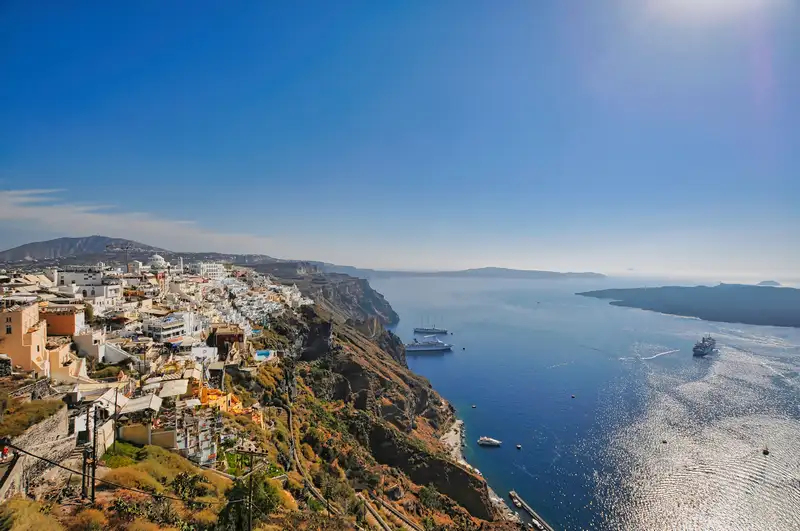
Table of Contents
Why Santorini is unlike any other Greek island
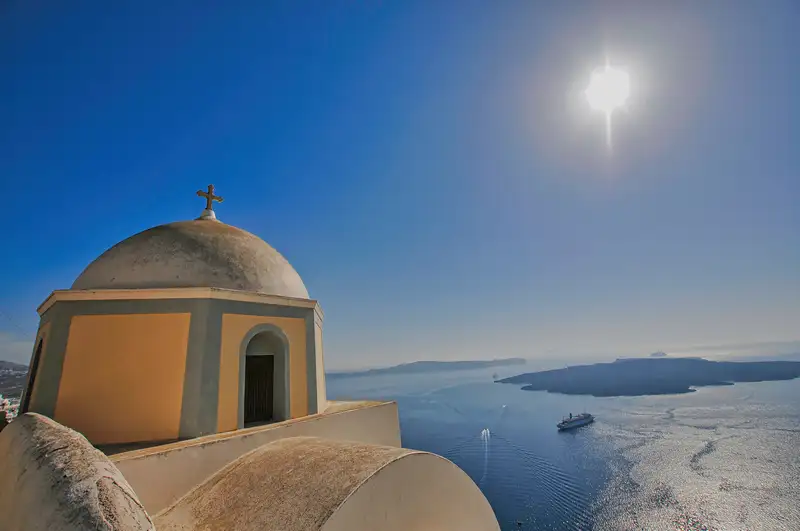
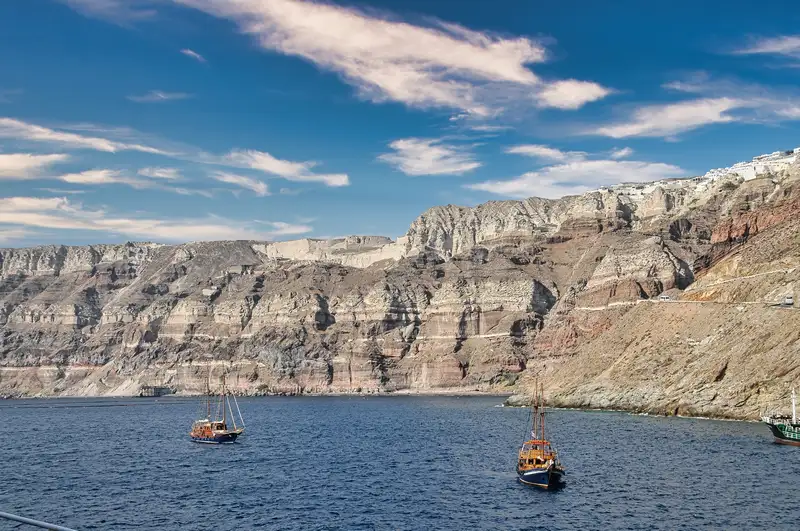
Santorini is the most remarkable of all the Greek islands because it is not an island. It is the edge of a volcano. In 1600 BC, the volcano erupted, exploding in the center of the land. All that remained was the crescent of cliffs that surrounded the great, deep lagoon.
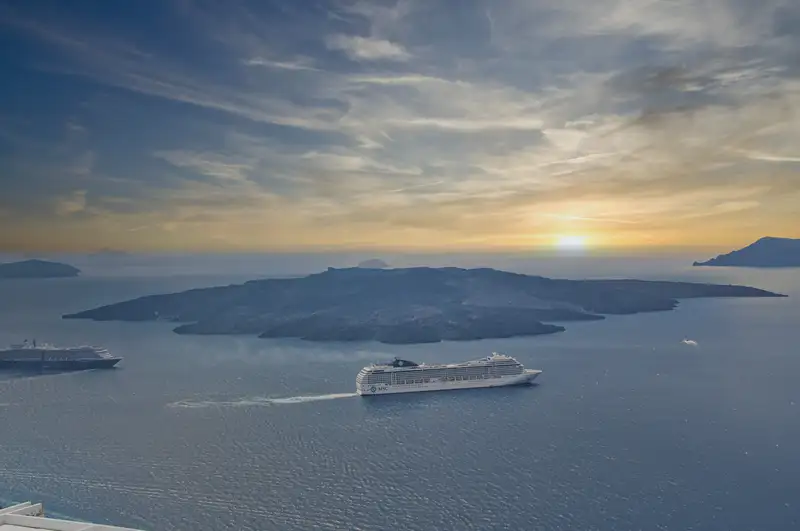
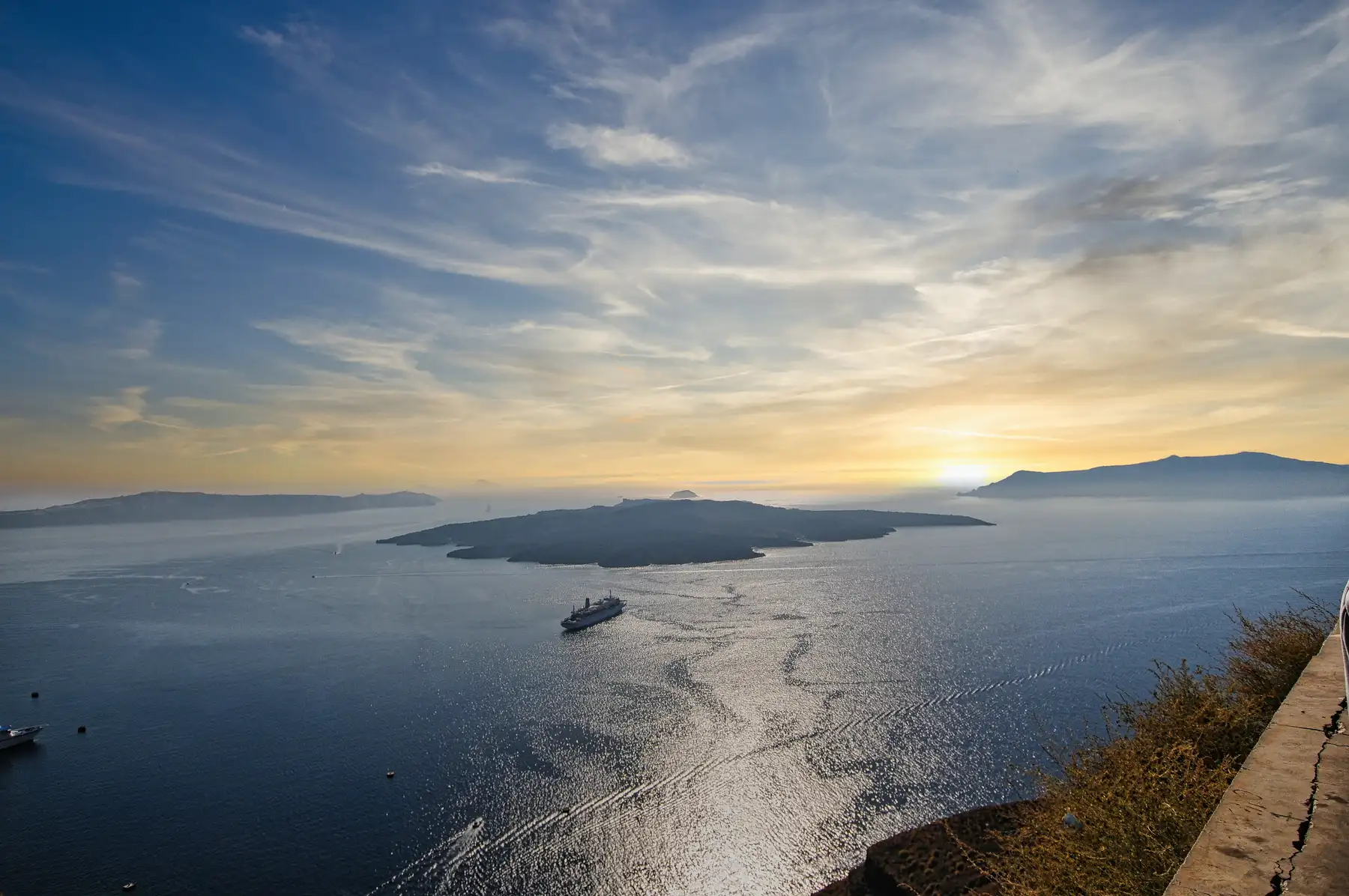
The caldera is the defining feature you see from the cliff-top villages, the view you sail into, and the landscape that makes Santorini truly unique.

The volcanic Earth nourishes grapes that no one else can grow. The vines are low, basket-shaped. The sand on the beaches is black and searing hot on your feet in August. The cliffs plunge 300 meters into water so deep that the boats can moor without anchors. Suppose you have been to Folegandros or Sikinos; you know the gentle Cycladic feel, the white houses on silent hills. Santorini is not that. It is bigger, more bizarre, more theatrical. It feels like a stage set abandoned by the gods.
Santorini through history and myth
Santorini's story sounds like a legend. After all, the island has had a hand in stirring the Mediterranean imagination for almost four thousand years. Volcanic catastrophe and vanished civilizations, ancient myths and eight centuries of foreign masters. They built Santorini in layers that are still visible to the eye.
The round island and the great eruption
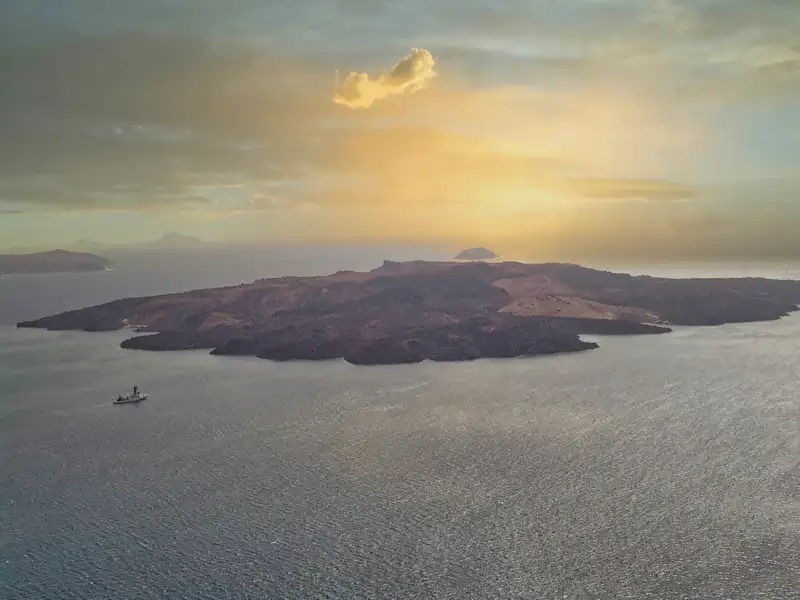
What remains today is what was left after the sea rushed into the land's heart during the 1600 BC eruption, transforming the island into its current form.
The eruption around 1600 BC was one of the largest in human history. Ash fell across the eastern Mediterranean as far as Egypt, while the tsunami that followed reached the northern coast of Crete, where many archaeologists think it played a role in the collapse of Minoan civilization.
The same ash covered the Bronze Age city of Akrotiri on Santorini, preserving its painted walls, pottery, and two-story houses, as Pompeii would be preserved in Italy fifteen centuries later. When you walk through the covered archaeological site at Akrotiri, you're walking through a city that saw the eruption.
The legend of Atlantis
The eruption marks the start of the Atlantis story. Plato wrote of a great and powerful culture that was destroyed in a day and a night, and sank beneath the waves. It is widely believed now by scholars that he was retelling, in mythological terms, the memory of what happened here.
Whether or not Plato had Santorini specifically in mind, it is impossible to stand on the cliffs at Oia or look down into the caldera without feeling that something vast happened, and that myth was the only way the ancient world could bear that memory forward.
The argonauts and the birth of Thera
There is another myth I love even more. In the story of the Argonauts, the hero Euphemus was given a magic clod of Earth by Triton, the son of Poseidon, as Jason and his crew sailed home with the Golden Fleece. He carried the clod across the Aegean, and when it fell into the sea, the island rose from the water.
The Greeks named it Kalliste, the most beautiful. It was a name that lasted for centuries before the Dorians of Sparta colonized the island in the ninth century BC and renamed it Thera after their leader Theras, son of Autesion. You can still walk the ruins of Ancient Thera on the high ridge of Mesa Vouno, where the Dorian city sat for nearly a thousand years.
From Thera to Santorini
The island had been known for a long time before it got the name Santorini. The Venetians, who conquered the island in the thirteenth century, named it Santa Irini for a small church of Saint Irene near the southern coast. The name gradually morphed into the one we know today.
The Ottomans followed the Venetians, then the Greek War of Independence brought the island into modern Greece in 1830, and a major earthquake in 1956 again changed the cliff villages, taking down many of the older buildings and silently starting the modern rebuilding that would turn Santorini from a quiet island of wine and fishing into the place we know today.
This is what I think about when I walk the caldera in the early morning. Beneath the white houses and the cruise ships, there are four thousand years of layers. Minoan frescoes. Spartan colonists. Venetian saints. Earthquakes and eruptions. The island has rebuilt itself many times, and what we see today is only its most recent face.
Each village its own rhythm
The villages of Santorini belong to one of three worlds. The cliff villages, which hug the curve of the caldera, are the ones that you see in every photograph. The inland villages are scattered across Santorini's southern half; they preserve the older, quieter Santorini, the Santorini that lived on wine and farming long before the cruise ships came.
The beach villages of Santorini, on the island's eastern coast, contain the summer rhythm of Greek families with long black-sand promenades and music that plays late. I love the island most when I move between all three slowly, by bus or on foot, and I find that the difference between two villages a kilometer apart can feel like the difference between two countries.
Oia, the famous one
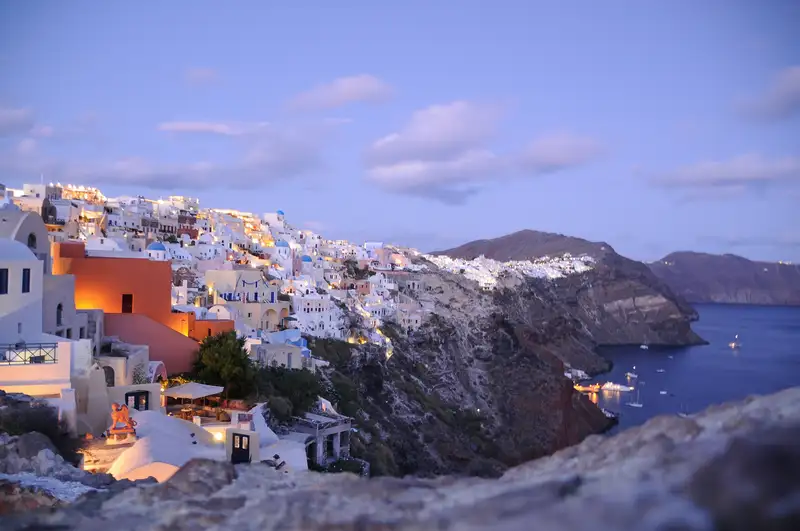
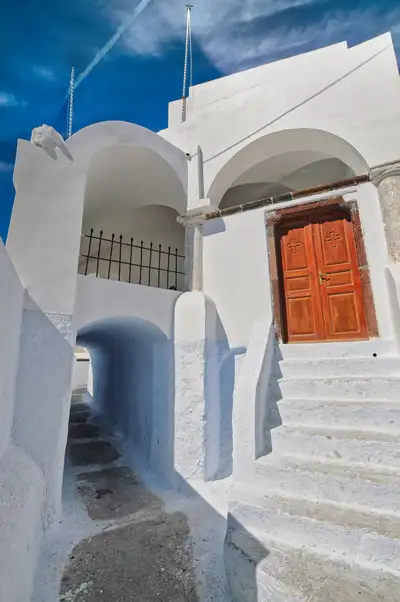
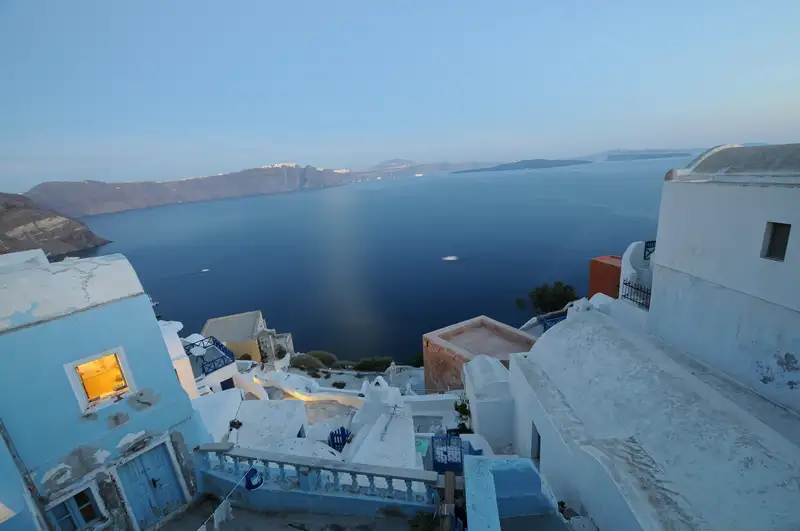
Oia is the village that you've seen on every postcard, right on the northern edge of the caldera. It is stunning, despite the crowds. Arrive before the buses start arriving from the cruise port, and wander the lanes while only the bakers are up. That is the Oia I always return to.
Fira, the capital
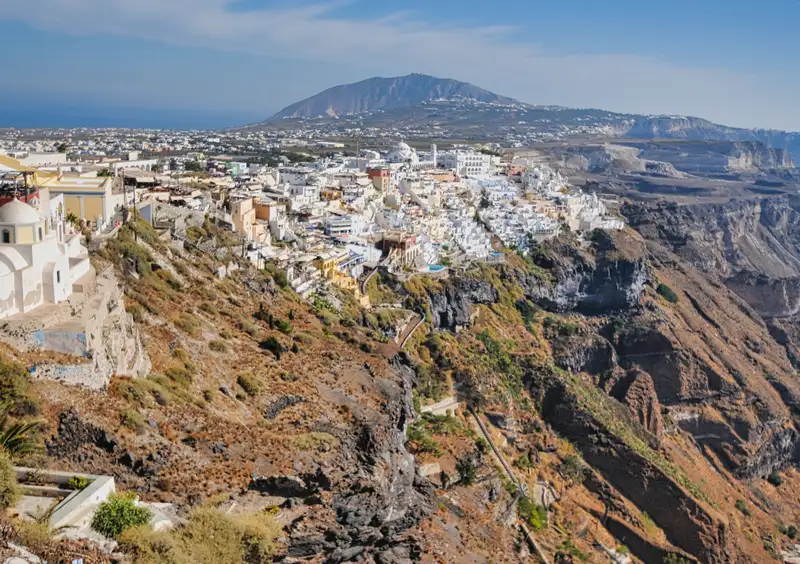
Fira is the center of the island, the hub where everything intersects. The bus station, the cable car down to the old port, and the museums. It's busier than Oia, more practical, less postcard-pretty.
I always find myself in Fira at some point on every visit, eating a souvlaki on the steps and watching the cruise ships file past in the caldera below.
Imerovigli, the quiet balcony
Imerovigli, on the other hand, is the highest village in the caldera. Known as the balcony of Santorini for good reason, it is perched on the rim between Fira and Oia and offers views that rival both without a fraction of the noise.
It's where I would stay if I returned tomorrow. And the sunset from the path below Skaros Rock is the most tranquil sunset I know on the island.
Firostefani, the in-between
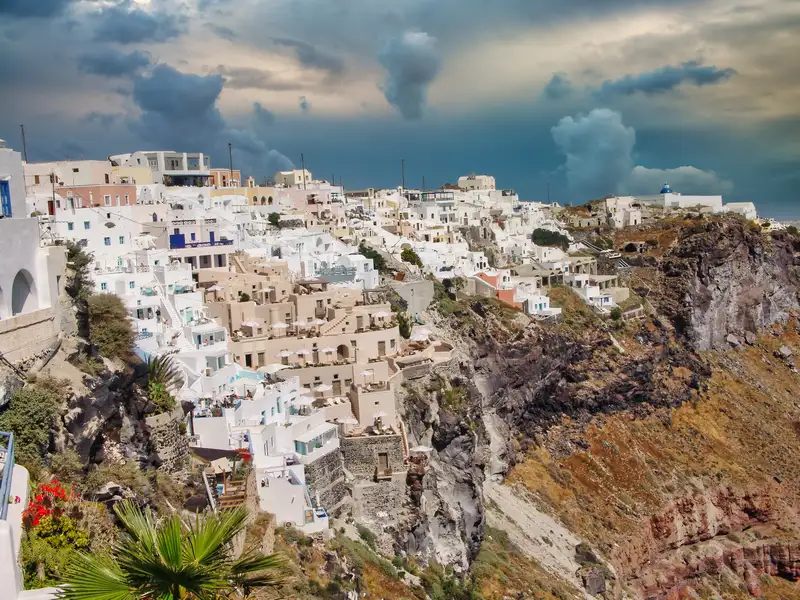
Firostefani is the little village in between Fira and Imerovigli that most people walk right through. It has the same caldera view, the same whitewashed lanes, but slightly fewer people and slightly lower prices.
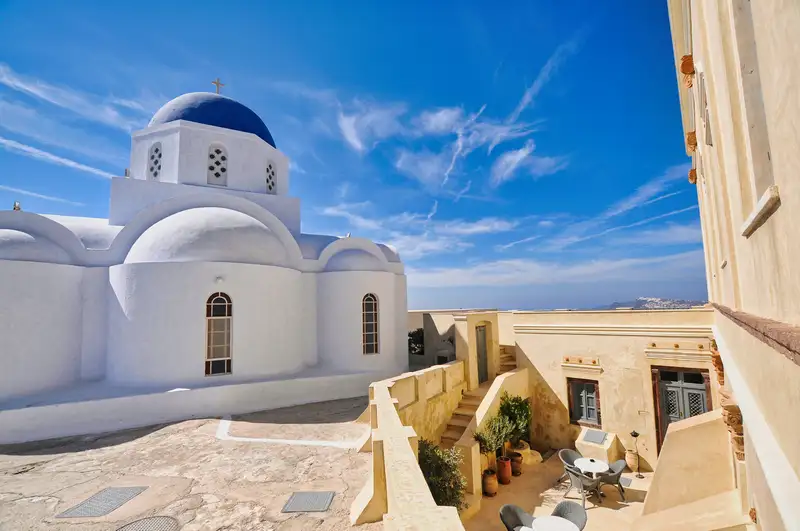
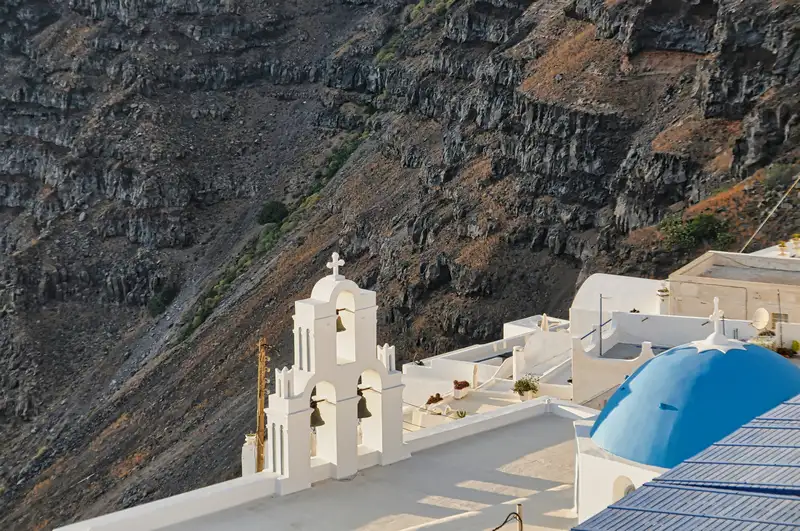
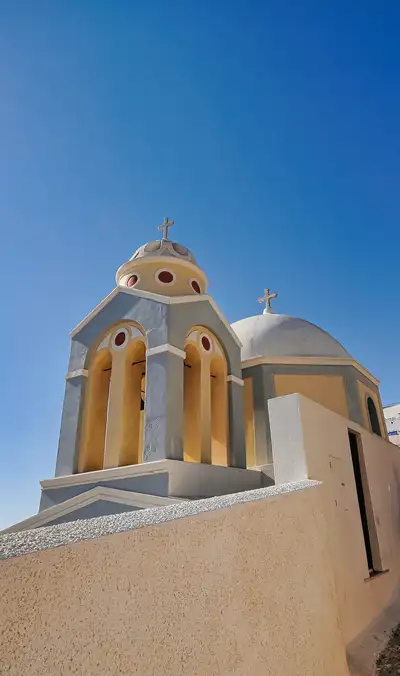
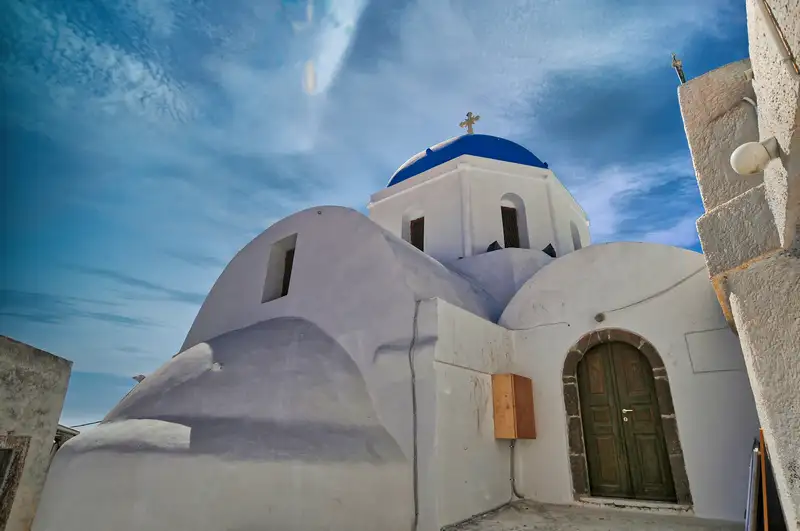
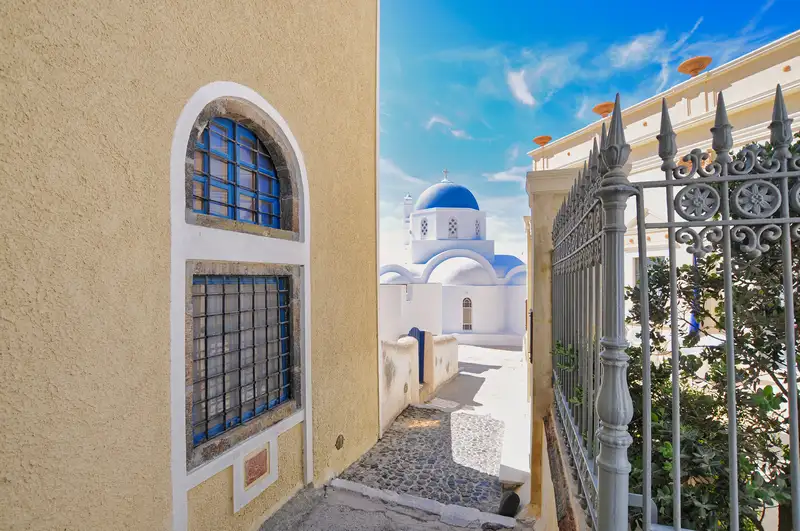
The blue dome of the church of Agios Gerasimos is one of the prettiest in Santorini, and the path from here toward Imerovigli is one of the easiest, gentlest walks on the island.
Pyrgos, the medieval village
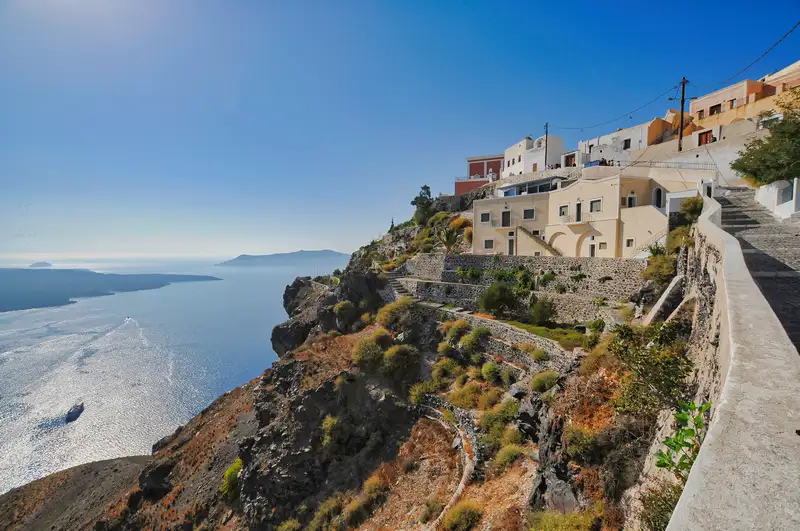
Pyrgos is inland, on a hill in the center of the island, and it's Santorini's closest approximation to a slow Greek village. The old houses climb the hill to a Venetian fortress, the lanes are narrow and shaded, and the tavernas around the square fill with locals at noon. I always come here for one long lunch when I visit. From the top of Pyrgos, you can see the entire island at once.
Megalochori, the slow village
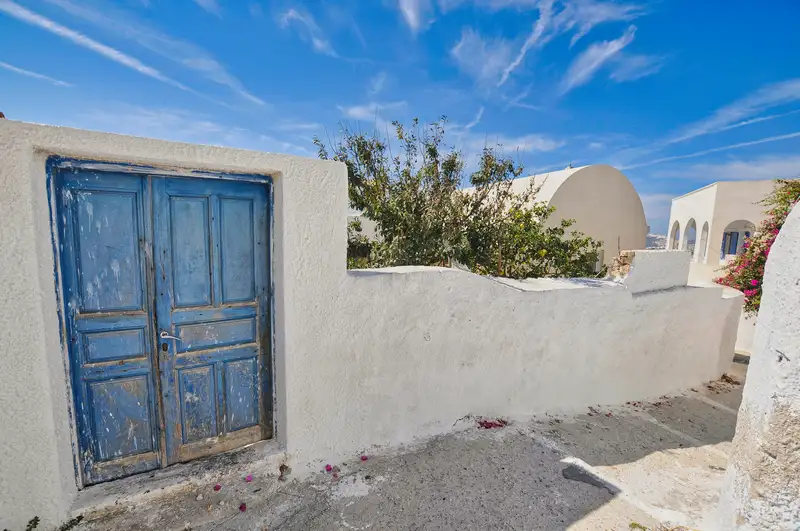
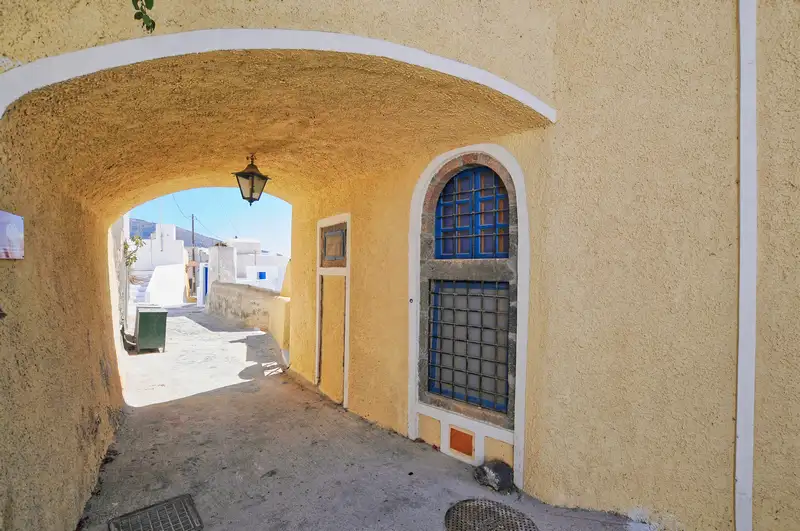
Megalochori is a traditional Cycladic village in the south of the island, where vineyards and old captains' houses ring the square. It is quiet in the way that Pyrgos is quiet, but lower and softer, and covered in bougainvillea spilling over the white walls.
Some of the best wineries in Santorini sit just outside Megalochori, and the village square at sunset feels like a memory of how the whole island used to be.
Akrotiri, the village by the ruins
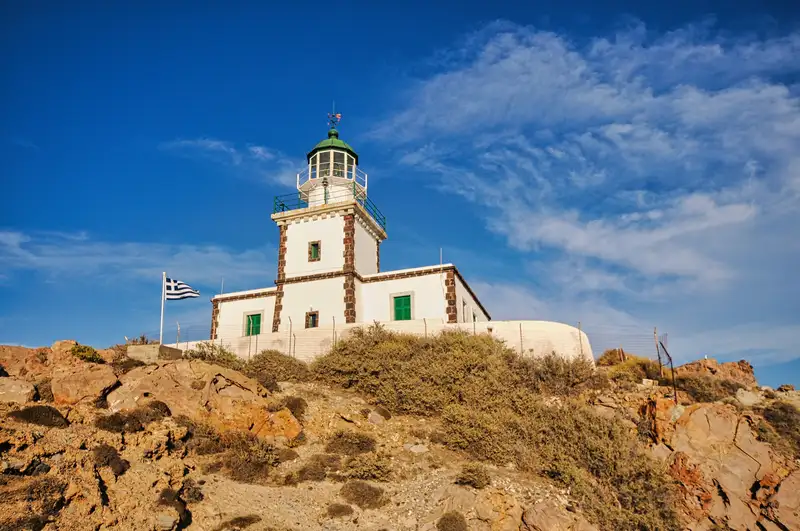
Akrotiri is a small village near Santorini's otherworldly archaeological site, at the southern tip of the island. Most people only visit the ruins, but it's nice to stroll around the village itself for a slow hour. Climb up to the Akrotiri lighthouse at the end of the road and take in one of Santorini's loveliest sunsets. Far quieter than Oia and just as expansive.
Emporio, the largest and least visited
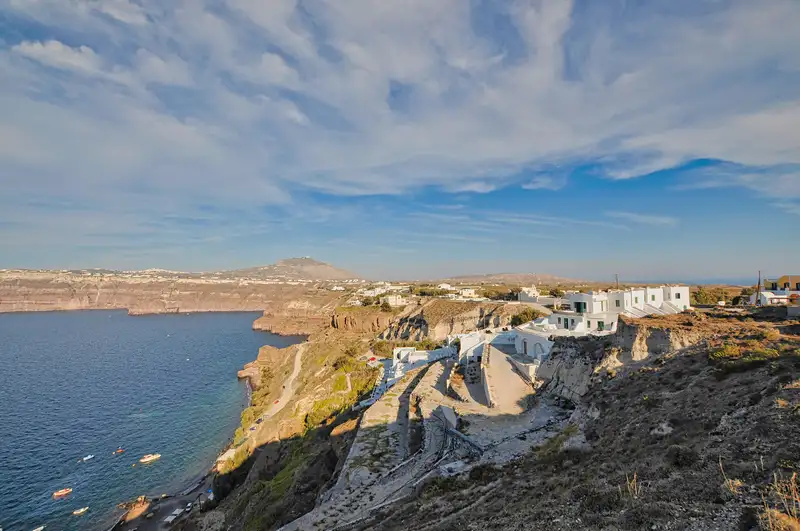
Emporio is Santorini's largest village and, strangely, one of the least visited. It is inland, on the southern half of the island, and has a distinctly un-touristy air.
The medieval kasteli quarter, with its labyrinth of alleys and ancient fortified homes, is a tiny maze to lose yourself in. Climb Gavrilos Hill to see eight stone windmills in a row.
Kamari, the family beach village
Kamari is on the East Coast. It's a long beach village with a broad black-sand promenade. Mesa Vouno, the great rock that towers over Kamari, looms at the southern end of town. Kamari has a more organized, family-friendly vibe.
It's the kind of place Greek families return to year after year. The open-air cinema by the beach is among the island's favorites, where you watch a film with the roar of the sea behind you.
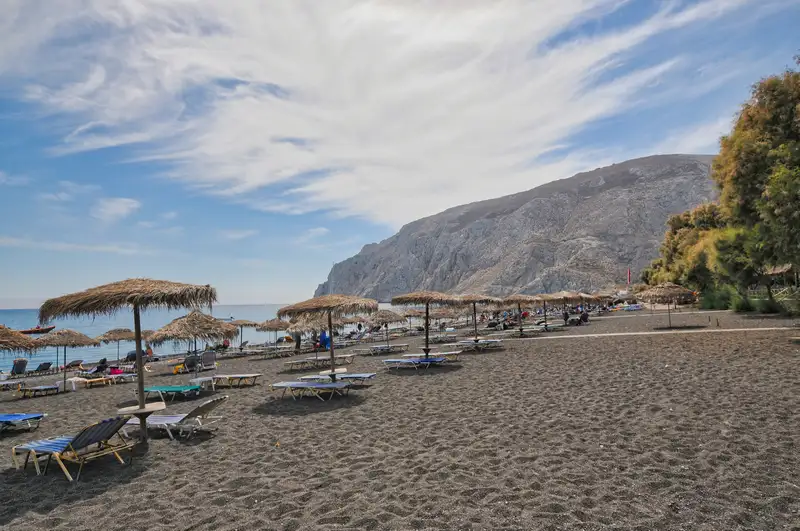
Perissa, the long black sand
Perissa is down the beach, just south of Kamari and on the other side of Mesa Vouno, with its same volcanic black sand stretching for kilometers. It's younger, louder than Kamari. Beach bars with music pumping until all hours of the night line the beach.
Prices are kinder than in the cliff villages. It's where you set off on one of the island's most rewarding walks to the top of Ancient Thera on the ridge above.
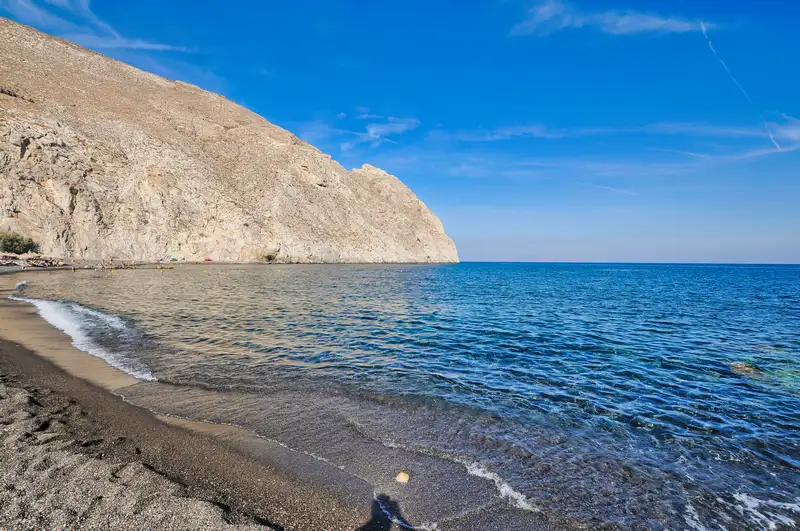
The volcanic beaches of the island
The best beaches in Santorini are not like the beaches you'll find in other Greek islands. There's black sand and red volcanic rock, and cliffs that edge them. The water swims warm and deep, but there are no long white-sand beaches like those on Naxos or turquoise coves like those on Milos.
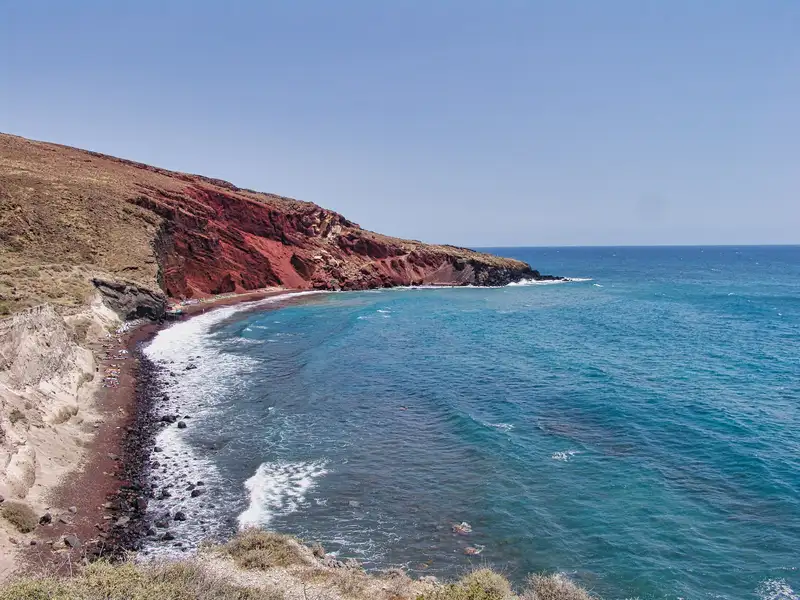
It's different here. Stranger. Blacker. The water holds the heat differently. The most photographed of them all is Red Beach near Akrotiri, set beneath cliffs that look like dried blood. White Beach is only accessible by boat and perches beneath pale rock with some of the island's clearest water.
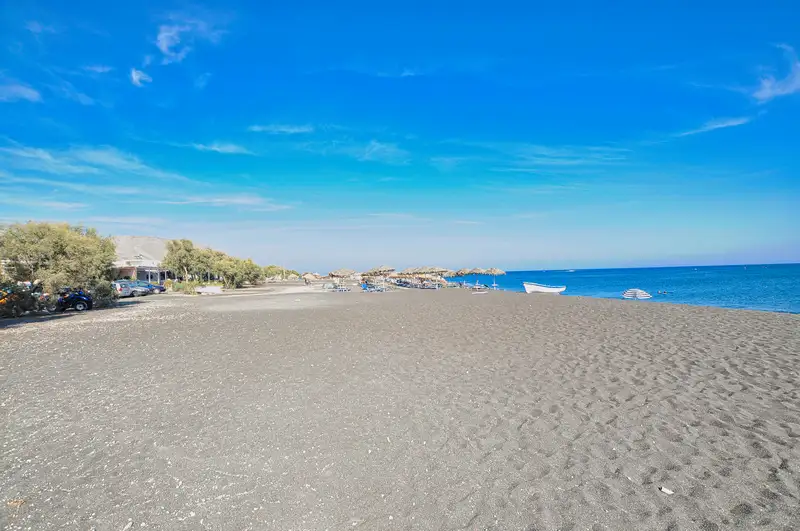
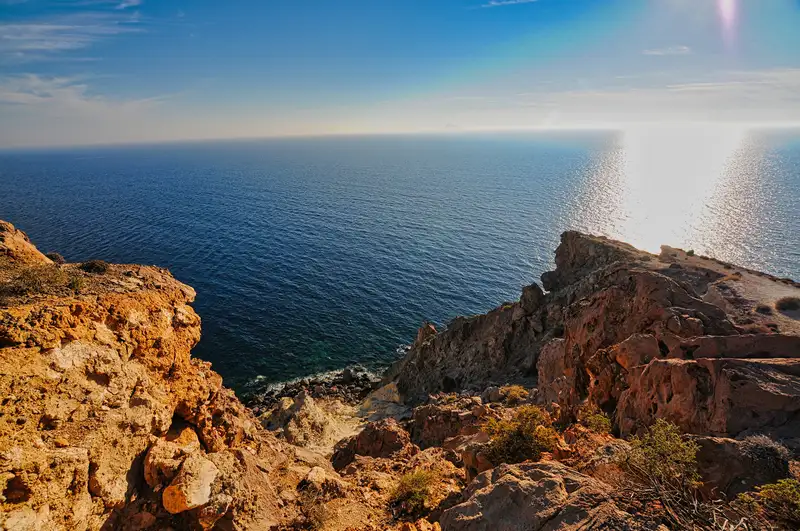
Kamari and Perissa face the long black-sand promenades of the east side, separated by the great mesa rock of Mesa Vouno. South of Perissa is Perivolos, which has calmer beach bars. At the southern tip is Vlychada, which lies beneath wind-carved cliffs that look almost lunar.
The sunsets you can find away from the crowd
The Santorini sunset is no less spectacular than this reputation would have you believe. I have been part of the Oia sunset crowd on my shoulders many times, and I will not lie to you: it is beautiful. It is. But it is also a spectacle, with thousands of people looking up at the same sky, cradling the same phones, watching for the same moment.
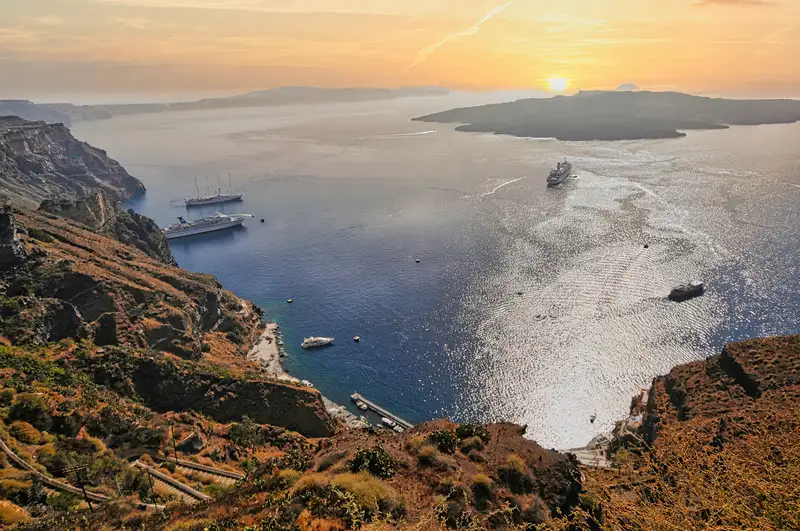
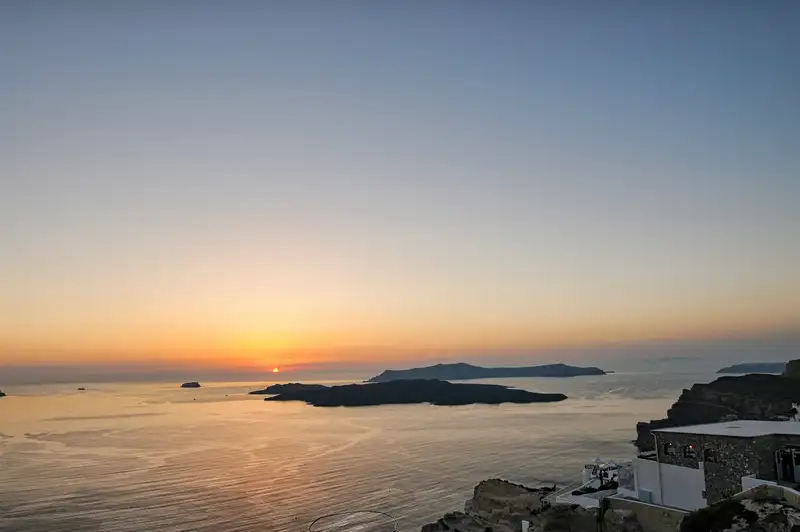
The better sunsets are quiet. From the path below Skaros Rock in Imerovigli, the sun sinks into the same caldera but with no crowd. From the rooftop of Franco's in Pyrgos, the whole island goes gold while jazz plays in the background. From the Akrotiri lighthouse, the sun slips below the volcano with maybe 10 people around you. From Firostefani, from Ammoudi Bay below Oia, from any cliffside taverna in Imerovigli, the light is the same.
If you only have time for one sunset in Santorini, I would not choose Oia. I would choose the one where you can hear the wind.

Things to do in Santorini beyond the views
Things to do in Santorini extend far beyond those vacation photos of blue domes and cliffside terraces. This is a small island crowded with history, food, and small adventures that most visitors don't make time for because they spend all day circling between Fira and Oia. Here are the ones I keep coming back to.
Walk the Fira to Oia Caldera path
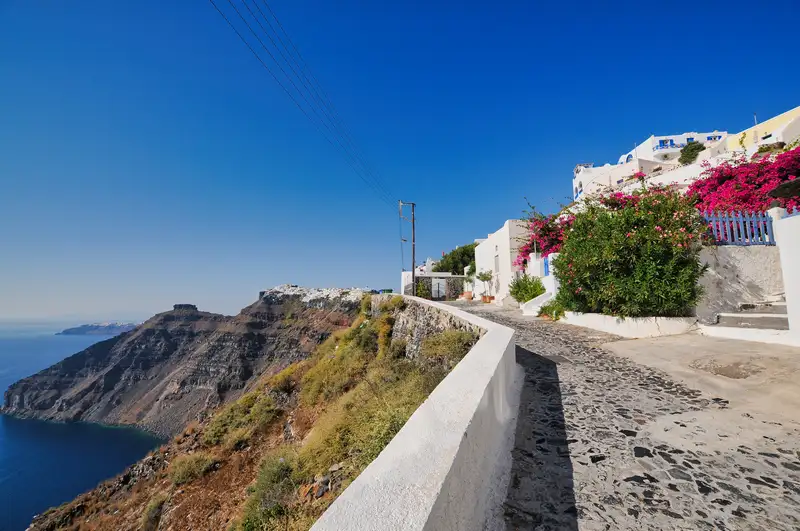
The Fira to Oia walk is, hands down, the single best thing you can do in Santorini — and it's free. The path follows the rim of the caldera for about ten kilometers through Firostefani and Imerovigli, with the volcano towering on one side and the white villages on the other. I always leave before sunrise to beat the heat. By the time you get to Oia, you will have earned every photo in the place.
Visit Ancient Akrotiri, Pompeii of the Aegean
The ancient city of Akrotiri was a Minoan city destroyed and preserved under the great eruption c.1600 BC. Walking around the covered site gives you the uncanny feeling that you're walking down a Bronze Age street that somebody left a few hours ago.
The two-story houses, the drainage systems, the frescoes that have come out of the walls of these houses, everything here is over a thousand years older than the Acropolis in Athens.
Hike to Skaros Rock
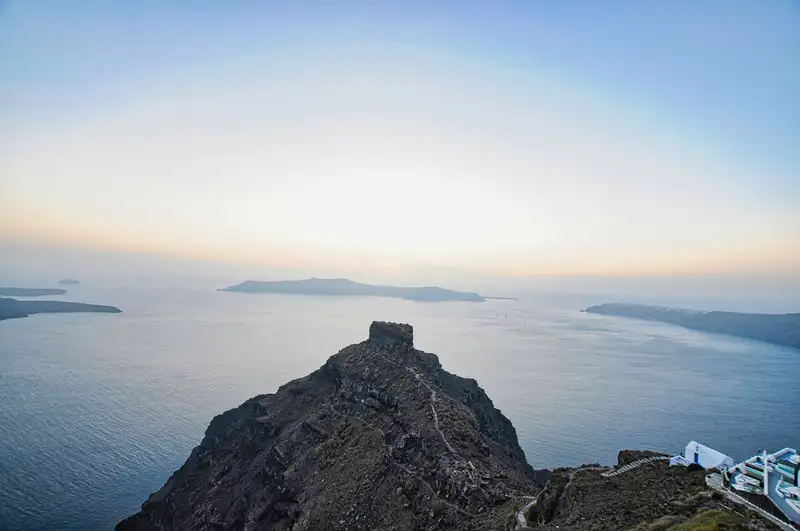
Skaros Rock is the dramatic stone outcrop right below Imerovigli and the ruined site of a medieval Venetian castle. The hike down and back takes about an hour, and the path ends at a tiny chapel built into the rock. It is one of the few walks in Santorini where you can be entirely alone with the caldera.
Visit the wineries and taste Assyrtiko
Wineries in Santorini are a class all of their own. The vines are laid close to the ground and are woven into circular baskets, or kouloura. This is to help protect the grapes from the fierce wind. The wine produced here is dry, full of minerals, and unforgettable, with Assyrtiko the most notable variety.
Estate Argyros, Santo Wines, Domaine Sigalas, and Venetsanos are all worth checking out, and most offer tastings with views over the caldera or the vineyards to the south.
Go on a boat tour to the volcano and hot springs
A boat tour of the caldera is one of the only ways to feel the scale of what you are actually standing on. The half-day cruises usually include a visit to Nea Kameni, where you walk up to the still-warm crater of the active volcano, and Palia Kameni, where you can swim in the iron-rich hot springs. The full-day cruises also visit Thirasia, the small inhabited island on the other side of the caldera.
Visit the museum of prehistoric Thera
The Museum of Prehistoric Thera in Fira is where the finds from Akrotiri ended up: all the artifacts and frescoes are on display here. Seeing this is the first thing you do when you emerge from the ruins, and it shows you what was inside those houses, with painted walls, with ceramics, with that "blue monkeys" fresco that everyone talks about. It is a small museum, and you can see everything in an hour. Seeing it makes the archaeological site feel real.
Discover Ammoudi Bay below Oia
Ammoudi Bay is a little fishing port at the bottom of the cliff below Oia. You get there by 286 steps, or a short drive. The tavernas are all at the water's edge, the seafood is very good, and the red rocks behind the bay turn pink and glow at sunset. If you are brave, you can swim out to the little island of Agios Nikolaos and jump from the rocks like the Greek kids do.

The food and wine of the volcanic island
Food and wine in Santorini are flavored by the volcano in every mouthful and in every sip. The Earth is volcanic, and the water is limited. Whatever grows here grows in a way it does nowhere else in Greece.
The cherry tomatoes are smaller and sweeter than any I've tasted, almost candy-sweet. The fava (here, yellow split-pea purée, not broad beans) is creamier and softer, cooked low and slow. The white eggplant is sweeter, the caper leaves crisp and salty, and the chorizo cheese fresh and herbal.
Tomatokeftedes, fried fritters of those tomatoes, mixed with herbs and onion, are the dish I order without fail on each visit. Fava with capers and onion, drizzled with olive oil, is a close second. For dinner, seek out fresh fish at Ammoudi Bay or at the village tavernas of Pyrgos, Megalochori, and Emporio, where the prices are kinder and the food more honest.
The wine is the other miracle. Assyrtiko, the white grape that built Santorini's reputation, is dry, mineral, and bracing. Vinsanto is a sweet, sun-dried dessert wine, amber and slow. The wineries are open most of the year and are worth at least one slow afternoon.
Preparing for Santorini
Planning a trip to Santorini requires a little more consideration than most Greek islands. The ferries are all-night journeys, the seasons really matter, and your place to stay dictates the whole experience. This is what I have learned from many, many visits to Santorini, put into writing for you, in case you would like to arrive prepared.
When is the best time to visit Santorini?
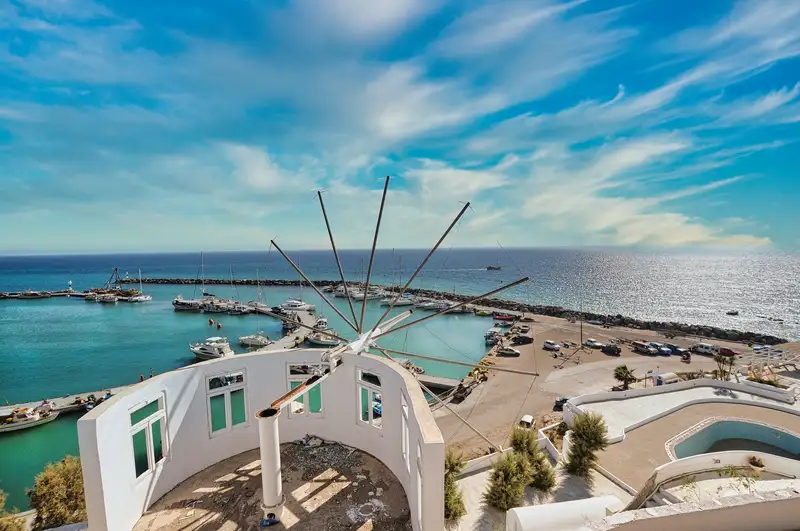
The shoulder seasons (late May to early June, and mid-September to mid-October) are when Santorini is at its best. The temperature is warm, the sea is still swimmable, the wineries and tavernas are open, and the cruise ships have just started to disperse. These are the windows when the island feels closest to itself.
The peak season is July and August. The heat is oppressive, the crowds are everywhere on every cliff path, and prices are at their highest. If you must travel in summer, aim for the very beginning of June or the last week of September, when the warmth of summer is still present, but the pace has not yet accelerated into all-out peak frenzy.
October is my favorite month for a quiet trip. The water is still warm from the long summer, the light is soft and golden, and the Oia sunset crowd is down to a manageable (almost human-sized) level. November through March is the low season. Many hotels and restaurants shut down, but the island remains open in a different way, moody and windswept, with the locals having returned to their winter rhythms.
How many days do you really need?
You need four or five days in Santorini to really feel the island. Anything less is just rush-rush from famous vista to famous vista without ever having time to notice the other stuff in between. Two days is about the minimum. Enough time for one walk around the caldera, one sunset, one beach afternoon.
Three days allow you to add Akrotiri, a winery, and a slow lunch in Pyrgos. Four days allow you to do all of that without ever feeling rushed, with a free morning to sit on a terrace and read. Five days is when the island starts to soften into a place you have been to rather than a place you visited.
Beyond a week only really works if you are actually settling into one village and treating Santorini like a slow stay, which is its own kind of beautiful but a different kind of trip entirely.
How to get to Santorini from Athens
By ferry from Piraeus
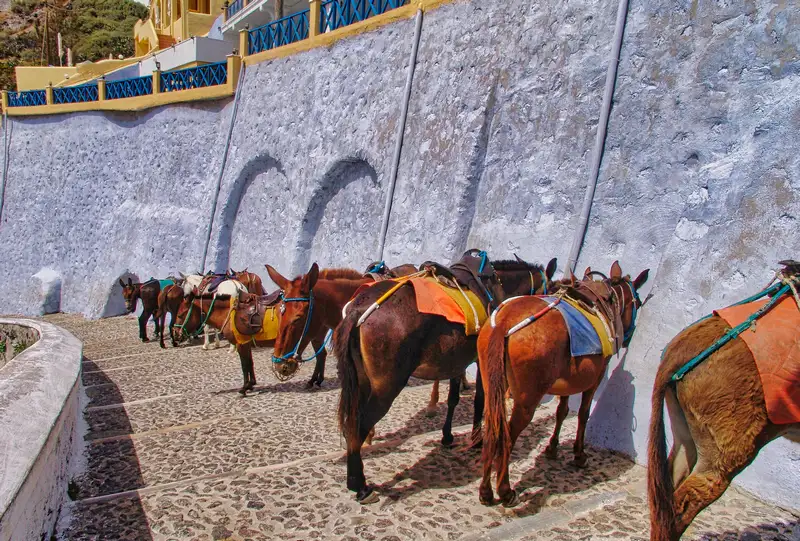
The ferry from Piraeus is the way most Greeks arrive in Santorini. Conventional Blue Star ferries take seven or eight hours, high-speed Seajets take five, and the price ranges from around 50 to 140 euros depending on the vessel and season. I prefer the slow ferry. You spend the morning passing Paros, Naxos, and Ios, and you arrive at Athinios port with the cliffs above you, the way the island has been received for centuries.
By ferry from Rafina
The ferry from Rafina is a smaller route, with fewer daily crossings, mostly run by Golden Star Ferries. It takes about 5 hours and costs about 80 euros. Rafina port is closer to the Athens airport than Piraeus, which makes it useful if you are flying into Athens and continuing to the island the same day.
By flight from Athens
Direct flights from Athens to Santorini take about 45 to 50 minutes, and are operated by Aegean, Sky Express, Olympic Air, and a few low-cost carriers in the summer months. The price is wild, from 50 euros if you book early to over 200 euros at the last minute in the high season.
Where to stay
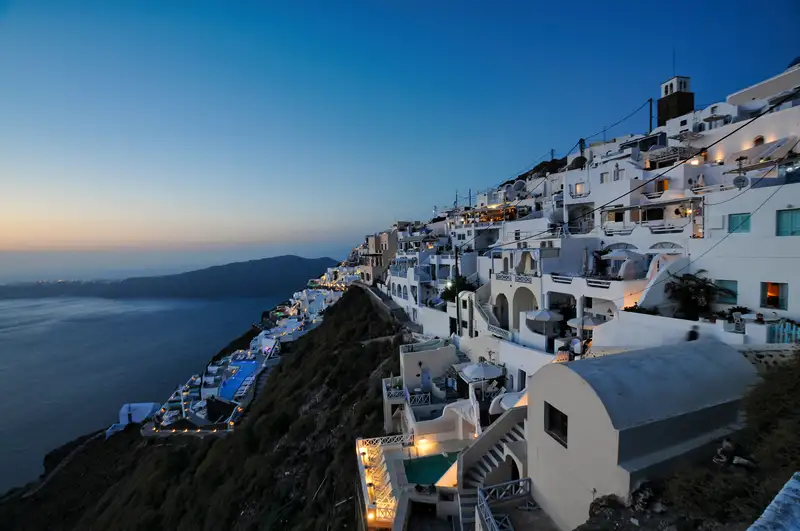
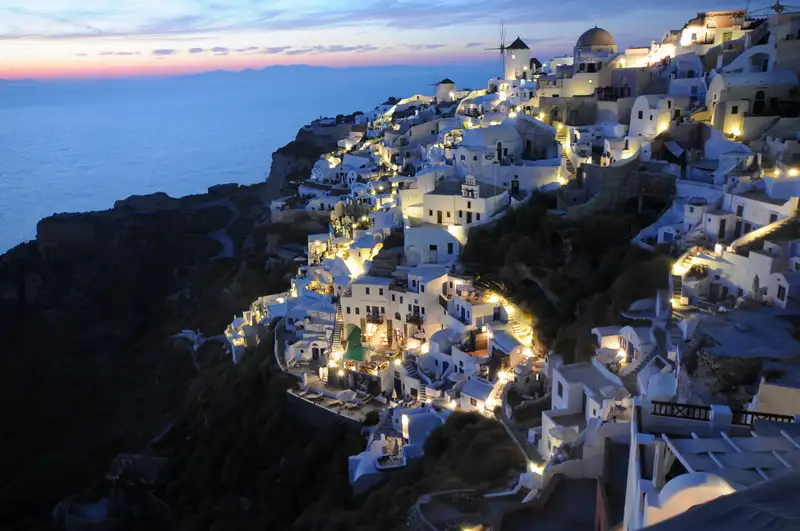
Your base in Santorini determines your entire experience more than it does on other Greek islands. Oia is the cliché, most expensive option, where all the cave hotels and infinity pools in the magazines are.
Imerovigli is the less crowded choice with the same caldera and sunsets. Fira is the practical, busiest cliff village with a bus station and the only 'nightlife'. Firostefani is the village between Fira and Imerovigli with the same view at slightly softer prices.
Pyrgos and Megalochori are the more inland options if you want to stay in a quiet village, and Kamari and Perissa are the beach-side villages with the lowest prices and the easiest access to the sea.
Getting around the island
Santorini is tiny, only 18km north to south, and you can drive around it in 45 minutes. The roads are narrow but well-paved, and the buses cover all the major villages. Most tourists rent something for at least a day or two, and most stay on the cliffside and take the buses to the beaches.

Quick answers about Santorini
Is Santorini worth visiting if you do not like crowds?
If you come in shoulder season and avoid the most famous spots at peak hours. It can feel almost private to wander around on October mornings in Oia and to take afternoon walks in Pyrgos and Imerovigli.
What is Santorini known for?
For its caldera, its cliff villages of Oia and Fira, its volcanic black and red beaches, its sunsets, and its wine.
Is Santorini or Mykonos better?
Santorini is better if you seek a stunning landscape, rich in history and architecture. Suppose you want a more low-key luxury experience, a quieter and less touristy spot. Mykonos is better if you are into beach clubs, big nightlife, and party energy. They are two very different islands.

Can you visit Santorini in one day?
Yes. It is doable but very rushed. If you visit Santorini in one day, you are usually on a cruise that only lets you spend a few hours on the island, or taking a day trip from another island. In that case, you only visit Fira and Oia, which means that you do not get to enjoy any of the good food, the wineries, the beaches, the villages away from the caldera, and you take it all in at a slower pace.
How do you get from Oia to Fira?
You can take the bus (about 30 minutes, 1.80 euros), a taxi (about 25 to 35 euros), or walk along the caldera path (about 3 hours).
Where is the best place to watch the sunset in Santorini?
The best sunset in Santorini is always wherever you can see it without crowds. Imerovigli, Pyrgos, the Akrotiri lighthouse, and Firostefani all have very few tourists, and their light is just as good as Oia's.
Is Santorini good for first-time visitors to Greece?
Santorini is wonderful for first-time visitors to Greece, and I highly recommend it. I would pair it with a few days in Athens, too. If you asked most Greeks which island to visit, they would urge you to add a quieter Cycladic island like Naxos or Anafi to Santorini to "balance it out," and I would tell you the same.
The slow goodbye to Santorini
I have a small tradition on the last night of every visit to Santorini. I walk the trail between Imerovigli and Firostefani, slowly, when the cliffside villages have turned on their lights and the caldera below has gone dark. I do not take photos. I do not stop at any of the Instagram-perfect viewpoints. I walk, and let the island have me for one more hour.
Santorini is many things to many people. To honeymooners, it is the dream. To cruise passengers, it is the postcard. To Athenians like me, it is something more complicated: a place we keep going back to even after we have made a pact to try something new. We come back for the wind on the cliffs in October, the noon hours in Pyrgos, the way the ferry slips into the caldera at dawn.
You will hear that the island is overrun. You will hear that it has lost its soul, that you should go somewhere else instead. Some of that is true. But the island is still there, underneath. You have to find it slowly. And when you do, you will keep going back, as I do.