The first time I made the drive to Nafplio, I was a boy in the back seat of the family car, eyes glued to the windscreen as the road twisted through olive groves and the Corinth Canal shimmered below like a long blue ribbon. I have made that drive dozens of times since. On every occasion, it is the same. You come round the last bend and the Argolic Gulf opens out before you.
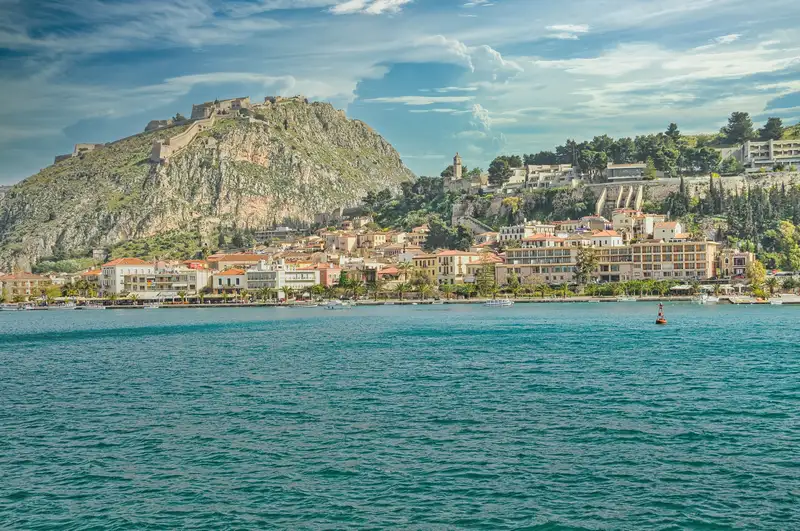
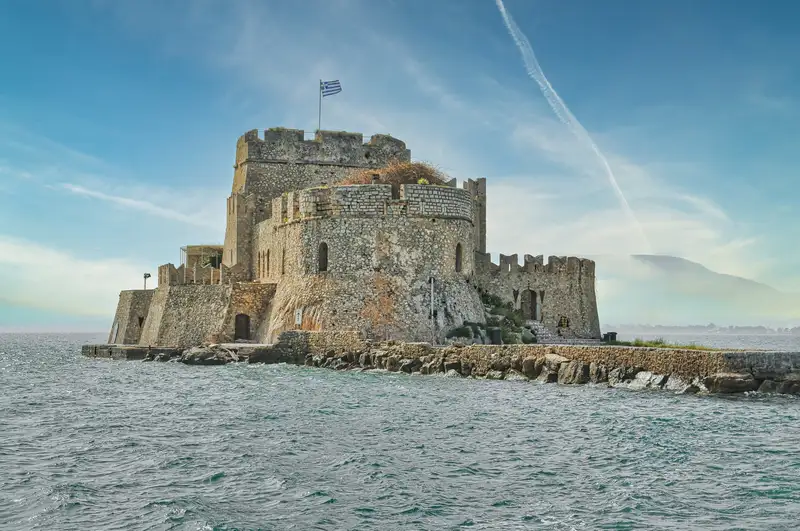
Nafplio is there, waiting, neat and calm on its small peninsula, Palamidi behind it, and Bourtzi afloat in the harbor like a stone ship that forgot how to sail.
This is a guide to the things to do in Nafplio. I am an Athenian who has been making that drive for as long as I can remember. I will take you through the old town, the three fortresses, the beaches, the museums, the day trips to ancient sites, and the small practical details that can make a visit to Nafplio run more smoothly.
But I also want to give you the feel of the place. Nafplio is not a list of sights. It is an atmosphere. You have to settle into it, and when you do, you can see why it was the first capital of Greece and why so many of us still think of it as the country’s most beautiful town.
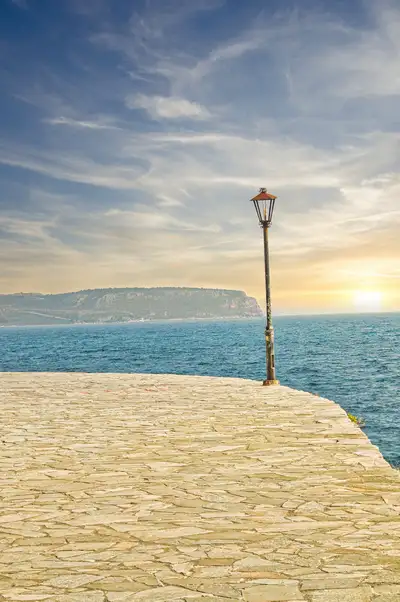
Table of Contents
Why Nafplio is special
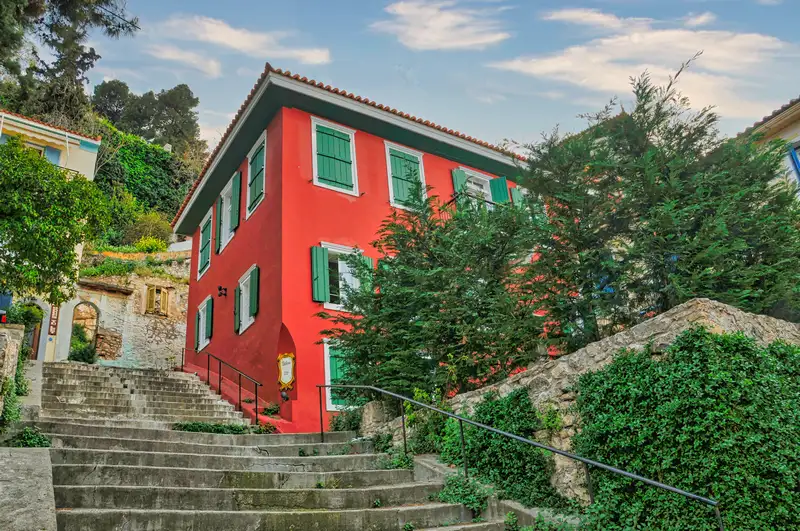
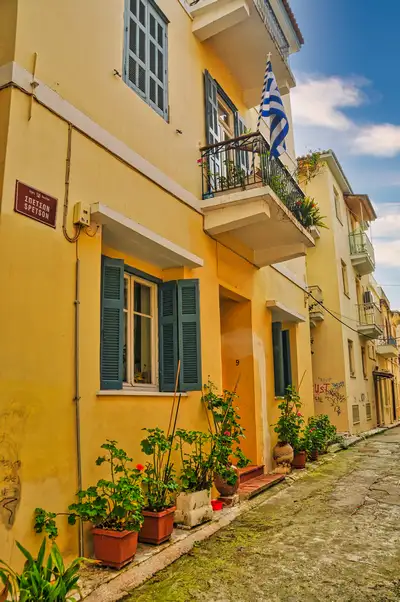
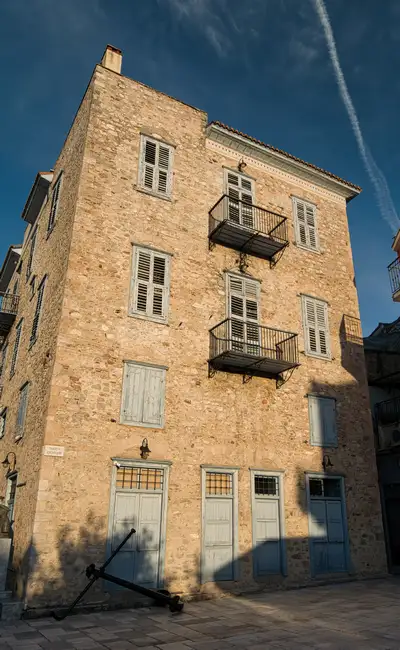
There is something about Nafplio that quiets you down. Maybe it is the scale. The old town is small, and you can walk from one end to the other in twenty minutes. Maybe it is the layers. Mycenaean, Byzantine, Frankish, Venetian, Ottoman, and then modern Greek, all of them folded into the same streets. You see it in the buildings: a Venetian doorway here, an Ottoman fountain there, a neoclassical mansion painted ochre, with bougainvillea spilling over a wrought iron balcony.
The Venetians called it the Naples of the East, and the name still fits. Like Naples, Nafplio is a port town that has flown many flags and kept its own face through them all. Athenians come here for weekends because it gives us something Athens cannot: a slower rhythm, the smell of the sea right at the edge of the cobblestones, and the feeling of stepping into a town that has nothing to prove. It is romantic in the old sense of the word. You do not have to chase anything here. You walk, and the place opens up to you.
Two hours from Athens, a different rhythm entirely
Nafplio is located on the east coast of the Peloponnese on the Argolic Gulf, about 140 kilometers from Athens. The journey by car or bus takes about two hours on the Olympia Odos motorway, with the road crossing the Corinth Canal and passing through the rolling hills of Argolis before dropping down into the bay.
The centuries that shaped these walls
The story of Nafplio is older than most things you will see in the town. In legend, it was founded by Nauplius, a son of Poseidon. The Mycenaeans built here, the Byzantines, then the Franks after the Fourth Crusade, and finally the Venetians, who shaped the Nafplio you see today.
The Ottomans captured it twice, and the Venetians retook it in between. When they left, they built Palamidi, their last great fortress in the Mediterranean. What makes Nafplio special to every Greek, though, is what came next. In 1823, during the War of Independence, Nafplio became the seat of the provisional Greek government.
From 1828 until 1834, it was the first capital of the newborn Greek state. Our first head of state, Ioannis Kapodistrias, walked these streets, lived here, was assassinated here in 1831, on the steps of Saint Spyridon Church. You can still see the bullet hole in the wall. Two years later, King Otto of Bavaria was crowned on the same square. Then the capital moved to Athens, and Nafplio went quiet again. But the memory of those years is in every stone.
Walking through the heart of the town
The major sites of Nafplio are all within walking distance of each other, which is part of the charm of the place. You can see the bulk of them in one afternoon if you wander from one square to another, following the cobbles. This is what to see in the town proper, before you scale the fortresses or visit the museums.
The old town of Nafplio, where the cobblestones begin
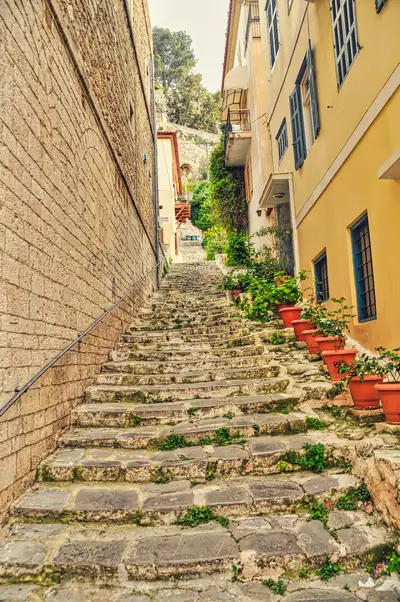
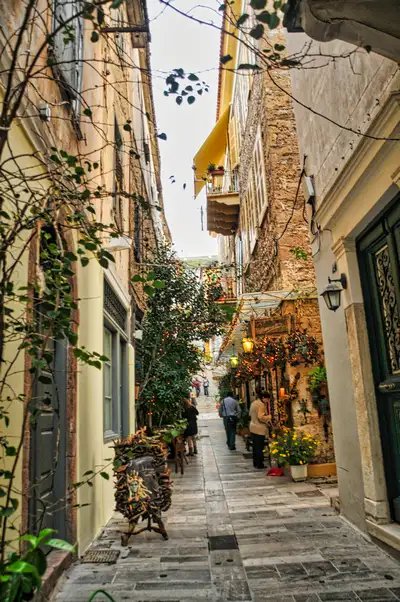
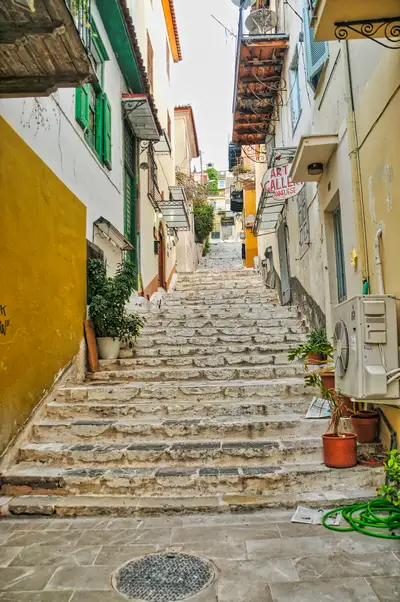
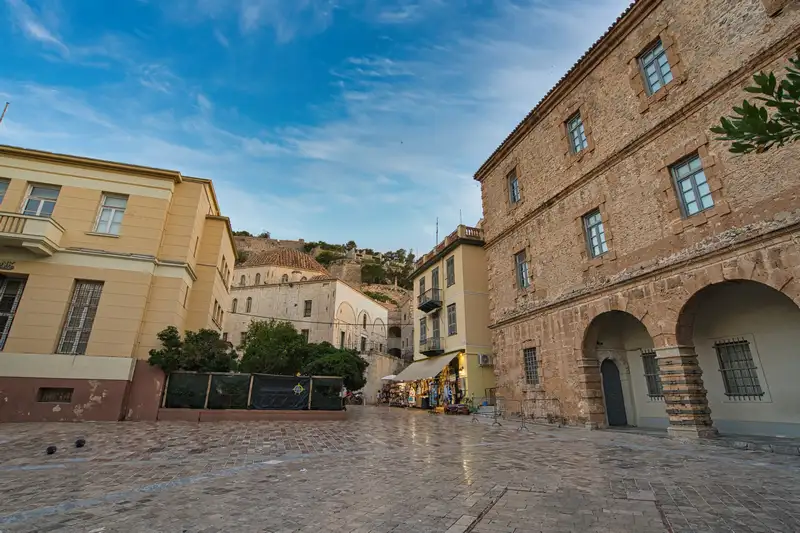
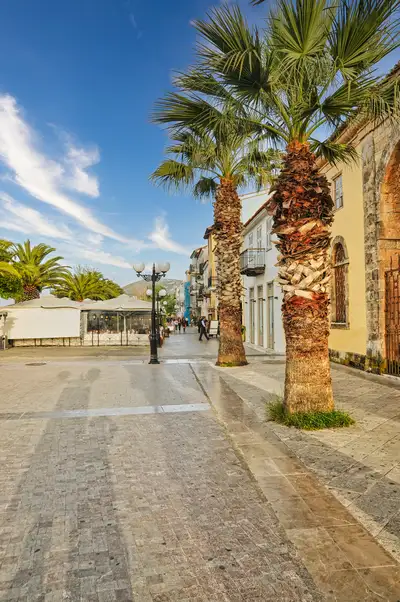
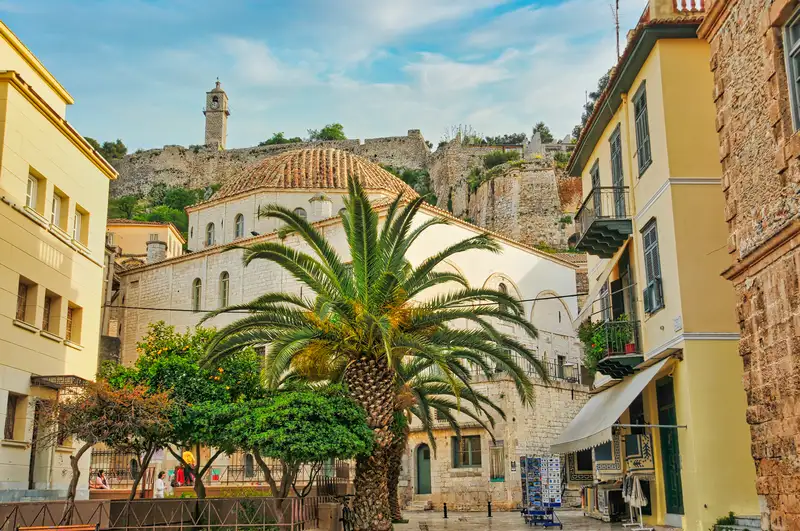
The old town is the reason most of us come. Cars are not allowed here; the streets are paved with cobbles polished smooth by two centuries of feet, and the houses are built into the slope below Akronafplia. You enter through the Land Gate, the original Venetian entrance, and the first thing you notice is the silence. No engines. Just footsteps, the sound of voices from a taverna, and a guitar being played two streets away.
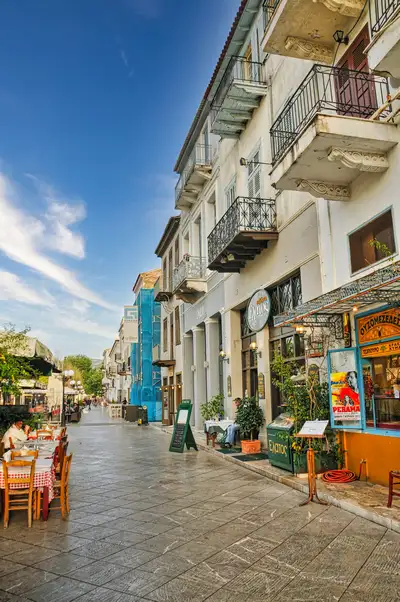
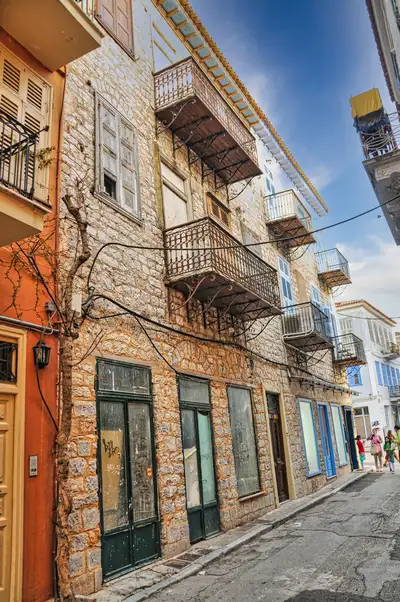
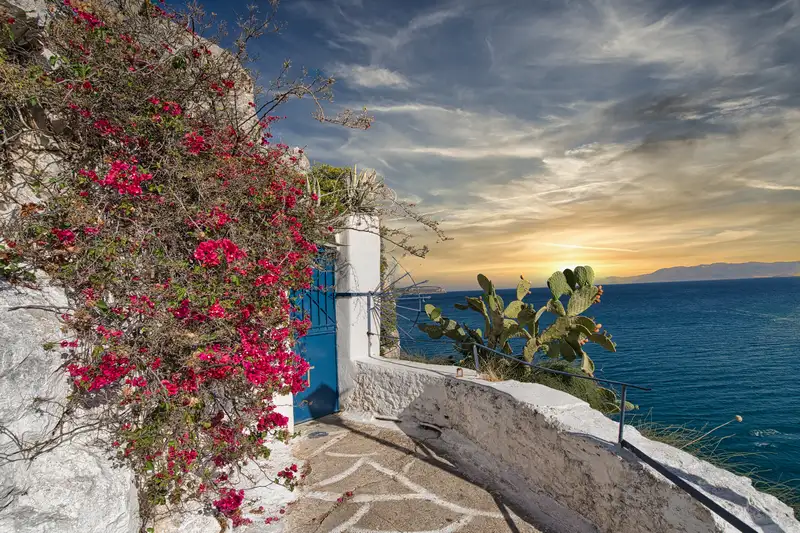
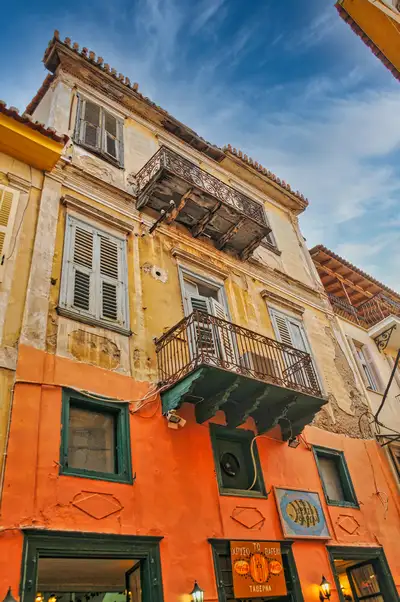
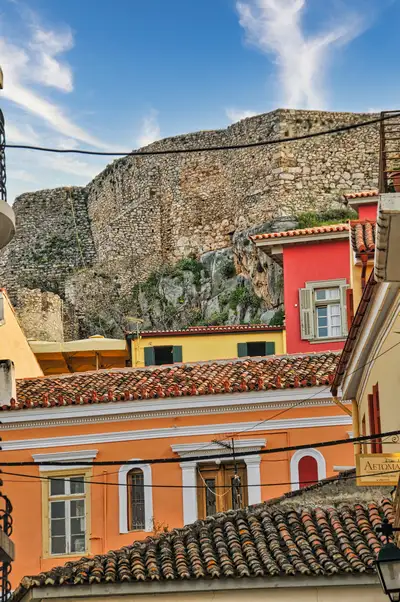
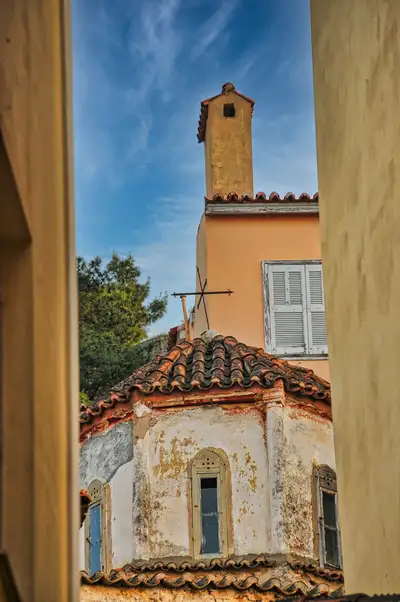
The streets are narrow and shaded, with neoclassical mansions in soft yellows, ochres, and faded pinks. Bougainvillea spills over the walls in great purple curtains. Wooden shutters open onto wrought iron balconies. Every corner holds a small surprise: a hidden church, a Turkish fountain, a store filled floor to ceiling with worry beads.
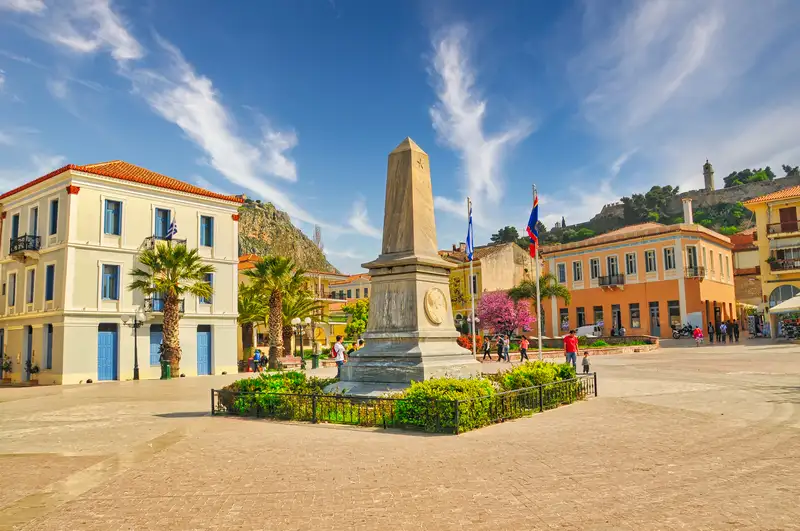
Syntagma Square is the heart of it all, a broad square paved with stone, with an old mosque on one side, the Vouleftiko on the other, the building that once housed the first Greek parliament, and cafes with tables and chairs spilling out under big umbrellas. Locals sit here for hours over one single coffee. Staikopoulou Street, just above the square, is where you want to go if you are looking for the small shops and family-run tavernas.Walk slowly. There is no rush in Nafplio's old town. That is the whole point.
The Church of Agios Spyridonas, where Kapodistrias fell
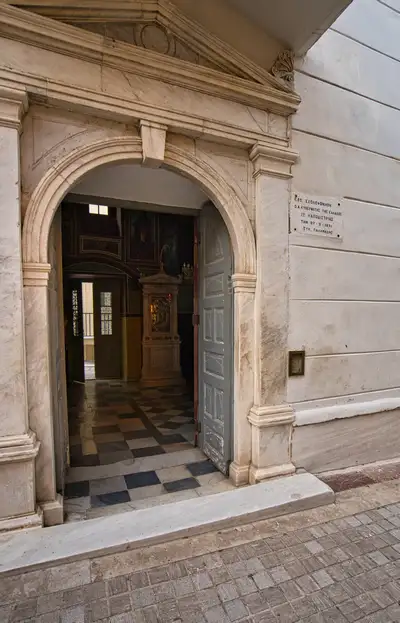
The Church of Agios Spyridonas is an eighteenth-century, whitewashed church hidden away in the labyrinth of the old town. The sort of place you pass by without even seeing it. But on the wall outside is a hole that changed the country.
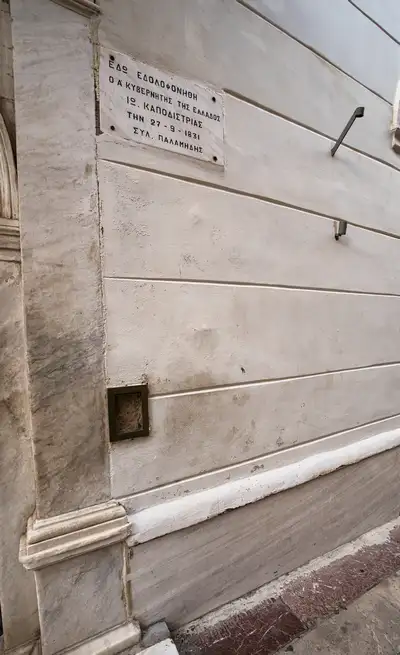
On 9 October 1831, Ioannis Kapodistrias, the first head of state of an independent Greece, was shot on his way to morning service on the small square outside the door. He was the father of the new Greek state, and his assassination threw the country into months of turmoil. The bullet hole is still there, in the stone wall outside the church, just above a small plaque.
Standing there is a quietly moving thing. The square is small and unremarkable. There are no crowds, no audio guides, no one telling you how this is the most important place in Greece. But this is where the country lost its first leader, and nearly lost itself. I never pass without slowing down.
The Arvanitia promenade, a walk between cliffs and sea
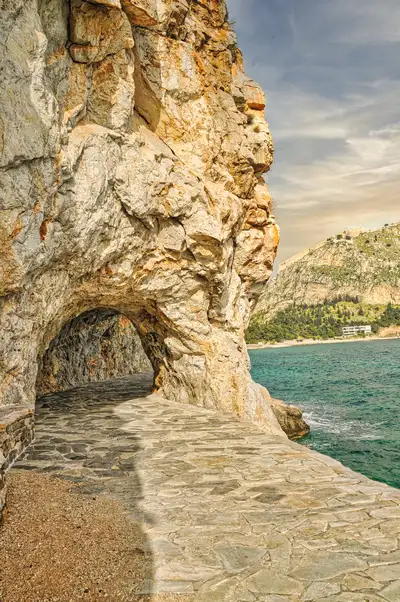
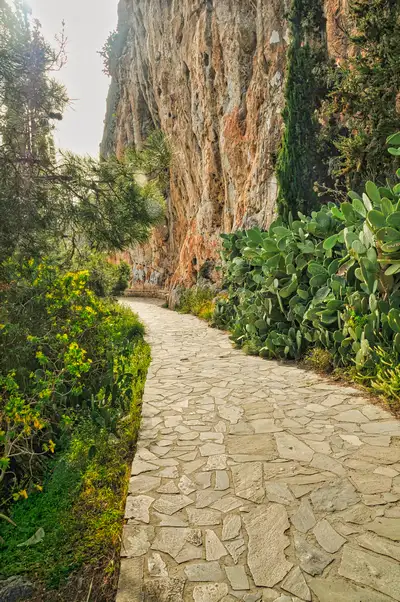
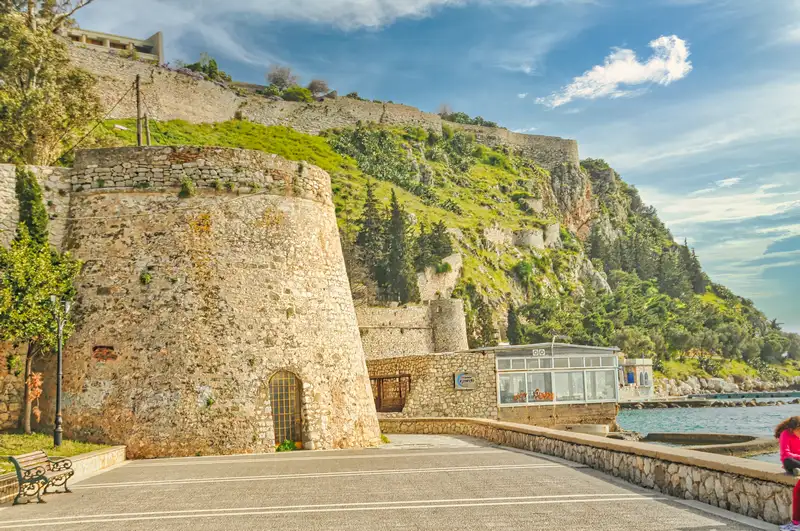
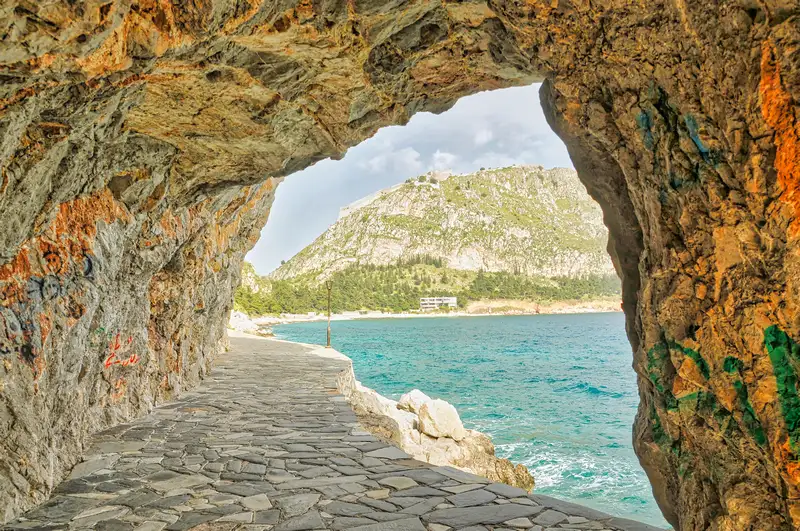
The Arvanitia promenade is one of life’s little pleasures in Nafplio. A paved path that runs along the cliff faces on the southern side of the old town, it snakes from the harbor around the rock of Akronafplia and finally down to Arvanitia beach. The walk takes twenty minutes at a leisurely pace, but it’s one of those twenty minutes that you will always remember.
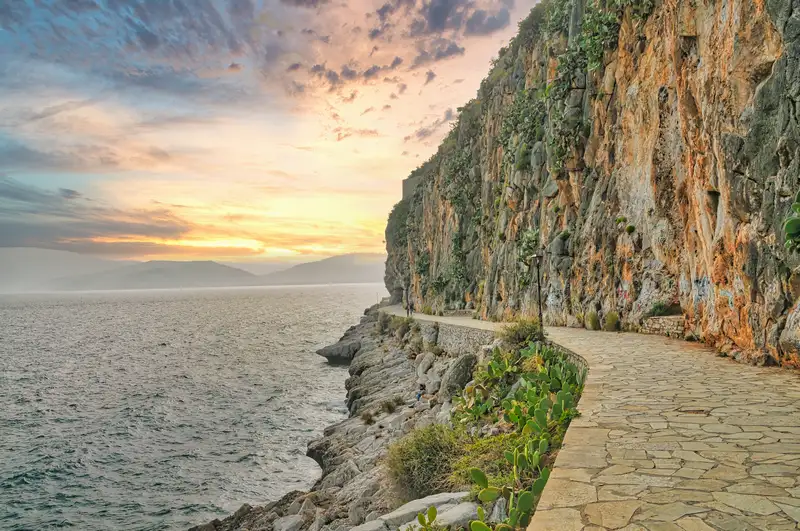
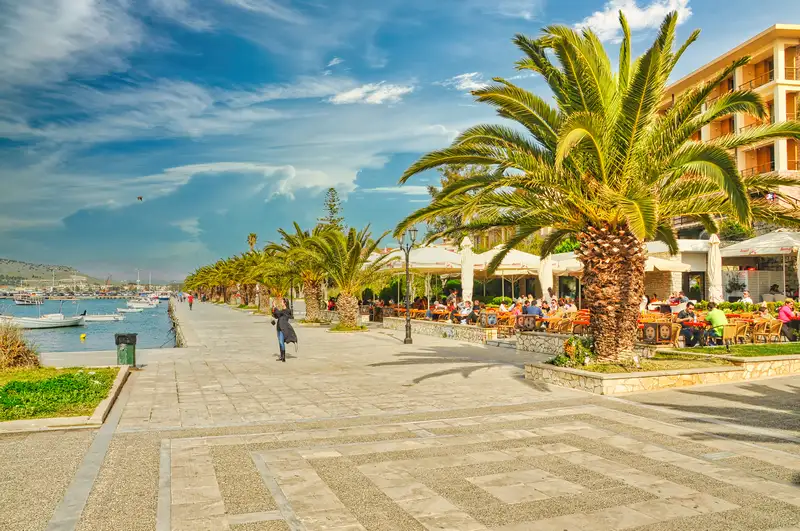
On one side, the cliffs rise up above you, rough and pale. On the other hand, the Argolic Gulf unfolds, blue and still. Small wooden benches line the way, and you pass older locals sitting and watching the water, fishermen with long rods, and couples with no particular destination. Look back, and Bourtzi sits in the harbor like a little jewel. Look forward, and the path continues past Arvanitia on the way to Karathona, three kilometers on.
I always walk it in the late afternoon. The light turns golden, the sea softens, and the town behind you seems to slow with the setting sun.
The three fortresses that watch the town
Nafplio has three fortresses, one looking down from the hilltop, one keeping watch from the sea, and one from a place in between. Each one was constructed by a different power, in a different century, and taken together, they are like a timeline in stone, a history of the town. Climbing them, or just looking at them from the harbor, is one of the things that every visitor to Nafplio ends up doing.
Palamidi, the last fortress of the Venetian empire
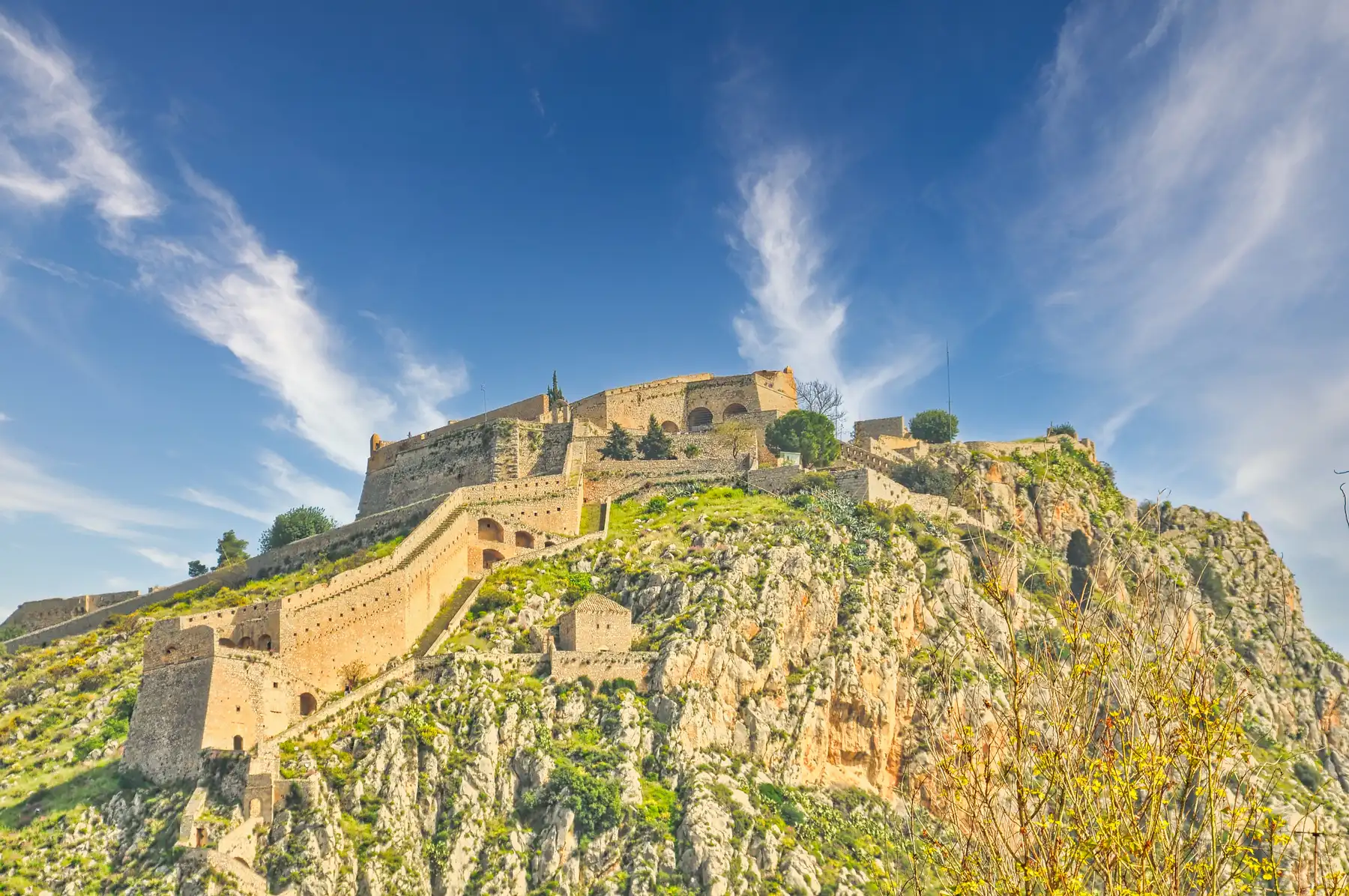
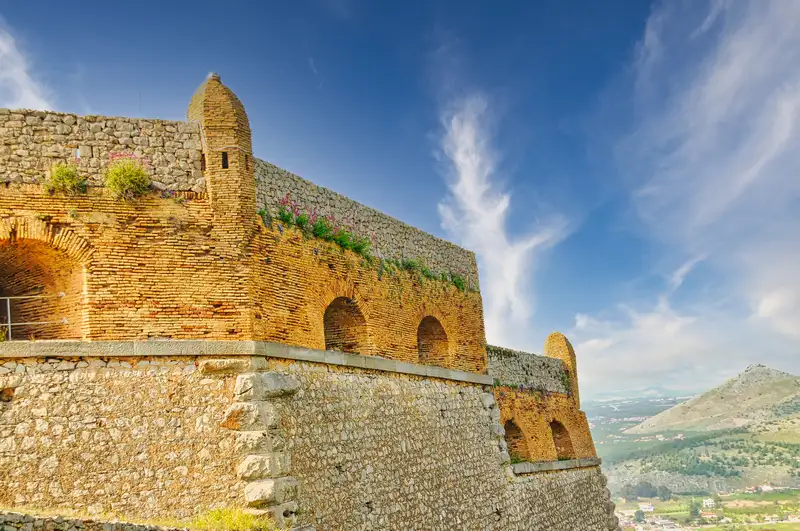
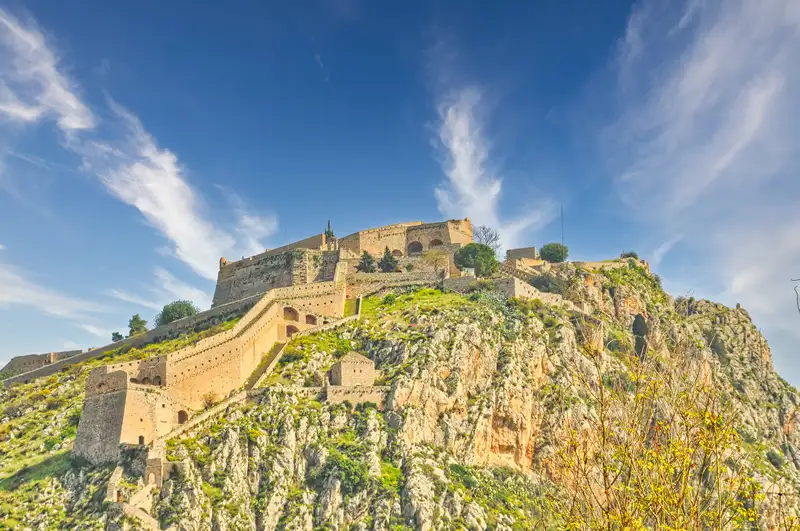
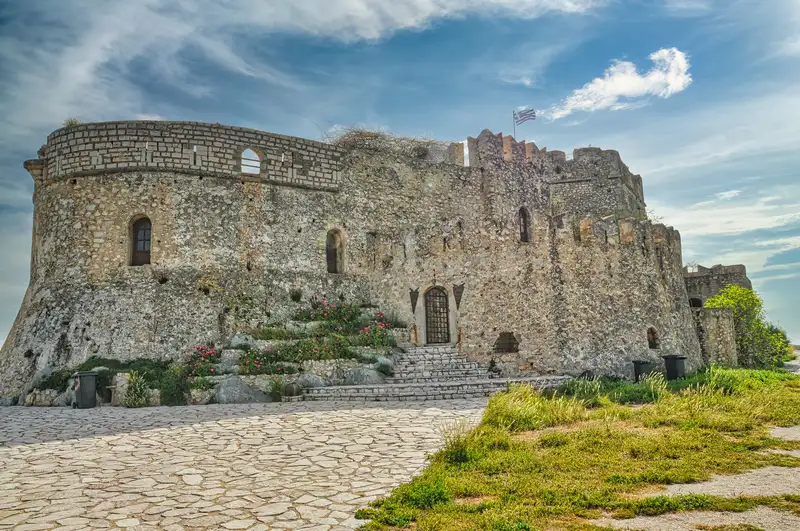
Palamidi is the large Venetian fortress on the hill above Nafplio. It was built between 1711 and 1714, at the very end of the Venetian empire in the eastern Mediterranean. From the bottom of the old town, there is a stone staircase that climbs all the way up to it. Locals claim there are 999 steps. There are actually slightly fewer, but it doesn’t matter. The climb is steep, and the sun can be hard, especially in summer.
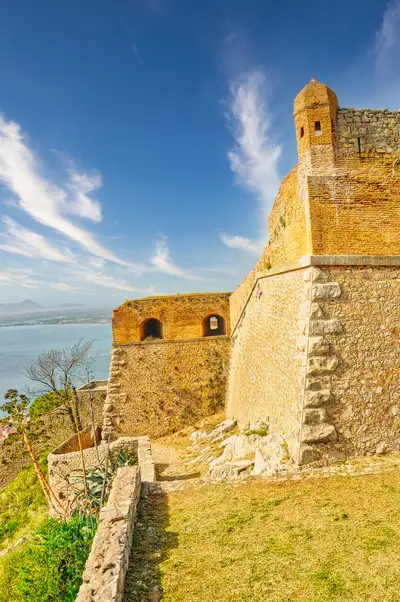
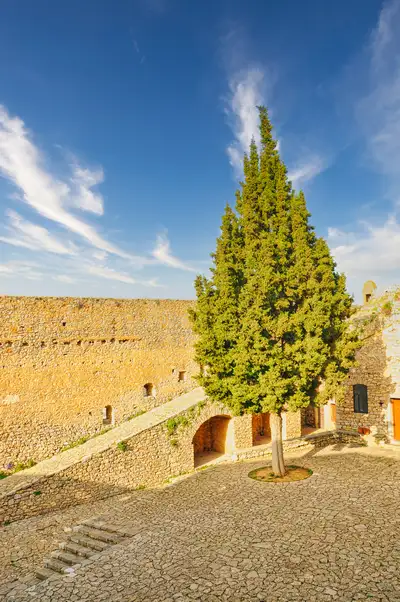
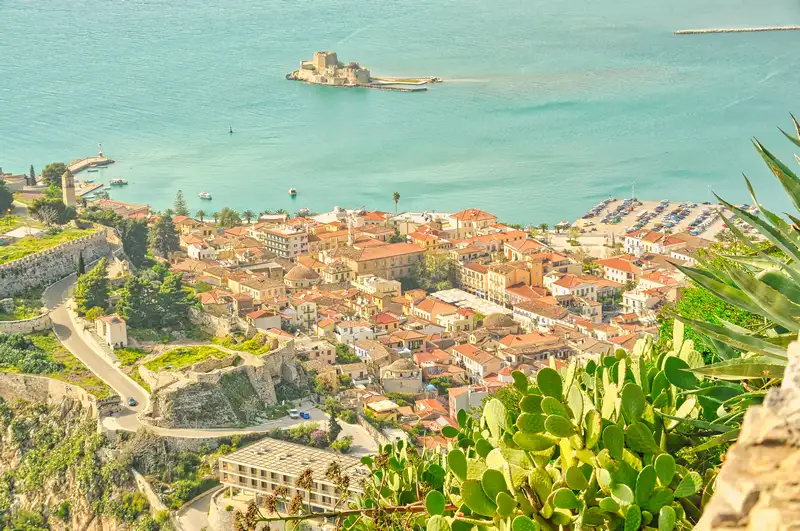
The view from the top, though, is worth it. The whole of Nafplio lies below you from there: the red roofs of the old town, Bourtzi in the harbor, the Argolic Gulf stretching all the way out to the distant mountains. Inside, there are eight bastions, connected by walls, and in one of them, the Ottomans had a prison where the hero Kolokotronis was kept in 1833. If all those steps seem like too much, you can also drive up. Whichever way you do it, do it in the morning.
Bourtzi Castle, the islet that became a postcard
Bourtzi is the little fortress on the small islet in the center of Nafplio’s harbor, and it is the image most people take away. The Venetians built it in 1473 to protect the port, and it was once connected to the shore by a heavy iron chain that could be raised in the event of enemy ships approaching. Later, during the dark days of the 1860s, the executioners of the prisoners of Palamidi were based there.
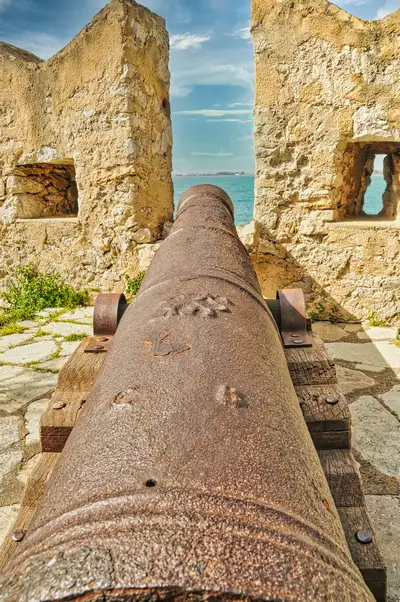
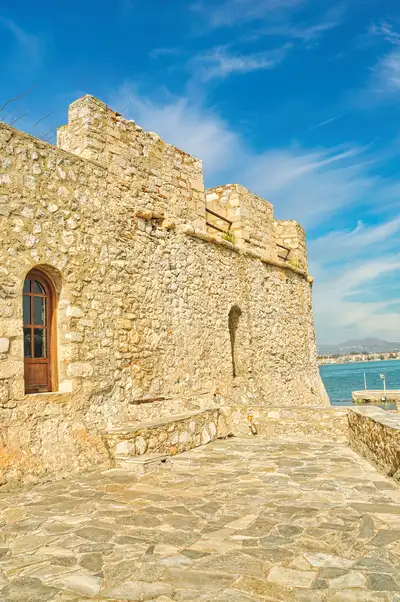
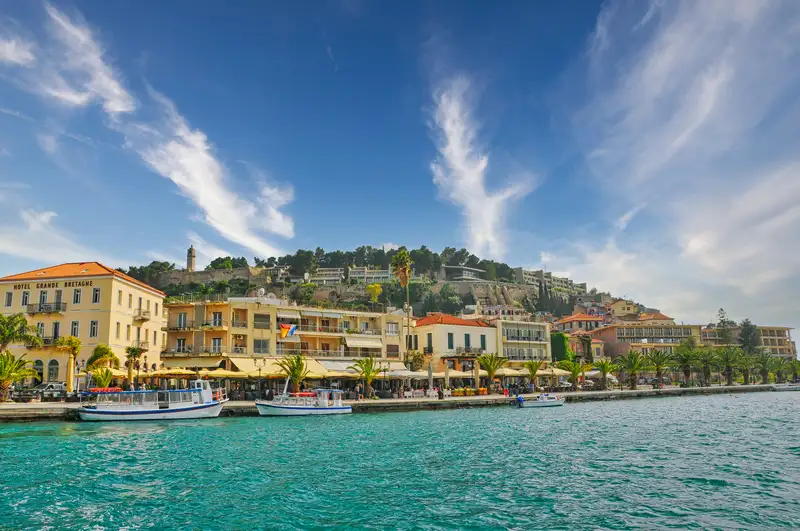
Bourtzi today is the most photographed place in town. There are small boats from the harbor in the summer months, and the trip takes 10 minutes. The interior is partially open and used for events. But really, you do not need to go in to experience it. The view from the harbor, and especially at golden hour when the stone turns warm and the water silver, is one of the most beautiful views in Greece.
Akronafplia, the oldest fortress, the quietest one
Akronafplia is the oldest of the three fortresses and the least visited. The lower stones are from the Bronze Age, with Roman, Byzantine, Venetian, and Ottoman layers on top of each other, like the pages of a long book. It sits on the rocky peninsula between the old town and Arvanitia beach, guarding over them both.
Unlike Palamidi, Akronafplia is free to enter and is open at all hours. You can approach it on foot through the old town, or take the lift from Plateia Polydouriou. This is a small elevator hidden in the hillside that whisks you up in a minute. From up top, the view is quieter than Palamidi's, but no less moving. Few tourists make it up here, and especially around sunset, when I love it most. The light turns gold, the gulls call, and the town hums softly below.
Small museums, long stories
Nafplio is a small town, but it has an embarrassingly high number of museums. And the best part is, most of them are in lovely old buildings that are worth a visit all on their own. Each is a piece of Nafplio’s long history, from Mycenaean times to the Greek War of Independence to the folk art of the Peloponnese to the minor ritual of worry beads. If you only have time for one, choose the Archaeological Museum. If you have time for all of them, even better.
The Archaeological Museum, inside a Venetian mansion on Syntagma Square
Nafplio’s Archaeological Museum is in a Venetian mansion built in 1715, right on Syntagma Square. The building itself, with its massive stone walls and wooden ceilings, is worth the admission price. The collection inside is a trip from Paleolithic to Roman, but the most stirring items are from the Mycenaean power centers on the Argolid plain.
The most famous is a suit of bronze armor from the fifteenth century BC, found in a chamber tomb at Dendra. Beside it is a boar tooth helmet, the sort that Homer writes about in the Iliad, each tusk drilled and stitched into place. Standing in front of these things, you understand why Greeks speak of Mycenae the way we do of ancient history. They are not myths here. They are objects.
The Peloponnesian Folklore Foundation Museum
The Peloponnesian Folklore Foundation Museum is one of the best of its kind in Greece. Founded in 1974 by Ioanna Papantoniou in memory of her father, Vassilios, the building is the family's old house in the very heart of the old town.
Inside are traditional costumes from all over Greece, room after room of embroidered jackets, woven aprons, silk veils, and wedding dresses, each one linked to a specific village or island, tools, ceramics, and small details of everyday life in the last two centuries. It is a quiet, careful place, the sort of museum that rewards slow looking. By the time you leave, you understand a little more of what Greek life looked like before the modern era smoothed everything down.
The War Museum, the rooms of 1821
The War Museum occupies the buildings of the first Military Academy of modern Greece, on Amalias Street, a little outside the old town. The location is not by chance. Nafplio was the center of the Greek War of Independence, and many of the men who fought in it lived and met here.
The collection traces Greek military history from 1821 to the twentieth century, but the weapons, uniforms, paintings, and documents from the revolution in the early rooms are the most moving. They show you how a small, divided people, with little money and almost no organized army, freed itself from a vast empire. If you have any interest in the modern Greek story, this museum gives it shape.
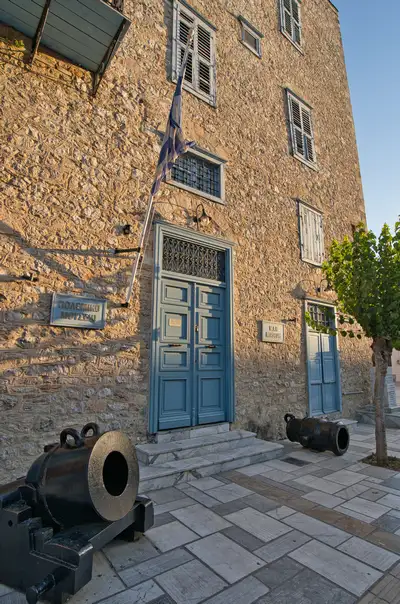
The Komboloi Museum, small beads, quiet rituals
The Komboloi Museum is the tiniest. It is also the sweetest. The museum is in a little old building on Staikopoulou Street. Worry beads from many cultures are on display: Greek komboloi, Muslim tasbih, Catholic rosaries, Buddhist mala beads.
Taken together, they speak a quiet truth: people everywhere have invented the same small ritual to soothe their hands and focus their minds. Greek komboloi have no religious significance. They are just for the hands. For the long afternoon at the cafe. For thinking. After the museum, you may want to buy your own. The shop downstairs has hundreds.
Beaches near Nafplio
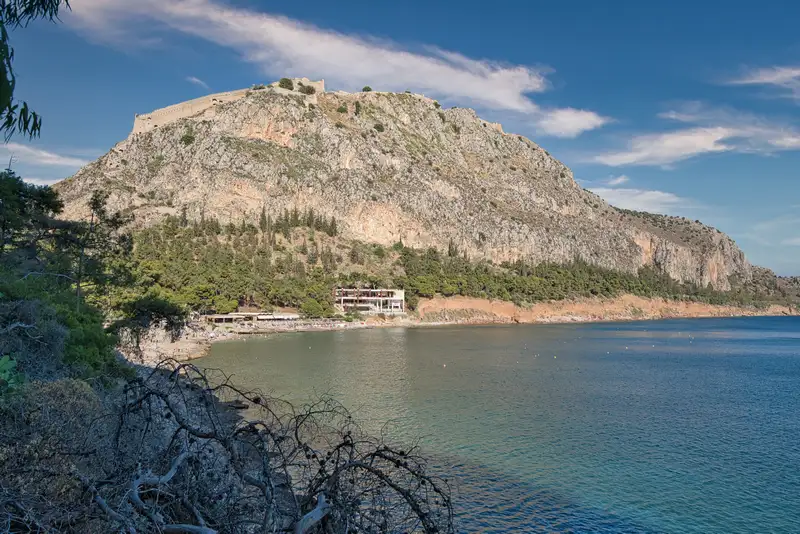
Nafplio is a coastal town with various beaches. The nearest one, Arvanitia, is just a 5-minute walk from the old town and wedged under the cliffs of Akronafplia. It’s small, pebbled, the water is deep and refreshingly cold, there is a beach bar in summer and some sunbeds, but what makes it special is the setting: cliffs on one side, the sea on the other, the town behind you.
Walk along the beautiful coastal path from Arvanitia all the way around the rock of Palamidi to the long sandy beach at Karathona, 3 kilometers away. It takes about 45 minutes and is one of the nicest things to do in Nafplio. Karathona is a family-friendly beach with palm trees, eucalyptus, and sun loungers, and a small island offshore. A bit further out are Tolo and Kondili, both with wide, sandy beaches and shallow water.
The great stories within an hour's drive
This is where Nafplio gives up one of its greatest secrets. The town is at the very center of the most mythologized archaeological region in Greece. Within an hour's drive, you can stand inside sites that have inspired the Western imagination.
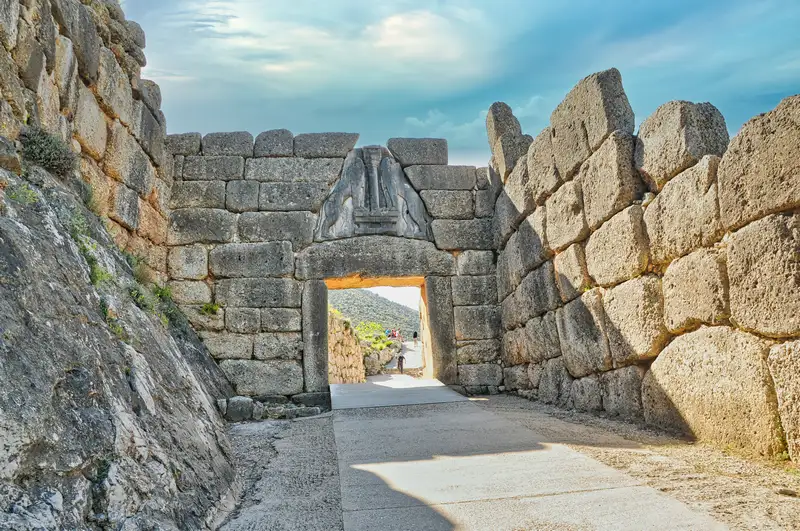
Take a twenty-five-minute drive north to Mycenae. The Lion Gate, the Cyclopean walls, and the tombs of the Mycenaean kings are all here. This was the home of Agamemnon, the era Homer rhapsodized about.
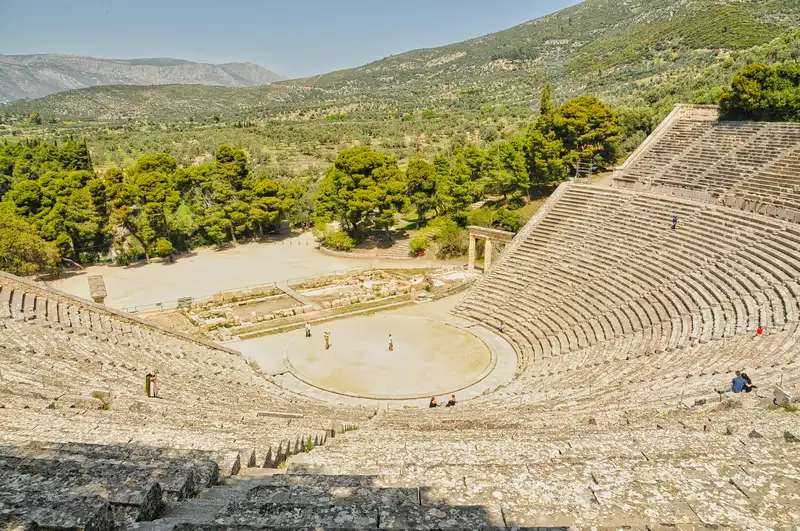
Half an hour to the east lies Epidaurus. Its 4th-century BC theatre is the best-preserved in Greece. Stand in its center, toss a coin, and the sound bounces straight to the back row.
Nemea, less than an hour to the north, was the home of one of the great ancient games and is now the epicenter of one of the best wine regions in Greece, where red Agiorgitiko grapes bathe in the sun.
Ancient Tiryns is much closer, just outside Nafplio. It, too, is famous for its Cyclopean walls. And up north, perched on a peak high above the valley, sits Acrocorinth, which will reward you with a fortress and views that stretch to the Saronic Gulf. I have created separate guides for each of these.
Practical guide to visiting Nafplio
And then there are the practical questions: where to sleep, where to eat, when to come, how to get from Athens, how long to stay, and all the small things, the questions that I always ask friends before they leave for Greece for the first time. Here, everything I would want to know before I visit for the first time is all in one place.
Where to stay in Nafplio
Most visitors stay in the old town, and I see why. Staying inside the Venetian streets, with cobbles outside your door and the sea five minutes away, is a small kind of magic. The small hotels and pensions are usually in restored neoclassical mansions, many with high wooden ceilings, stone walls, and views over rooftops or the harbor.
The new town, just east of the old one, is quieter and slightly cheaper, with easier parking and a more local feel. Everything that matters is still walkable. Outside the town, in the hills or near the beaches, there are a few larger properties with gardens and pools, but you need a car.
If it is your first visit, stay in the old town. The atmosphere alone is worth the price difference. I have a separate guide with more on where to stay in Nafplio.
Food and tavernas in Nafplio
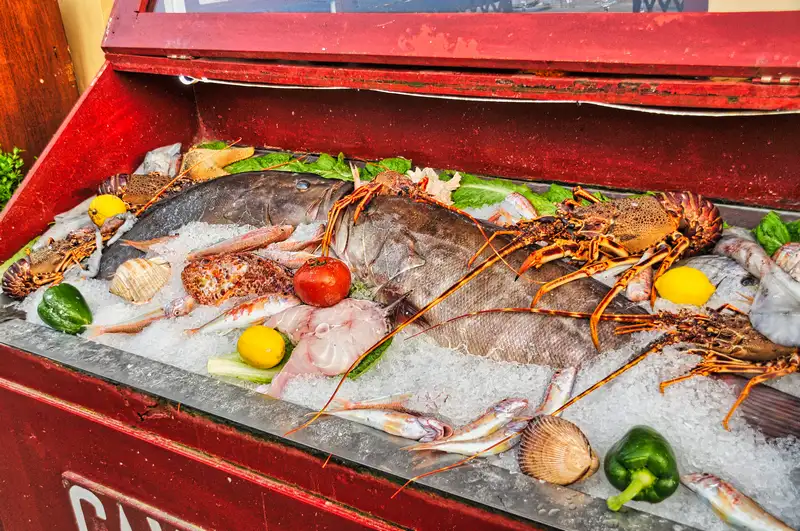
Nafplio food is honest, local, and both sea-and land-based. Fresh fish and octopus come from the Argolic Gulf, oranges, lemons, olives, and good olive oil from the Argolic plain, and some of the best Greek red wines from the hills of Nemea.
The town itself is full of small family-run tavernas in the side streets of the old town, where the menu is short, and the daily catch is written on the chalkboard. Order fresh grilled fish, octopus on the charcoal, taramasalata, and seasonal greens. For a more sit-down meal with a view, the cafes around Syntagma Square or along the harbor are hard to beat.
Then there is the gelato. Nafplio is home to one of the best Italian-style gelaterias in all of Greece, and on a summer evening, a cone in your hand and a slow walk along the waterfront is a ritual in its own small way.
Best time to visit
Nafplio is a year-round town, but each season has a different feel. For me, spring is the best: April through early June. The hills are green, the wildflowers are out, the days are warm, and the sea is just turning swimmable.
Autumn, September through October, is a close second, with its warm light, smaller crowds, and still-swimmable sea that still holds summer’s heat.
July and August are the busiest months, with the most tourists. The town is at its most beautiful, but it can also feel crowded, especially on the weekends when Athenians descend in great numbers. The temperature is in the mid-thirties, and Palamidi in the early afternoon is not kind to anyone.
Winter has a quiet beauty of its own. November through March are the quiet months when the crowds have disappeared, the prices are down, and the town has a gentler aspect. Many tavernas and cafes stay open year-round, and you’ll walk slowly through empty streets and feel as though the town is yours.
How to get to Nafplio from Athens
By car
It is easiest and, at around two hours each way along the Olympia Odos motorway, the quickest. Stop at the Corinth Canal for your first big view of the trip. A car also lets you visit Mycenae and Epidaurus, and go to the beaches. It’s the best way if you have the time.
By bus
A very good alternative. KTEL buses depart from the Kifissos terminal in Athens several times a day. The trip takes about two and a half hours, tickets are cheap at about 15 euros, and the buses are comfortable and air-conditioned.
How many days do you need?
One day
If you are short on time, one day in Nafplio is enough. It lets you walk the old town, see Bourtzi from the harbor, climb to either Akronafplia or Palamidi, and have a long meal. You will leave with a sense of the place, even on one visit.
Two days
Two days let the town settle into you, leaves time for the unexpected. You can spend a morning at Palamidi, an afternoon at the beach, and an evening on the waterfront. You can find your own corner.
Three days
Three days is the sweet spot. With three, you have time for the day trips: a morning at Mycenae, an afternoon at Epidaurus, perhaps a quiet drive into the Nemea wine country.
More than three, and you are almost committing to living in Nafplio. If you can stay longer, do. The town rewards slowness. Many of us in Athens have been coming for years, and we still find new corners.
A few small things will make your visit to Nafplio go more smoothly
Wear comfortable shoes. The old town is paved with beautiful but slippery smooth cobblestones, even more so after rain. Heels are not the best choice.
Climb Palamidi early. Before nine in the morning, if you can, and bring water. By midday in the summer, the sun beating down on the steps can be brutal.
Use the lift to Akronafplia if you want a gentler climb. It is well hidden inside the rock, but it takes you up in a minute.
Parking inside the old town is forbidden. Park near the Land Gate, Arvanitia, or the new town, and walk in.
Carry some cash. Many small tavernas and shops still prefer it even though almost all places now take cards.
Weekends in spring and autumn. Avoid them if you can. Athenians fill the town. Weekdays are quieter, and the light is the same.
Stay for sunset at least once. The golden hour in Nafplio, with Bourtzi glowing in the low sun, is one of those memories that lasts for years.
Frequently asked questions about Nafplio
Is Nafplio worth visiting?
Definitely, I would even go so far as to say that Nafplio is the most beautiful town in Greece, and many Greeks would agree. There’s something about the old town, the three fortresses, the cobbled streets, the harbor with Bourtzi as its centerpiece that has a quiet kind of magic to it.
You don’t find that kind of atmosphere so easily in Greece. Add in day trips to Mycenae, Epidaurus, and Nemea, and you’ve got a base that pairs romance with serious history. It’s that kind of place that you remember.
Is Nafplio expensive?
Nafplio is pretty reasonable by Greek standards and much cheaper than the popular islands. For example, a meal at a family-run taverna in the old town is about fifteen to twenty-five euros per person, wine included.
A coffee at Syntagma Square sets you back around four to five euros. Hotels in the old town start at around sixty euros for a simple guesthouse, two hundred euros and more for a restored mansion, with prices rising on summer weekends. It’s not a ferry-island price tag.
Can you visit Nafplio as a day trip from Athens?
Yes, you can, and many people do. It’s a two-hour drive each way, or about 2.5 hours by KTEL bus from the Kifissos terminal. An early start leaves you time for the old town, a fortress, and a long leisurely lunch before you have to turn for home.
But Nafplio is one of those places that is much better with an overnight stay. It’s at its best in the early morning and at sunset, the two hours that most day-trippers miss.
Is Nafplio good for families with kids?
Yes, Nafplio works well for families with kids. The old town is car-free so that the kids can roam at will; the harbor and Bourtzi boat ride are easy wins for the younger ones; and Karathona beach has shallow water and shade from eucalyptus and palm trees.
Climbing Palamidi can be too much for little ones in summer heat, but you can drive up, which solves that problem. The flat Arvanitia promenade is stroller-friendly. Most tavernas will happily welcome kids without fuss.
What is Nafplio known for?
Nafplio is best known as the first capital of modern Greece, from 1828 to 1834, after the Greek War of Independence. But the town is also known for its three Venetian and Ottoman fortresses, Palamidi, Bourtzi, and Akronafplia, its gorgeously preserved old town with neoclassical mansions and bougainvillea-draped streets, and its status as the Athenians’ romantic weekend bolthole.
One last walk before leaving
The first capital of Greece is, conveniently, no longer the center of anything. In that, Nafplio has the patience of a gift. Athens grew loud, and Nafplio was left to be itself. Small, layered, beautiful, slow.
I think of Nafplio often when I am caught in Athens traffic—the sound of my footsteps on the cobblestones. The bougainvillea brushes on the walls. The smell of the sea at Arvanitia. The silhouette of Bourtzi at sunset. The bullet hole in the church wall, and the fact that a country was born here in just a few years, before going on to conquer the world.
Nafplio teaches you that not everything has to be loud. Some places hold their meaning quietly. You have to slow down enough to hear it. If you come, do that. Walk slowly. Sit longer at the cafe. Watch the light shift on the fortress walls. Let the town come to you. That is how I always go. That is how I think you should, too.