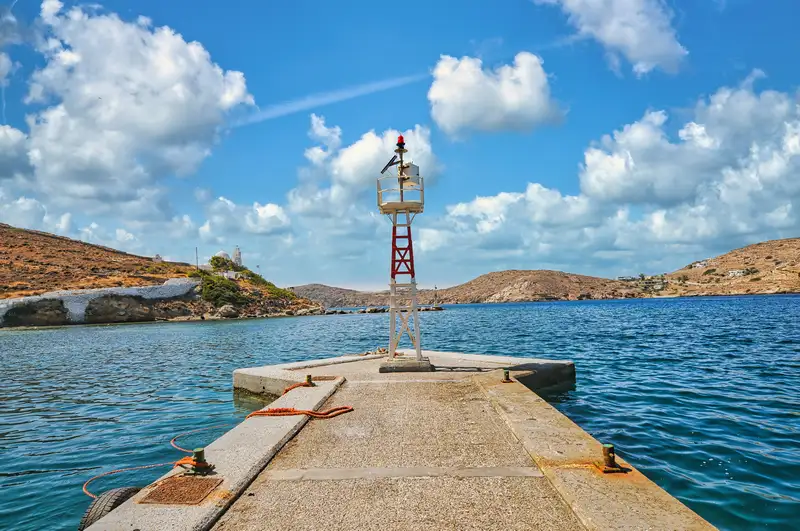
The first time I visited Ios island Greece, I was nineteen years old with an ill-fitting backpack. Before I got sunburnt or fell down drunk, before any of the expected things happened, I got blinded by the light. It was late afternoon, the port of Ormos was empty, and up on the hill the white buildings of Chora shimmered as if someone had spilled a bag of sugar cubes on a rock. It was beautiful, but nothing about it seemed real. Nothing about it felt as if it could be the place I had heard so many stories about.
It was many summers ago. I have returned many times since then, in different seasons, at different ages, with different people, and each time the island has revealed another of its many faces to me. The island of the young. The island of Homer. The island of slow mornings on deserted beaches. The island of a whitewashed village that comes alive at dusk and makes you forget the hour.
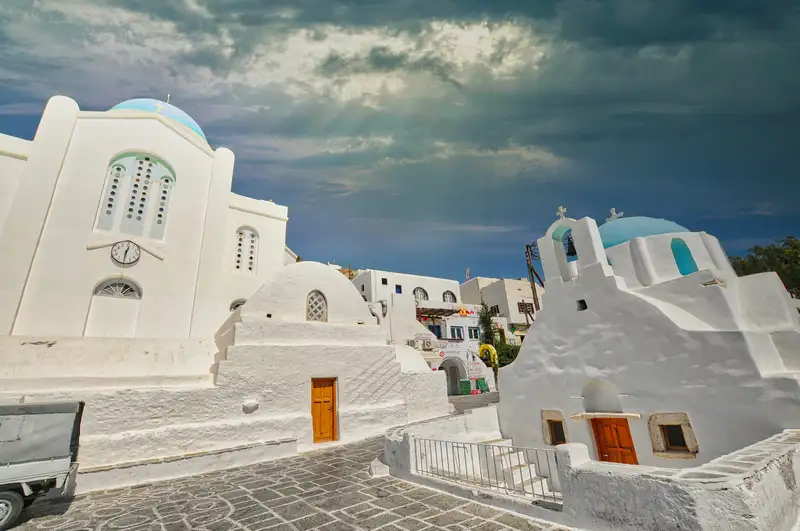
Table of Contents
Why is the island of Ios worth visiting?
Ios is a place worth visiting because it packs more than one kind of beauty into a single landmass. On a map, it is easy to overlook, squatting discreetly between Naxos and Santorini. In real life, it unfurls thirty-two kilometers of sandy coastline; boasts one of the most photogenic choras in all the Cyclades; hosts a Bronze Age settlement more than four thousand years old; has a headland where you can still leave flowers for Homer; and radiates a slow Aegean light that I have never been able to forget.
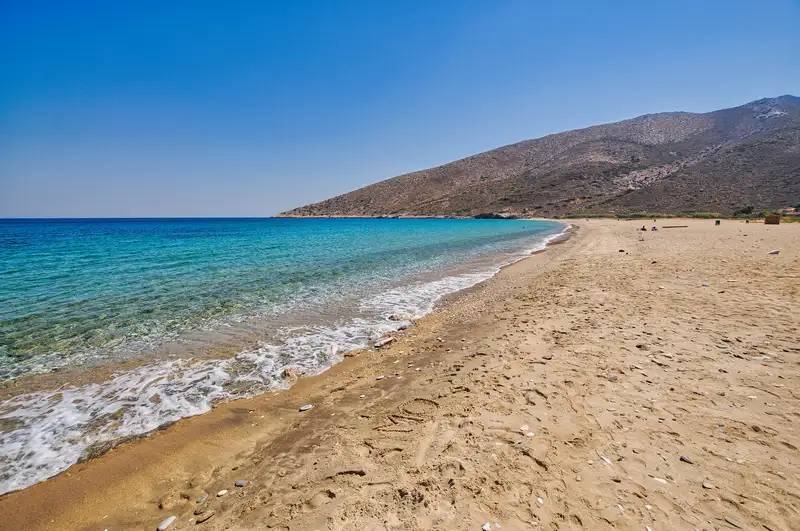
Most people come to Ios for the beaches. And I understand that. Mylopotas is a long stretch of golden sand and water as clear as glass on the seabed. Manganari, down south, is the kind of bay you glance around twice just to be sure you are still in the Mediterranean. But Ios rewards you if you linger a little. A walk up to Panagia Gremiotissa at sunset. A chat with a grandmother in Chora who still makes her sweets from scratch. An evening when the meltemi wind drops and the only sound is the clanging of a goatbell high up on the hill. You come to Ios for one reason. You leave remembering another.
The Deep Past of Ios: History and Myth
The history of Ios includes a Bronze Age settlement more than 4,000 years old, the island it has become, and a mythology inextricably tied to the ancient poet Homer, by tradition, who was actually buried on the island. The most enduring myth, however, is that Homer was associated with Ios.
The old myths of Ios and the Homeric connection
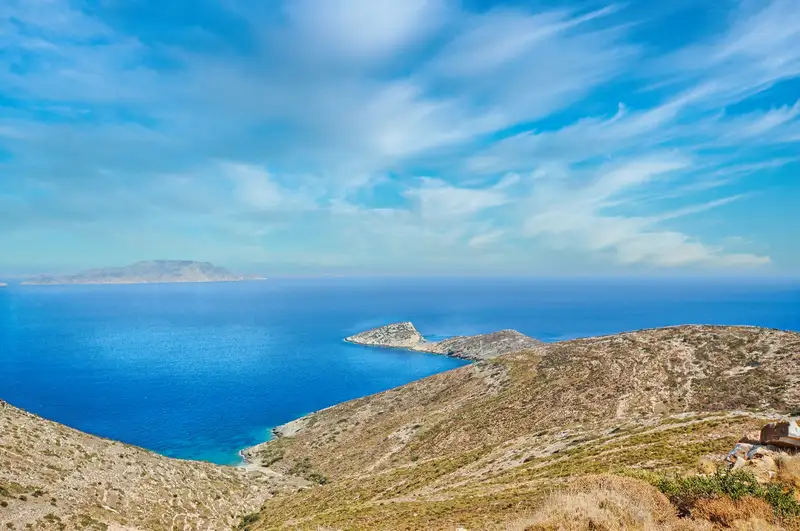
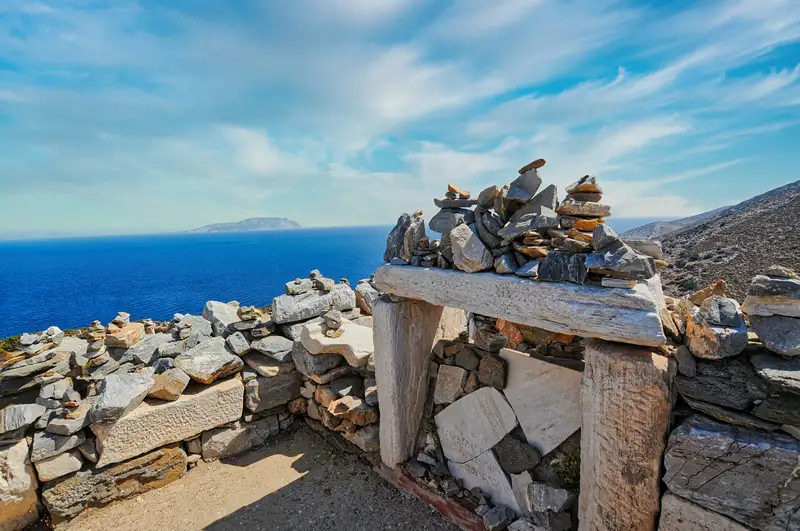
According to sources as old as Homer himself, his mother, Klymene, was born on the island, and Homer died and was buried there on his way from Samos to Athens. Whether any of this is literally true is something that no historian has been able to prove. The tradition has been visited by those who wish to honor it at the northern headland of Plakotos for more than two thousand years, and they still do.
The island's older name, Phoenice, was given to it by the Phoenicians, who had a settlement here at some point. The island of Ios itself is in some traditions named after the Ionian Greeks, and in others after the violets, called ia in ancient Greek, which once grew on its slopes.
Ios through history, from old stones to a modern island
Long before Homer's time, people were already living on Ios. Skarkos, the prehistoric settlement just outside Chora, was inhabited as early as 2700 BC and is one of the oldest known sites in the Cyclades.
After the Minoan and Mycenaean influence, the island experienced the Hellenistic and Roman periods, and later the Byzantine rule, which saw the construction of the hilltop castle of Palaiokastro in 1397 to protect sea routes between Constantinople and Crete.
The island was then ruled by the Venetians, with the Crispi family of Naxos as its governors, who administered Ios as part of their duchy. It was ruled later by the Ottoman Empire until the Greek War of Independence in the early 19th century, and it officially became part of the modern Greek state in 1829.
Ios remained, for most of the twentieth century, a quiet farming and fishing island, but in the 1970s it began to attract young travelers from all over Europe, who arrived and transformed it forever.
Chora: The whitewashed village that lives at the top of the hill
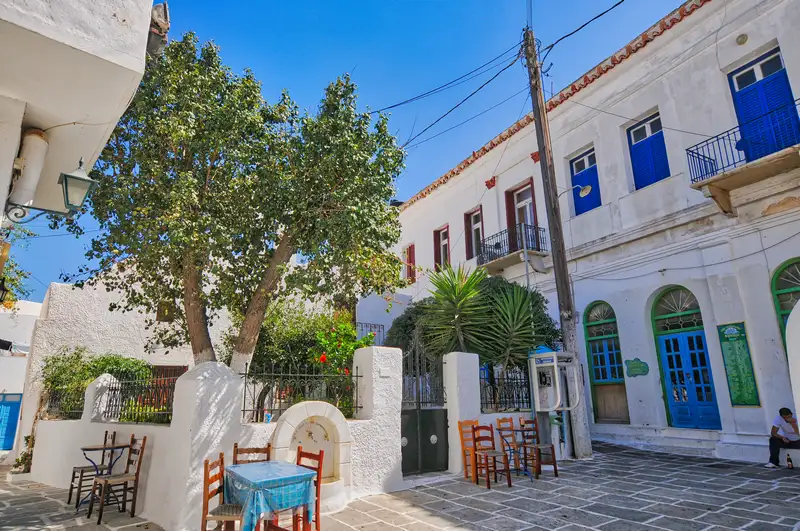
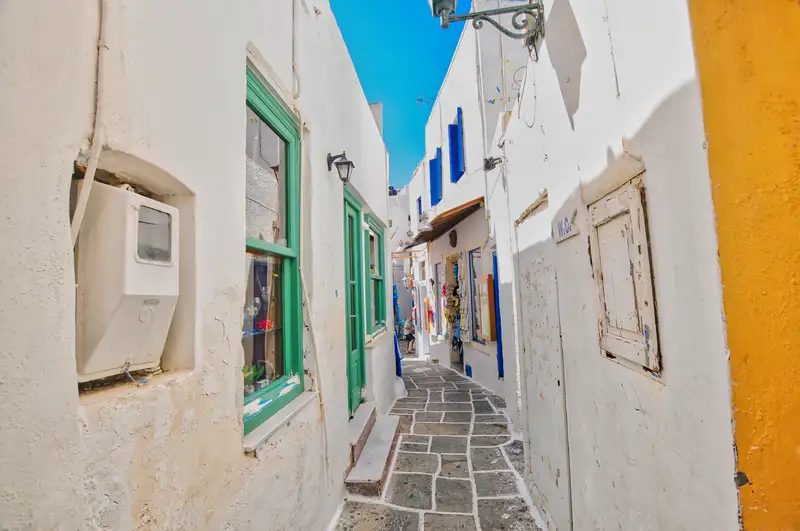
You can witness a whitewashed Cycladic village at its finest in Chora; nowhere else is it quite so intact. Blue-domed churches, alleys so narrow you step over them rather than walk down them, twelve windmills on the ridge, a white cathedral at the main square, Panagia Gremiotissa sitting on its peak, and the Odysseas Elytis open-air theatre clinging to the hillside outside the village.
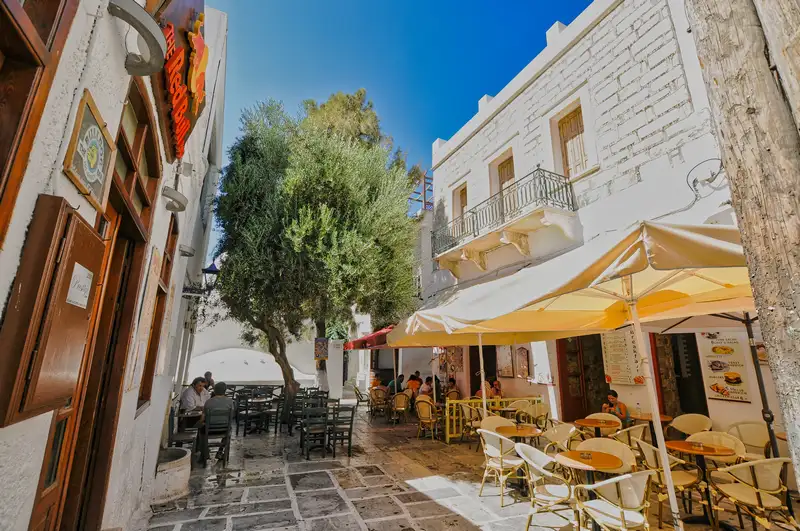
It’s small enough to explore on foot in an hour, but rich enough in history and charm to occupy you for a day. I’ll never forget the first time I made my way up there from Ormos. You round a corner, and the cathedral comes into view first, stark white with its azure dome gleaming in the sunlight. Around it, the main square unfolds itself, lined with cafes, tavernas, and tiny shops selling linens and silver trinkets.
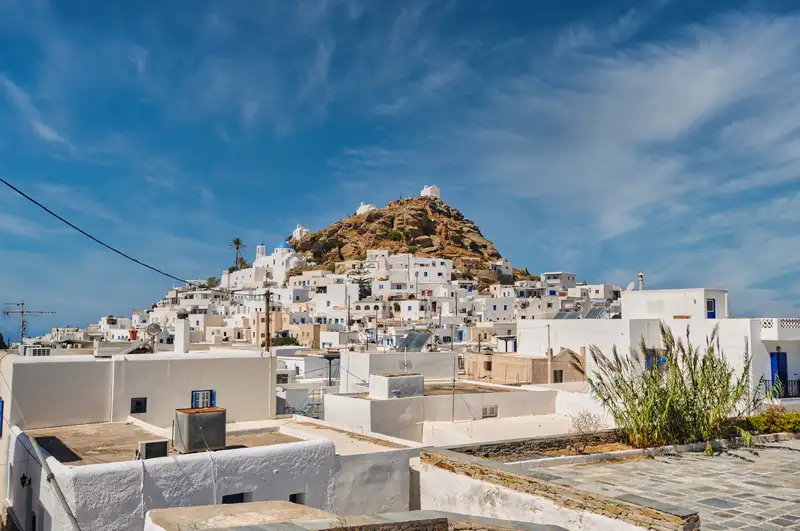
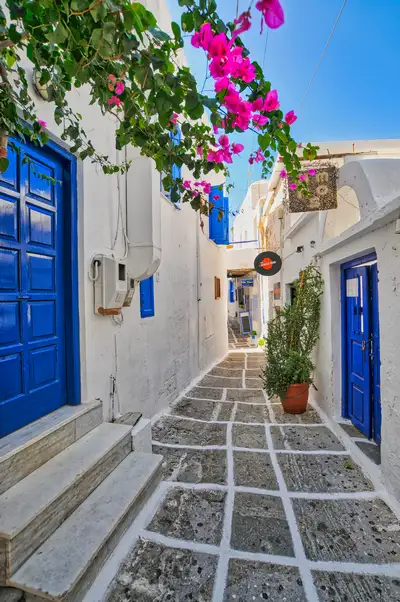
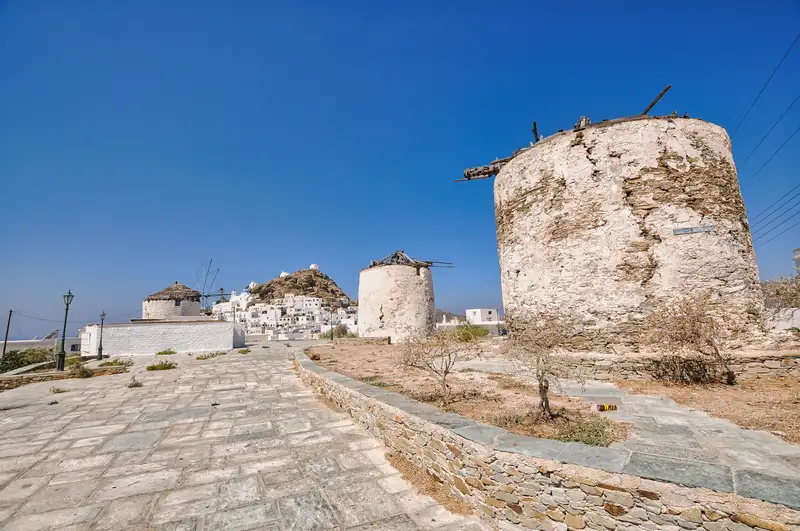
Past that, the village climbs up the hillside. Every corner reveals another photo opportunity, another azure door, a whitewashed stairway lost in jasmine, a cat glaring at you like you’ve got mud on your boots. Round another corner, and there are the windmills. There are twelve scattered along the ridge above Chora, though only some have been restored. They perch up there like weary guards, and at nightfall, when they’re lit from below, they seem to hover against the twilight sky.
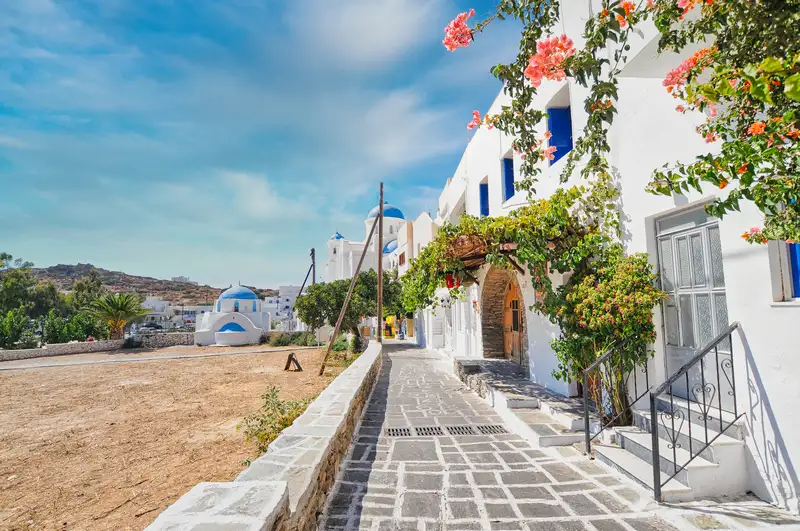
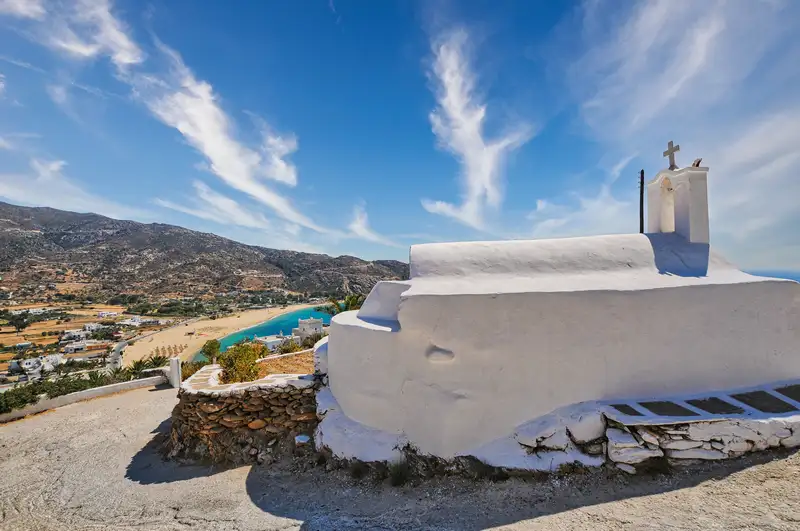
Just past them sits Panagia Gremiotissa, perhaps the most famous church on the island. Legend says an icon of Mary washed ashore from Crete centuries ago, and the church was built there because the icon refused to stay anywhere else. Watching the sunset from its terrace is one of those views that sticks with you, a quintessential Aegean sunset. I’ve sat there many times, and it has never failed to take my breath away.
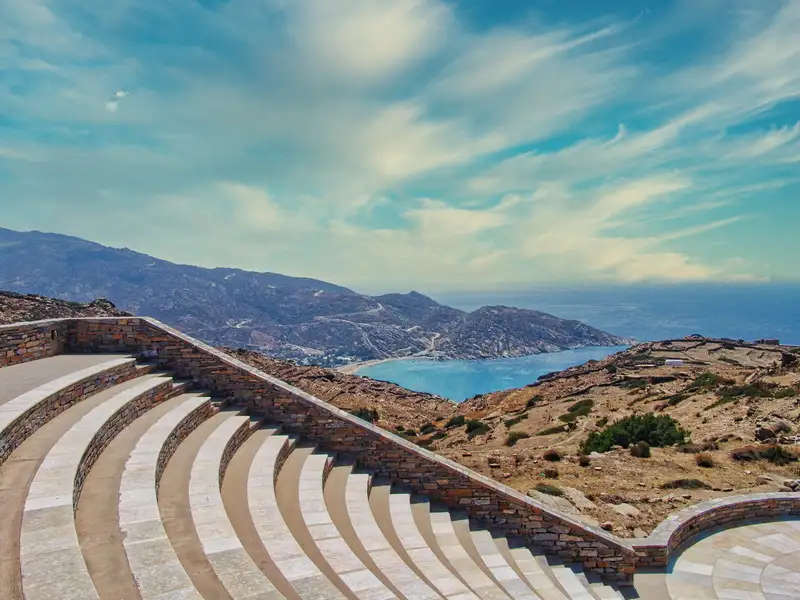
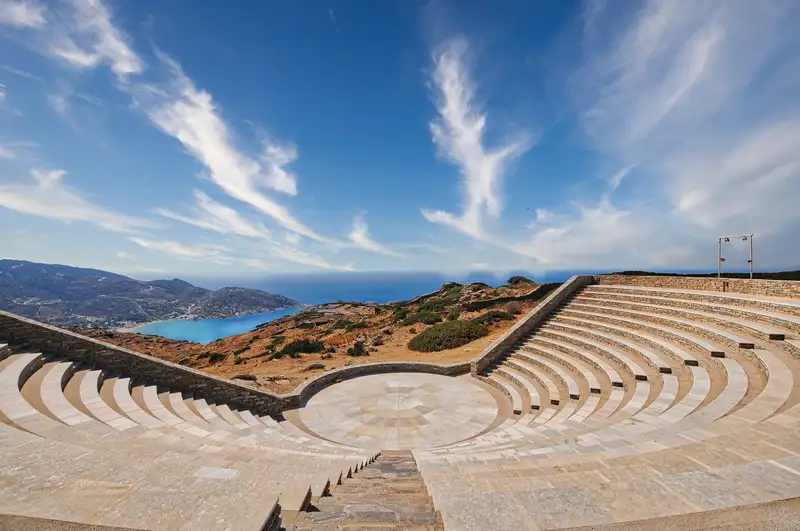
At the bottom of Chora village, the Odysseas Elytis open-air theatre has been cut into the hillside – a small stone amphitheater named after the Nobel Prize-winning Greek poet. In the summer months, concerts and performances are held there under the stars. Even when there’s nothing going on, it’s worth visiting for the view from the top rows alone.
The beaches of Ios: Golden sand and turquoise water
The best beaches on Ios are Mylopotas, Manganari, Koumbara, Gialos, Agia Theodoti, and Psathi, though the island has more than thirty beaches along its eighty-six kilometers of coastline.
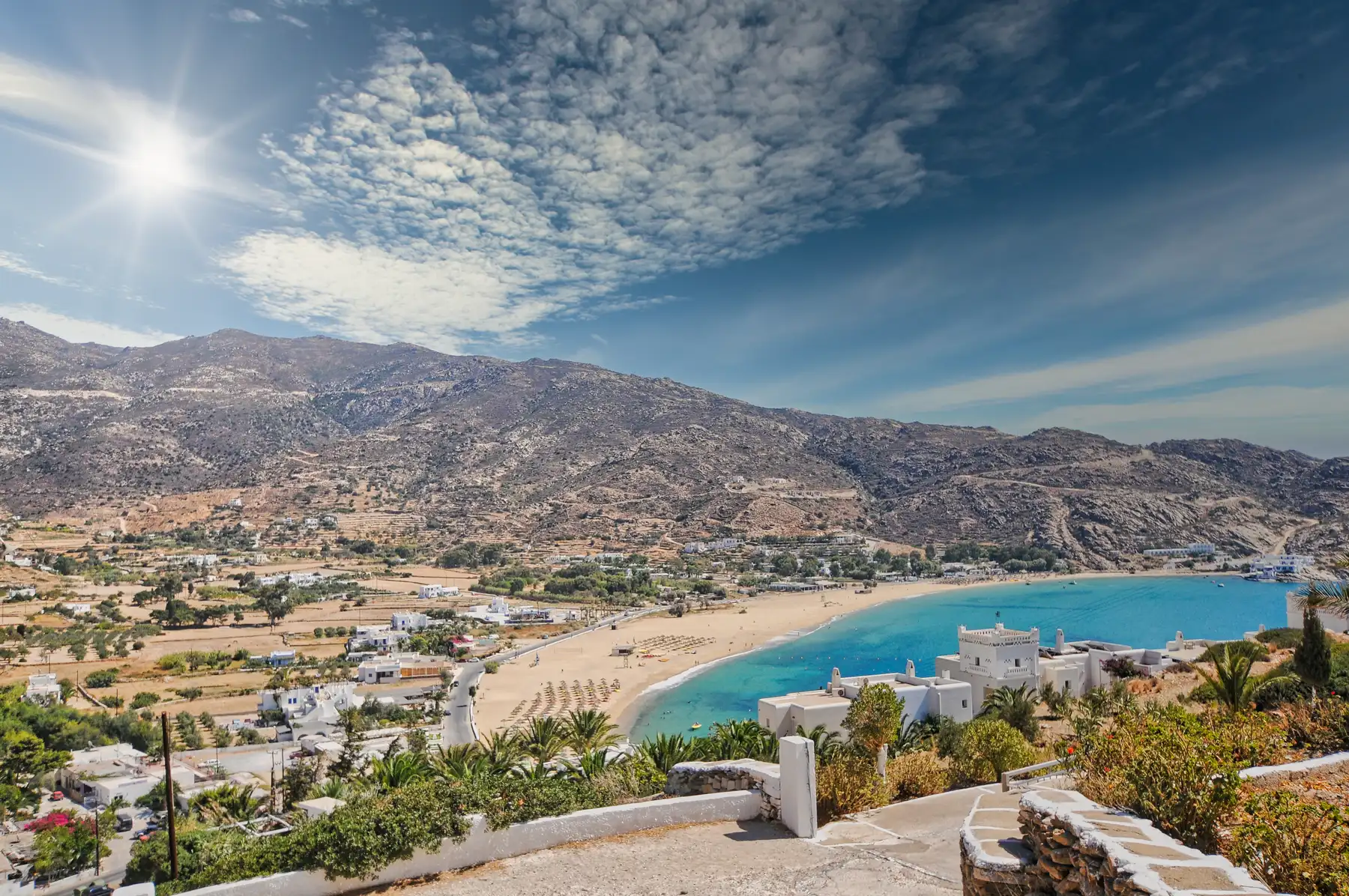
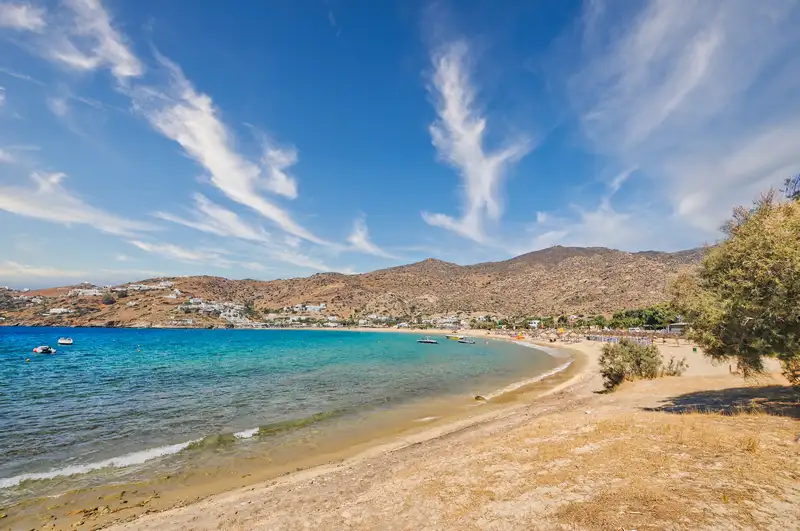
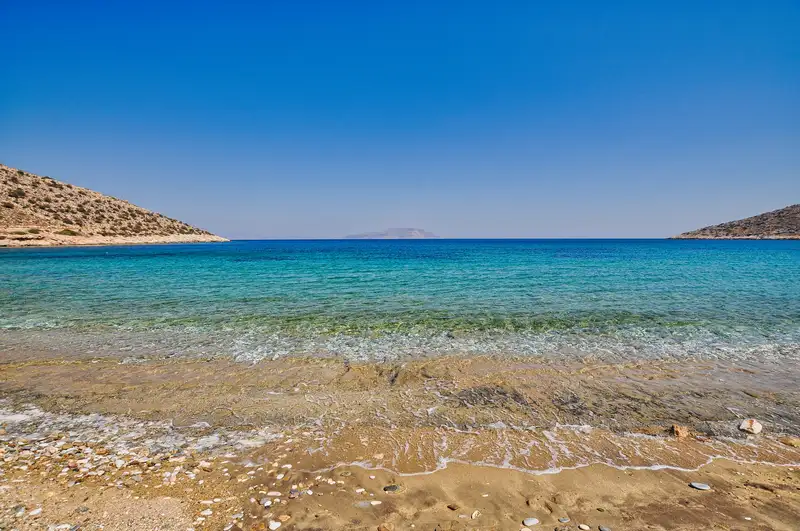
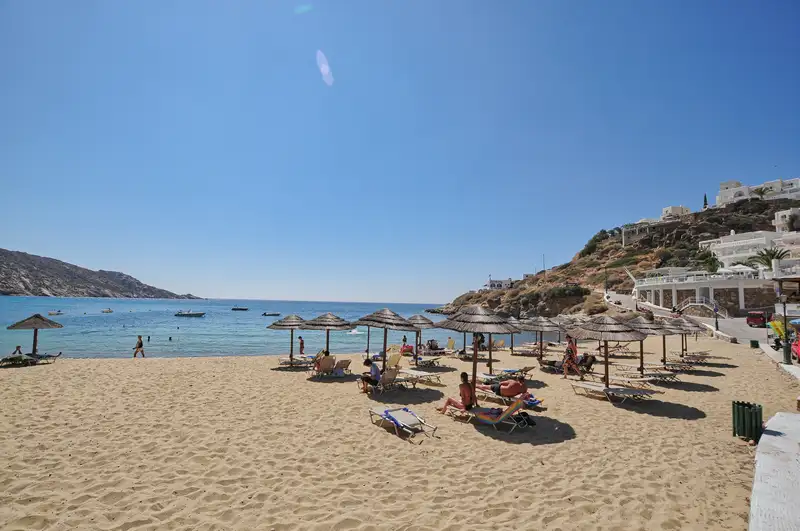
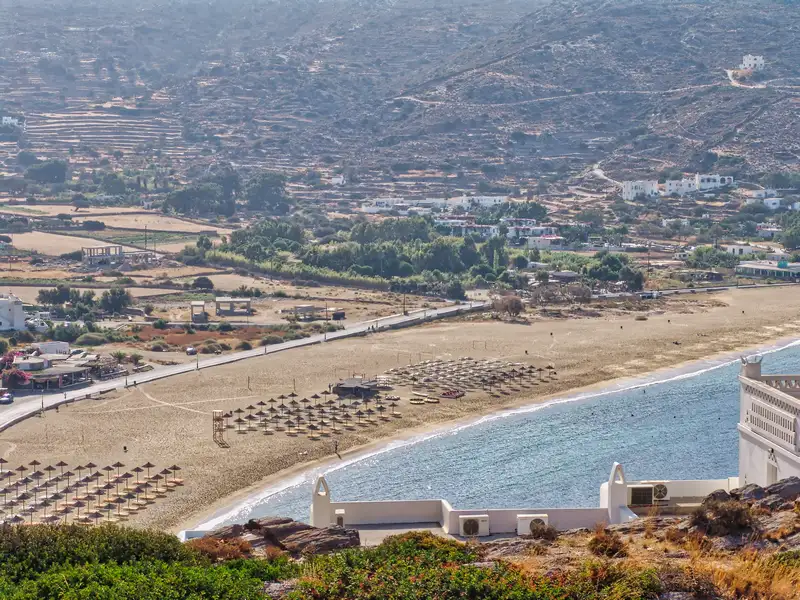
Mylopotas is the main beach: a long golden strip lined with sun beds, beach bars, and small restaurants. It’s about three kilometers south of Chora. The water is calm and shallow near the shore and turquoise blue and deep beyond that. It’s the most popular beach on Ios and, during the high summer season, also the loudest. In June or September, it winds down into something altogether softer.
Manganari is on the southern tip of the island, about twenty-three kilometers from Chora. Manganari is actually five beaches or bays connected and separated by small rocky points. The water is shallow and turquoise, and the sand is incredibly soft – almost tropical. Scenes from Luc Besson’s The Big Blue were filmed here. It takes time to get there, but the drive is one of the island’s most beautiful.
Koumbara is small, close to the port, and one of the best sunset beaches on Ios. Koumbara is partly pebbled. Gialos, on the other hand, is right next to Ormos (so an easy swim on arrival or departure day) and much quieter than Mylopotas, with a more local feel.
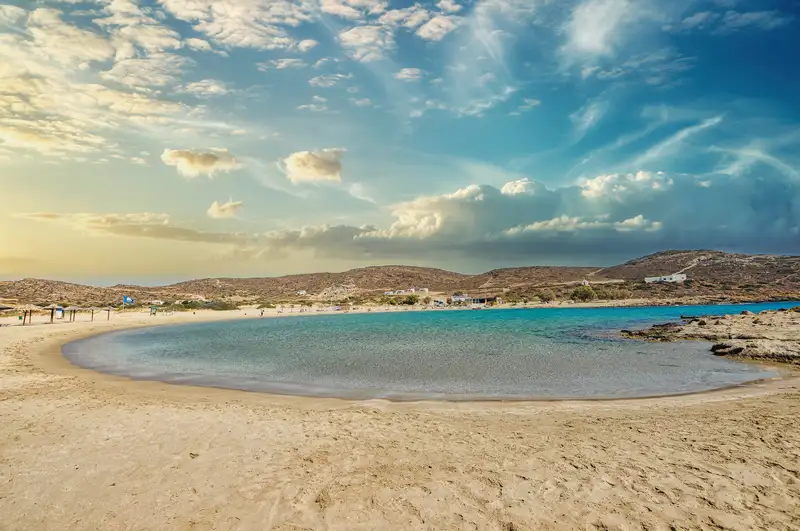
Agia Theodoti, on the island’s east coast, is a horseshoe bay that most people don’t go to, and that’s exactly why I love it. A little further east, still on the island’s east coast, is Psathi. It’s even wilder and almost unorganized – a place where you bring your own water and stay until sunset.
Ios’s northern beaches, around Plakotos, are more rocky and remote and better as a pause on the way to Homer’s tomb than as a beach day in themselves.
Beyond the beach: What Ios gives you if you look for it
After the beach, the best things to do in Ios are to climb to Panagia Gremiotissa at sunset, take a walk through the Skarkos archaeological site, visit the tomb of Homer in Plakotos, explore the ruins of Palaiokastro, see a show at the Odysseas Elytis theatre, and hike one of the island’s marked trails.
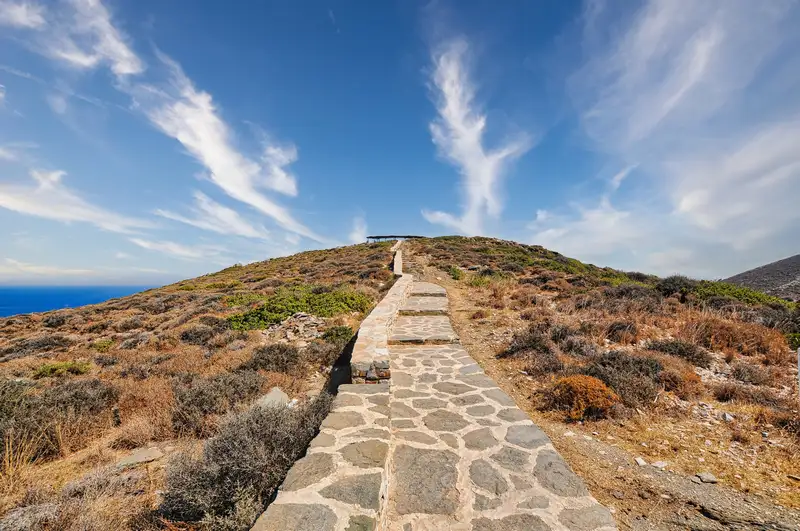
Panagia Gremiotissa is the easiest and, for me at least, the most memorable. From Chora, it is a short walk up to the terrace of the church. On the same ridge to one side of the main building, there are three smaller chapels. Sunset here dominates the whole of the western Aegean, and on a clear night you can see Sikinos and, out beyond that, the outline of Folegandros. I have stood there with people I had just met and who did not say a word for the whole of it. Some places are not places to say words.
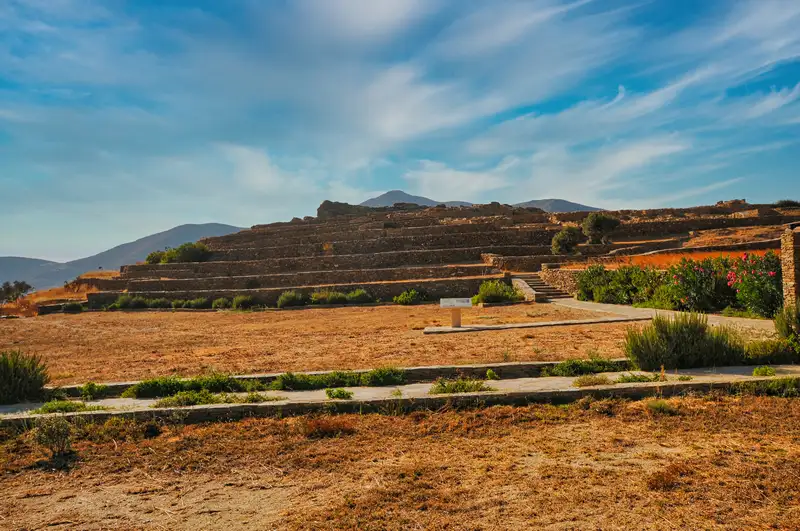
Skarkos is a four and a half thousand year old Early Bronze Age settlement on a low hill just outside Chora. The stone walls are still up to three meters high in places, and you can wander through the streets that people walked on in 2700 BC. It is one of the most significant Proto-Cycladic sites ever discovered and was awarded a European Union cultural heritage prize for the excellence of its preservation. Most people who come to the island will never visit here, and that is part of why it moves me. The past, not much more than a thought for most of us, is just sitting there quietly.
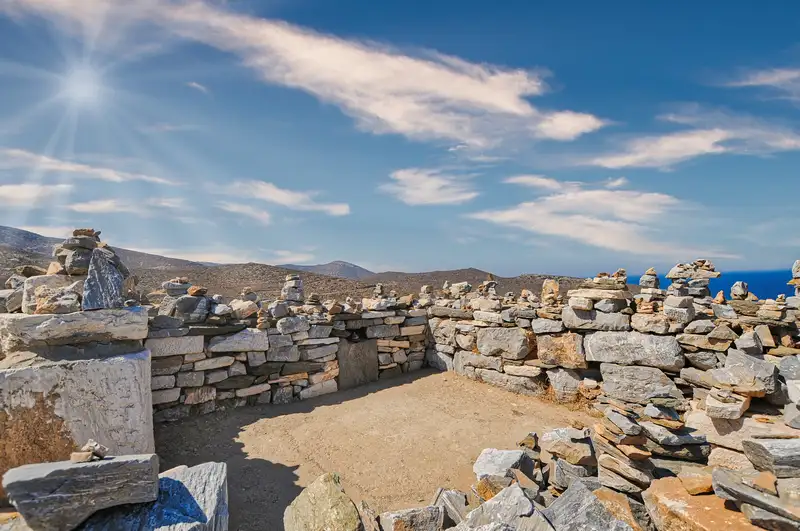
Palaiokastro is a ruined Byzantine fortress on a high hill to the east of the island, about seventeen kilometers from Chora. It was built in 1397 and controlled the sea routes between Constantinople and Crete. Not much remains, but the climb is worth it for one of the widest views on Ios, as far as Naxos and Amorgos on a clear day.
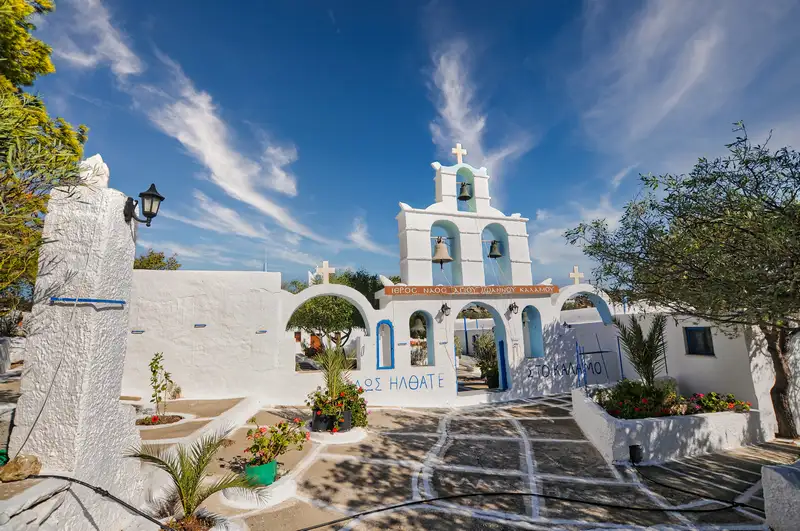
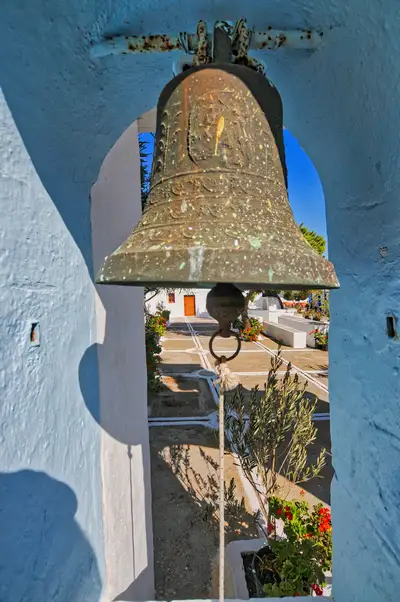
Tucked on a silent hill above the road to Kalamos beach on the island’s southeastern corner, whitewashed and low and almost always empty save for its festival days, the Monastery of Agios Ioannis of Kalamos is that kind of inconsequential Cycladic monastery you always find yourself slowing for, for no very good reason. The locals come on pilgrimage here from all over the island on the 29th of August, feast day of Saint John the Beheaded, and the chapel gets full of candles and songs and the smell of incense. The rest of the year, the wind has it.
Other small pleasures worth a mention: the Archaeological Museum in Chora, which has artifacts from Skarkos and other sites on the island, the small Gaitis-Simossi modern art museum near the top of the village, a boat tour around the island to get to the coves that roads cannot reach, and the marked hiking trails. Most start in Chora, are under seven kilometers, medium difficulty, and are full of wild thyme and ancient stone walls.
The Taste of Ios: What the Island puts on the table
The food is as Cycladic as the island’s heart. There are some local specialties you will not find anywhere else, most famously cheeses. The one you should start with is skotyri, a crumbly, sharp, aged goat cheese flavored with summer savory. It is served on bread, baked into pies, or eaten with dried figs. The first time I tried it, on a terrace above Mylopotas, I asked the owner where I could buy some to take home. He laughed and said, only on Ios.
Look for other local cheeses such as niotiko and xino. Matsi is handmade local pasta usually served with cheese and butter, a simple but deeply comforting dish. For dessert, ask for mosenta, a traditional pie made with watermelon, raisins, honey, and sesame seeds. It is not something you will find in many tavernas, but the few that still make it treat it like an heirloom.
Tsimetia, rice-filled zucchini blossoms, turn up on menus in summer, and kalasounia, cheese-filled sweet pies, in spring. The fish, like on most Cycladic islands, is fresh from the morning boats. Drakos Tavern on Mylopotas has been serving seafood since 1963, and still feels like a place where the same families sit at the same tables every summer.
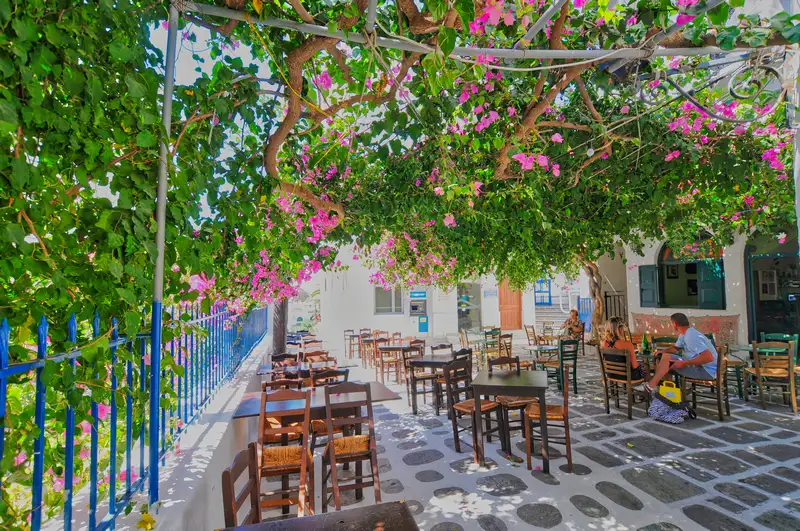
In Chora, the restaurant scene has expanded in recent years without losing any of its character. There are modern Mediterranean kitchens, mezze tavernas, and places where the owner’s mother still does the cooking. I do not like to suggest particular places in a pillar piece, because lists of names go stale fast. Ask someone in Chora where they ate last night. You will get a better answer than mine.
What is the nightlife really like?
The nightlife on Ios is smaller, softer, and more local than its reputation would have you believe, but it is also real and important to the island. In July and August, Chora springs to life after midnight and does not sleep again until dawn. In May, June, and late September, it is gentler, more sunset bar than all-night club.
Ios built its reputation in the 1970s and 1980s, when young travelers from all over the world arrived, camped on Mylopotas beach, and danced until the sun came up. Some of that spirit remains. There are bars on the main square of Chora where people are still dancing at five in the morning, and beach clubs on Mylopotas that put on the kind of parties that people fly in to experience.
The nightlife is not inescapable, though. It is contained in a few blocks of Chora and at the southern end of Mylopotas. If you want it, you will find it within ten minutes of stepping out of your hotel. If you do not, you can book your base in Ormos or on the quieter side of Mylopotas, where you will barely hear it.
What I love about the Ios nightlife, even as someone well past the age of dancing until six, is that it is still hospitable. It never feels exclusive or staged. People talk to each other. Strangers share tables. The island has retained the open-hearted quality that made it famous in the first place.
Planning your trip
Finding Ios: Where it sits in the Aegean and how to reach it
Ios is a small island of the southern Cyclades, right in the middle of the ring of islands in the Aegean, and exactly halfway down the ferry route that runs south from Piraeus along the coast of the Cyclades. This long island is about 18 kilometers long and 10 kilometers across, and has no airport, so the only way to get to it is by boat.
From Athens, the most common way to reach Ios is by ferry from Piraeus. The fast boats will take about three and a half to four hours. The slower conventional ferries take seven to eight hours, but they are cheaper and, if you don’t object to the longer travel time, more comfortable for the overnight crossing.
Connections are good if you are coming from another island. Santorini to Ios is under an hour by high-speed ferry. Naxos to Ios takes about forty minutes to an hour and a half. Paros is a little further away, at around two hours on the fast boats. There are summer services that also connect Ios island with Folegandros, Sikinos, Milos, Amorgos, and Anafi. Visiting these islands creates a feeling of reading the same story on different pages as you hop from one island to the next in the southern Cyclades.
How many days do you need ?
Three to four days is ideal on Ios. Two days is enough to get a taste, five or more, and the island starts to find you. At three, you have enough time to enjoy one leisurely afternoon in Chora, two full days at separate beaches, and a short side trip to Homer’s tomb or the Skarkos ruins. Time to watch one sunset at Panagia Gremiotissa and another from Koumbara. Eat at two or three tavernas and still feel like you’ve just scratched the surface.
When is the best time to visit the island ?
The best time to visit Ios is between mid-May and mid-June or between the second half of September and early October. These are the shoulder windows when the sea is warm enough, the meltemi has softened, the crowds are light, and the island is like itself.
July and August are the party months. The beaches get busy, Chora buzzes until sunrise, and the whole of the southern Cyclades gears into high summer mode. If you are coming to Ios for the nightlife, that is your window. If you are coming for some peace and quiet, it is the one to avoid.
June is my personal favorite time to visit. The days are long, the water is a bit chilly but still swimmable, the bougainvillea in Chora is in full bloom, and the tavernas have opened but are not yet overwhelmed by visitors. September is the gentle second chance. The water is warmer, the evenings slower, and there is a sense of the season letting go gently.
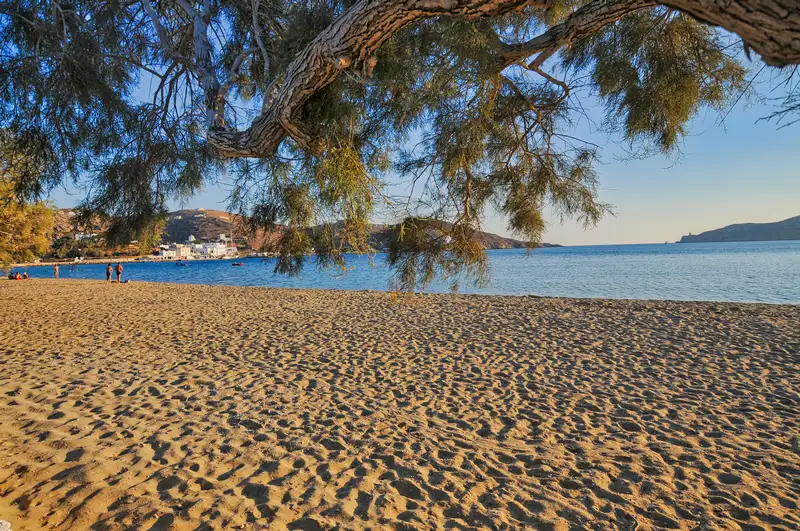
How do you get around ?
Ios has a bus network, and you can rent cars or scooters. Taxis are available too, and you can always walk. For shorter distances or when the weather is right, walking in Chora is nice. You need a car or scooter for longer trips, and a bus will do for some shorter journeys as well. The bus network is quite good.
Buses between Ormos, Chora, and Mylopotas leave every 15 to 20 minutes during the summer season. There are also less frequent buses to Manganari, Agia Theodoti, and Psathi beaches, which typically leave once or twice a day. Tickets are cheap and paid for on the bus in cash. If you will be staying and spending most of your time near the main beaches and tourist areas on the island, then the buses should be more than sufficient.
Renting a car, scooter, or ATV will give you much more freedom. Ios is a larger island than it looks on the map, and the more out-of-the-way beaches, such as Manganari or the northern coast by Homer's tomb, take a while to get to. For 2 or 3 days of exploring, a small car or scooter will make your life easier. If you aren't already a confident driver of large off-road ATVs, then I would be cautious on them on the inland roads, which can be quite winding. Taxis are a limited resource and difficult to hail during the peak summer period.
Where to sleep
Where to stay in Ios is mostly a matter of preference. There are three main bases, each offering a slightly different take on the island trip.
Pick Chora if you want to be at the heart of things. The place to walk, to watch sunsets at your door, tavernas and bars down below, and village life itself – one of the attractions of visiting. It is the loudest base in summer, and especially so in areas close to the main square, but it is also the most atmospheric. If you sleep in Chora, the village's distant hum will lull you to sleep, and church bells wake you up.
Pick Mylopotas for beach days. The long, golden beach is below you, the bus to Chora runs throughout summer, and most accommodation is either on the sand or on the slope above it. This is the area where you will find larger hotels, beach clubs, and some of the better-known properties on the island.
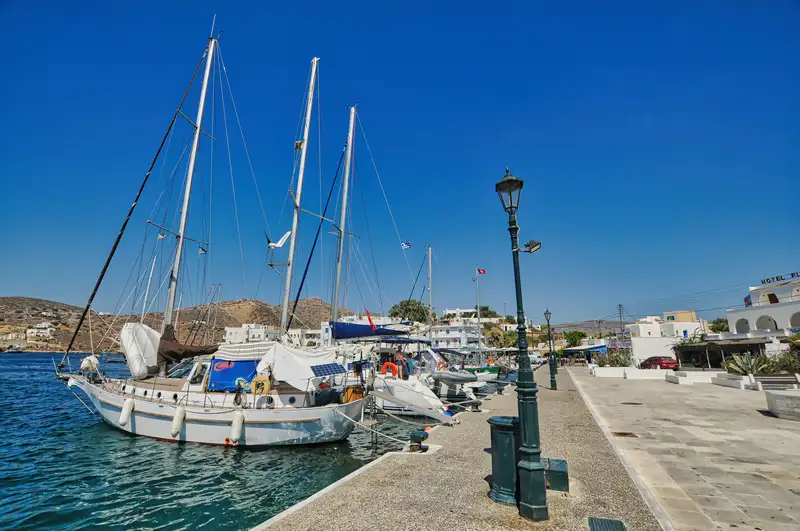
Pick Ormos, the port area, also called Yialos, for the quietest of the three bases. It is more practical for early-morning ferries, closer to Koumbara and Valmas beaches, and has a more local feel than the other two. I often suggest it to travelers who want a quieter base but close enough to reach Chora and Mylopotas without hassle.
What islands can you visit from Ios?
Ferries from Ios connect with Santorini, Naxos, Paros, Folegandros, Sikinos, Milos, Amorgos, Serifos, and Anafi, and in that sense, Ios is one of the best places to base yourself in the southern Cyclades if you are looking to visit more than one island.
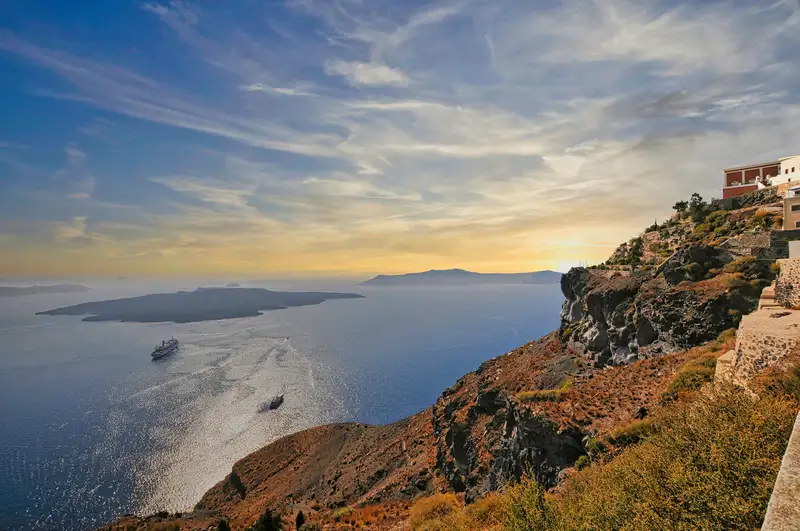
Santorini, the most obvious place to go next, is a hop, skip, and a half-hour by fast ferry south. She is known the world over for her caldera, sunset crowds, and volcanic beaches, and the link between Ios and Santorini has been made by more tourists than can possibly be counted.
Naxos is to the north of Ios, greener and bigger, and it is full of long sandy beaches and villages tucked into the mountains, a different rhythm from the dry Cycladic white.
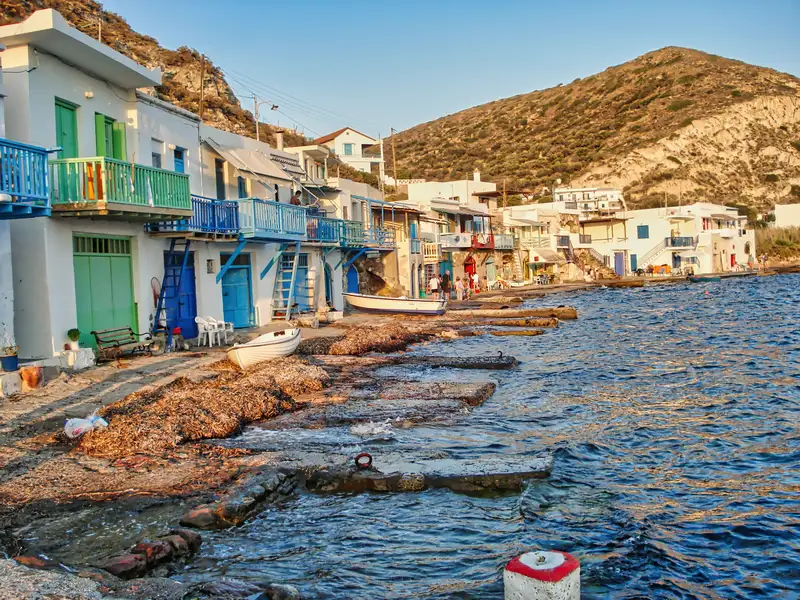
Paros sits a little further north, stately and poised, and is often chosen as a regional hub. Milos, further west, is all about the sea caves and the rock's painted colors.
If the bigger islands are too big for your taste, Folegandros is just a short ferry ride across, tall and proud and with a hilltop Chora that seems to hover above the Aegean. Sikinos is right next door. You can reach Anafi in the far corner of the archipelago by a long boat ride that will take you as far as you can go, and still feel held in place. Serifos, to the northwest, is untamed and untouched.
A few more answers before you book the ferry
Is Ios better than Santorini?
Ios isn't better than Santorini, and Santorini isn't better than Ios, because they're very different islands. Santorini has the caldera, the drama, and the crowds. Ios has the beaches, the more laid-back rhythm, and a Chora that's just as beautiful for a fraction of the price. Most visitors love both for different reasons, and a Santorini-Ios pair is the classic southern Cyclades itinerary.
What is Ios famous for?
Ios is famous for its whitewashed Chora, its long golden beaches, its summer nightlife, and its association with Homer, who tradition says was buried on the island. It's also home to an Early Bronze Age settlement at Skarkos, one of the most important Proto-Cycladic sites ever discovered.
Can you visit the island without a car?
Yes, you can visit Ios without a car. The summer bus network is frequent enough to get you from the port to the Chora and Mylopotas, and to all the main beaches (Manganari, Agia Theodoti, Psathi). A car or scooter rental is only really worth it if you want to explore remote coves or move at your own schedule.
Is Ios safe for solo travelers?
Ios is very safe for solo travelers. It's a small island, the local community is close-knit, and the atmosphere, even at the busiest time of year, is friendly. It's just common sense if you're on your own in crowded nightlife areas, as on any island, but Ios has a long tradition of welcoming solo visitors, from the backpackers of the 1970s to today's solo woman travelers.
How expensive is Ios compared to other Greek islands?
Ios is cheaper than Santorini or Mykonos, and more in line with Paros or Naxos. The costs of accommodation, food, and transport are all reasonable, and there are plenty of high-end options too if that's what you're looking for. The shoulder months of May, June, and late September offer the best chance of both quiet and value.
The many faces of the island
Ios is not one island. There are many. It is the Ios of the nineteen-year-old who arrives on a ferry with a backpack. It is the Ios of a slow morning on a deserted beach at Manganari. It is the Ios of the old woman in Chora who still makes cheese pies as her grandmother did. It is the Ios of Homer, and the Ios of the dancers, and the Ios of the traveler who came for two nights and stayed for three weeks.
If you give it time, it will give you back more than you expect. Come in June if you can. Climb to Panagia Gremiotissa at the moment when the sea turns gold. Eat the skotyri. Sit on a bench above Chora and do nothing for an afternoon. Let the island take its time, the way it wants to.
The first time I left Ios, I promised myself I would return. I have kept that promise more times than I can remember. And every time I return, the light is still there, falling the same way across the same white walls, as if the island has been waiting.