You visit some islands. You settle into Naxos. The first time I came, years ago, I was supposed to stay only two nights. I ended up staying eight. I was walking down from the Kastro on the second evening. The air was full of grilled fish and oregano, and the sense that I had somehow blundered into a place that was still behaving as it pleased. That was the first time I visited, and the sense has never left me.
This guide is an attempt to compile the very best things to do in Naxos for the visitor who wants to breathe in the island and not just take photographs of it. Naxos is the biggest of the Cyclades and the most fertile. It has mountains that rise a thousand meters into the air and beaches that stretch for kilometer after kilometer of golden sand. There are temples that are older than most of Europe, marble villages that still smell of woodsmoke in the depths of winter, and the kind of quiet self-confidence that you will not find on any of its more famous neighbors.
What follows is the sum of everything I have learned across many visits: the places that fill me with awe, the food I crave after I leave, the myths that are still etched into the island, the practicalities that make life easier, and the slow turns in the road that have made Naxos one of my favorite places in all of Greece.
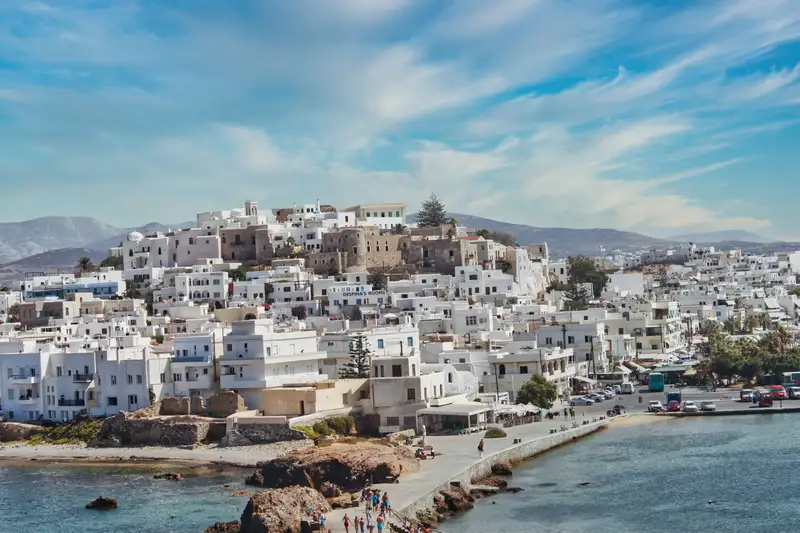
Table of Contents
The quiet weight of an island that lives its own life
The magic of Naxos is that it doesn't have to win your love. Most islands seem like they've been decked out for a photo shoot, varnished into a single glossy snapshot for the camera. Sure, Naxos has postcards, but tucked behind them is an entire island carrying on as if they don't exist. Working farms, cheese makers, fishermen, marble quarries, schools, weddings, and harvests. Mountain villages tick over in their own time. The smell of olive oil and wild herbs wafts up from the Sunday market.
I have visited in summer, when the beaches are packed, and in October, when the air is crisp, and the tavernas are half empty. Both times, the island felt the same to me. The island just...is. It's that steady, lived-in feeling that makes Naxos so special and keeps it with you long after you've gone home.
Where Naxos sits, between Paros and the open horizon
Situated at the very heart of the Cyclades, Naxos occupies a central position in the Aegean Sea. It is surrounded by some of the most popular islands in Greece, Paros to the west, Mykonos to the north, Ios to the south, and Amorgos to the east. Naxos lies some 200 kilometers southeast of Athens and is reached by ferry from Piraeus, Rafina, or Lavrio, as well as by a short flight from Athens' airport.
For visitors from another island, Naxos is one of the Cyclades' most connected points, with daily ferry services to and from most of its neighbors.
A short history of the island
Settled for over six thousand years, the island of Naxos bears traces of its long and complex history in almost every corner. The island's first grand period was that of the Cycladic civilization, which prospered here from around 3000 BC, and whose mysterious white marble figurines can be seen today at the Archaeological Museum of Naxos.
By the 6th century BC, ancient Naxos was one of the richest in the Aegean, thanks to abundant marble and emery deposits, and the unfinished Portara is all that remains of a temple to Apollo from the island's golden age.
Byzantium came next and with it its painted churches, of which more than two hundred remain scattered across the island's countryside. In 1207, the island was captured by the Venetian Marco Sanudo, who made Naxos the capital of his Duchy of the Archipelago, leaving his mark in the form of the Kastro that still dominates Chora.
The Ottomans followed, then Greek independence in the 19th century, and, finally, modern Greece. The traces of each are still here, discreetly, if you know where to look.
Where Zeus was raised, and Ariadne wept
Few islands are as steeped in myth as Naxos. Legends say that Zeus was raised as a child in a cave on Mount Zas, the highest point in all the Cyclades. His son, Dionysus, the god of wine, grew up here too. In gratitude, he covered the island with vineyards and claimed it as his own.
The most romantic story of all is that of Ariadne. She fled with Theseus after helping him slay the Minotaur. He set her down on the Naxos shore while she slept. When she awoke, she was alone and heartbroken, but Dionysus found her there, fell in love, and took her as his wife, wedding her on Naxos.
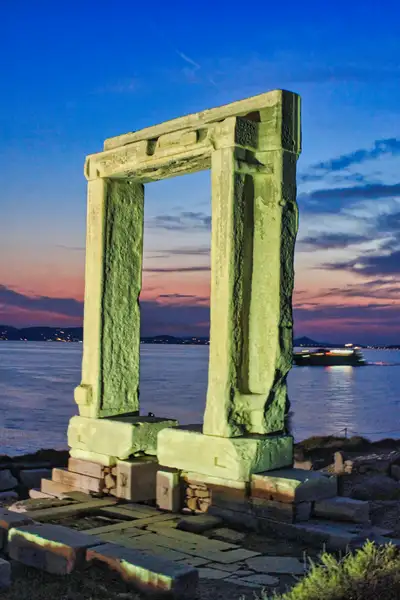
I think of this story whenever I pass the Portara at sunset. The breeze, the empty marble gateway, the sound of the sea. It is easy to imagine her waking on that beach, the warmth of the sun still upon her, watching a sail disappear.
Naxos town, the slow heart of the island
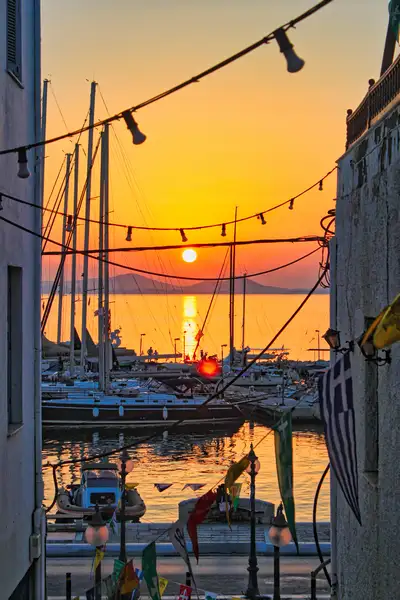
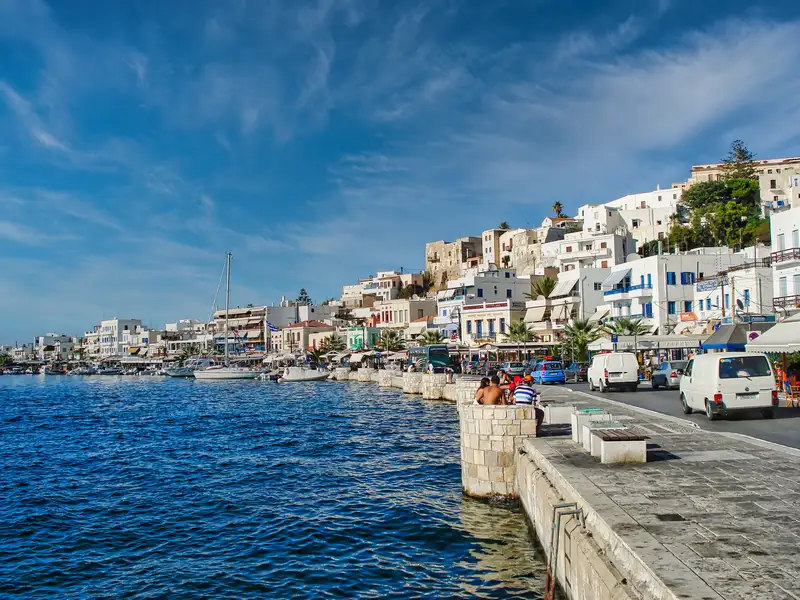
The town in Naxos is the island’s heart, and almost every visit starts and ends there. It contains the harbor, the labyrinth of whitewashed alleys of the old town, the Venetian castle on its hill, and, at the edge of the sea, the marble gate of Apollo.
You can spend an entire holiday within its walls and never think you have seen it all. Here are the three places in town I always return to.
Chora and its old streets
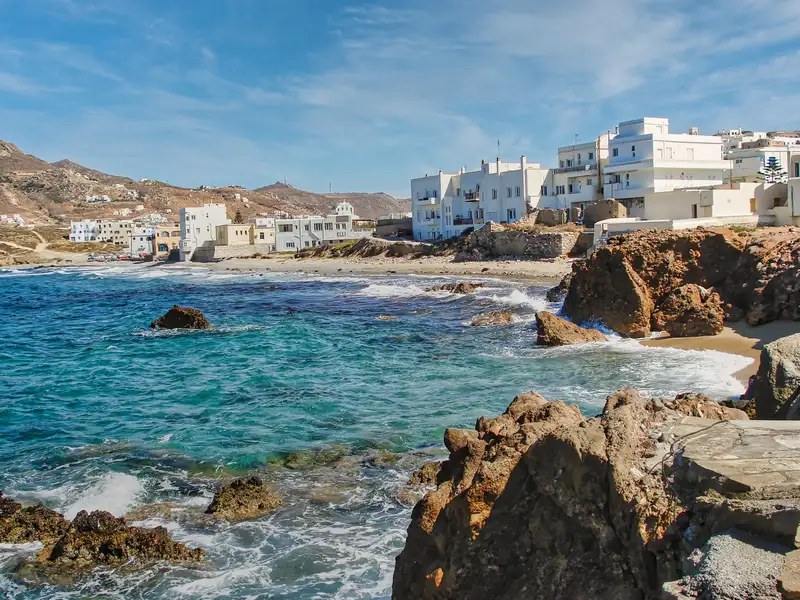
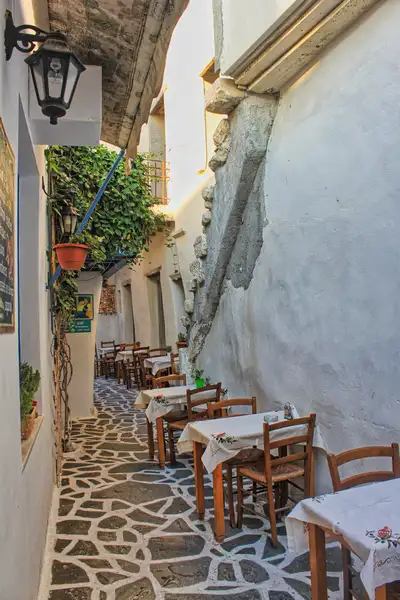
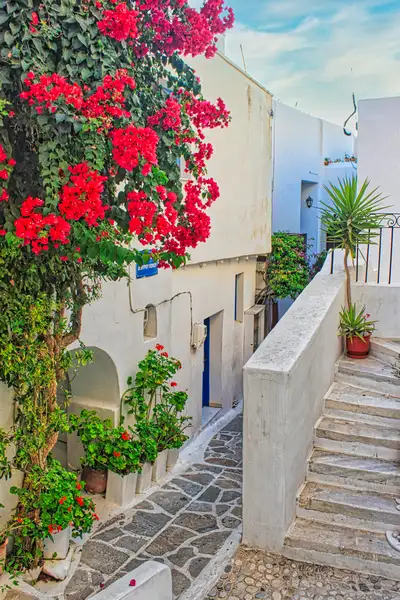
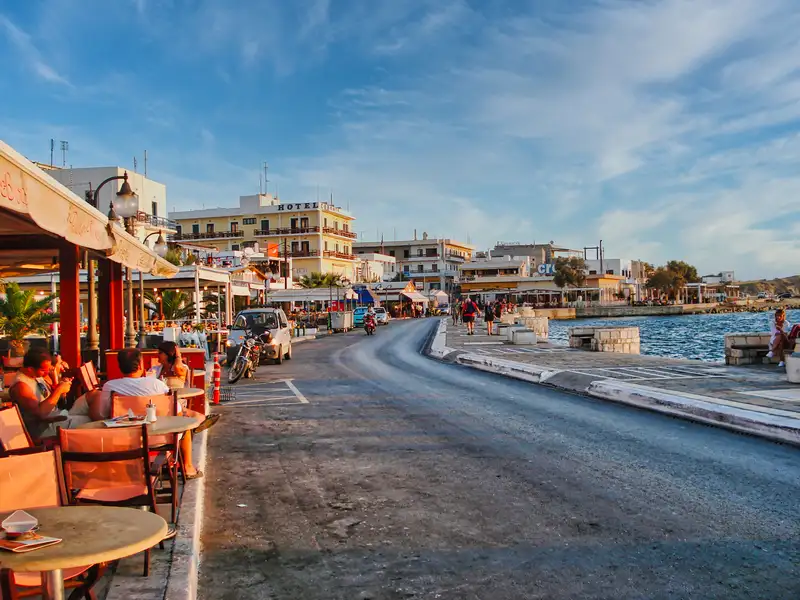
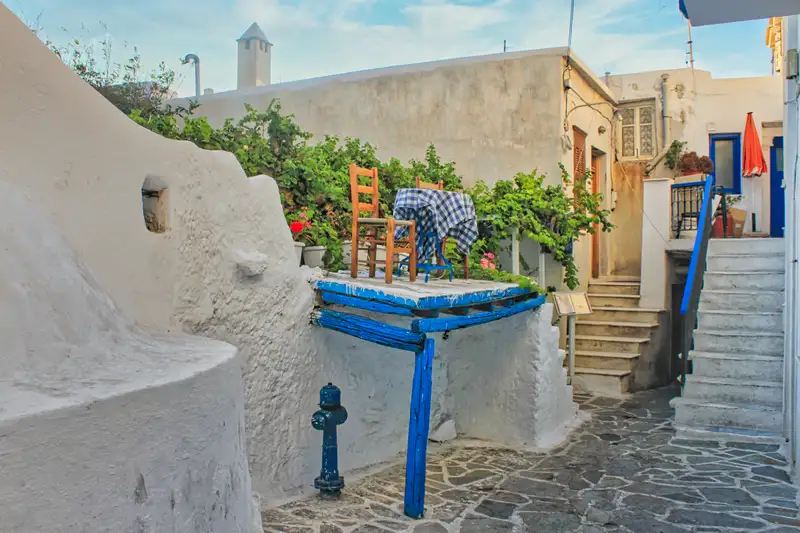
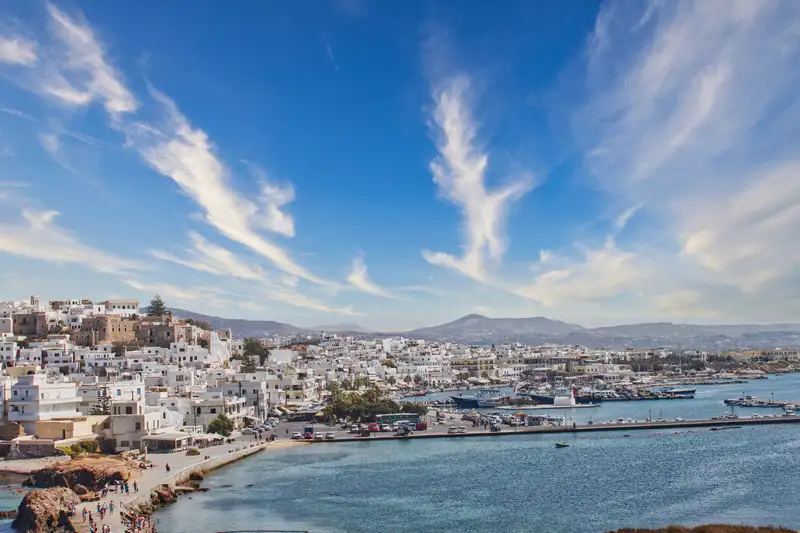
Chora nestles into a small bay and is overlooked by the Portara on its islet. The white houses climb up the hill in narrow lanes that zigzag and loop until you stop trying to orient yourself. I love to lose myself in these streets.
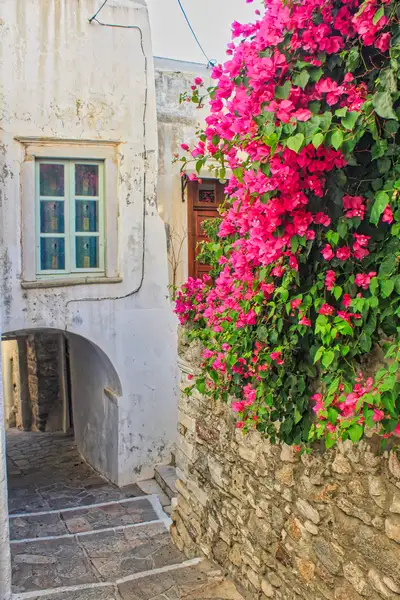
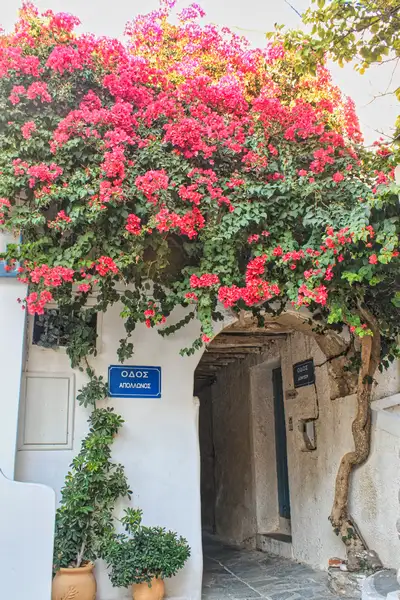
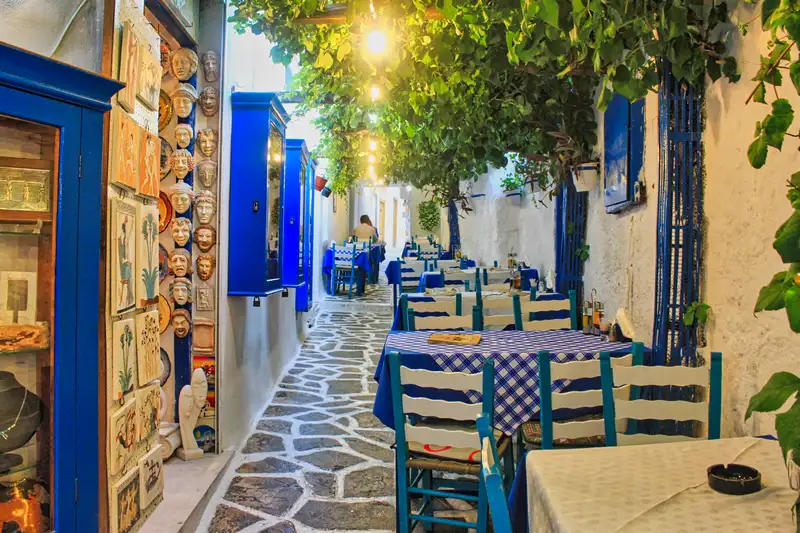
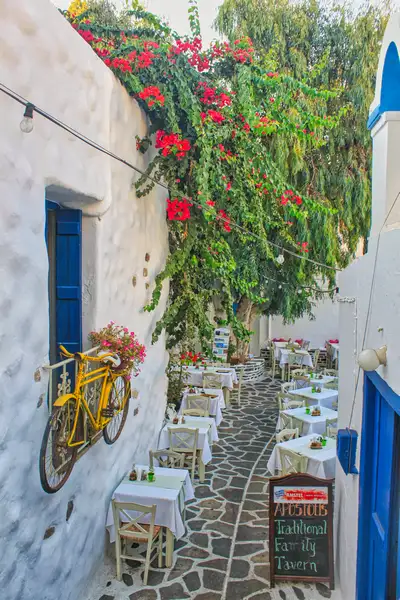
The old town is full of arched passages, little chapels, taverna courtyards draped with bougainvillea, and the tiny shops where you can buy local cheese, honey, kitron, or handmade leather sandals. At nightfall, there is a gentle activity in the streets. Visitors filter down from the Kastro, families sit at seafront tavernas, music spills from small bars, and the light on the marble of the Portara glows gold and then pink.
Wander the Old Market, alley by alley. Find somewhere to sit with a glass of local wine and wait for the ferries to arrive. There is no checklist. The town reveals itself gently, and the longer you linger, the more it yields.
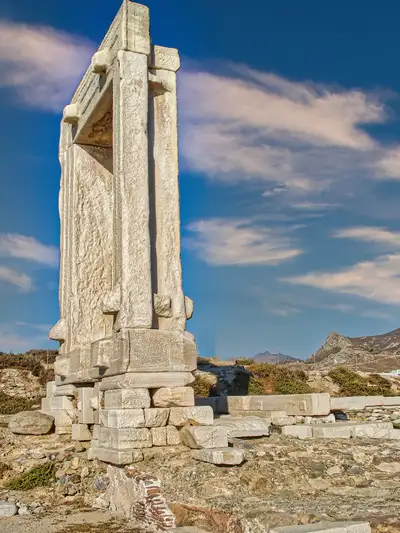
Portara, the temple of Apollo
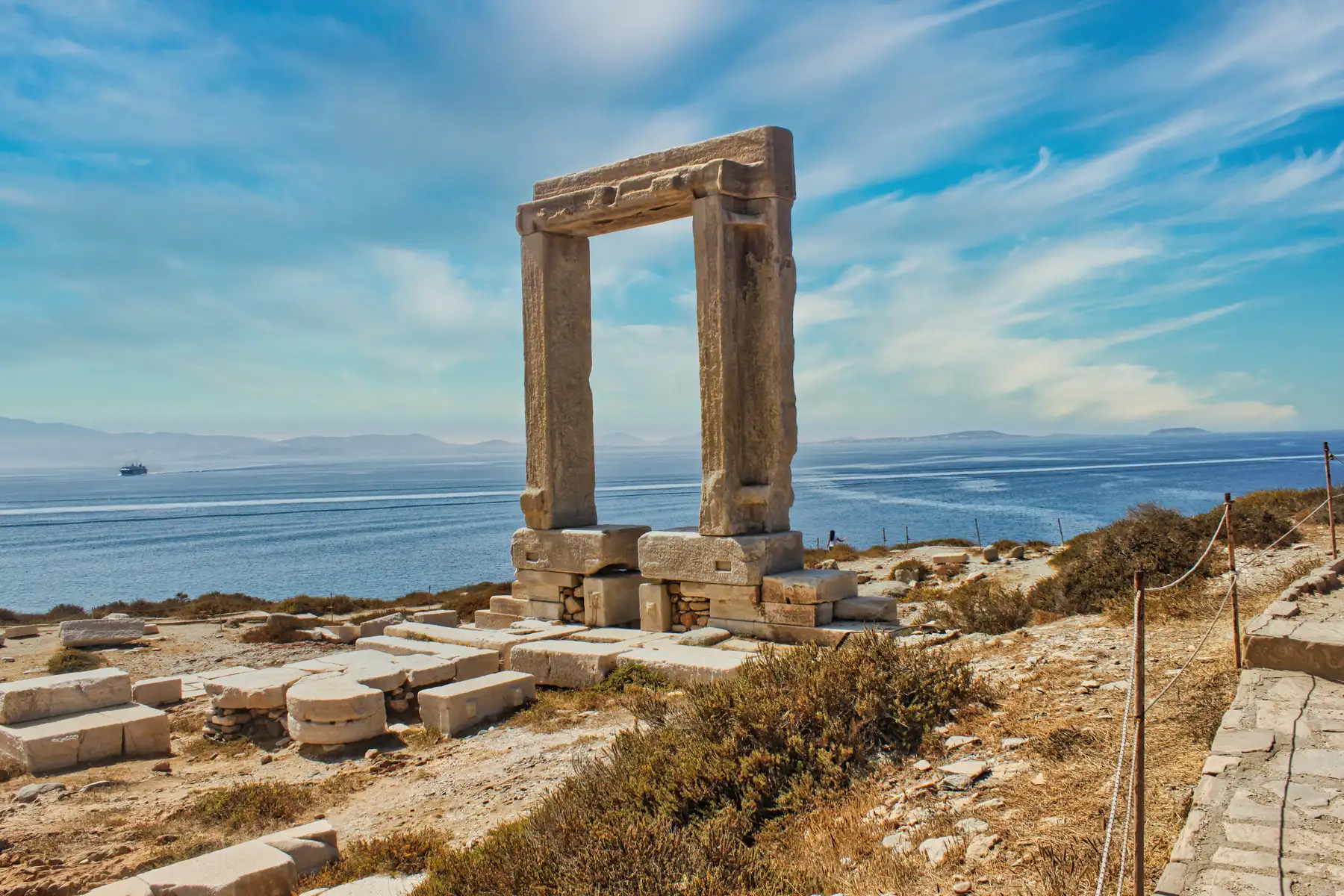
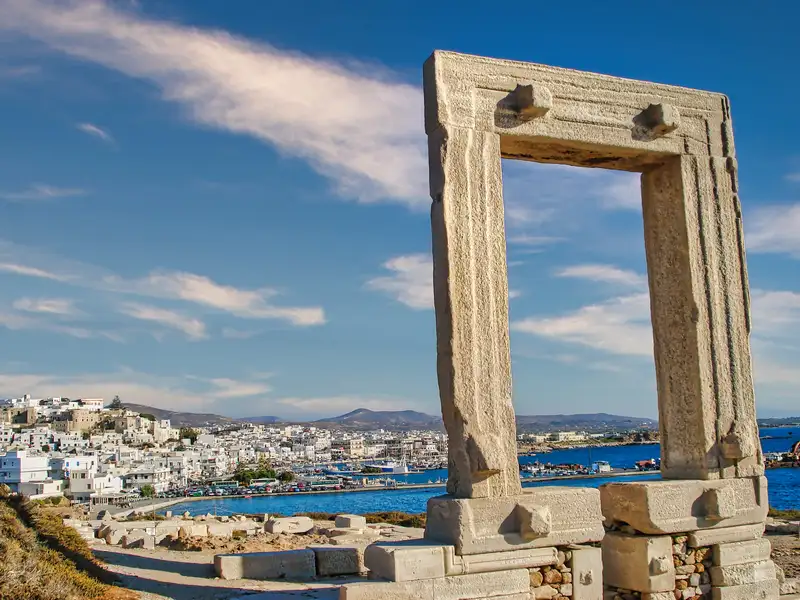
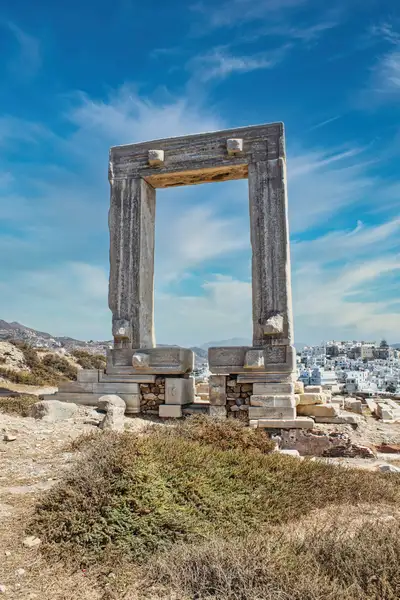
The Portara is the gate of an unfinished 530 BC marble temple dedicated to Apollo. It is the symbol of Naxos and sits alone on the small islet of Palatia. The islet is linked to Chora by a short stone causeway, which you can walk across.
Work started on the temple, but it was never finished. Over the years, its stones were carted off to build other structures in the town, but the gate was too heavy to move, so it remained.
Sunset is the magical moment when the sun dips behind the marble frame, and the whole town gathers on the rocks to watch. I have seen it many times, and it never feels hackneyed. But I also love to go there at sunrise, when no one is there, just the wind and the sound of the waves against the stones.
The Venetian castle (kastro)
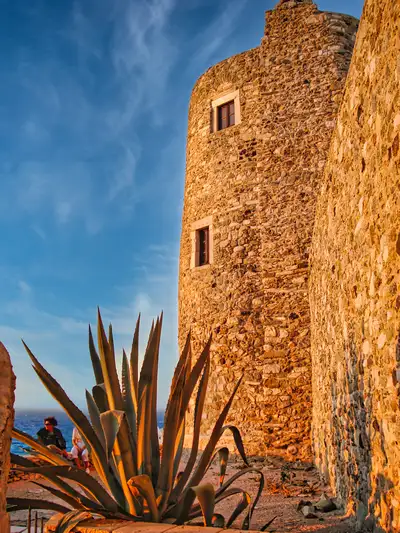
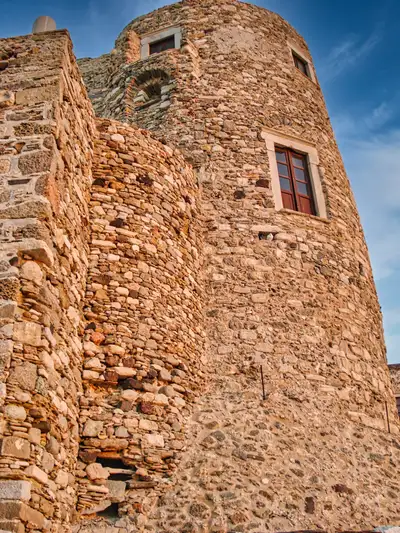
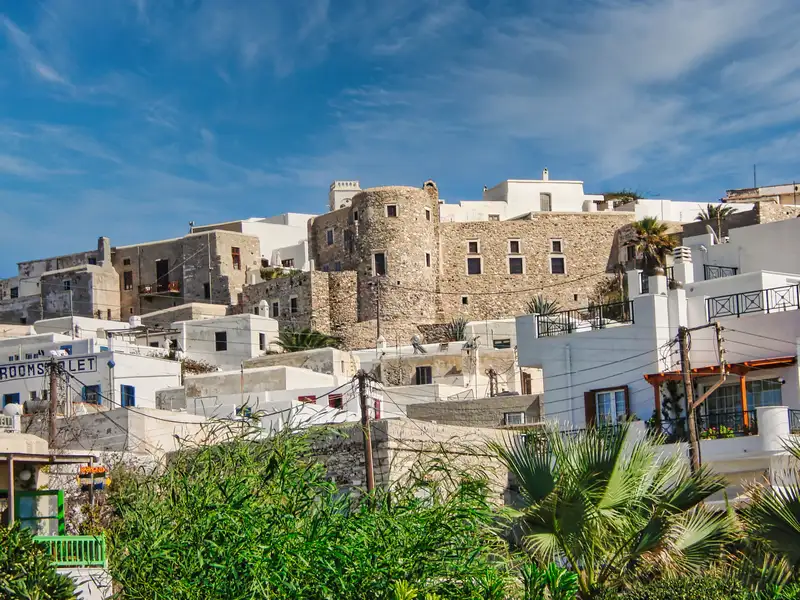
Above the old town is the Kastro, the 13th-century Venetian citadel built by Marco Sanudo, who made Naxos the capital of his tiny principality in the Aegean. To reach it, you have to climb a maze of stepped lanes until you pass under one of the old gates and into a quieter, older quarter.
Inside the walls are the Catholic cathedral, the old Ursuline school, a few small museums, and the Archaeological Museum of Naxos, which houses some of the best Cycladic figurines you will ever see.
People still live in the Kastro. Laundry hangs from iron balconies, cats sleep on the warm stones, and the silence is dense in the afternoon. It's one of the most atmospheric places on the island.
The mountain villages of Naxos
If you visit only Chora, you will see a pretty island. If you rent a car and head for the mountains, you will see Naxos as it really is. The island's interior is a patchwork of little villages that have changed little in a hundred years.
Apeiranthos nestles on the eastern slopes, with its marble-paved streets, stone houses, and a silence that is almost monastic.
Filoti clings to the hillside below Mount Zas, with its ancient plane trees in the square and tavernas that cook lamb the slow way.
Halki, the old capital, is home to the Vallindras kitron distillery, which has been making local citron liqueur for over a century.
Koronos smells of mint and oregano in summer, and Melanes conceals one of the great unfinished kouros statues among its olive groves. These villages are not museums. People live, work, raise children, and celebrate festivals in the summer. To drive between them on a quiet morning, as the sun filters through the olive leaves, is one of the best things you can do on the island.
The beaches of the island
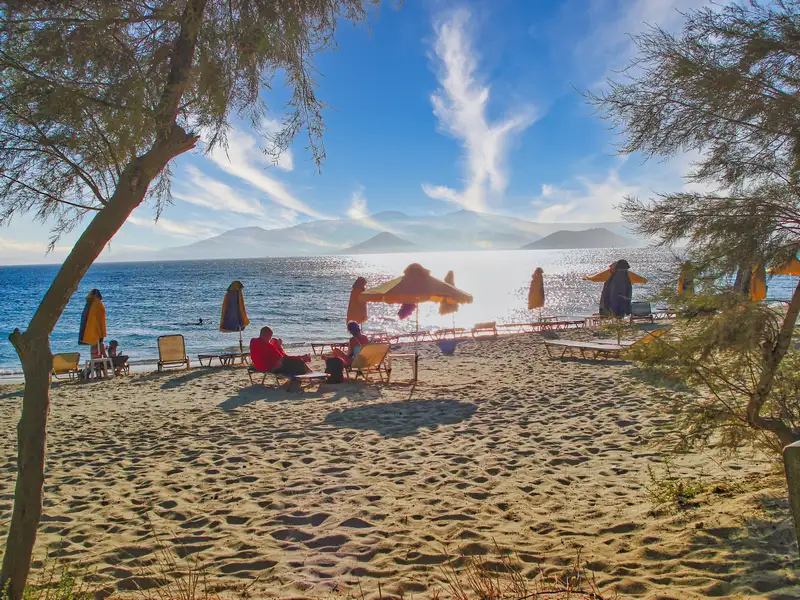
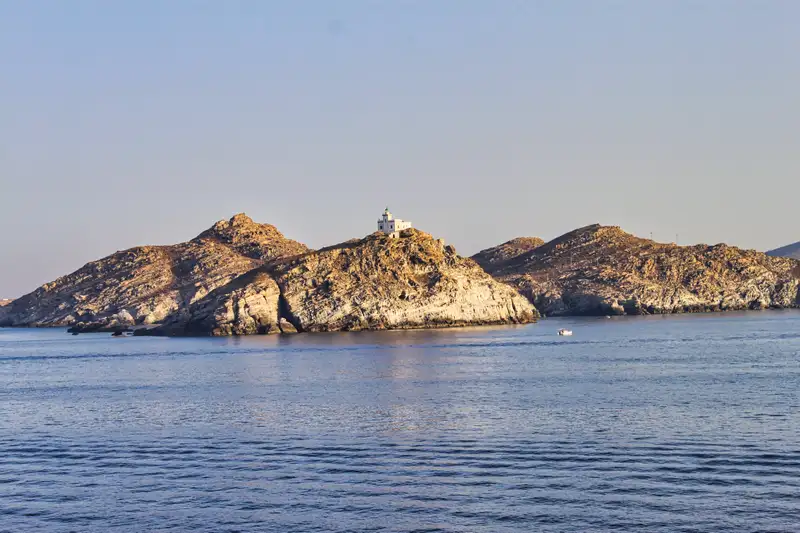
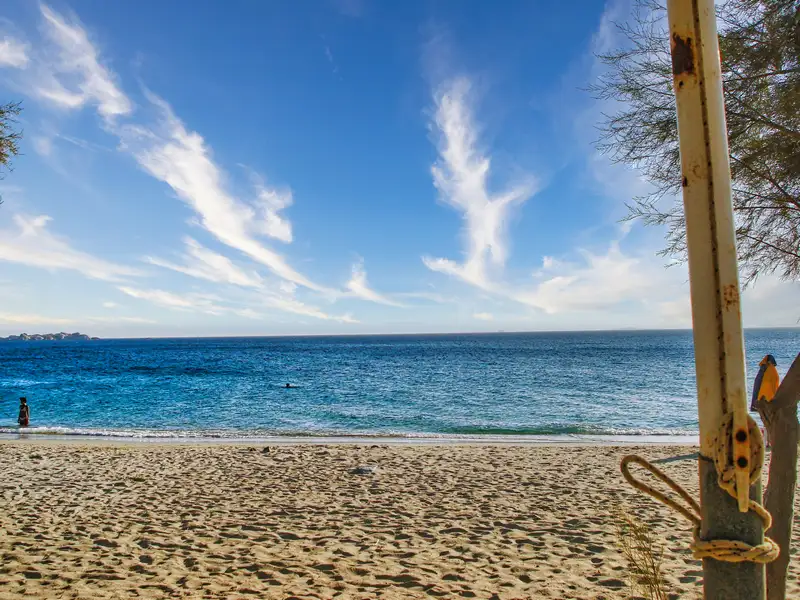
Naxos has the longest, most indulgent beaches in the Cyclades, and they are among the features of the island that burrow under your skin. The entire western coast is one unbroken, lazy expanse of pale gold sand, washed by water so limpid it seems faked. It begins in town with Agios Georgios, an easy, walkable stretch from the harbor.
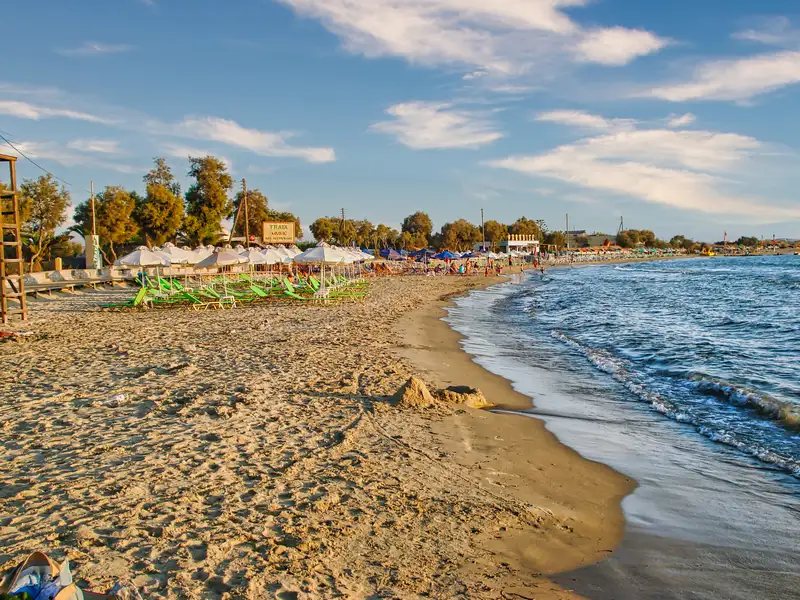
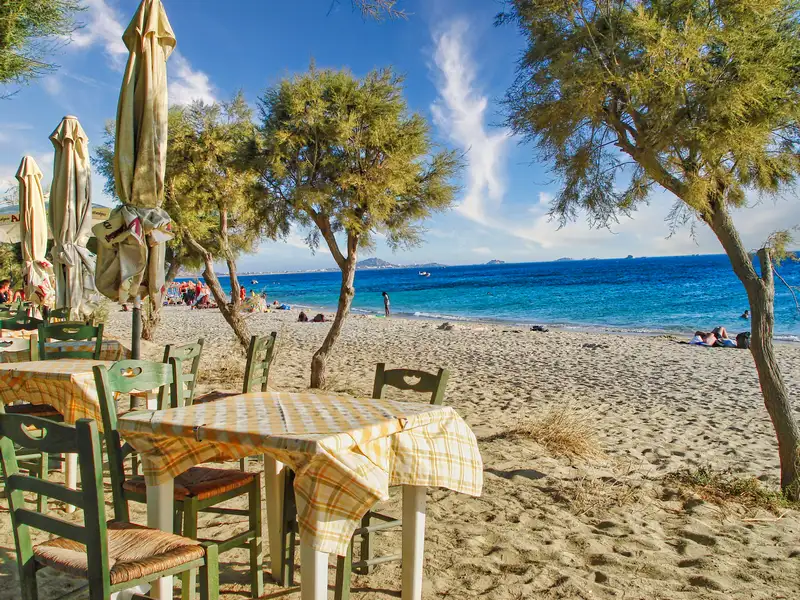
A few minutes south is Agios Prokopios, which opens into a wide turquoise bay that families crowd, and next to it is Agia Anna, smaller and more animated, with fishing boats beached on the sand. After those, comes Plaka, three kilometers of dunes and cedar trees that always seem half deserted. Past Plaka, Mikri Vigla beckons windsurfers from across Europe with its summer Meltemi, and Kastraki keeps things quieter, with the clearest water and almost no buildings.
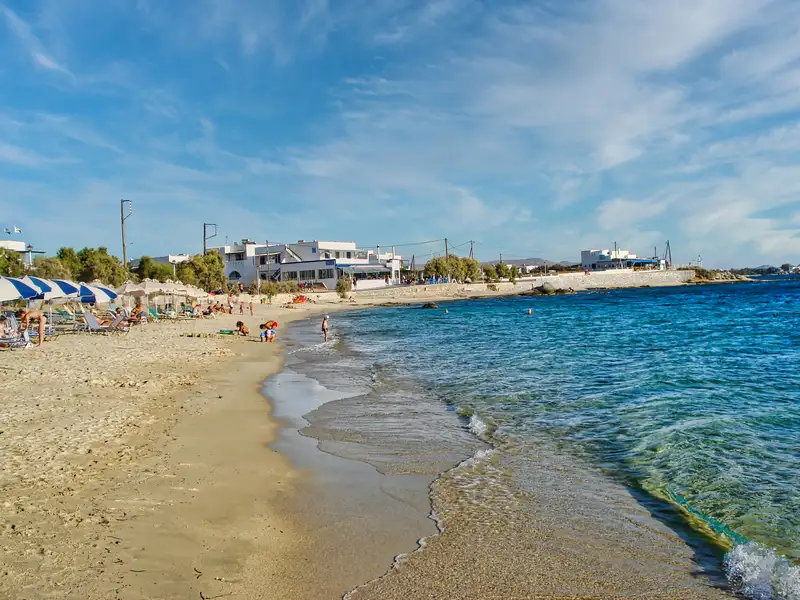
Down in the deep south, Naxos turns wild. Aliko is one of the most beautiful beaches in Greece, hidden behind a small juniper forest, and nearby are quiet coves and rocks in pink and ochre. Beyond it, Pyrgaki marks the end of the paved road and is calm and almost empty. After many summers on this coast, I keep discovering new corners.
Inland Naxos, where the old stories still live
Off the beaches and away from the towns lies a wild, ancient interior, unseen by most visitors to Naxos. The mountains conceal caves where gods were born. The valleys shelter temples hewn from white marble.
The olive groves guard great unfinished statues abandoned on the stone where they were chiseled more than two thousand years ago. To venture into the interior is to enter the island's oldest layer.
Mount Zas and the cave of Zeus
Mount Zas, 1,004 meters above sea level, is the tallest mountain in the Cyclades. It is named after Zeus, who, according to ancient mythology, was raised secretly on the mountain to keep him hidden from his father, Cronos.
A cave on the mountain's west side, the Cave of Zas, is still open to visitors. You can walk around in its cool, damp stillness and marvel at the stalactites that have formed over millennia. The trail to the summit departs from the Aria Spring above Filoti, or from a small chapel further up, the chapel of Agia Marina.
The climb takes three hours or so up and down, and the view from the summit stretches across half the Aegean. On a clear day, you can see Paros, Ios, Amorgos, and even the cliffs of Santorini in the distance.
The ancient sites and temples of Naxos
Away from the Portara, Naxos also has an unassuming set of ancient sites scattered through the countryside. The Temple of Demeter at Sangri is from the 6th century BC. It stands in a broad green valley with mountain views. The temple is constructed almost entirely from white Naxian marble. A small museum beside it tells the tale of the goddess of harvest, who was worshipped here.
Hidden amongst the olive groves in the village of Melanes is one of the great unfinished kouros statues, a standing marble figure carved from a single block that was abandoned there over two thousand years ago. A second kouros is even larger and even more unfinished. Found near Apollonas in the north of the island, it is over ten meters (33 ft) long and is still partly attached to the rock from which it was being cut.
Panagia Drosiani, near Moni, is one of the oldest Christian churches in Greece, with 7th-century frescoes that have survived almost intact.
Naxian food, and the citron of Halki
Naxos is one of Greece's great food islands, and you sense it the moment you sit down at a taverna. The famous Naxian potatoes, grown in the fertile plains surrounding Chora, are sweeter and firmer than anywhere else in the country.
So too is the cheese tradition: graviera, arseniko, and kefalotyri are made in small dairies across the island. There's local honey from the mountain villages, fresh seafood from the harbor, slow-cooked lamb in Filoti, and stuffed vine leaves that taste as if they've just come from the garden.
The drink to remember is kitron, a citron liqueur distilled from the leaves of the citron tree. It's made only on Naxos, and the Vallindras family has been producing it in Halki for more than 120 years. You can visit the old distillery, see the copper stills, and taste the green, yellow, and clear varieties before you leave.

Practical info for visiting the island
The following is useful practical information to have before you book your trip. I've organized it here so it's easy to find when you need it.
Getting to Naxos
Naxos is accessible by ferry or by plane. Ferries depart from Piraeus, Rafina, and Lavrio in Athens, and the crossing takes 3.5 to 6 hours, depending on the type of ferry. Summer schedules include frequent ferries from Mykonos, Paros, Santorini, and Ios.
Flights from Athens to Naxos are about forty minutes. There are no nonstop international flights to the island. The most convenient option from another country is a fast ferry from Rafina or Piraeus if you fly to Athens.
Getting around Naxos
The local KTEL bus network is good, and there are regular buses from Chora to all the main beaches and many of the mountain villages. A rental car is the best option for the inland routes and the quieter beaches. Roads are generally good, though there are some narrow and steep mountain stretches. Taxis can be useful for short trips, but they can be hard to find in high season.
Where to stay in Naxos
Where to stay in Naxos, depends on what you want from the trip. Chora is the most walkable base if you don’t have a car and want to be near the ferry and the old town.
Agios Prokopios and Agia Anna are great for a beach holiday, particularly with kids in tow. Plaka is quieter and more boutique. Mikri Vigla is a windsurfers’ town. If you want something a little different, the mountain villages of Apeiranthos and Halki have small guesthouses with views over the valleys and a much more relaxed pace.
Best time to visit the island
The best time to visit Naxos is late May to mid-June or September to early October when the weather is still warm but not too hot, the sea is swimmable, and the crowds are light.
July and August are just as beautiful but busy and very hot, with stronger Meltemi winds. May and October are quieter with cooler evenings and lower prices. Winter is milder, but most of the tourist services shut down. Chora itself stays open and humming.
How long does the island need
It is possible to spend just three days on Naxos and feel that you have seen the highlights – Chora, the Portara, and a couple of beaches. Five days on the island is ideal, as it allows time to visit the mountain villages and spend a full day at the beach, hiking, or taking a boat trip.
Ten days allow you to go completely slow and really start to feel the island’s pulse. If you have more time than that, you won’t regret it.
What makes Naxos worth your time
Naxos has the finest beaches in the Cyclades, some of the most beautiful mountain villages in Greece, ancient temples, deep mythology, delicious food, and a sense of authentic island life that many of its more popular neighbors have long since lost.
It is also one of the most affordable Cycladic islands and one of the easiest to reach from Athens. If you want an island that gives you everything you need without making you work, Naxos is the place.
Day trips from Naxos
Naxos is the natural base for the Small Cyclades. The calm group of islands just to the southeast is like an almost-forgotten corner of paradise. Koufonisia has some of the clearest water in Greece and a languid, easy rhythm. Iraklia is rocky and almost deserted. Schinoussa has rolling green hills and a few perfect beaches. Donoussa, the furthest out, is the most remote, the end of something.
Day boats leave from Chora and from Agia Anna in summer, and on a good day, you can swim in two or three different bays before turning back. There are also longer trips to Delos, the sacred island of Apollo, and to Paros, Mykonos, and Santorini, though the last are better as full-day cruises.
Frequently asked questions about Naxos
Is Naxos better than Paros?
Naxos and Paros are neighboring Cycladic islands often compared, but they are different in character. Paros is smaller, more refined, and more concentrated on beach life and nightlife. Naxos is larger, greener and more diverse, with mountains, ancient ruins, and a stronger food culture.
I usually recommend Naxos over Paros for variety, and Paros over Naxos for a simpler, easier beach holiday. Many visitors choose to spend part of their trip on both islands, since the ferry between them takes less than an hour.
Is Naxos expensive?
Naxos is one of the cheaper islands in the Cyclades. Hotel rooms, taverna meals, and rental cars are significantly less expensive than in Santorini or Mykonos, and even in high season, you can find reasonably priced rooms in Chora and at the main beaches without paying a premium. The mountain villages are the cheapest part of the island, and you can eat very well in family-run tavernas for a small bill.
Is Naxos family-friendly?
Yes, Naxos is one of the most family-friendly Greek islands. The shallow, sheltered bays of Agios Prokopios, Agia Anna, and Plaka are great for small children. Chora is a walkable town that is safe at night, with lots of casual tavernas. The flat coastal road makes it easy to drive between beaches, and the mountain villages offer something different to do and see when the children get tired of sunbathing.
Is Naxos a party island?
No, Naxos is not a party island. There are bars, beach clubs, and music in the summer, especially around Chora and the main beaches, but it is a much calmer and friendlier scene than on other islands. If you are looking for a serious nightlife destination, Mykonos or Ios will be better choices. Naxos is for relaxed evenings, long dinners, and a glass of wine on a quiet rooftop.
What is the best beach?
The best beach on Naxos depends on the day and your mood. For families and easy swimming, nothing beats Agios Prokopios and Agia Anna. For long stretches of soft sand and a sparsely populated feel, Plaka is hard to beat. For unspoiled, wild beauty, I prefer Aliko, with its cedar forest and pink rocks. And for windsurfing, the classic spot is Mikri Vigla.
What is Naxos known for?
Naxos is known for being the largest and most fertile of the Cycladic islands. It is home to the famous Portara, the marble gate of an unfinished ancient temple to Apollo, and it has some of the best beaches in Greece. It is also known for its mountain villages, its kitron citron liqueur, its sweet Naxian potatoes, and its deep mythology, including the cave on Mount Zas where Zeus was raised as a child.
Small things, long after the ferry leaves
Now that I think of Naxos, I think of small things first. The sound of cicadas in the heat of August. The taste of cold kitron after a long lunch. The light on the marble of the Portara when the sun is low. A goat path winding up Mount Zas in the early morning. The smell of bread coming out of an oven in Apeiranthos.
Naxos does not give itself in headlines or in single, perfect photographs. It gives itself in long afternoons, in slow drives between villages, in tavernas where no one is in a hurry, in beaches where you forget what time it is.
It is an island that rewards patience and quiet, and it stays with you for a long time after you leave. Come for the Portara if you must. Come for the beaches, for the food, for the myths. But stay long enough to let the rest of it find you. That is when Naxos truly becomes itself.