Paris
From Paris to the lavender fields, a country made to be savored
Some countries surprise you when you arrive. Others feel as though you know them already, even before you land. France is the second kind. The country is one you have seen a thousand times before you set foot in it.
Café tables sloping out onto the pavement. The iron tower against a pink evening sky. Fields of lavender—bread tucked under an arm on the way home. You go there half expecting to be disappointed. The way overfamiliar things often are. It doesn't. That is the strange magic of France. The country not only lives up to the dream. It goes further.
This France travel guide is not a list of monuments to rush between. It is what I wish someone had told me before I went. Because, as you will see, beneath the postcard, there is a quieter, deeper country. Market towns waking up at dawn. Vineyards turning gold in October. A meal that lasts across a whole afternoon and feels like the most important thing you have done all year.
The best times to visit France are late spring (April to June) and early autumn (September and October), when temperatures and light are both warm and pleasant, and the worst of the summer tourists haven't yet arrived or have already left.
Summer (July and August) is high season. The Riviera and Provence are packed with tourists, prices rise, and down south, it can get very hot. Paris, curiously, is almost deserted as the locals go away on holiday in August. That means there are smaller crowds, but many shops and restaurants are also closed.
Spring is beautiful. The gardens are in flower, the café terraces open up, and days are long and light. In early autumn, there is the grape harvest, the vineyards turn gold, and a softer warmth is perfect for lazing about.
Winter is quieter and colder, but it has its own magic. Paris under grey skies has a romantic, film noir atmosphere, the Christmas markets in Alsace sparkle, and the Alps are all snowy vibrancy. Just remember to take warm clothes and get used to shorter days.
France is fairly expensive, pricier than Spain or Portugal, but good value compared to Switzerland. The contrast between the expensive Paris and the rest of the country is striking.
A budget backpacker can live on €70-€100 per day in the provinces, staying in a cheap hotel or guesthouse, eating at bakeries and at market food stalls, and using the bus and train. Paris is much more expensive, with even modest daily costs ranging from €100 to €230, depending on your comfort level.
A mid-range traveler will naturally fall somewhere in between, but will always get more for their money in the provinces than in the capital city. Eating out can be either a delight or a rip-off. Breakfast from the bakery is a few euros. A set lunchtime menu in a bistro will usually be €15- €22, much cheaper than dinner prices for equivalent dishes.
Once you start ticking off the many museums, the costs mount: the Louvre is around €22. So if you are planning to pay for lots of attractions or museum entries, be prepared. A couple of extra points to bear in mind: most French cities have a small tourist tax on your accommodation, payable per night. And if you are paying by card, always insist that you are charged euros, never your own currency (you will get a rotten exchange rate).
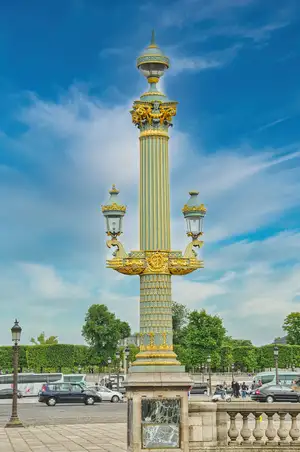
Paris is where nearly everyone starts, and it's worth the acclaim. The light on the Seine at sunset, the cafés of Saint-Germain, the long museums, the quiet churches, the hours that disappear while you're just walking.
Give it more days than you think you'll need. But the France beyond Paris is a country of thrilling diversity. Provence in the south is all lavender fields and hilltop villages and golden afternoons, with Aix-en-Provence and Avignon at its center.
The French Riviera takes you along the coast through Nice, Cannes, and Antibes, where the sea is an impossible blue. The Loire Valley spills inland like a fairy tale, its riverbanked by fairy-tale châteaux and silent vineyards.
Normandy in the north is greener, more hushed, home to Mont-Saint-Michel rising from the tide and the windswept beaches of the D-Day landings.
And there's more, always more, whenever you're ready: Lyon for food, Alsace for storybook villages, Bordeaux for wine. France gives you a different country in every direction.
The vast majority of international visitors fly into Paris. There are two international airports. Charles de Gaulle (CDG) is France's main international airport, with flights from all over the world. The other international airport is Orly (ORY), a smaller airport with connections to destinations worldwide.
France also has several well-connected regional airports. Nice, Lyon, Marseille, Bordeaux, and Toulouse are the main ones. If you are traveling directly to the south of France or to the coast, these airports can save you a long drive or train journey. Several budget airlines connect these cities to destinations across Europe. Travel to central Paris from Charles de Gaulle is easy.
The RER B train takes you to the city in just over half an hour. There is a Roissybus service to the Opéra district. There are also official taxis into the city, which have a fixed flat rate. If you are already in Europe, arriving in France by train is a pleasure. The Eurostar train from London to Paris takes just over two hours. Paris is connected to Brussels, Amsterdam, Cologne, Geneva, and Barcelona by high-speed trains. Arriving by rail with a view of the imposing grand old train station in the center of the city is a much more romantic arrival than an airport.
Travel in France is easy, and often a delight in itself. It boasts one of the finest train networks in the world, and for most journeys you won't need a car. France's national operator, SNCF, runs it all, from its high-speed TGV INOUI trains that cover the Paris-Lyon, Paris-Marseille, Paris-Bordeaux, and Paris-Nice routes at up to 300km/h, to regional TER trains that serve smaller towns.
The low-cost Ouigo trains can take you at the same speed for a fraction of the price, if you book early and don't have much luggage. Buy tickets via the SNCF Connect app and, if possible, book about 3 months in advance for the best fares.
Cheaper still are FlixBus and BlaBlaCar buses, which cover the country on a tighter budget if a slower schedule. Public transport within cities is excellent, too. Paris has a dense metro and RER network, with single tickets priced at around €2.15 and weekly passes offering excellent value.
A rental car only comes into its own in the countryside, the Loire Valley, Provence, or the Dordogne, where the pleasure is in the small roads and the villages between the famous destinations.
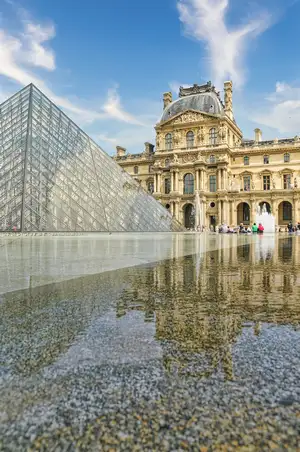
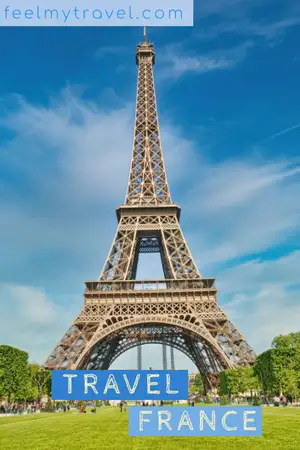
If you do one thing in France, it will probably be to see the Eiffel Tower. It's earned the cliché. But the country's monuments run far deeper than that most famous silhouette.
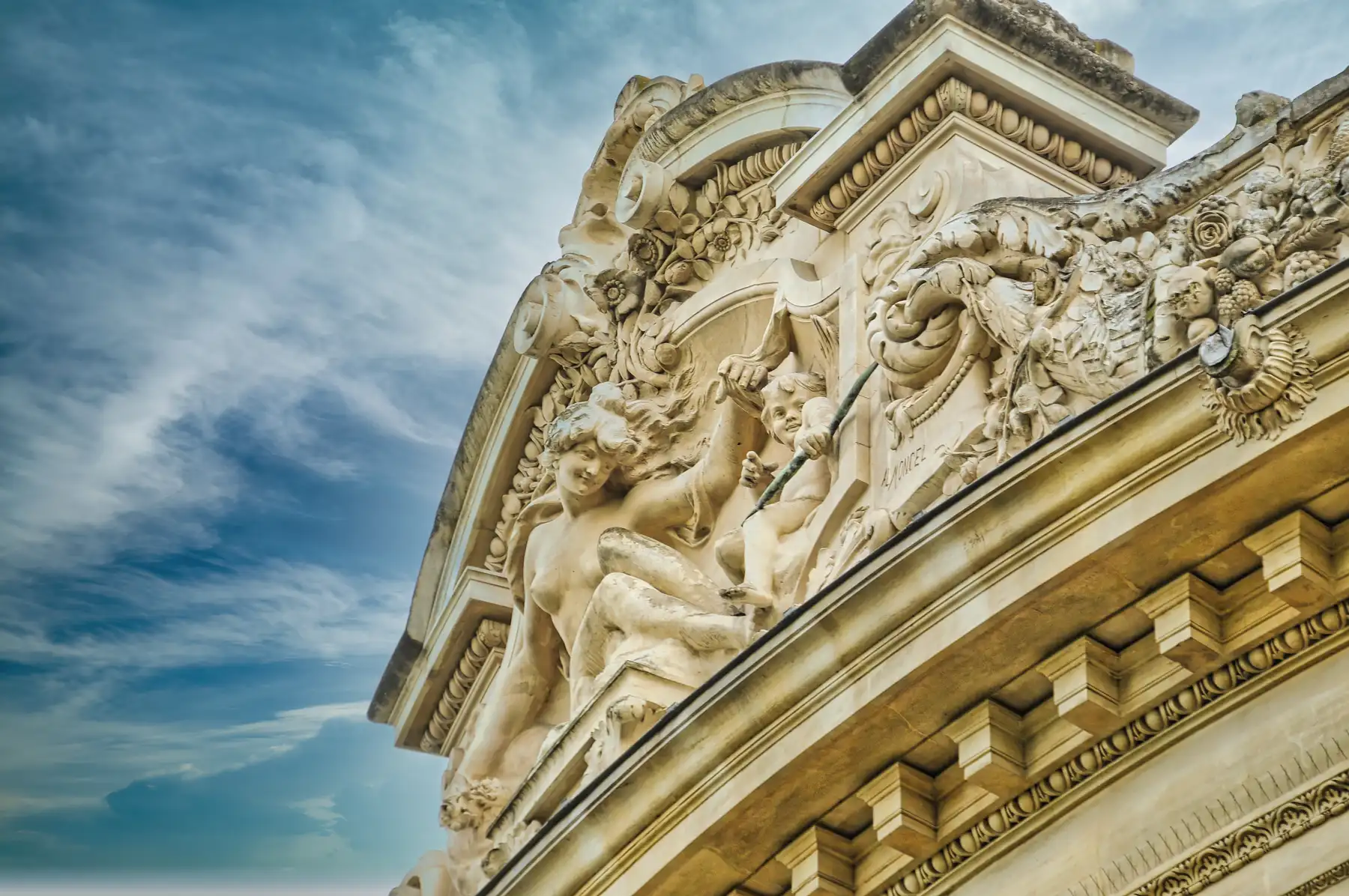
In Paris alone, the Louvre holds the largest art collection in the world, Notre-Dame is restored and glowing once more after its fire and the Arc de Triomphe and Sacré-Cœur frame the city at either end. A short train ride from the capital, the Palace of Versailles spills its gilded halls and endless gardens, a monument to a vanished age.
Beyond the capital, the wonders continue. Mont-Saint-Michel hoves out of the sea like a vision, an abbey on a rock surrounded by racing tides. The châteaux of the Loire, with Chambord and Chenonceau among them, are among Europe's most beautiful buildings.
In the south, the Roman aqueduct of the Pont du Gard and the walled city of Carcassonne send you back two thousand years. France wears its history everywhere. You only have to look up.
You're never far from something good to eat in France, and the food is a good reason to come. But what you remember is not just the flavors. It's the ritual: the asking for your full attention with a meal, and in return, the whole table set before you.
It starts early, with the smell of a boulangerie before the city has properly awakened, the crackle of a fresh baguette, a croissant that breaks into flakes of butter. By midday, the bistros fill, and the trick is to order the plat du jour, the dish of the day, written on a chalkboard and made from whatever the market had to offer that morning.
Then there's the cheese, hundreds of kinds, each from its own valley or village, and the wine, poured with no ceremony at all and almost always good. Order the house red. Trust the waiter.
Above all, don't rush. The long meal is not a waste of time in France. It is the thing itself, the place where the whole day quietly comes together.
France is generally a very safe country for travelers. Violent crime is very rare. However, it does experience petty crime in the busiest tourist areas, and vigilance is required. Pickpockets target crowds at the Eiffel Tower, the Louver, Montmartre, and the Paris metro, especially Line 1 and its connections to the airport.
Keep your bag closed and in front of you, and be aware of common scams at the big sights: the petition signers, the friendship bracelet near Sacré-Cœur, and the gold ring found at your feet. A polite, firm "no" and a walk-on are all that's required. Tap water is safe to drink anywhere in France.
Be aware that transport can be disrupted by occasional strikes and demonstrations, so check news reports before a big travel day. Solo travelers should have no problem at all.
A few little things that will make you feel less like a tourist and more at ease.
Always say bonjour when you enter a store or approach someone. It's the one word that means more than any other in France. Forgetting it comes across as rude, and offering it warmly will open almost every door.
Tipping is easy, because service is already included in the bill (service compris). Round up or leave a euro or two for good service, and you're good to go. Many shops and businesses close on Sundays, and a fair number close for most of August, especially in Paris.
Plan around it. Book the big sights, the Louvre, the Eiffel Tower, Versailles, online and in advance, or you could lose hours in line. And learn a few words: bonjour, merci, s’il vous plaît. They're small, and they change everything.
I came to France to find beauty. I did not come for tenderness. And yet. It is what I remember. Not only the great sights, which were as beautiful as you could imagine, but also the small moments. The baker who wished me a good day as though she cared. The way the light fell across a square at the precise hour when everything turns gold. The long, unhurried lunch where, for a change, you have nowhere else to be.
I sat on my last night at a table by the river and watched the city lights come on, a glass of wine slowly warming in my hand. And as the sun set, I felt that familiar ache of leaving a place too soon, that feeling that some part of you is staying here, sitting at this table, watching this water, long after the rest of you has gone home.
France does not just give you a vacation. It gives you a way of seeing the world that you bring with you. Go and let it teach you. And do not be surprised if, between the bread and the river light, it quietly becomes a part of you.
If you go, allow it time. Allow it to be grey. Allow it to be quiet. Allow it to surprise you the way it surprised me. And do not be surprised if, at some point, it begins to feel like home.