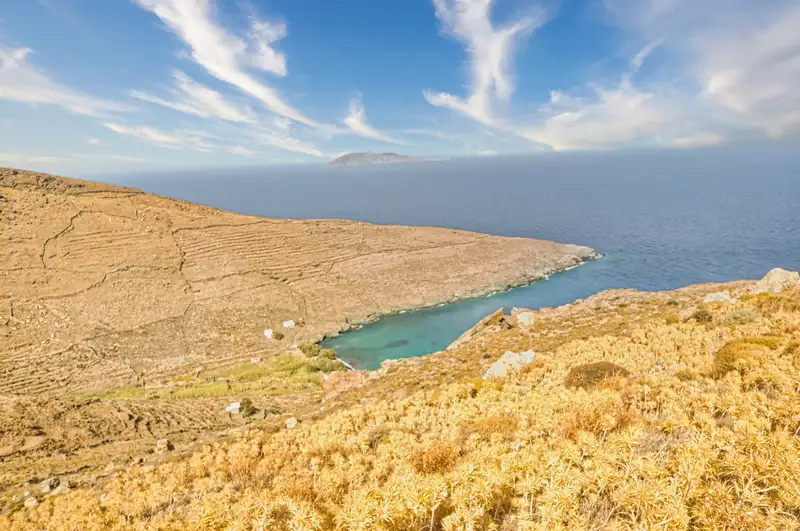
Ask anyone Greek about Serifos and you will hear three words. Rocky. Bare. Quiet. The island has a reputation, even within our own ranks, of being too harsh and too empty to merit a full week from anyone's time. I have returned to Serifos enough times now to know that the words are right and the conclusion is wrong. Serifos is rocky. It is bare. It is profoundly quiet. The error is in thinking those are defects.
The honest truth about things to do in Serifos is that the island affords you very little to run after and asks you, quietly, to stop running. There is the white hilltop of Chora, rising from the slope above Livadi bay. There are the iron mines of Megalo Livadi, slowly rusting in the western light. There is a beach with no name, a chapel without a door, and a small taverna in Piazza where the same woman has been pouring ouzo for longer than I care to remember.
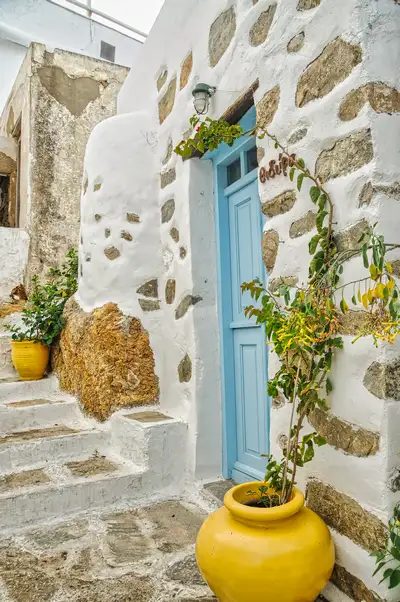
Table of Contents
Serifos on the map: small, rocky, far enough from everything
Serifos is a small island in the Western Cyclades, between Kythnos to the north and Sifnos to the south, about 65 nautical miles from the port of Piraeus. The island is inhabited by approximately 1,300 people during the year, the majority in Livadi and Chora. There is no airport, and that, more than anything, is the reason the island has remained so quiet.
You have to make a decision about Serifos. You cannot accidentally arrive on a connecting flight. That one fact has determined everything: the tempo, the cost, the sort of traveler who gets off the morning ferry. It is also the reason I love it. If you're looking for a slower side of the Cyclades without the clamor of the bigger names, then this is one of the cleanest Aegean answers.
The history and myth of Serifos
History is right on the surface of Serifos. You cannot walk on a beach without stumbling over a rusted remnant of an old mine. Nor can you climb up to Chora without walking over a stone path that pirates had once used to survey the sea. It is one of the older inhabited islands in the Cyclades, and its history is still very tangible.
Where the story begins
People have been living on Serifos since prehistoric times. In antiquity, this was a place of some importance, which even minted its own coin. The image on the coin was a frog, the little animal that the locals had taken as their symbol.
The reason was the iron and copper that lay hidden in the rocks. From the 6th century BC, those mines made Serifos rich enough to matter, and the wealth was evident in signs all over the southern half of the island.
The myth of Perseus and Danae
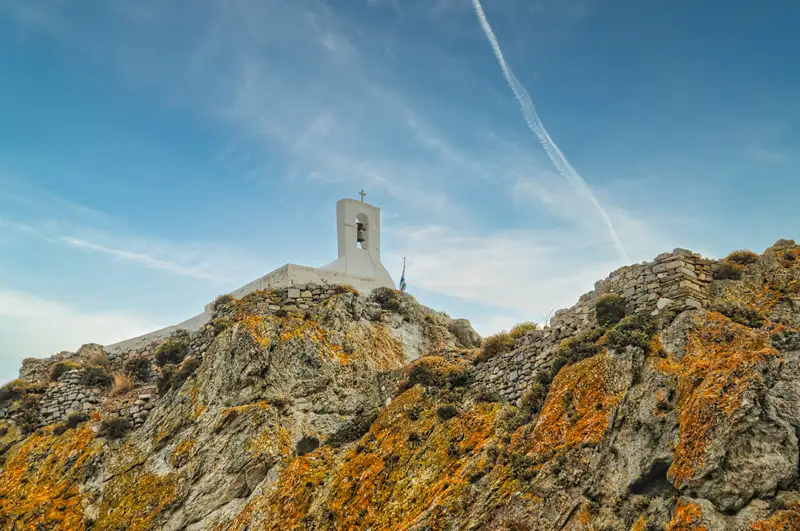
The most famous story linked to Serifos is the myth of Perseus. His mother, Danae, was placed in a wooden chest with her baby son, and the sea deposited them on the shore of this island. A fisherman rescued them, and they were welcomed to his village. It is on these hills that Perseus grew up and learned to be a man.
The king of Serifos, Polydectes, attempted to force Danae to marry him, but Perseus was sent away to bring the head of Medusa. He came back, held it aloft before the king, and turned him to stone. It is hard to believe, watching the wind blow over the dry grass on the cliffs above Livadi, that the myth seems so close.
The Iron Lady and her mines
The island is also known as the Iron Lady among locals, and it's not a poetic nickname. The mines never stopped during the Roman, Byzantine, and Ottoman periods and were modernized at the end of the 19th century with the arrival of foreign companies eager to extract iron ore at an industrial scale.
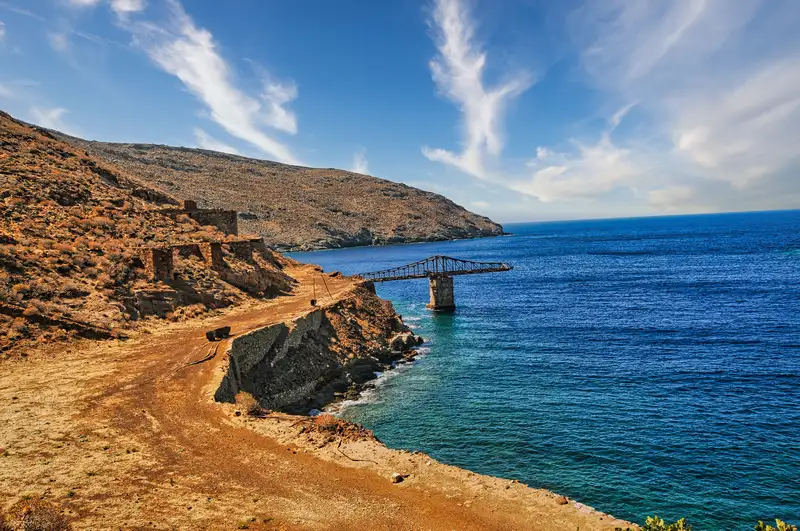
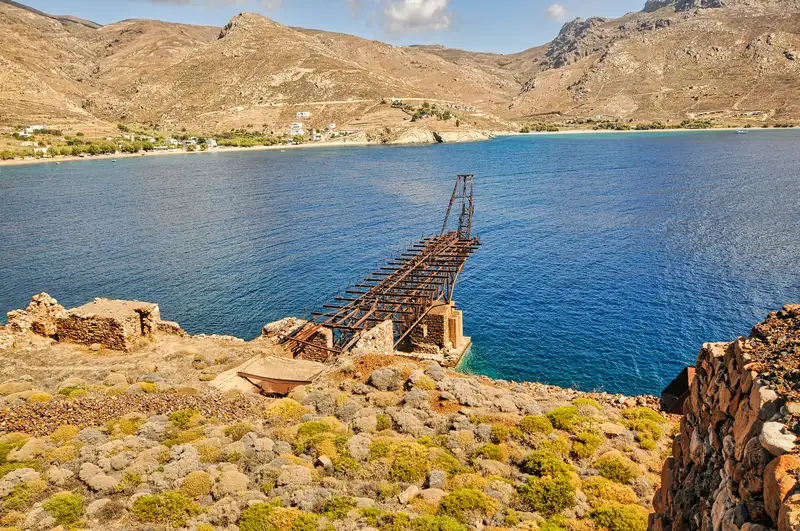
The southwest of the island, around Megalo Livadi and Koutalas, became a little industrial center. Loading bridges jutted out over the sea. Workers' houses lined the bays. The island, which today seems so quiet, was for a few decades full of metallic noise.
The strike of 1916
In August 1916, the miners of Serifos went on strike. Conditions were inhuman, the pay meager, the days long. The strike was suppressed by the gendarmerie, and four miners were killed. It was one of the first labor uprisings in modern Greece, and it won the eight-hour working day.
Walking down to Megalo Livadi today, you pass the half-destroyed bridge and the abandoned neoclassical buildings of the old mining headquarters. The wind blows through the empty windows. It is one of the most moving places on the island, and one of the quietest.
The Byzantine and pirate years
After the mines fell silent in earlier centuries, Serifos turned in on itself. Byzantine churches were built into the hillsides. Some of them still stand with their original frescoes. Then the pirate years came, and the island responded the way every Cycladic island responded: by climbing.
Chora was rebuilt on its hill so the locals could see the ships approaching. The Monastery of Taxiarches, up in the north, was fortified with walls a foot thick. The whole geography of how people lived was shaped by who might arrive next from the sea.
Chora, the white town that holds onto its hill
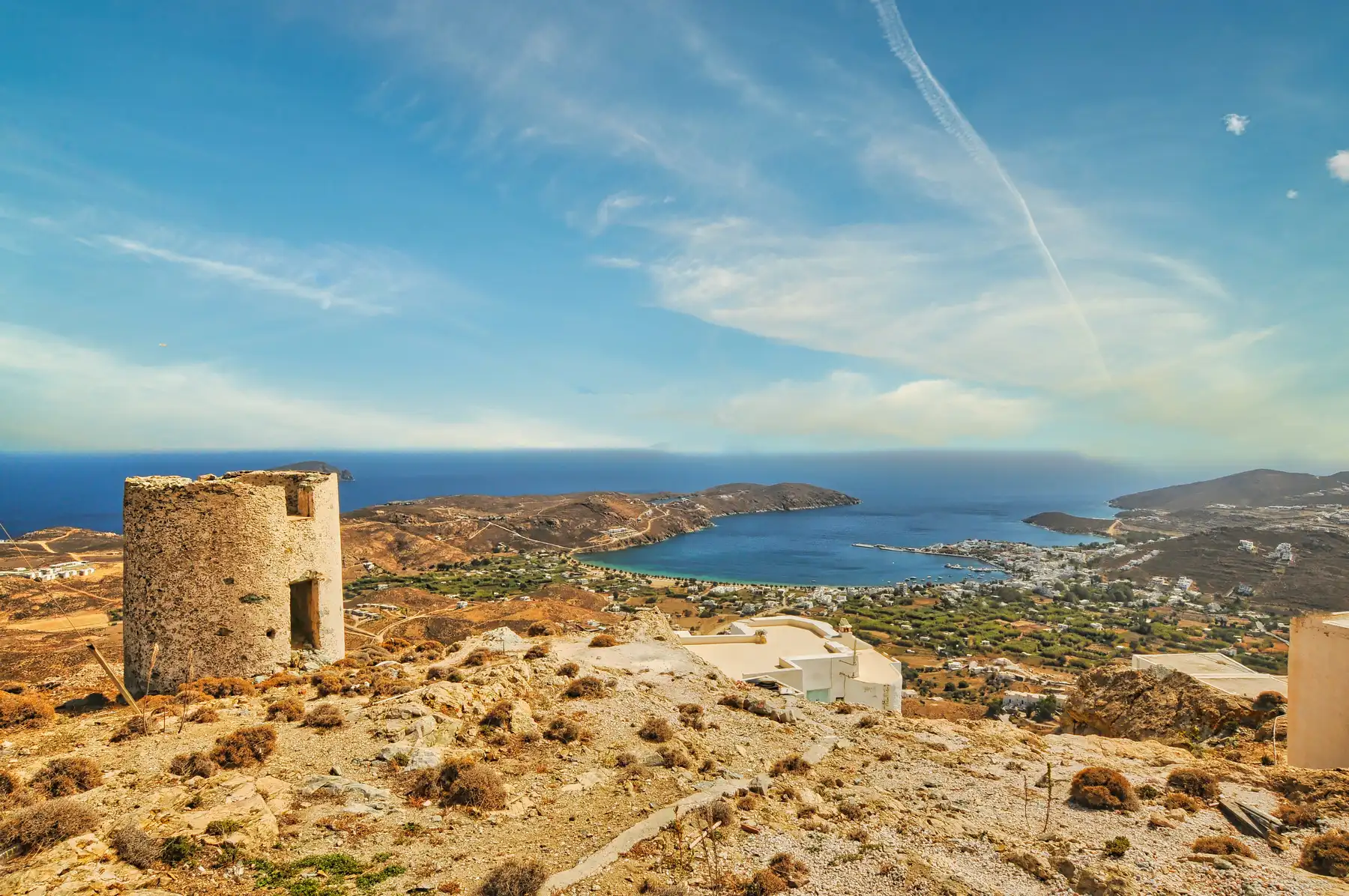
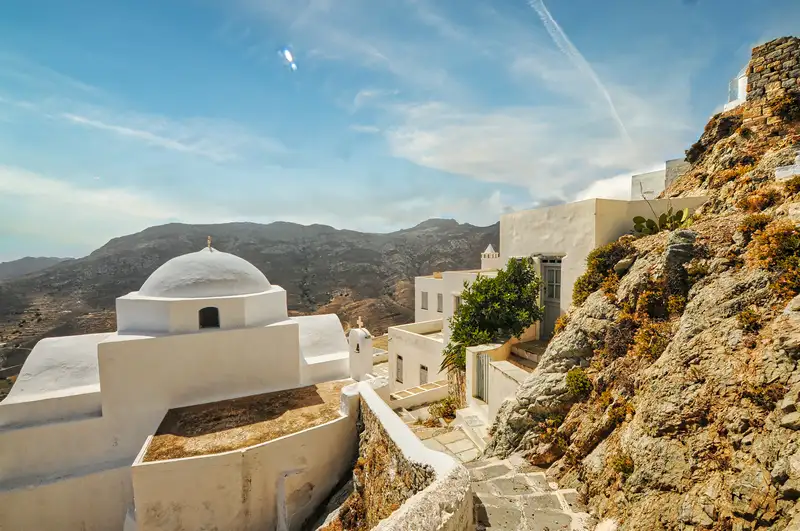
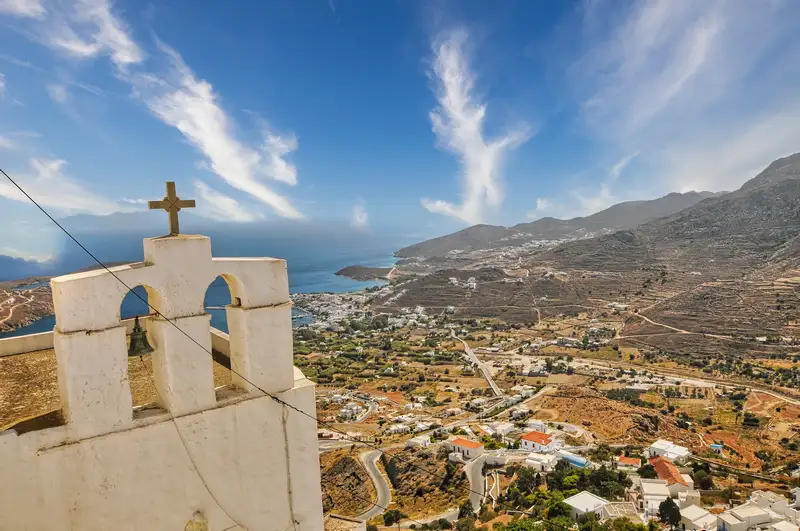
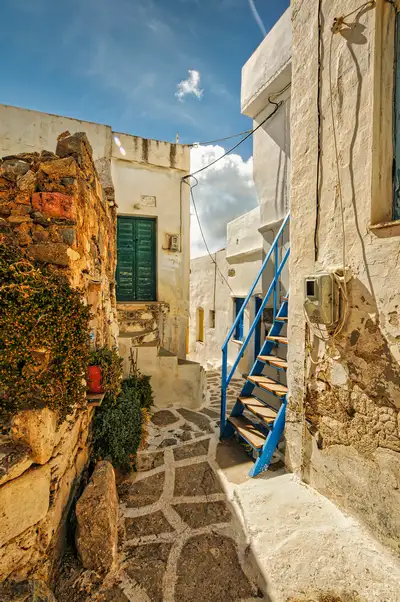
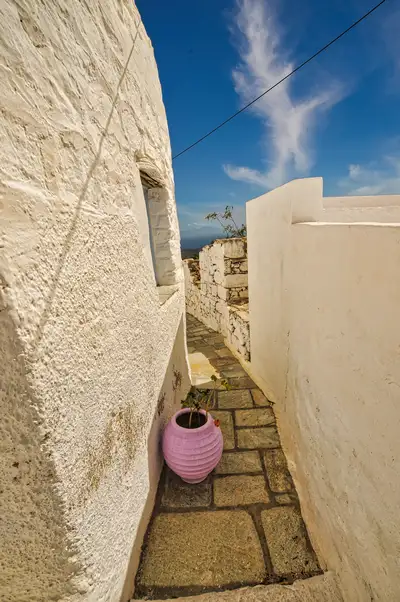
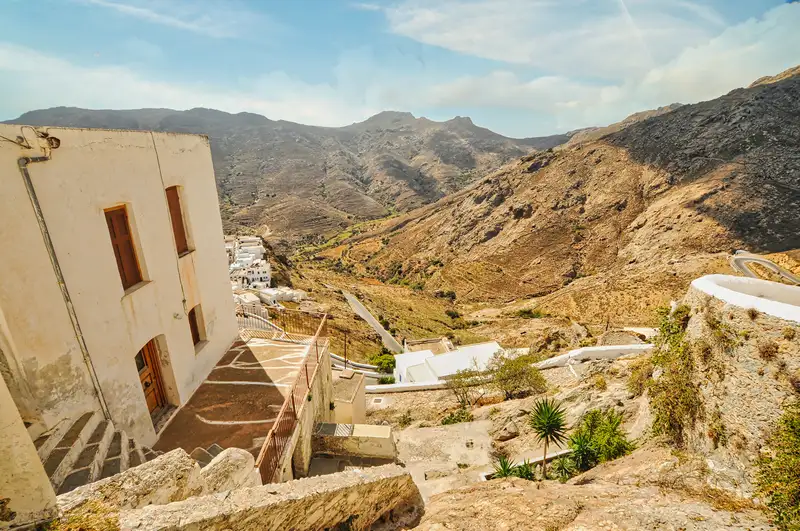
Chora is the reason most visitors fall in love with Serifos, and they do so quickly. Perched amphitheatrically on a tall hill above Livadi bay, from a distance it resembles a sculpture more than a settlement. Clusters of white houses with blue window frames tumble down the slope, interrupted only by the small domes of the chapels and a smattering of old windmills at the very top.
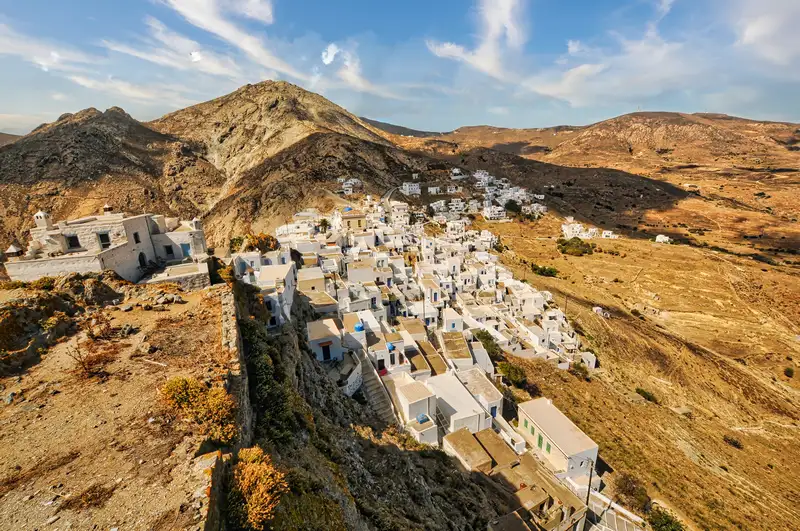
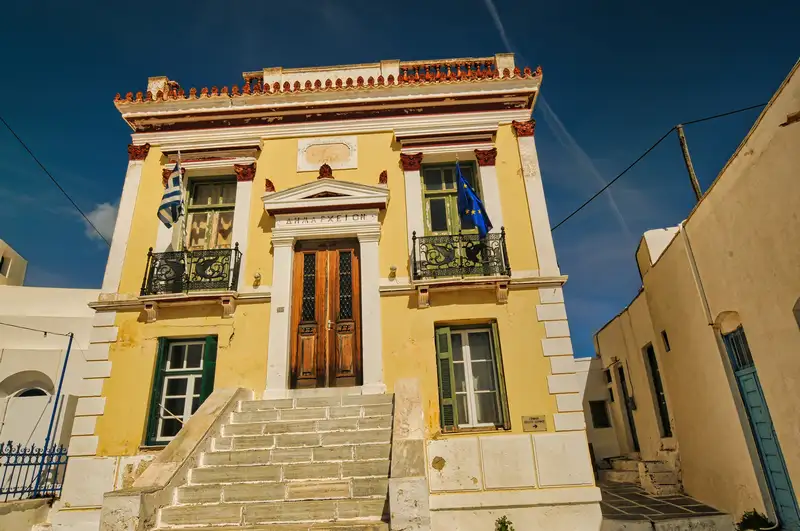
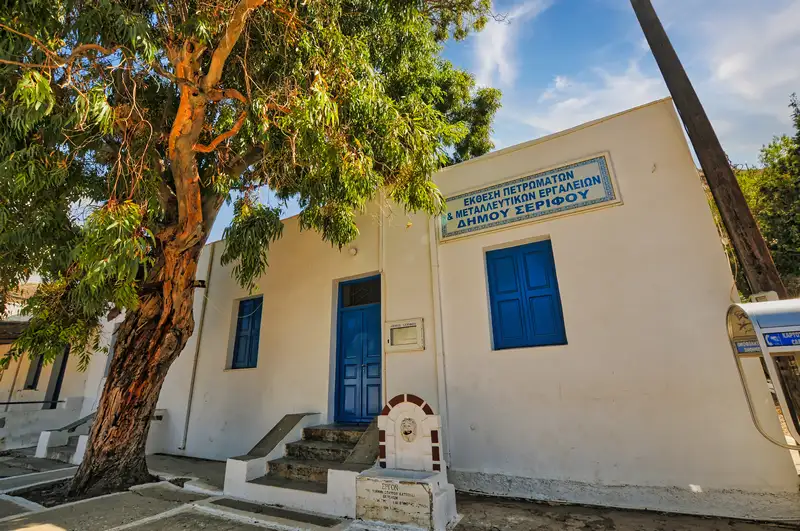
I always start at the bottom, at Kato Chora, and walk up. The streets are narrow and white, and fold into one another in a way that makes the climb longer than it really is. Halfway up, you reach the Piazza, the main square. On one side of it, the neoclassical Town Hall, built in 1907 and painted butter-yellow, glowed in the late-afternoon sun. Opposite it is the church of Agios Athanasios, with its blue dome.
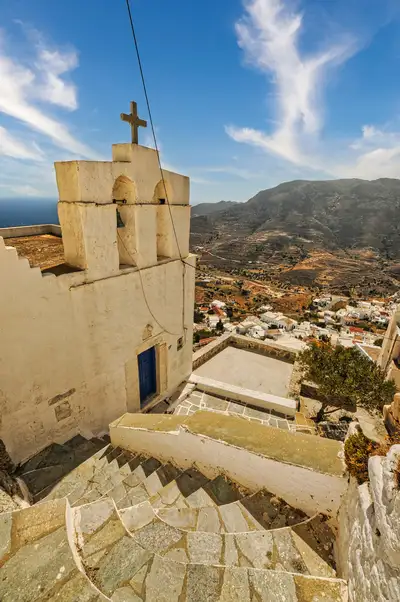
In the middle of the square, there is a single huge tree, and underneath it, the tables of the local taverna are often full of people drinking ouzo and eating mezedes. From here, the climb steepens, passing the old Lotzia gate, once the entrance to the fortified town to the west, and the path becomes a series of stone steps.
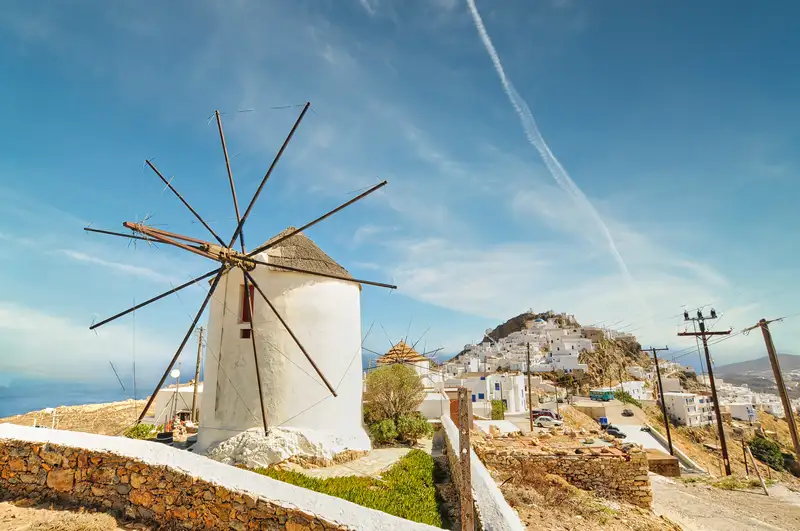
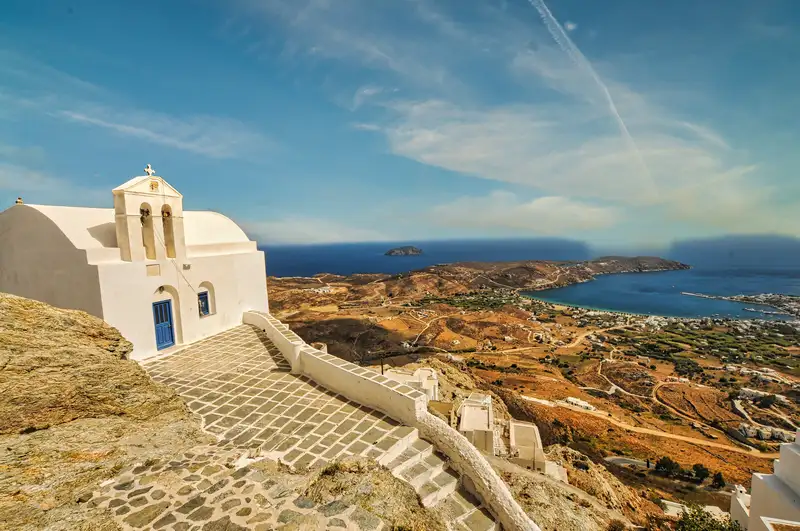
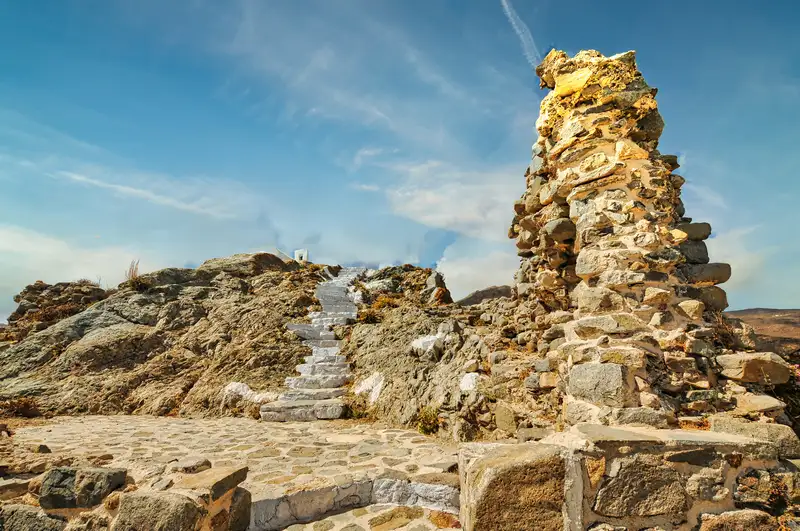
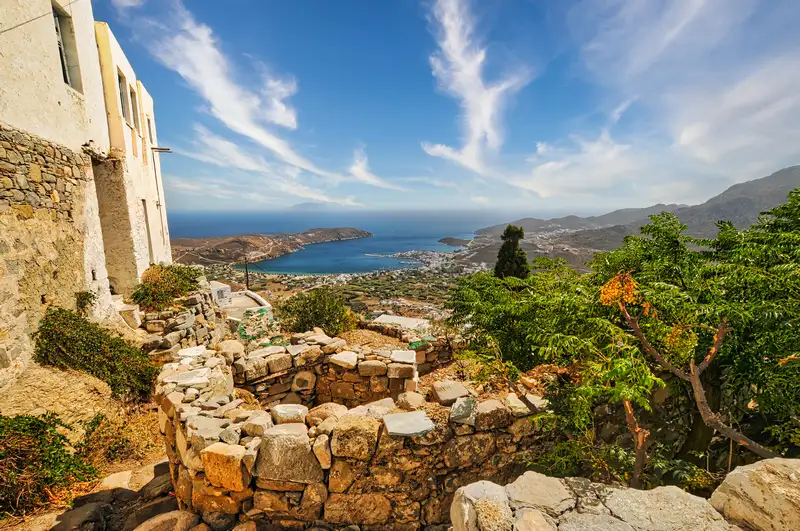
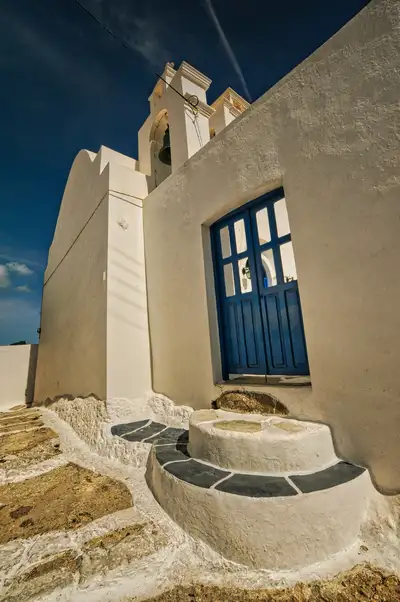
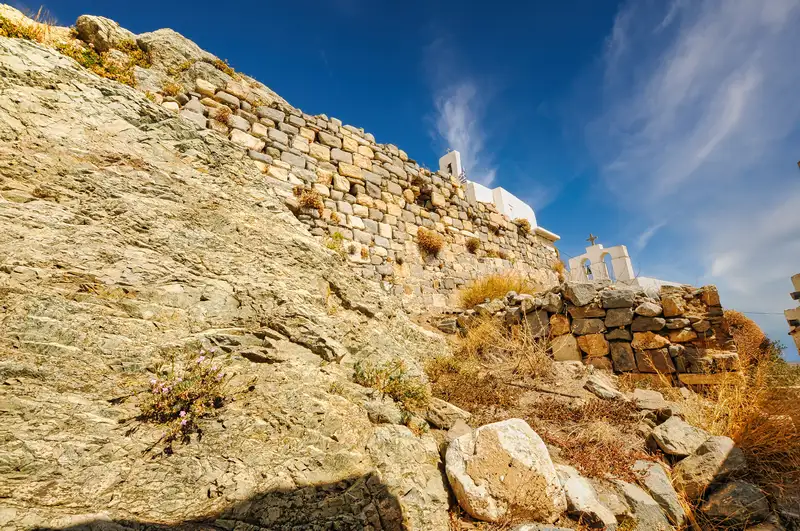
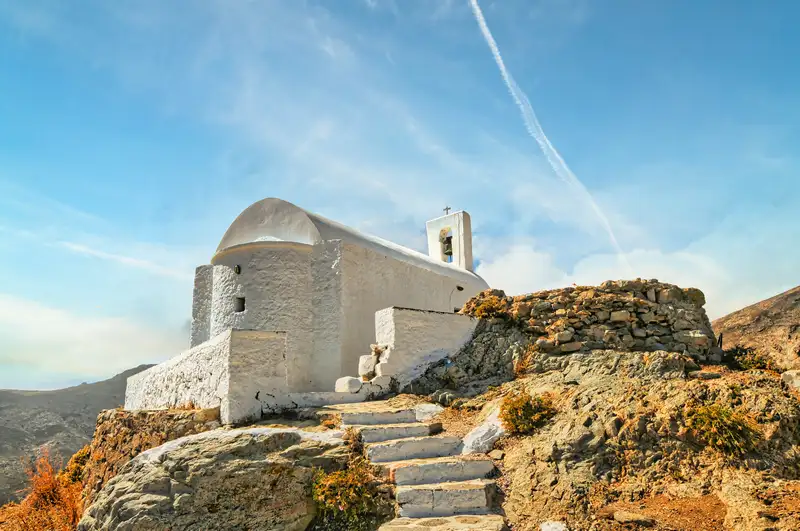
At the very top, at 251 meters, is the small chapel of Agios Konstantinos, on what was once the Kastro, or medieval castle. There is almost nothing left of it. What there is, instead, is the view. From up there, the whole island spreads out below you, Sifnos visible in the distance on a clear day, and the Aegean Sea a wash of turquoise and dark blue. I always leave Kastro late in the afternoon. The light softens, the air cools, and Chora below starts to glow as the lamps come on one by one.
Livadi, the port that doesn't feel like a port
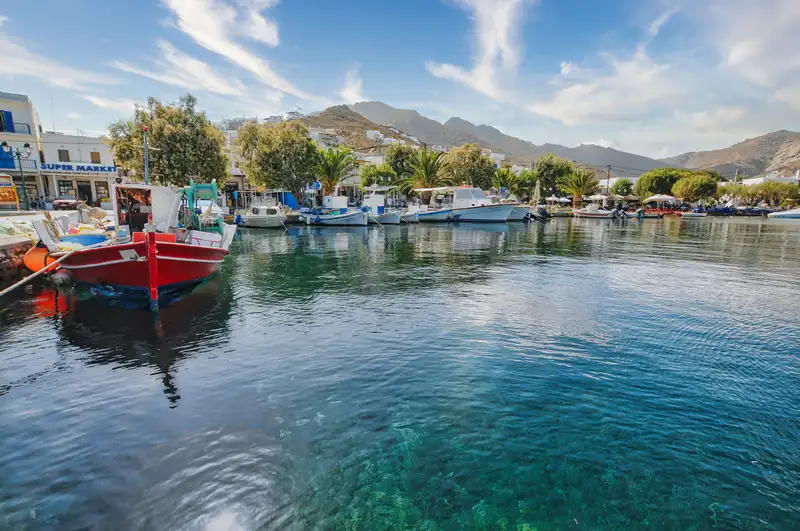
Livadi is the ferry port and, once you set foot on shore, within ten minutes, you forget that it is a port at all. The waterfront is a long, easy curve of tavernas, bakeries, and small shops, with a soft sandy beach running right up alongside.
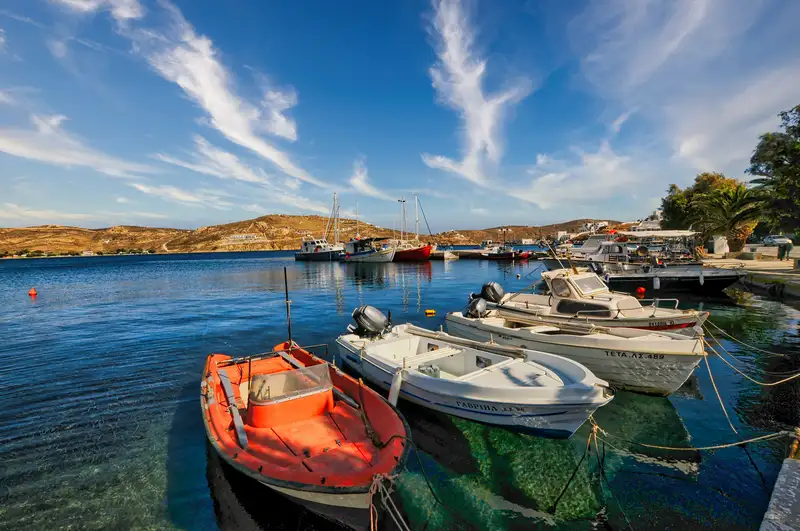
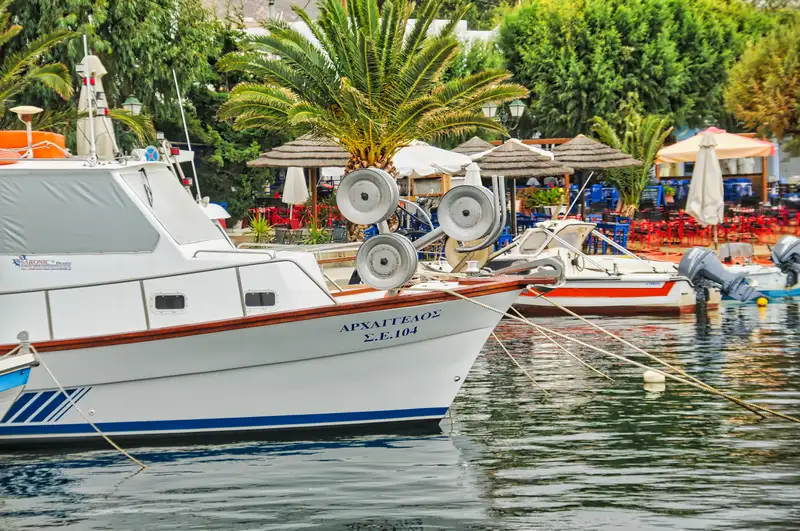
There is no big harbor wall, no crush, no hurry. The fishing boats snooze on one side, the yachts on the other, and the cafés sit in between with their tables almost touching the water. I always drop my bag and walk to the bakery first. There is a small place where they make spanakopita and bougatsa fresh in the morning, and the smell hits the street before you turn the corner.
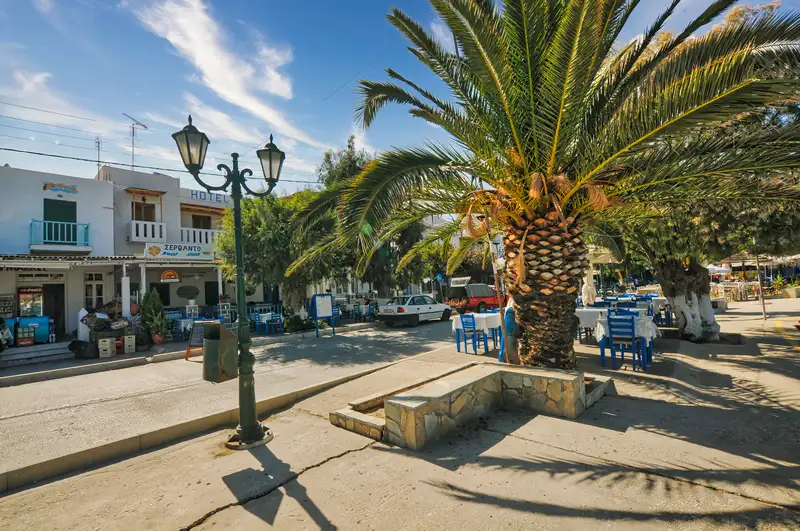
By evening, Livadi changes again. The light goes pink against Chora on the hill above, the tavernas fill up, and you can sit at a table on the sand with a plate of grilled octopus and a cold glass of white. If you are traveling with kids, or you do not want to drive at night, basing yourself in Livadi is the easiest choice on the island.
The beaches of Serifos
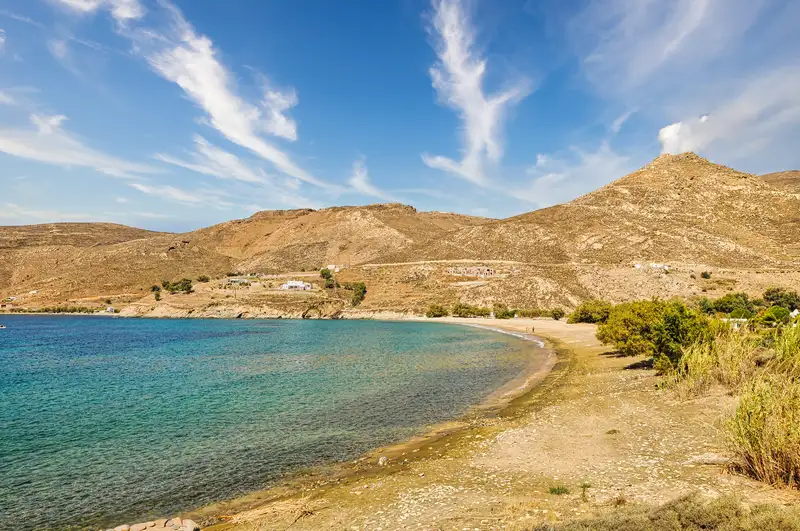
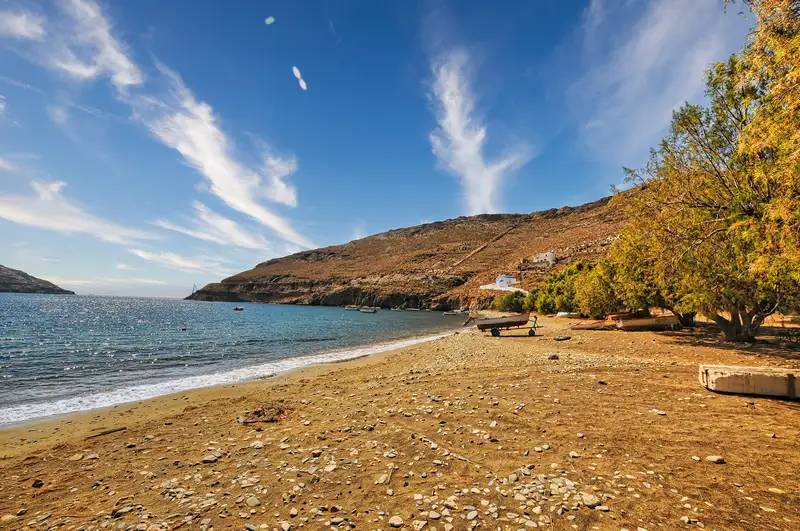
Serifos has over 70 beaches along its 81 km coastline, encompassing nearly every variety. There are long sandy bays and small pebbled coves accessible only on foot, beaches popular with families under the shade of tamarisk trees, and remote inlets accessible only by boat.
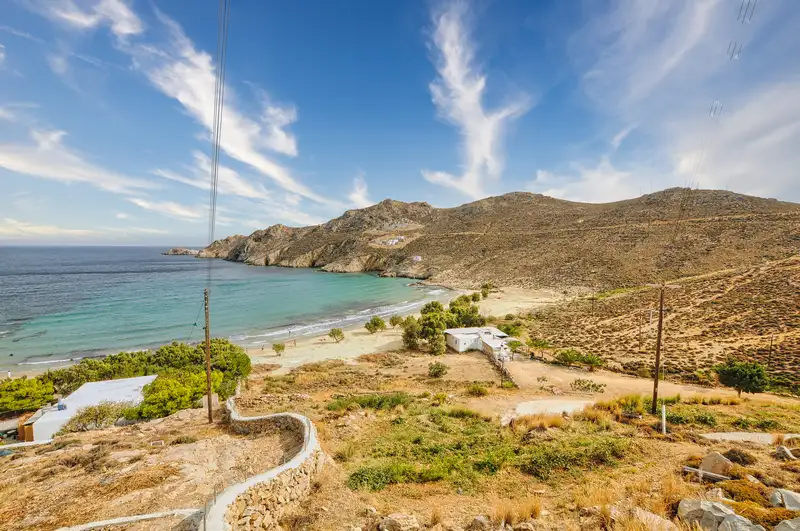
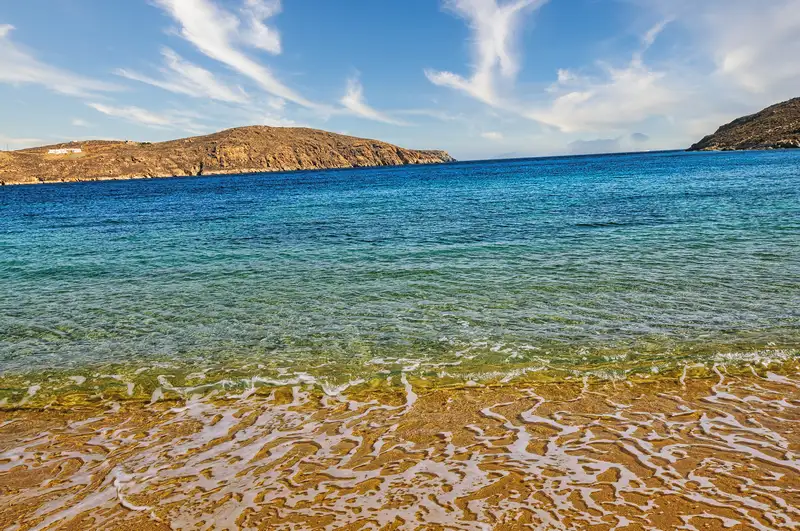
The sea is the clear, deep blue you only find in the Western Cyclades, where the rock is granite, and the water is unusually clean. The most popular by far is Psili Ammos, a wide arc of soft golden sand with shallow turquoise water, tamarisk trees for shade, and a small taverna at the back of the beach. It has been voted among the best beaches in Europe more than once, and yet you can still find it empty on a quiet morning in June.
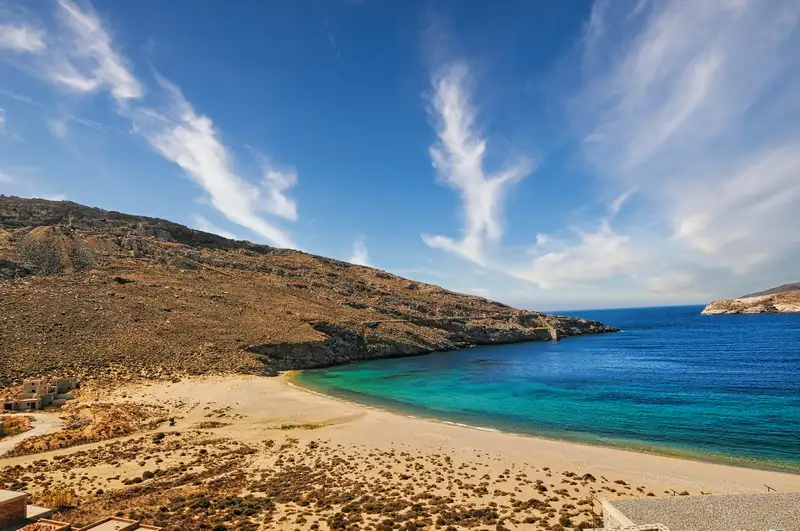
Agios Sostis sits on the east, in two mirrored bays separated by a small chapel on a rocky outcrop. The water here turns an unreal shade of blue when the wind drops. Livadakia, a short walk south of the port, is the easiest beach to reach if you are staying in Livadi, and it is well-suited for families.
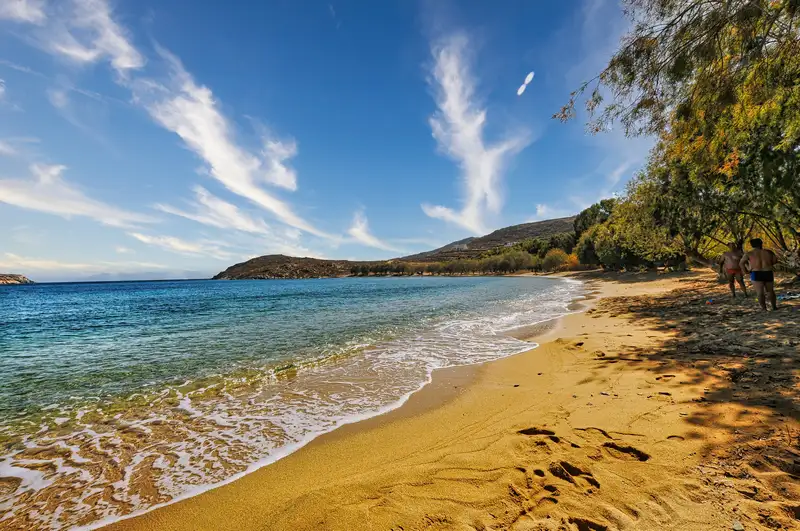
Vagia and Agios Ioannis offer that beautiful combination of golden sand and almost no development. Kalo Ambeli, a little further out, is the kind of beach you really have to want, with a twenty-minute walk down to a vivid blue cove that feels completely cut off from the rest of the island. Ganema, on the west, is one of the few beaches that remain swimmable on a windy day.
The Monastery of Taxiarches and the chapels of Serifos
The Monastery of Taxiarches is Serifos' largest and most important historic building. Perched on a slope in the green northern half of the island, in a village called Galani, it was built in the late 16th century, fortified to fend off pirate raids, and still looks more like a miniature castle than a house of prayer today.
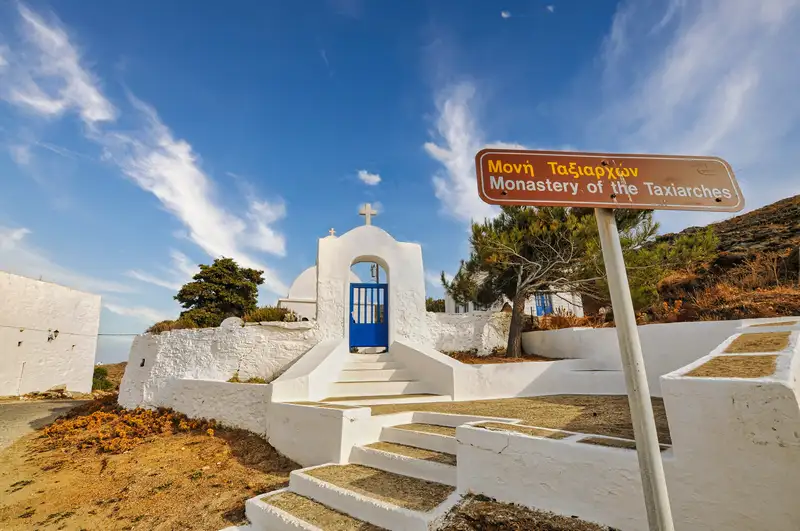
Inside its walls, the courtyard is quiet and shaded, and the church houses a richly carved wooden icon screen, an ancient Bishop's throne, and 18th-century frescoes blackened to perfection by the centuries. On arrival, if the abbot is present, he is usually glad to show you around.
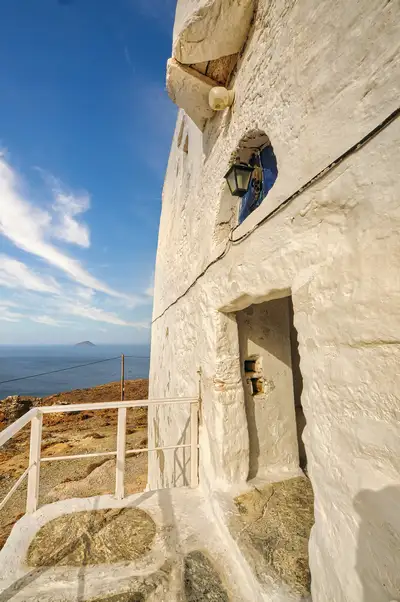
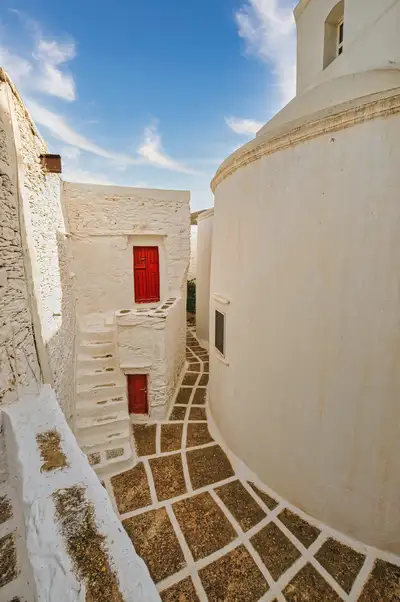
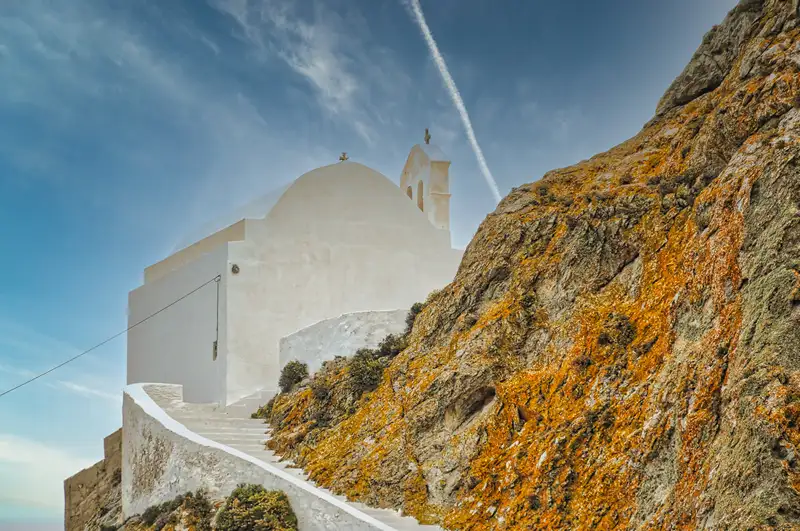
Away from Taxiarches, the island has a few dozen chapels, most of them small white rooms perched alone on a hillside or above a cove. The Byzantine church of Panagia, in the village of the same name, was built around 950 to 1000, and you can still see its original murals on the inside walls.
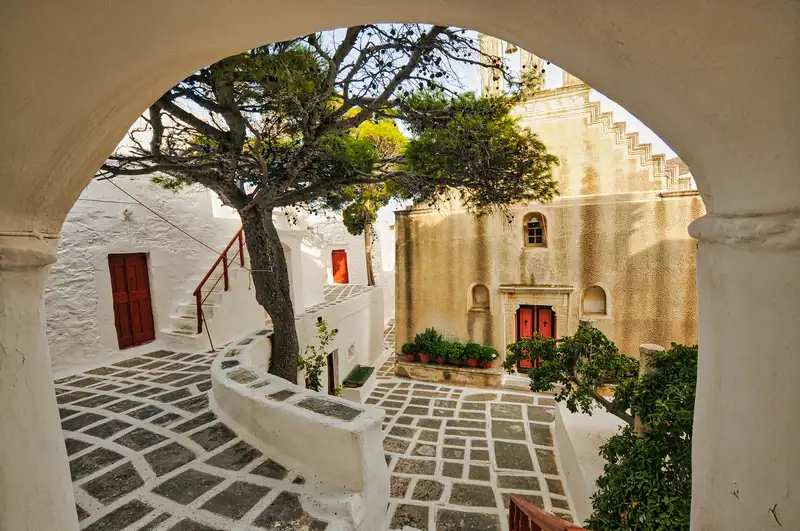
Panagia Skopiani, above Platys Gialos in the northeast, is a small blue-and-white chapel on a high rocky outcrop with views as far as Sifnos. None of these places is in any way spectacular or showy. They are just quiet and old, and held in place by the sea wind.
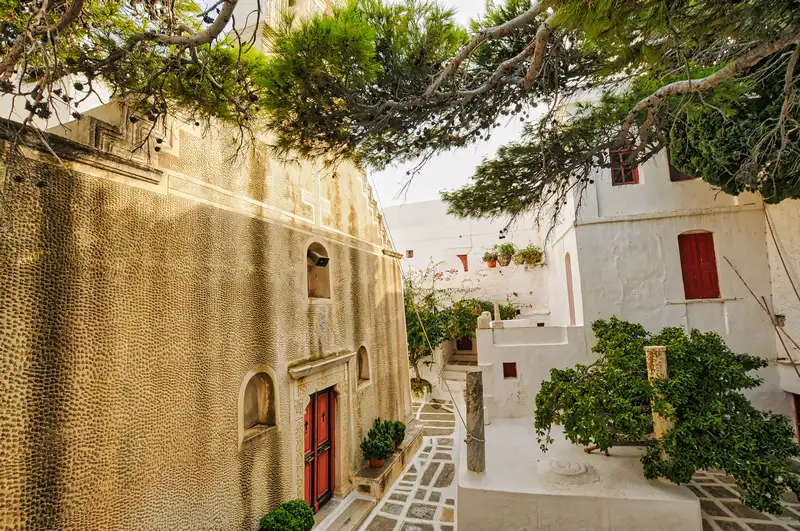
The small villages that hold the island together
Most visitors to Serifos don't stray far from Chora and the south beaches, and that's a small mistake. Serifos' inland, and particularly the north of the island, is home to some of its most beautiful villages. Panagia clings to its 10th-century Byzantine church and stares out to olive groves rather than the sea.
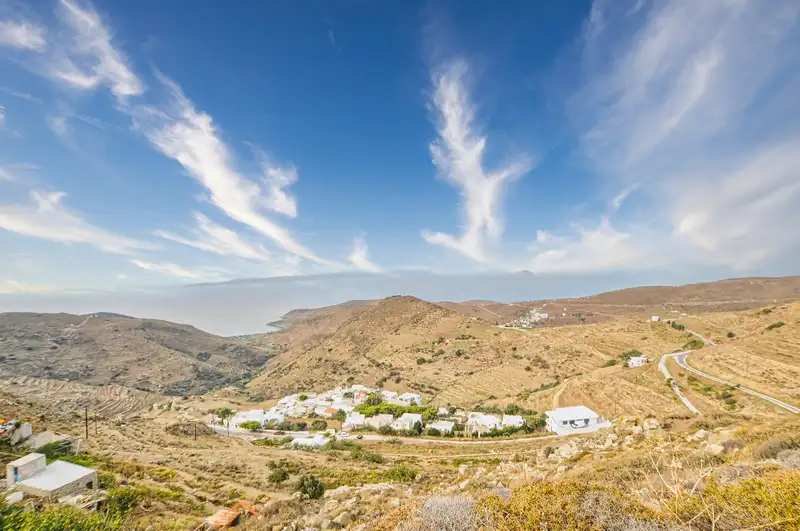
Galani, home of the monastery, is little more than a few square blocks of lush, green, white houses and the two or three old mansions that still stand.
Kallitsos and Kentarchos are even quieter. On a Sunday, you may have the place to yourself and one of their two cafés to yourself too. A few old threshing circles and traditional houses survive up on the hill in Pyrgos to the north.
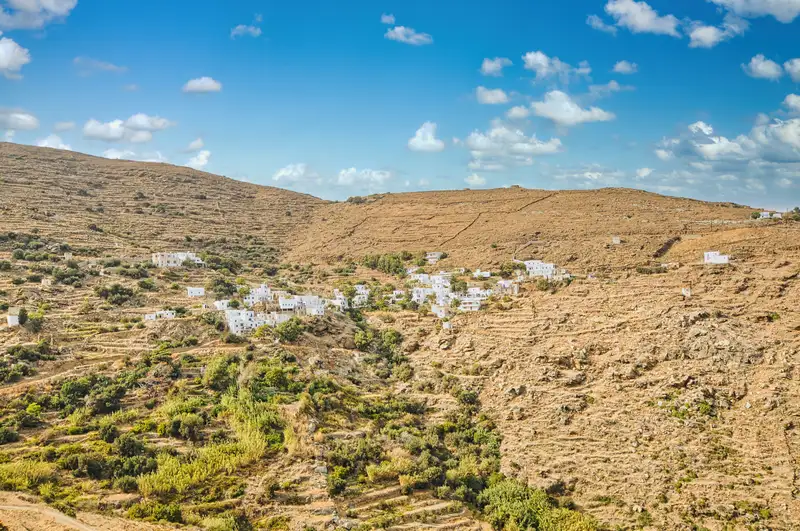
Driving through Serifos' inland is a slow afternoon's pleasure. The road climbs and twists. The air is heady with the smell of oregano and thyme, and there are chapels to pull over by and listen to the silence. This is where Serifos shows a different face to its seaside. Older, more rooted, a little melancholy in the best way.
Planning your trip to Serifos
Serifos is small and unassuming, but a few decisions will dictate the experience. The ferry, the season, the length of stay, and your mode of transport will all condition how the days pass.
How to get to Serifos from Athens
Serifos can only be reached by ferry from Piraeus, the port in Athens. There is no airport on Serifos. Fast ferries by companies such as SeaJets and Fast Ferries arrive in two to two and a half hours. The conventional ferries take four to four and a half hours and are cheaper.
There are several departures each day in summer, and tickets will sell out, especially in August, so it's worth booking ahead. You can also get to Serifos directly from Sifnos, Kythnos, Milos, Kimolos, and Paros in summer, which makes island hopping straightforward.
When is the best time to visit
The best time to visit Serifos is in June, early July, and September. The weather is balmy but not oppressive, the Aegean is at its clearest, and, as they are, the crowds remain at manageable levels.
Mid-July and August are more crowded, and the Meltemi can be stronger on the north-facing beaches. Late spring and early autumn are the best for hiking, with cooler air and flowers in the undergrowth on the trails. The island almost entirely shuts down or slows to a trickle between October and May, with fewer ferries and many tavernas closed.
How many days do you need?
You will need at least three or four days on Serifos to do it justice; I recommend five. A weekend is enough to see Chora and one or two beaches, but the island has more depth the longer you stay. The pace is intentionally slow. The fourth day is usually when something clicks in you, and you no longer check the time.
Getting around the island
A car or scooter is by far the best way to get around Serifos. The distances are short, but the bus network is sparse, and many of the best beaches are at the end of small roads or short walking tracks. Scooters start at about 25-30 euros a day, and cars from around 60 euros.
There is a public bus that connects Livadi and Chora throughout the day in summer, plus seasonal routes to Psili Ammos, Agios Sostis, Megalo Livadi, and a few other beaches, but the schedule is sparse. Some of the back roads are dirt, especially in the south, and an ATV is a popular middle option.
Where to stay on Serifos
Where you stay has a great deal to do with what kind of trip you have. The port, Livadi, is the most convenient, with the most places to stay and the shortest walk to dinner. Close behind, Livadakia is smaller, quieter, and more family-friendly.
Chora itself is short on rooms, but the experience of staying in the heart of that hilltop town is not to be missed, particularly after the day-trippers have all returned down to the port. And a half-dozen small hotels and villas are perched on the hillsides above the western beaches. There, you trade convenience for silence and the sound of the sea at night. My own preference is a few nights in Livadi at the start of a trip and a few in Chora at the end. It's the rhythm that I like best.
Frequently Asked Questions about Serifos
Is Serifos worth visiting?
Yes, absolutely. Serifos has beautiful beaches, it's extremely quiet and authentic, and like the other islands, it has no high-season crowds. It is one of the least developed of the Cyclades, so it will appeal to travelers who want to take it easy and aren't in a rush.
Is there an airport on Serifos?
No, unfortunately not. You will have to reach the island by ferry from Piraeus (in Athens), which takes two to four and a half hours, depending on the boat.
Is Serifos better than Sifnos?
Serifos and Sifnos are very different despite being neighboring islands. Serifos is rougher around the edges, quieter, and less foodie-focused. Sifnos is a greener island with some of the best food in the Cyclades. Serifos is the better option for a raw, unspoiled Cycladic atmosphere. If you are a foodie, Sifnos may be more your style.
Can you visit Serifos as a day trip from Athens?
You can, but it's not recommended. The high-speed ferry takes about two and a half hours each way, leaving very little time to enjoy the island. It's an island that rewards a slower pace and a stay of at least three days.
What is Serifos famous for?
Serifos is famous for its peaceful setting, over 70 beaches, the hilltop capital, Chora, the abandoned iron mines of Megalo Livadi, and its links to the myth of Perseus and Danae.
Leaving Serifos, but only for now
The last evening I spent on Serifos, I walked up to the Kastro once more. It was September, and the light was already changing into that early autumn gold the Cyclades wear so well. And there was almost no one else up there. Below, Chora burned white and blue. Beyond it, the Aegean ran out in long dark blue lines all the way to Sifnos. The wind ran through the chapel, and I could hear, faintly, the music from a taverna in Piazza somewhere below.
I have come back to this hill many times, and the feeling never repeats itself in quite the same way. That is what Serifos teaches you, slowly, ferry by ferry. Most islands try to give you a story. Serifos gives you a pause. Hands you back time you did not know you had lost. The mines are silent now. The bridge over the bay at Megalo Livadi is half-finished and always will be. The white houses keep their lamps on into the small hours, and the sea below the Kastro keeps doing what it has always done. Take the ferry from Piraeus. Stay longer than you think you should. Let the island do the rest.