
Prague
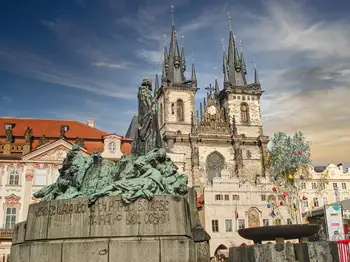
Beyond Prague lies a country of castles, cobblestones, and quiet wonder
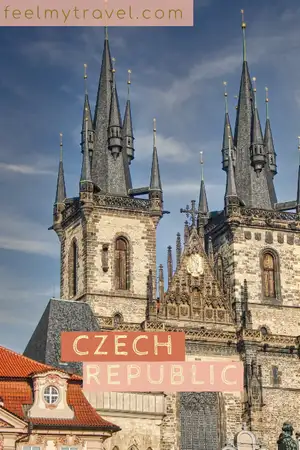
Some countries make a grand entrance. They bow and curtsy as you arrive. They sweep you into their arms and make you swear you'll come back. The Czech Republic is not one of those. It doesn't greet you like an old friend at the gate. It doesn't blind you with dazzling palaces. It doesn't rush at you. It waits in parts. A mist curls up off the Vltava as the sun peeks over the horizon. The sound of a tram bell clanging down a back alley. The comfort of a candlelit pub as the cold seeps through the windows.
I went expecting to fall in love. I didn't expect it to become a part of me in the way that it did. This Czech Republic travel guide is not a collection of monuments to see between meals. It is a wish I had had someone tell me before I went. It is the Czech Republic as I found it: a land of stone and spires and red rooftops folded into the curves of the river, of forests that gobble up whole castles, and of squares that have not changed in five hundred years.
It is a land of simple pleasures, too: a half-liter of beer that costs less than water, a lazy afternoon with no agenda, a town you never even heard of that turns out to be the best part of the whole trip.
The ideal time for travel to the Czech Republic is late spring (May and June) and early autumn (September and October), when the weather is pleasant, the days are long, and the tourist crowds are smaller than in high summer.
High summer (July and August) is high season. Prague is crowded with tourists, and small towns like Český Krumlov pack them in on the weekends. The weather is warm and agreeable, but you will not have any of the famous views to yourself for more than a moment, and the prices are high.
Spring and early autumn are softer. The trees in the parks grow green or gold, the light is diffused, the beer gardens open or linger, and the cities exhale a little. These are my favorite months for an aimless stroll.
Winter is cold, often grey, sometimes snowy. But December has its own magic. The Christmas markets strew the old squares with the scent of mulled wine and roasted almonds, and Prague dusted with snow seems like a fairy tale. Just dress in layers, because it's cold that gets into your bones.
The Czech Republic is relatively inexpensive, especially compared with other European countries. The Czech Republic is far cheaper than its western neighbors, Germany or Austria. Prices, especially in central Prague, have crept up in recent years.
A budget traveler should be able to get by on €45–€65 a day, staying in hostels, eating at local pubs, and using public transport. A mid-range traveler should budget €90-€140 per day for a comfortable hotel, sit-down meals, and some paid attractions. You will find your money goes even further outside the capital, in cities such as Brno, Olomouc, or Český Krumlov.
Food and drink are one of the country's big attractions. A filling pub lunch will cost around €8-€10. A traditional dinner will set you back €15–€25. And beer (treated by the Czechs as something bordering on holy) is often cheaper than bottled water.
One final tip: the Czech Republic has not adopted the euro and instead uses the Czech koruna (CZK). Some tourist-oriented shops will accept euros but will offer a poor exchange rate. Always pay in koruna, and always reject any offer to charge you in your home currency at an ATM or card machine.
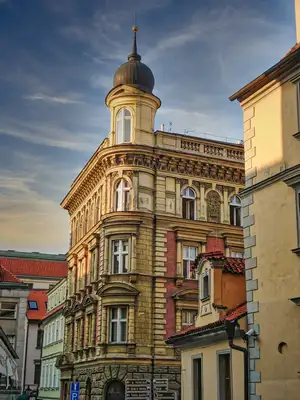
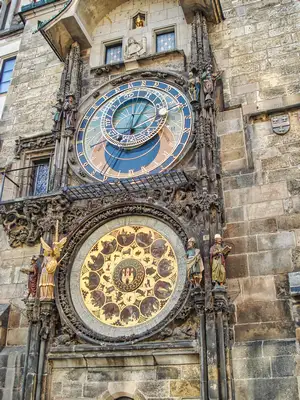
Everyone begins in Prague, and with good reason. The Old Town Square with its Astronomical Clock, the Charles Bridge at dawn before the throngs, the castle aglow against the Vltava by night. A city that endured the ages mostly whole, and it shows.
But the Czech Republic offers up rewards to those who stray from the capital. Český Krumlov, a medieval town swaddled by a bend of the river, is so utterly perfect that you half expect it not to be real. Kutná Hora, home to a soaring Gothic cathedral and the ghoulish bone chapel of Sedlec. Karlovy Vary, a spa town of pastel facades and healing mineral springs, has drawn visitors for generations to come to take the waters.
Brno, too, is the relaxed second city, full of modernist architecture and student energy. Olomouc is quieter and festooned with fountains and its own astronomical clock. Telč, with its painted Renaissance square, is frozen in time. And the Moravian countryside in the southeast, where vineyards roll toward the horizon, and life slows to a pace almost forgotten.
Most international visitors will arrive via the country's biggest airport, Václav Havel Airport Prague (PRG), which has direct flights from all over Europe, North America, the Middle East, and Asia. Travel to the city center is easy and inexpensive, with public buses that link into the metro system, and the entire trip only costs a few euros.
Traveling in Europe already? Don't worry, the Czech Republic is ridiculously easy to access by land, with fast, comfortable trains and buses heading to Berlin, Dresden, Vienna, Bratislava, Budapest, and Krakow. RegioJet, Leo Express, and FlixBus run the routes, and it will often only cost you a few euros to get there; many trains are fitted with Wi-Fi, power sockets, and even a steward who will bring coffee to your seat.
I got to the Czech Republic by train from Vienna, and I watched as the countryside changed from vineyards to forests to red rooftops. I highly recommend you do the same. If you have the time, it will only add to your experience.
Transport in the Czech Republic is comfortable, cheap, and one of the unheralded joys of visiting. Trains are excellent, and most destinations of interest are car-free, too. For trips between cities, you have options.
Czech Railways (ČD) is the national operator, but private companies RegioJet and Leo Express operate on many routes with modern trains, assigned seating, free Wi-Fi, and onboard snacks for routes like Prague to Brno or Ostrava. Buses (FlixBus, RegioJet) service all the routes that the trains don't, and are often the cheapest way to travel. Popular intercity trains and buses should be booked online in advance, as they sell out.
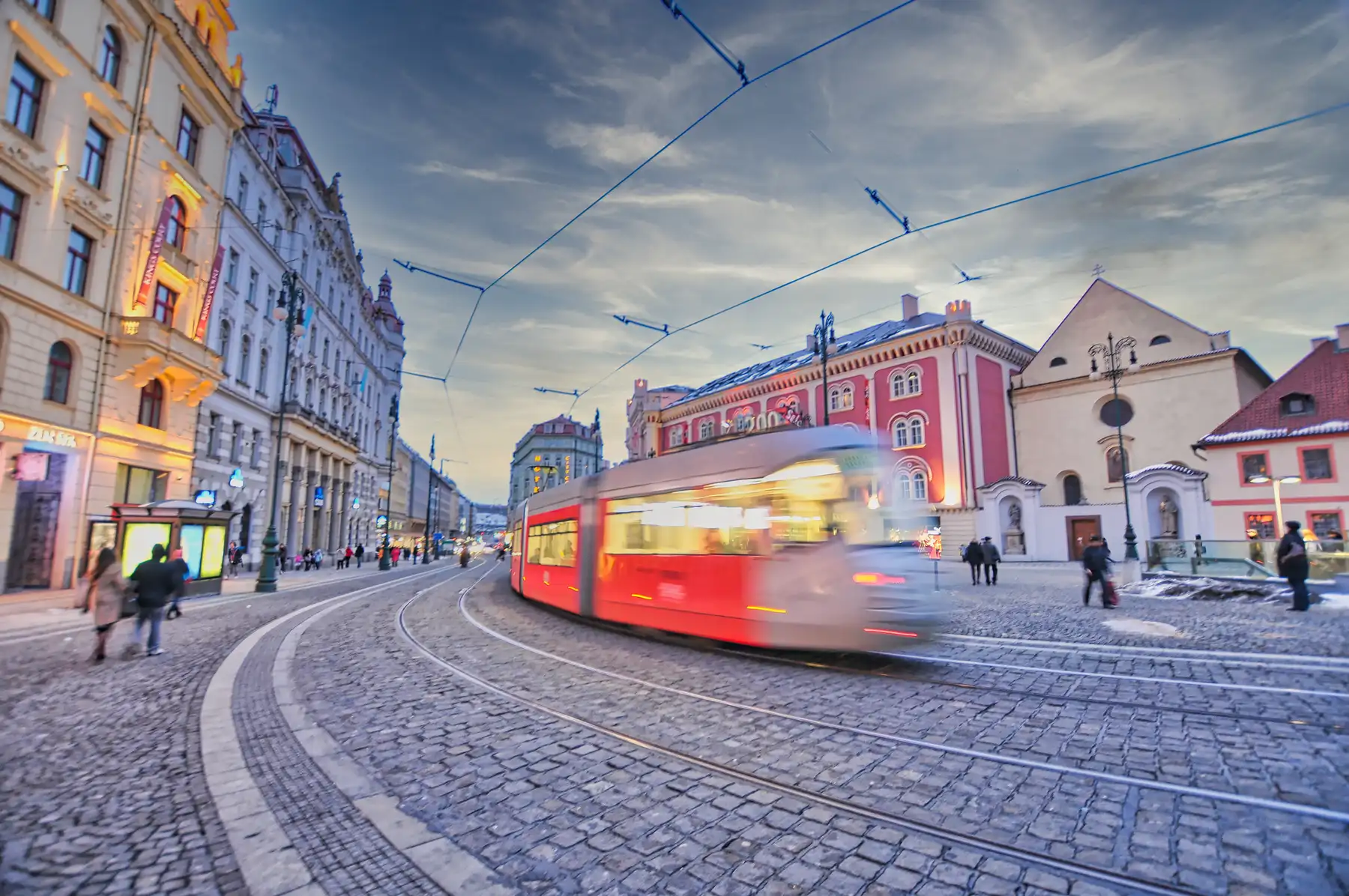
Public transport is reliable and cheap in the cities. Prague has a clean and efficient metro, as well as trams and buses that run late at night. A single ticket is around €1, and day passes are good value. Tickets need to be validated on boarding, or you risk a fine. The IDOS app is your best companion for planning any journey. A car rental is best for discovering the countryside and the Moravian wine region.
See one thing in the Czech Republic, and let it be the Prague Castle. It is the largest ancient castle complex in the world, a small city above the river all to itself. Rising at its heart, the cathedral of St. Vitus is a Gothic giant of stained glass and stone, built over nearly six centuries.
Below it flows the Charles Bridge, lined with weathered statues of saints, and arching over the Vltava as it has since the 14th century. In the Old Town, crowds descend on the hour to witness the Astronomical Clock, the Orloj, in performance, its little medieval theatre of moving figures that has run for more than six centuries.
Outside Prague, the wonders of the Czech Republic continue. The Sedlec Ossuary, near Kutná Hora, is a chapel, the interior of which is decorated with the bones of tens of thousands, for the strange and the unforgettable.
St. Barbara's Church, not far away, is one of the finest Gothic buildings in all Europe. And castles crown the hills, wherever you look, from fairy-tale Karlštejn to the vast estate at Český Krumlov.
It is a country that wears its history openly. You do not have to hunt it out. You merely walk, and it is there.
Czech food is hearty, warming, and designed for cold weather and long conversations. It is not delicate, and it does not pretend to be. It is comfort on a plate.
Start with svíčková, tender beef in a creamy vegetable sauce, served with bread dumplings and a spoonful of cranberry. Try the goulash, rich and slow-cooked, that soaks into more of those soft dumplings. Order the roast pork with sauerkraut, the dish that the Czechs return to again and again. And leave room for a koláč, a sweet pastry filled with poppy seed, plum, or cheese.
But the true heart of Czech life is beer. This is the country that gave the world Pilsner, and beer here is cheaper than water, poured with care and treated with real respect.
Find an old pub, order a half-liter, and sit. No rush. That is the whole point. If someone offers you a shot of Becherovka, the herbal local spirit, say yes. It tastes like Christmas and medicine at once.
The Czech Republic is a very safe country. Violent crime is extremely rare, and you will be fine even in the biggest cities. If you are a tourist, your biggest concern should be pickpocketing.
Crowded tourist areas of Prague will have pickpockets, especially on the Charles Bridge, in the Old Town, and on crowded trams and metro lines. Keep your bag closed and in front of you, and be aware of pickpockets in crowds.
The other thing you might encounter is taxi scams. Some taxis (especially near tourist areas) will be driven by people who want to overcharge you. Use ride apps like Bolt or Uber, or ask your hotel to call a taxi they know, and you will not have this issue at all.
Tap water is safe to drink anywhere, and walking alone at night in the cities is fine. The Czech Republic is also great for solo travelers, including women.
Some small things to know that make the difference between being a tourist and being at home.
Tips are expected but not generous. It's normal to round the bill up a little or leave 10% for good service. In pubs, you generally tell the server how much you want to pay when they take your money, not leave change on the table.
Have some koruna with you. Cards are accepted almost everywhere in Prague, but smaller pubs, village stores, and regional buses will often prefer koruna, and some places will not take cards at all.
Validate your tram and metro ticket as soon as you board. The inspectors do check, and the penalty for an unstamped ticket is not worth the gamble.
Learn two words: prosím (please, or you are welcome) and děkuji (thank you). They are hard to pronounce, but will be deeply appreciated when you manage them.
I went to the Czech Republic expecting to fall in love with it. I did not expect to long for it.On my last night, I sat on a riverside bench while the light fell behind the castle and my beer grew tepid in my hand, and I felt that particular sadness of leaving a place before you are ready to leave it. The sense that a part of you is staying there, sitting on that bench, looking out at that river long after the rest of you has gone home.
The Czech Republic is not showy about its loveliness. It does not strike you over the head with it at first. It works on you quietly, by degrees: through stone and fog and quiet streets, through the welcome warmth of a pub on a cold night, through the generosity of strangers who had no reason to be so generous.
If you go, allow it time. Allow it to be grey. Allow it to be quiet. Allow it to surprise you the way it surprised me. And do not be surprised if, at some point, it begins to feel like home.