Some islands seduce you with glossy magazines and postcards boasting famous sunsets. Years ago, in the port of Piraeus, I heard about Folegandros from an elderly fisherman. He told me it was the kind of place where you might finally hear yourself think again. I didn’t know what he meant until I got off the ferry to the island and was hit with waves of white light, the sound of silence, and the peacefulness of a place that never tried to be anything other than what it is. If you’re looking for things to do, you’re missing the point. Stop. Look around. Be found.
Folegandros is not Santorini. It’s not Mykonos. It’s the Greece that was here before crowds discovered holidays got expensive. Don’t worry, you can still find it. It’s hiding out on a Cycladic island so small that most travelers have never heard of it. Let me tell you about it. This Folegandros travel guide is less about what to do and more about what I discovered.
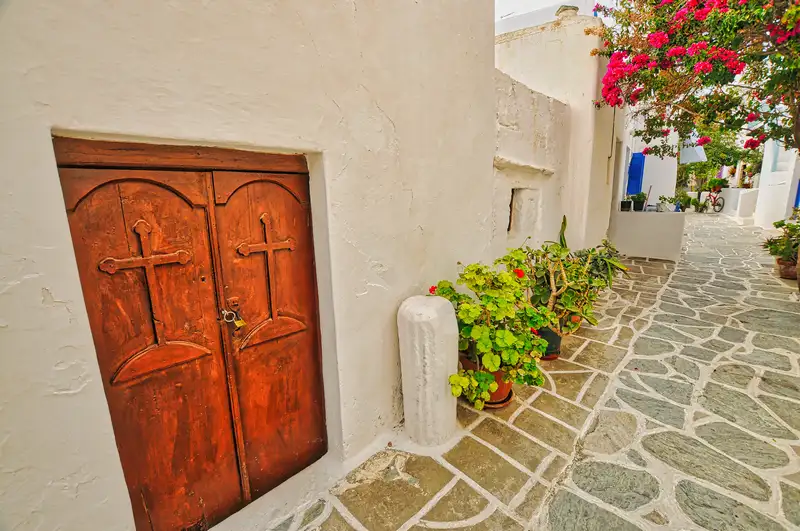
Table of Contents
Why Folegandros still feels like a secret
I’ve visited dozens of Greek islands and repeatedly return to Folegandros for one simple reason. Space. Quiet. The sense that here, I am not a visitor on vacation but a human who has somehow stumbled into a place that still belongs to itself.
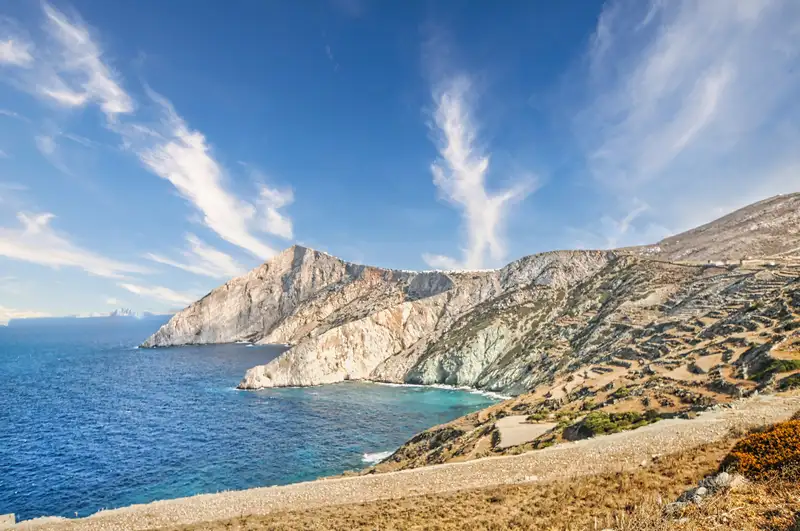
Folegandros is a small and genuine Cycladic island with fewer than 700 permanent inhabitants. There is no airport runway, no cruise ship dock, no international hotel chains. The roads are narrow. The villages are small. The cliffs fall away to brilliant blue water with no one constructing a railing to keep you from plummeting to your death. It assumes you are watching where you are going.
The island is a romance for couples seeking a romantic Greek island vacation. It is an absolute for the solo traveler who wants to walk, think, and eat well. And it is a lovely surprise for families with older children who love the outdoors and don’t need water parks or waterslides.
Does Folegandros deserve to be on your itinerary? I would argue it is one of the most deserving destinations in all of Greece, not because of what it has but because of what it has chosen not to become.
Chora: A village made of white walls, blue doors, and afternoon light
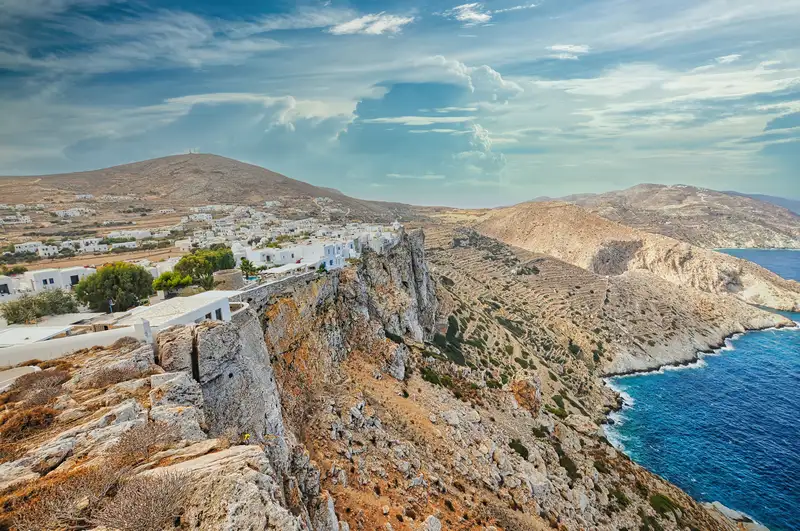
The island’s main village, Chora, is the undisputed center of Folegandros. Built into a cliff 200 meters above the sea, it’s one of the most picturesque villages I have ever visited in Greece.
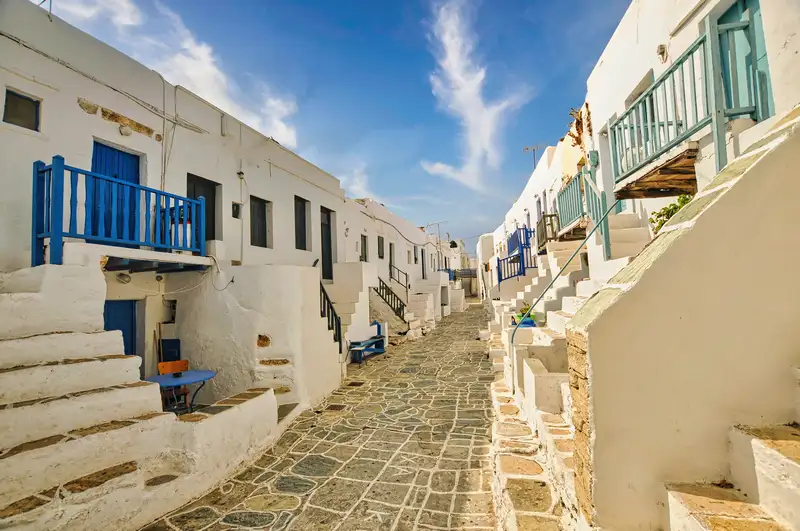
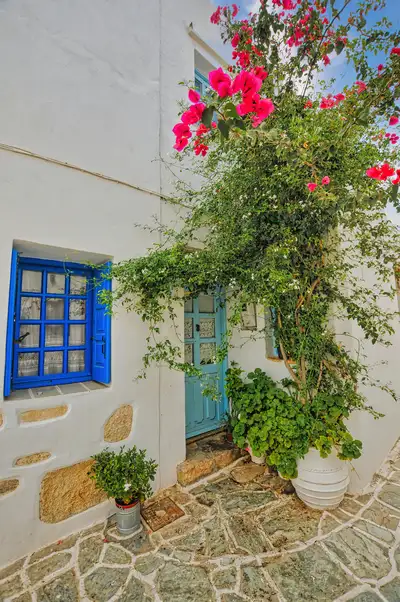
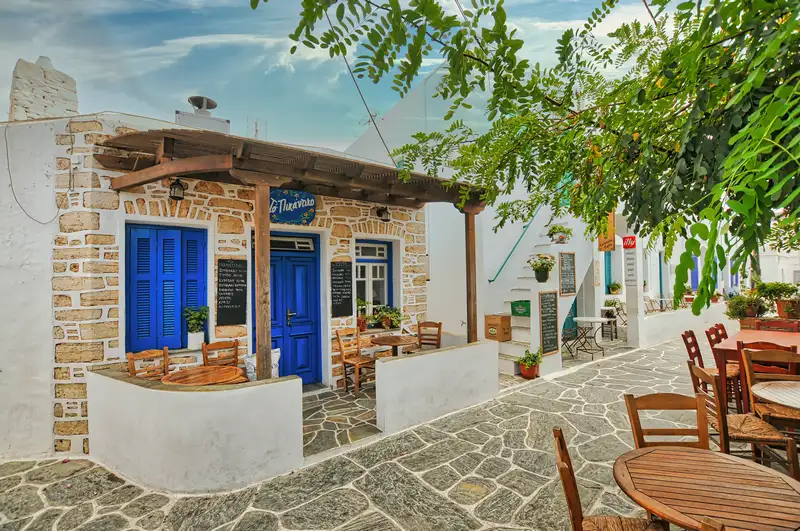
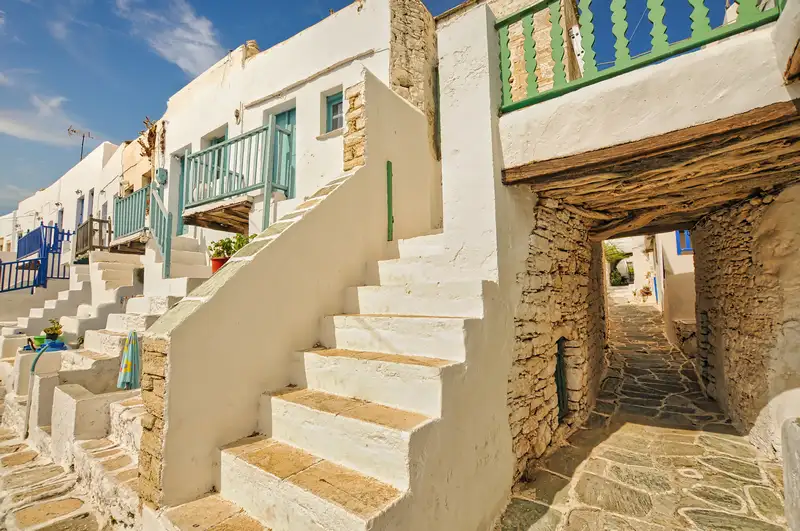
On my first visit, I remember walking in and just stopping in the middle of the main square. Staring. White-washed houses and blue doors. Bougainvillea tumbling over stone walls. Cats lazing in the shade. A church bell is ringing somewhere in the distance. No cars. No honking horns. No sirens. No machines. Just the gentle hum of a village that has been in existence for centuries and sees no reason to change now.
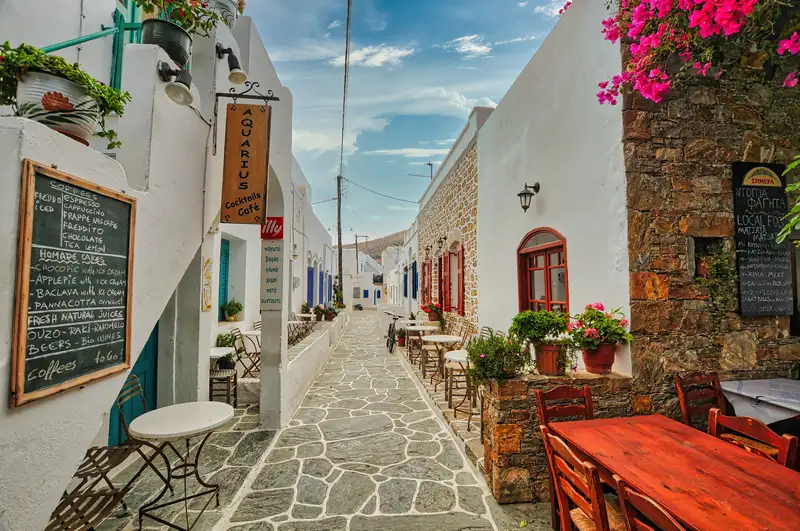
Chora is small enough to see on foot in an hour. But it’s also rich enough in details and hidden corners to keep you busy for a full day. The narrow streets twist and fold into each other. They open suddenly into minuscule squares with a single tree at the center or a wooden bench worn smooth by time. There are small shops selling handmade jewelry and locally made pottery. There are cafés where you can sit for hours, and nobody will rush you.
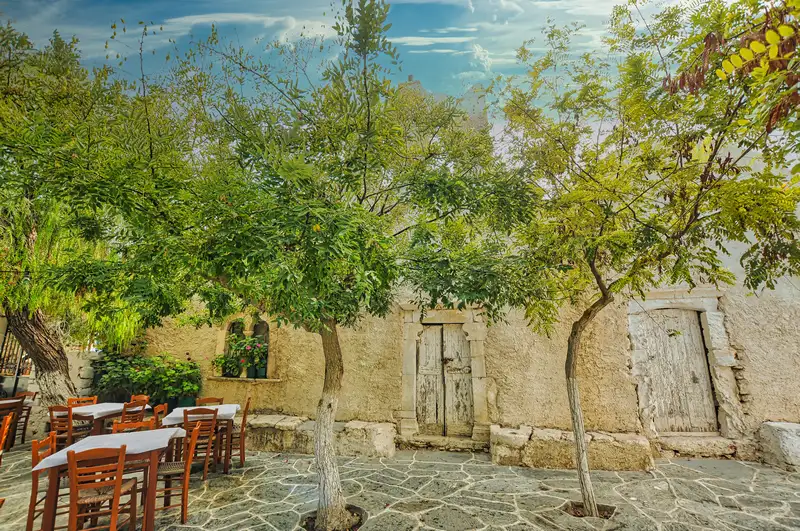
The main square, Plateia Pounta, is the social hub of the island. In the evening, locals and visitors crowd around the tables under the trees. Drinking wine. Eating slowly. Talking quietly. It’s not lively in the way that Mykonos is lively. It is lively in the way a family dinner is lively. Warm. Unhurried. Full of small pleasures.
If you are searching for the best photo spots in Folegandros, this is a good place to start. The whitewashed alleys of Chora contrasted against the deep blue sky make for the kind of image that needs no filter.
Kastro: The fortress where time forgot to leave
Kastro is the oldest part of Chora, and it is the place where Folegandros shows you its history most clearly.
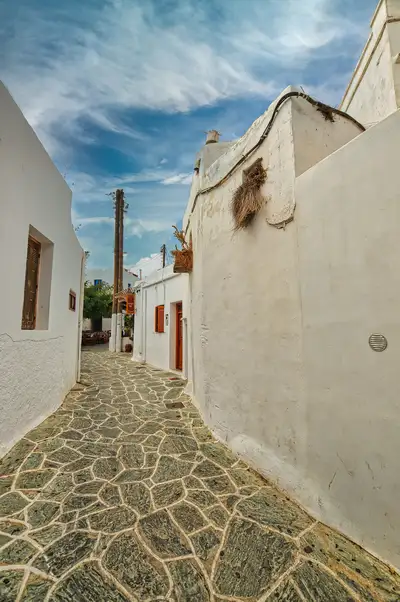
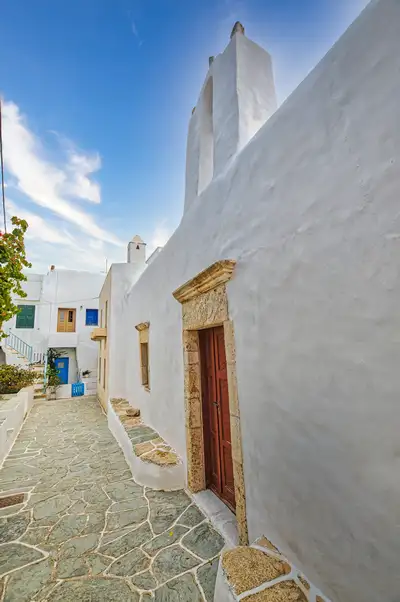
Built in the 13th century by the Venetians, Kastro is a fortified settlement perched on the edge of the cliff. The outer walls of the houses serve as the fortress walls themselves, creating a tight, closed ring of stone that once protected the villagers from pirate raids. There are only two entrances, both narrow enough that you have to turn sideways to pass through.

Inside, Kastro feels like stepping into another century. The houses are packed close together, connected by stone staircases and low archways. Laundry hangs between balconies. Old wooden doors creak in the wind. Small churches with blue domes appear around corners like quiet surprises.
I walked through Kastro late in the afternoon, when the light turned golden, and the shadows grew long across the stone. I was the only person there. The silence was not empty. It was full of all the years that place has held.
At the far edge of Kastro, the cliff drops straight down to the sea. The view from there is one of those moments where you stop thinking and just feel the size of the world around you. This is one of the most dramatic panoramic viewpoints in the Cyclades, and no photograph will ever do it justice.
Beyond Chora: The quieter corners of Folegandros
There are three settlements on Folegandros. There’s Chora, the village perched on the cliff. There’s Karavostasis, the village by the sea. And there’s Ano Meria, the village in the fields. The lion’s share of attention always goes to Chora. And it’s hard to argue with that. But the other two villages have their stories to tell as well. One smells of salt and diesel. The other smells of dry grass and goat milk. Both are worth your time.
Karavostasis: The port where the island begins
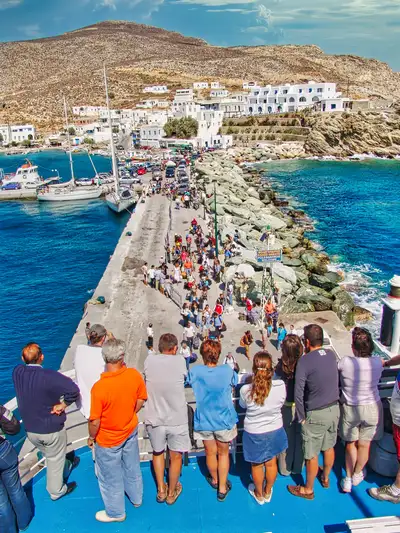
Karavostasis is where the ferry docks and where most visitors depart, less than five minutes later, scooting onto the bus to Chora before they can even look around. I was one of them until the last day when I found myself back down at the port with nothing to do and nowhere to be, and I’m glad I did.
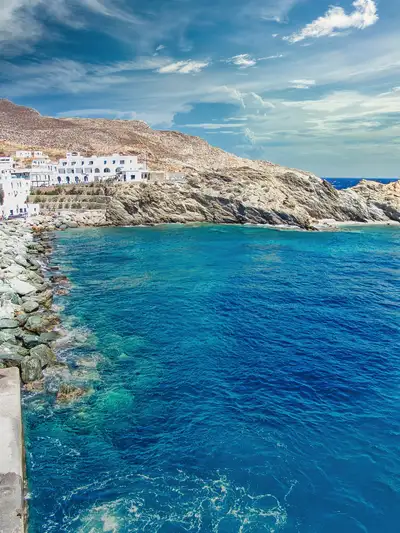
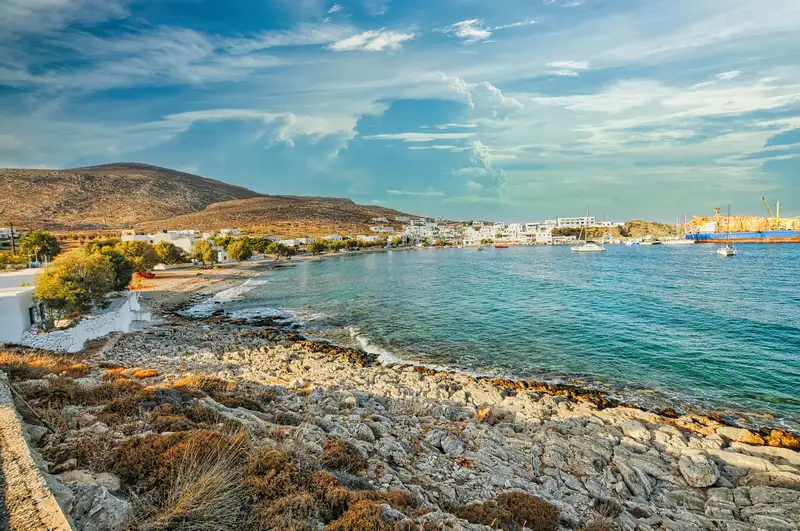
It’s a minuscule village. Just a few buildings hugging the waterfront, a pebble beach, a few tavernas with plastic chairs by the sea. There is no drama here, no cliffs, no fortress walls. Just a sheltered bay, a few fishing boats rocking on the swell, and the slow pace of a place that is largely there just to welcome you and say goodbye.
If you want a quiet morning swim before catching the bus to Chora, the beach at Karavostasis is right there. The water is clear, the entry is gentle, and it’ll probably be all yours.
Ano meria: The village where goats outnumber people
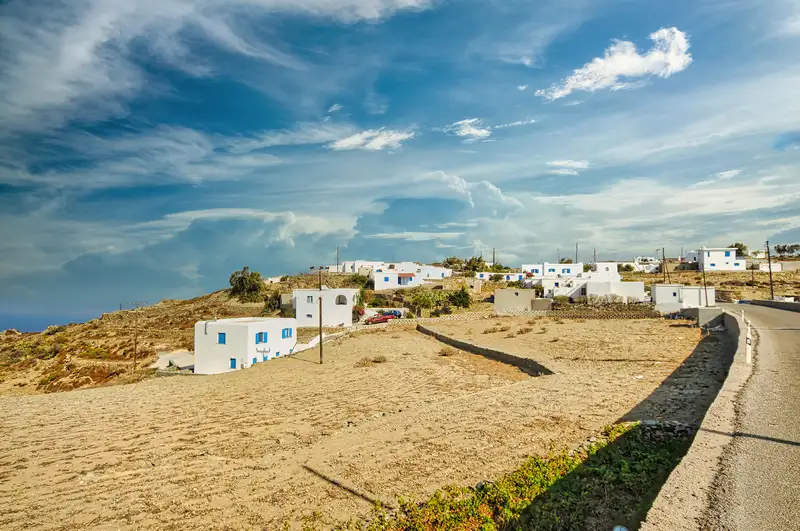
Ano Meria is the antithesis of everything else on Folegandros. The island’s third village sits along a western ridge and has an air of a forgotten place.
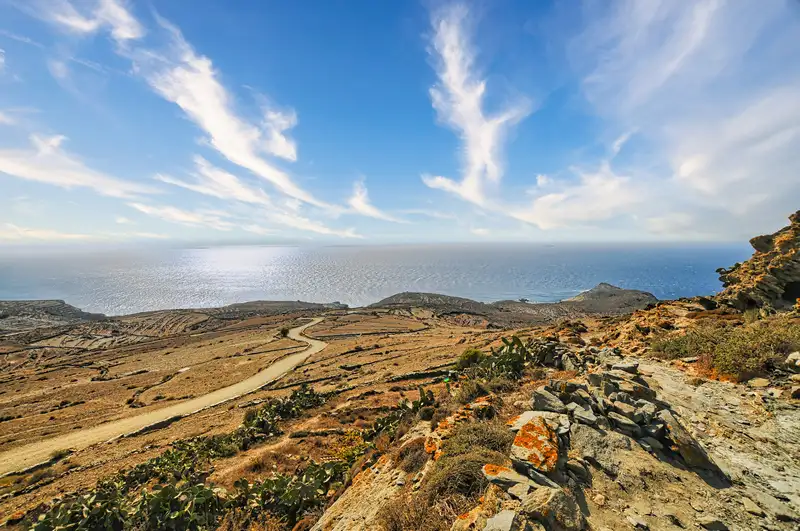
It has no town square. There is no center to Ano Meria, really. It’s a series of farmhouses and dry stone walls and small churches and terraced fields strung out along one road. The villagers grow barley, raise goats, and make cheese the way their grandparents did. It’s one of the most traditional villages in the Cyclades.
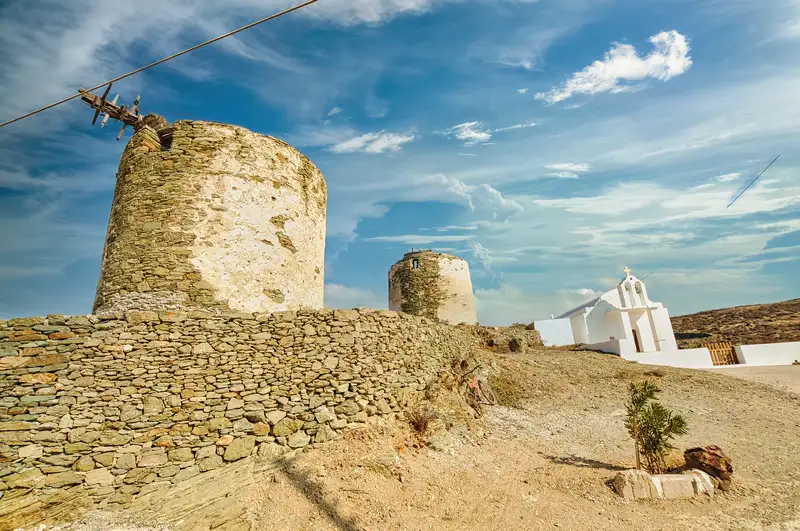
I walked through Ano Meria on a weekday morning and saw more goats than people. The wind was strong. The hills were dry and gold, filled with low stone walls dividing the land into small parcels. A woman was hanging laundry in front of her house. A man was repairing a fence. That was the whole scene. It was more beautiful than a postcard.
There’s a small folklore museum in Ano Meria that displays life on the island in previous centuries. Simple tools. Woven textiles. Farming implements. It’s nothing fancy. But it tells the story, and it’s an honest one.
It is also the starting point for several hiking trails that descend down to some of the island’s most remote beaches. If you want to get a sense of Folegandros at its quietest, most untouched, you start here.
What viewpoints offer the best views
The church of Panagia above Chora, of course. It is completely worth the reputation it has. But there are others. The edge of Kastro, where the cliff falls away to the sea, is both beautiful and a little terrifying. You look straight down at the water 200 meters below with nothing between you and the drop.
There are several spots along the hiking trail from Chora to Ano Meria where the island narrows, and you can see both coastlines at once.
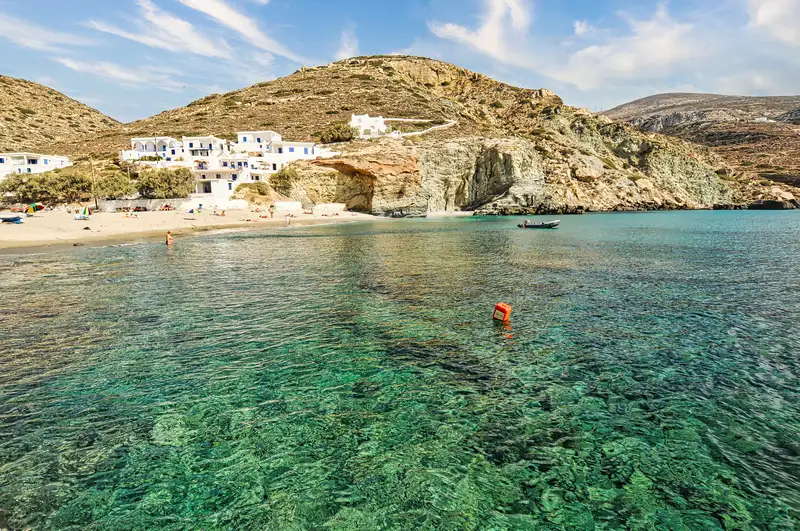
The hilltop above Agali Bay is another favorite. It takes you about 20 minutes to walk up from the beach and look down at the bay, the turquoise water, and the scatter of white houses along the shore.
Panagia: The white church above the clouds
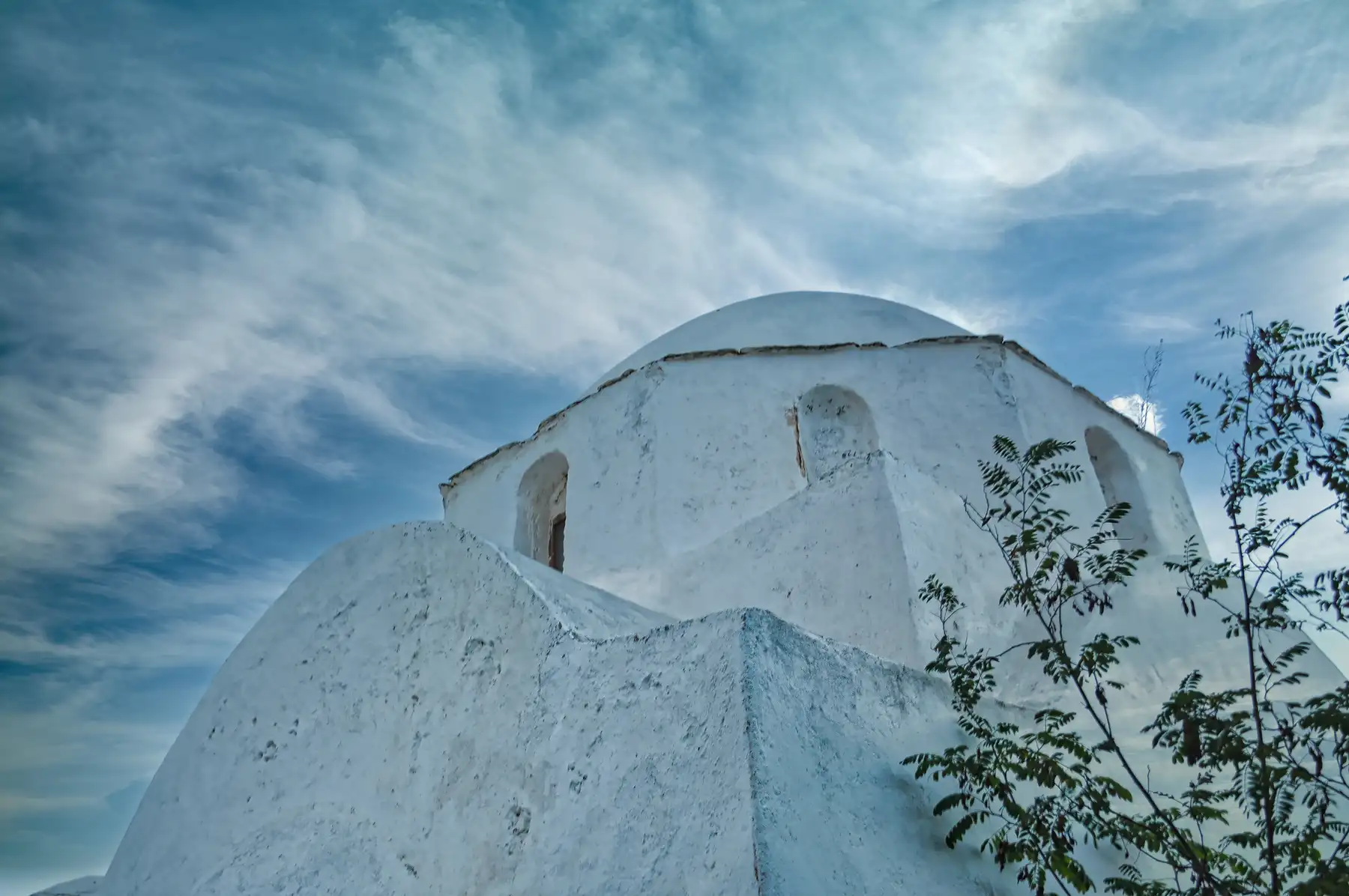
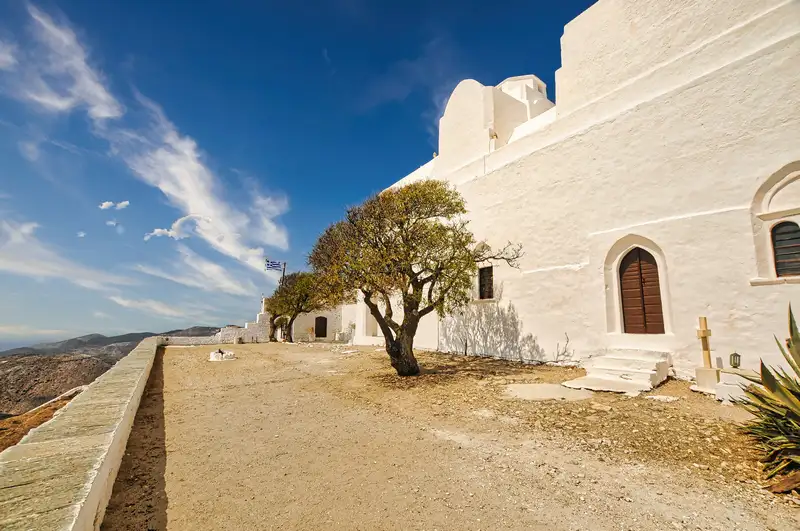
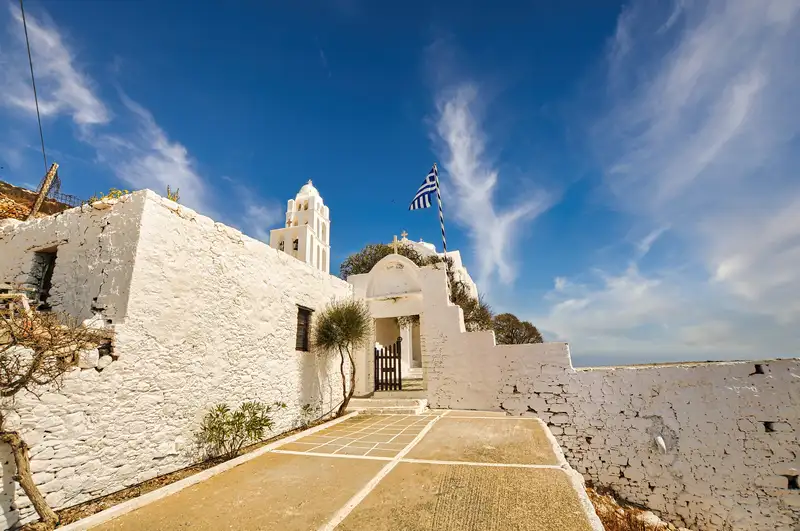
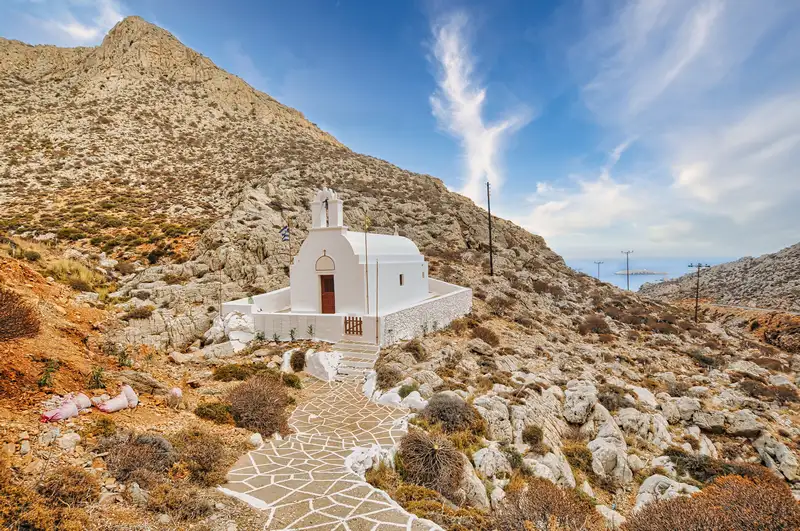
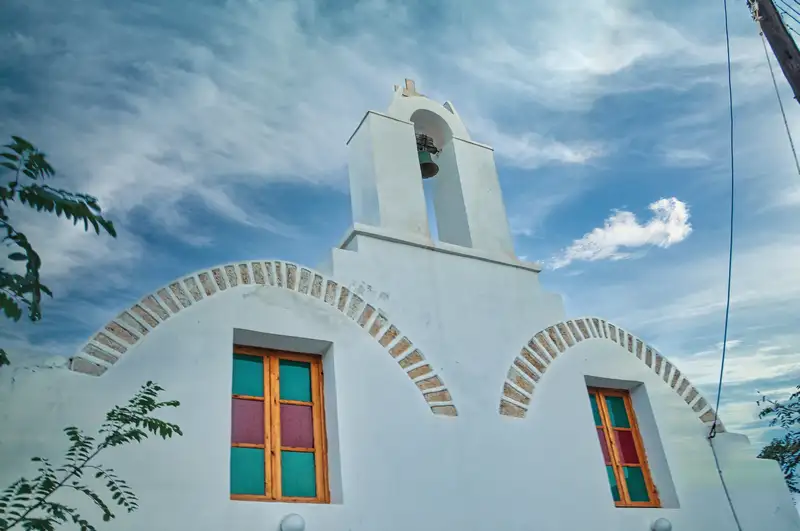
On top of the hill, above Chora, you will find the Church of Panagia (Virgin Mary). You may have seen it in pictures and not even realized it. A white church on a cliff, glistening in the sky. There is a zigzag path leading up to it, quite steep in parts. If you’re thinking about it, here are the answers to the questions you didn’t ask.
Is the walk to the Panagia church steep? The path is as steep as you make it. There are shorter, more difficult paths leading up to the church, and these are used by locals and shepherds. But the path I used, which zigzags up the hillside, is not difficult at a reasonable pace. It ascends some 200 meters from the edge of Chora, and it’s steep in parts, but with no shade in summer, it’s better to do this at sunrise or sunset. As far as time, I would say 15-20 minutes at a relaxed pace.
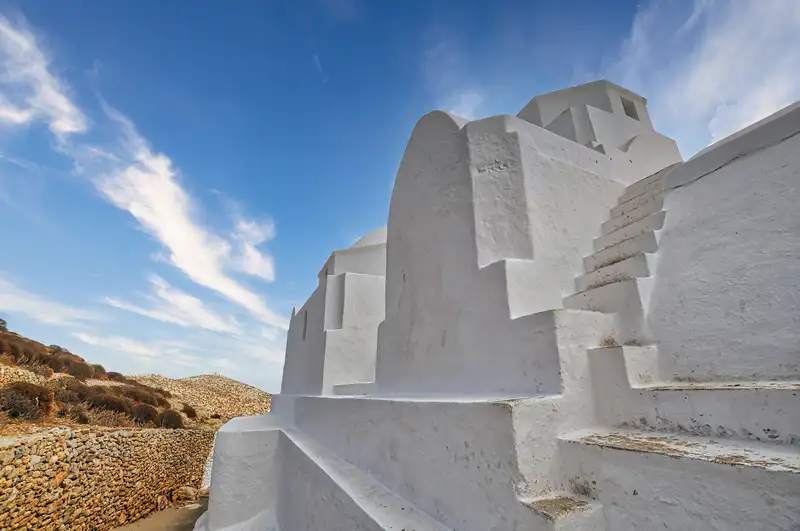
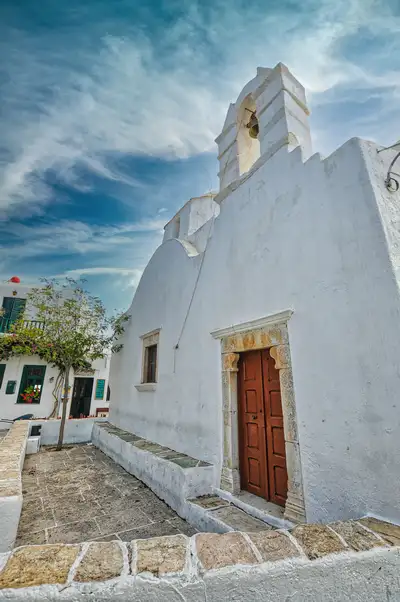
As for the church, there is not much to it. Small and white and simple, as most Cycladic churches are. But it’s the location. You reach the top, and you can look out in all directions. The sea stretches out around you. The cliffs drop away under your feet. On a clear day, you can spot Sikinos, Ios, and even the silhouette of Santorini in the distance.
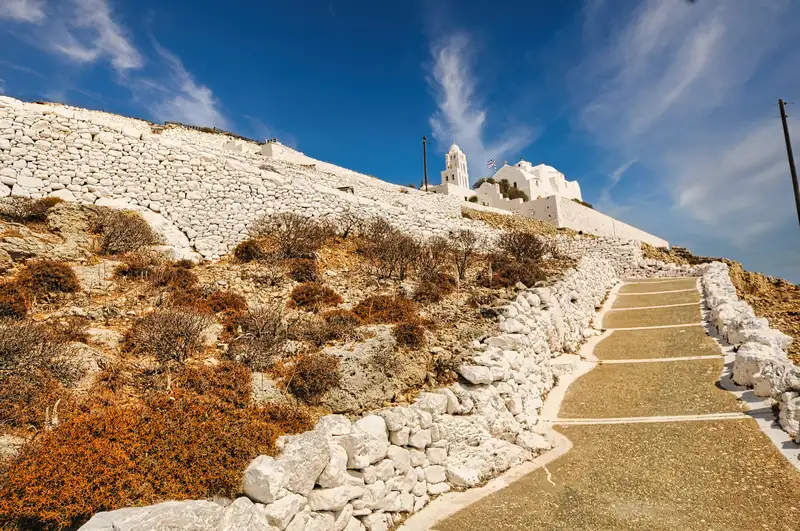
And here’s another thing. This was one of the best places to watch the sunset in Folegandros. I saw the sun set from the churchyard. The sky burned gold to pink to deep purple, as the wind rustled through the dry grass. I sat there, long after the sun had set, reluctant to leave.
The Panagia church viewpoint is one of those places that makes you see why people built churches on hilltops. Not just for God, but for the closeness to something greater than themselves.
The beaches that Folegandros hides between its cliffs
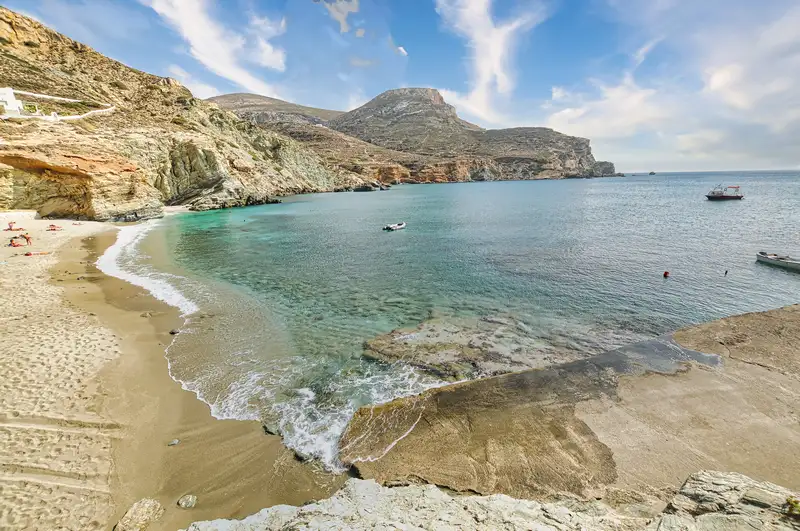
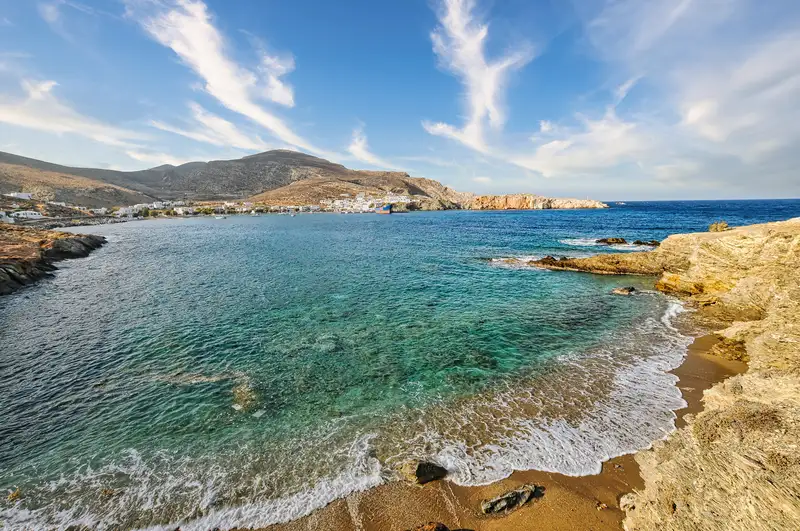
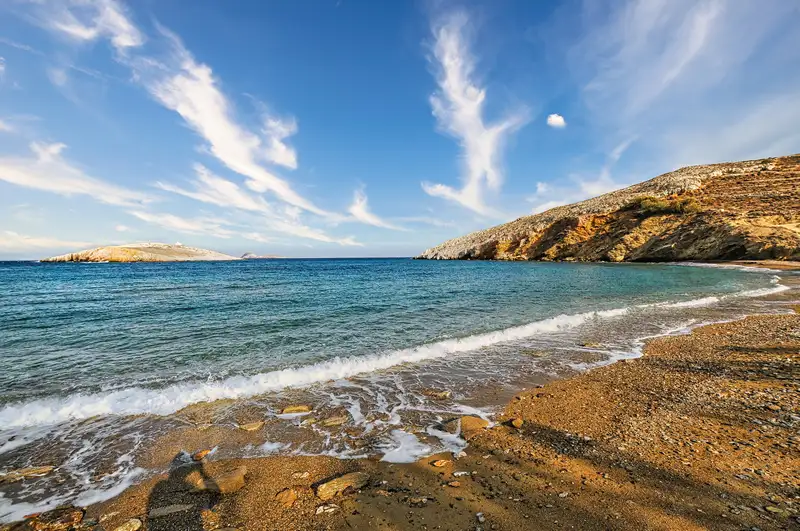
The beaches of Folegandros are not wide and sandy like many of the beaches on larger islands. They are small and wild and tucked into rocky coves at the base of high cliffs. Some of them are easy to reach. Some require a hike. Some are only accessible by boat. Each one, though, is earned.

The water is deep, clear, and an almost impossible shade of blue. The island has no large harbors or industrial zones to sully it, so the sea is clean and untouched. Most beaches are pebbly or have coarse sand and a rocky entrance to the water. There are no beach clubs or loud music or rows of umbrellas jostling for space. Just the coast as it always has been, worn by wind and salt and waiting for those who are willing to make the walk down.
I go much deeper in my separate guide on the best beaches in Folegandros, where I walk you through each one and help you decide which are worth your time.
What local food should you try in Folegandros?
Food on Folegandros is humble, simple, and of the earth. There are no fancy restaurants or fusion menus here. This is a place where the tomatoes taste like tomatoes, where the cheese is made from the goats that roam the hill.
Matsata is the island’s signature dish. Handmade pasta served with either chicken or rabbit in a rich tomato sauce. It’s slow-cooked, hearty, and utterly comforting. Every taverna makes it a little differently, and I ate three different versions in as many days. All was good.
Kopeli is a local cheese, made from a blend of goat’s and sheep’s milk. The flavor is sharp, briny, and tangy. Served as a starter, it’s often drizzled with honey or accompanied by dried figs.
Soufiko is a vegetable stew made with whatever the garden has on hand. Tomatoes, eggplant, peppers, and zucchini, simmered gently in olive oil and herbs. The taste of a Greek summer, in its purest, most complete form.
Fish is always on the menu, and on Folegandros it’s generally cooked simply, with lemon and olive oil. In the port village of Karavostasis, there are several seafood restaurants that serve the catch of the day.
Planning your trip to the edge of the Cyclades
Folegandros is not that sort of island. There is no airport to compare with. There are no rental car companies vying for your business, nor is there a maze of hotel options to sort through. Planning is easy because the island is easy. A ferry will take you there. A bus or your feet will take you around. A small room in one of three villages will be your base.
There are a few decisions to make, and those are when to go and how long to stay; even those questions have obvious answers. What follows are details I learned from my own visit, the sort of things it’s nice to know before you purchase your ticket, so the island can do what it does best: amaze you with how little you actually need.
When is the best time to visit Folegandros?
The best time to visit Folegandros is from the end of May to early October when the weather is warm, the ferries are running regularly, and the tavernas and hotels are open.
My favorite months are June and September. The weather is comfortable (mid-20s to low 30s Celsius), the island is not at its busiest, and the light is softer, making everything look even more beautiful.
July and August are warmer and busier, although "busy" on Folegandros is still quiet by Greek island standards. Even in high season, this is not a place that's overrun by visitors. It is far less crowded than other Cycladic islands, and that is a large part of its charm.
How many days do you need?
Three days was about right for me. Long enough to poke around the villages, hike a few trails, swim at a handful of beaches, and spend a night doing nothing at all on a seafront terrace.
Two days is the minimum if you don’t want to race around the island. If you have four or five days, you’ll have time to find your own pace, return to your favorite beach, and sample every little taverna in Chora.
Folegandros isn’t the sort of island you tick off a list. It’s the sort of island where one lazy afternoon, sitting on a stone wall as goats cross a hillside, is the thing you’ll remember most.
Finding the island: A ferry ride to the edge of the Cyclades
There is no airport. Folegandros is only accessible by ferry. In fact, that’s part of the experience. Ferries to Folegandros leave from Piraeus port in Athens and take approximately 4-8 hours on a high-speed or conventional boat. There is also a Santorini to Folegandros ferry that only takes about 1-2 hours. That’s one of the reasons it’s easy to see both islands on the same trip.
Ferries also sail between Folegandros and Milos, Ios, Naxos, and Paros. Connections are best from late May to September, but there are boats running before and after that. Outside of that season, they are less frequent and easily canceled due to weather.
The ferry to Folegandros arrives at Karavostasis. That’s a small port village at the base of the island. You can take a bus from there, or you can drive the winding road to Chora.
Where to stay and what each one gives you
Folegandros is a tiny island, and your lodging options are reduced to three: a hotel in Chora, on the cliff, a guest house in Karavostasis, near the port, or a pension in Ano Meria, out in the fields. Each location provides a different perspective of the island.
Stay in Chora, and you'll be at the center of things, enveloped by the evening warmth, within easy walking distance to tavernas and the main square. In Karavostasis, you'll be awakened in the morning by the songs of fishing boats and scented by salt. In Ano Meria, you will be embraced by the kind of silence most visitors travel long distances to experience. You will not find large resorts on Folegandros. It's all intimate and personal, scaled-down and in keeping with the character of the island.
If you want help deciding, I put together a complete guide on where to stay in Folegandros that walks you through every area and what it feels like to wake up there.
How do you get around the island?
The island is small and easy to get around. The local bus runs between Karavostasis, Chora, and Ano Meria. It departs several times a day in the summer and is scheduled to arrive at the port and Chora just after the ferry arrives. The ride from the port to Chora takes 15 minutes.
Is Folegandros easy to walk in?
Pretty much. Chora is all walkable, and the walk from Chora to Ano Meria is an enjoyable hike. The beaches are all accessible by bus, car, or on foot.
Is it possible to visit Folegandros without a car?
Yes. Most visitors don’t have a car. The bus and your two feet will take you almost everywhere. Renting a car or scooter allows you more flexibility (in particular to visit the more isolated beaches and hiking trailheads), but it is not required.
Small questions that matter before you visit the island
Is Folegandros a good alternative to Santorini?
In many ways, yes. Both islands have whitewashed villages built on cliffs. Both have dramatic sunsets. Both are staggeringly photogenic. But Folegandros has something Santorini lost a long time ago: peace and quiet. You will not compete with other travelers for a table at a restaurant. You will not wait in line to snap a picture of a sunset. You will not feel like a number.
Folegandros vs Milos, which is better?
That depends on what you're looking for. Milos has more beaches, more diversity, and more to do. Folegandros has more soul. Milos is the island you visit when you want choices. Folegandros is the island you visit when you want to feel.
Is Folegandros less crowded than other Cycladic islands?
Much less. In every way. And that, more than any single sight or beach, is its greatest gift.
Is there an ATM on the island?
Yes, there is one located in Chora. It's always a good idea to bring cash, as not all restaurants or shops take cards.
Is there a mobile phone signal and Wi-Fi?
Yes, mobile signal is generally quite good, but there are certain areas, particularly on some hiking trails, where the signal can be weak. Most hotels and cafés have free Wi-Fi.
Is it possible to do a day trip to Folegandros?
If the ferry schedules permit it, technically yes. I wouldn't advise it, though. The island is too special to experience in a couple of rushed hours. Stay for at least two nights.
Is Folegandros an expensive island?
Not particularly. In fact, there are more affordable Greek islands out there. Moderate accommodation and taverna prices make it doable on most budgets. It's certainly a way better value than Santorini or Mykonos.
What stays with you after Folegandros
I took the first ferry in. Chora was still asleep. A cat slinked across the square. Panagia church was white and still against the lightening sky, the same way it’s done for centuries, looking on. I found a bench on the upper deck and watched Folegandros shrink. First, the port. Then the cliffs. Then the villages were white dots on a brown ridge, and then even those were gone.
Three days. That was all it was. But something about this place burrowed into me. Not one thing. One view or one meal or one swim. It was quieter than that. Just the feeling that I’d been somewhere real. Someplace that didn’t put on a show for me. It just was, the way it has always been, and allowed me to be in it for a little while.
I still think about it at random moments. When the city gets too noisy. When someone asks me where they should go in Greece, and I hesitate, because the honest answer is a place most of them have never heard of.
Go, if you have the chance. Stay longer than you think you need. And when the ferry takes you away, watch the island fade. That’s when you’ll see how much of it you’re really taking with you.