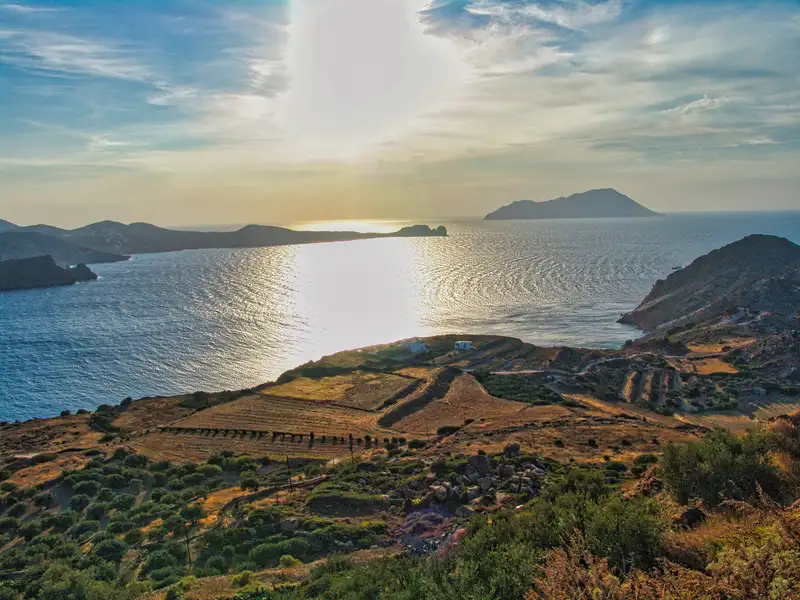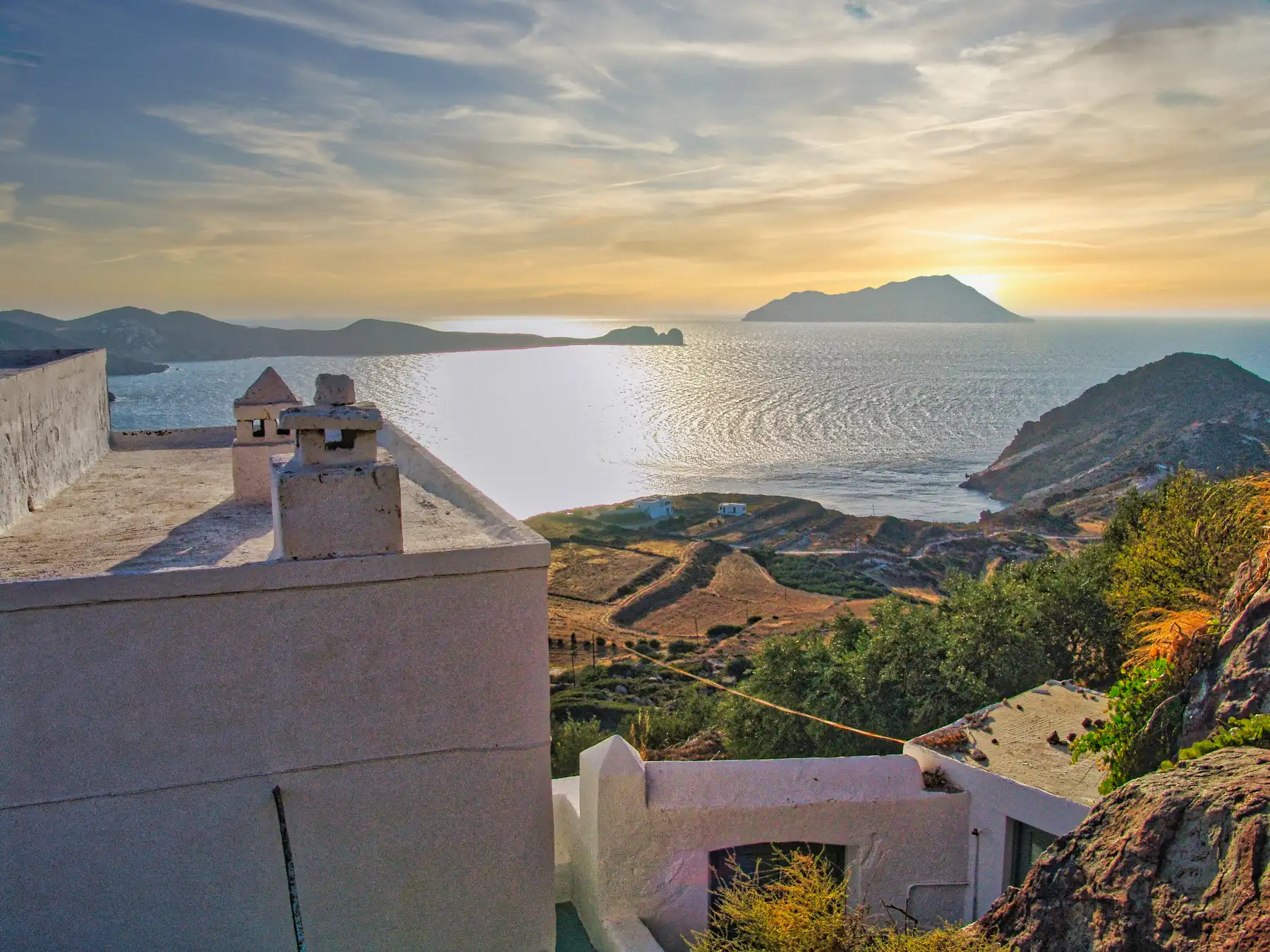
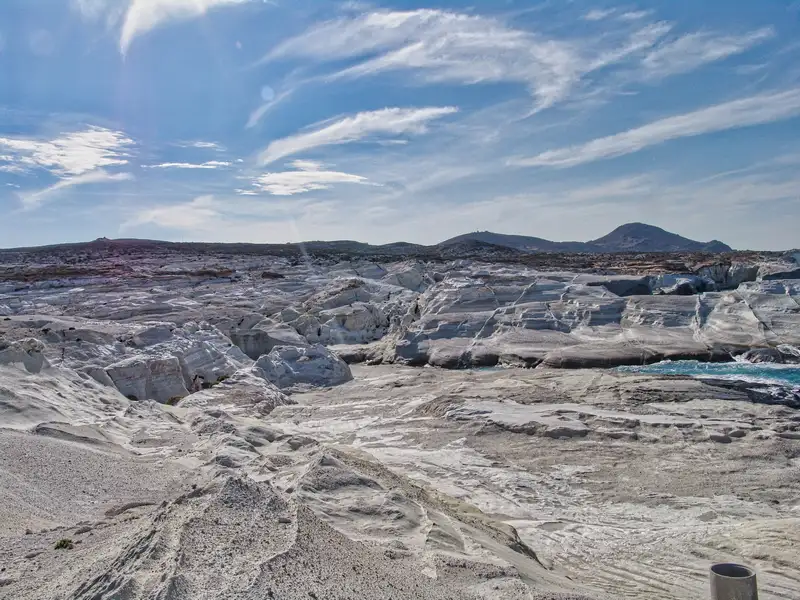
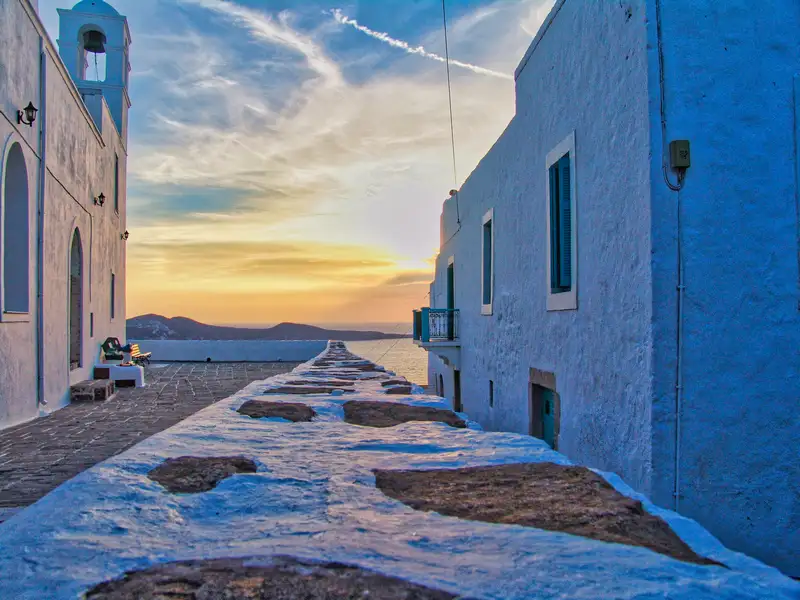
There’s a light on Milos Island that I have never found anywhere else in Greece. It is sharper than the light in Santorini. Older than the light in Mykonos. Softer than the light in Crete. It falls on the white rocks of Sarakiniko in the morning and turns the whole shoreline into something that looks like the surface of the moon. It falls on the whitewashed walls of Plaka at sunset, and the whole village turns to honey.
I have been visiting Milos for years, in every season that makes sense to visit it, and I still have not seen everything. That is the first thing I want you to know. Milos is not a large Greek island, but it carries more beaches than most travelers can count, more colors than most photographs can hold, and more silence than most visitors come expecting to find.
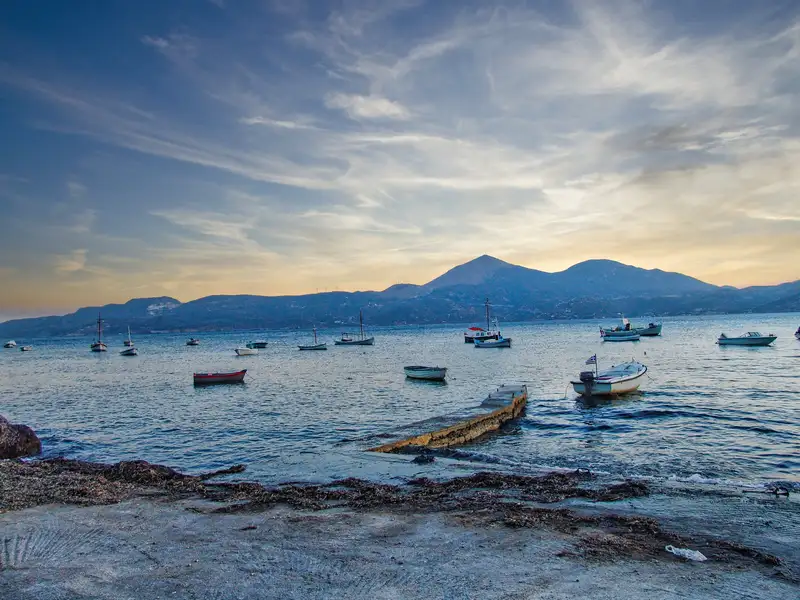
Table of Contents
Why Milos Island still holds a part of my heart
Because it is beautiful, and because it is still itself. Milos island lies at the southwest corner of the Cyclades. Born of volcanic fire many millions of years ago, it has been sculpted gently by wind and sea. It has more than seventy beaches, each with its own color, its own rhythm, its own way of catching the light. It has whitewashed villages that have not been dressed up for tourists. It has food that tastes of the place, not of anywhere else.
What makes Milos different from Santorini and Mykonos is not the beauty. All three islands are beautiful in their own way. The difference is scale. There are no cruise ships docking in Adamas in the early morning. There are no lines of people queuing for a sunset photograph. The prices are gentler. The streets are quieter. You can walk into a taverna in Pollonia at eight in the evening and still find a table by the sea.
Finding Milos on the edge of the Cyclades
Milos island is in the south-west part of the Cyclades in the Aegean Sea. It's about halfway between mainland Greece and the island of Crete. Milos is the westernmost of the large Cycladic islands, next to its smaller sister island, Kimolos, and close to Sifnos, Serifos, Folegandros, and Sikinos. To the southeast, you can find Santorini after a stretch of open sea.
To the north, the island of Milos gazes out over the water towards its quieter neighbors. There are several small islets close by, including Poliegos, Antimilos, and the small cluster of Glaronissia. The island is roughly horseshoe-shaped, with its open end to the northwest. This is because the whole island is the rim of an old underwater volcano, and the bay of Milos is essentially the crater. That small piece of geography accounts for much of the island's beauty. Everywhere you go, you are walking on the edge of something old and slow.
A walk through the history of Milos Island
The history of Milos Island is long, strange, and often overlooked.
The island was inhabited more than eleven thousand years ago. Its volcanic soil produced obsidian, a sharp volcanic glass that was one of the most valuable materials in the ancient mediterranean. Milos obsidian has been found in digs as far away as Crete, Egypt, and Anatolia. The bronze age settlement of phylakopi, near the modern village of Pollonia, was one of the great trading centers of the Aegean.
In the fifth century before Christ, the island was caught in the Peloponnesian War between Athens and Sparta. The Athenians demanded that Milos pay tribute to them. The small island refused. What followed became one of the darkest chapters in Greek history, remembered today through Thucydides' Melian Dialogue. The men were killed, the women and children enslaved, and the island was emptied. It is a heavy memory that still lives quietly in the stones here.
Later came the early Christian catacombs, carved into the soft volcanic rock above Tripiti. They are among the oldest anywhere, predating even the famous catacombs of Rome. Later still, the Venetians built the castle above Plaka in the thirteenth century.
In 1820, a local farmer digging in a field near Tripiti found a broken marble statue buried in the earth. It turned out to be the Venus de Milo. Within a year, the statue had been taken to France, where it remains in the Louvre. I have stood in front of it in Paris. It is beautiful. But it belongs here. I hope that one day it comes home.
The places on Milos that stay with you
Milos is home to more attractions than you could possibly squeeze into one vacation, but there are a few places that will linger in your memory long after you’ve left. These are the places that bring me back year after year.
The moon rock of Sarakiniko
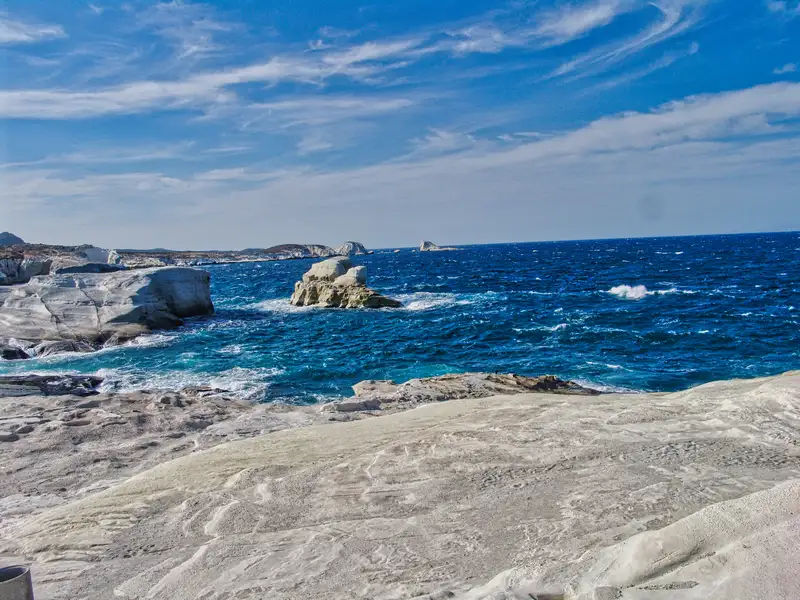
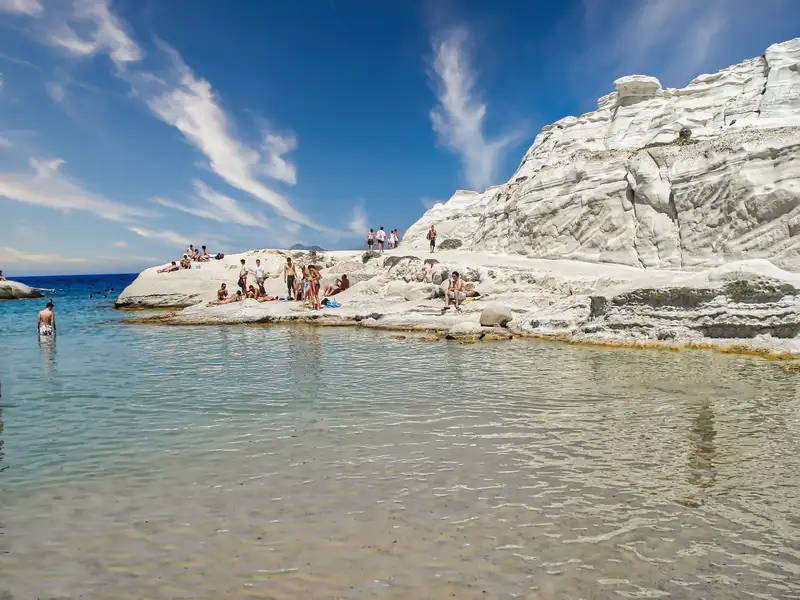
Sarakiniko beach is the most-photographed attraction on Milos island, and for good reason. The entire beach here is a landscape of smooth white volcanic rock, sculpted by wind and waves into shapes so bizarre that they look more like the work of art than the forces of nature.
Standing on it at sunrise with nobody around you, it feels as if you are walking on the surface of another planet. The water is a luminous turquoise blue, in stark contrast to the white sand. There is a small sandy cove tucked into the formations, and a few cliff faces for the more adventurous to jump off into the sea.
The pirate caves of Kleftiko
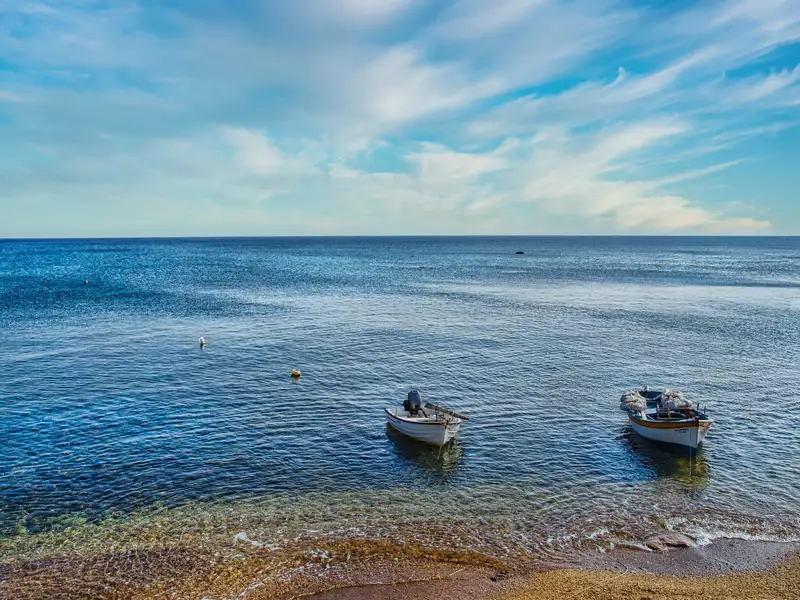
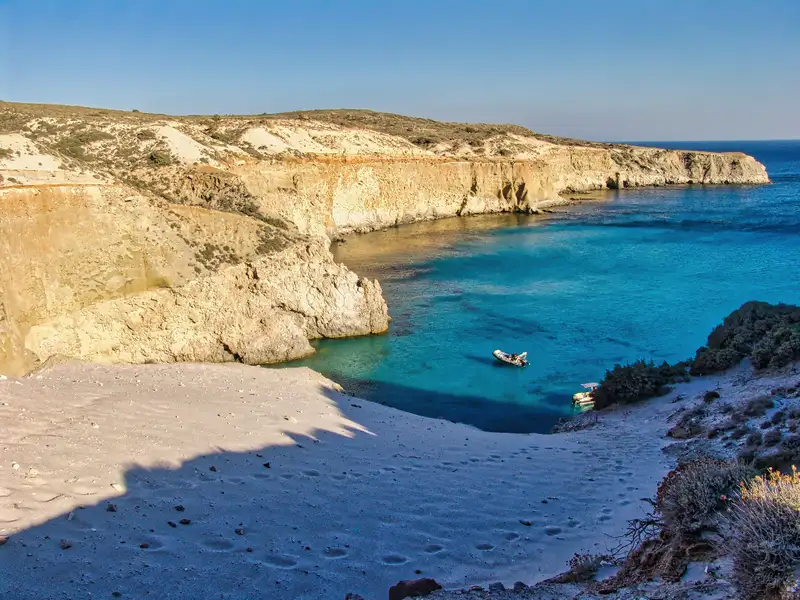
Kleftiko is a beach in name only. It is actually a network of white limestone cliffs, sea caves, and secret coves on the southwest coast of the island that are only accessible by boat. It is called the pirate caves because pirates would anchor their ships out in the bay and hide among the rocks.
These days, the same waters host small boats filled with tourists who come for a few hours of swimming and snorkeling in waters that are so clear they look surreal. If you only do one boat trip on Milos, make it this one. Tours leave from Adamas and are usually full-day trips.
The hilltop village of Plaka
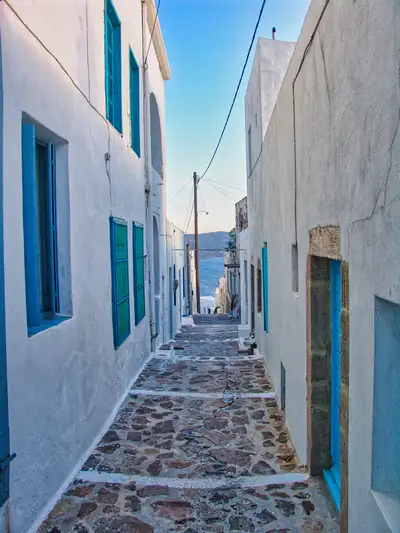
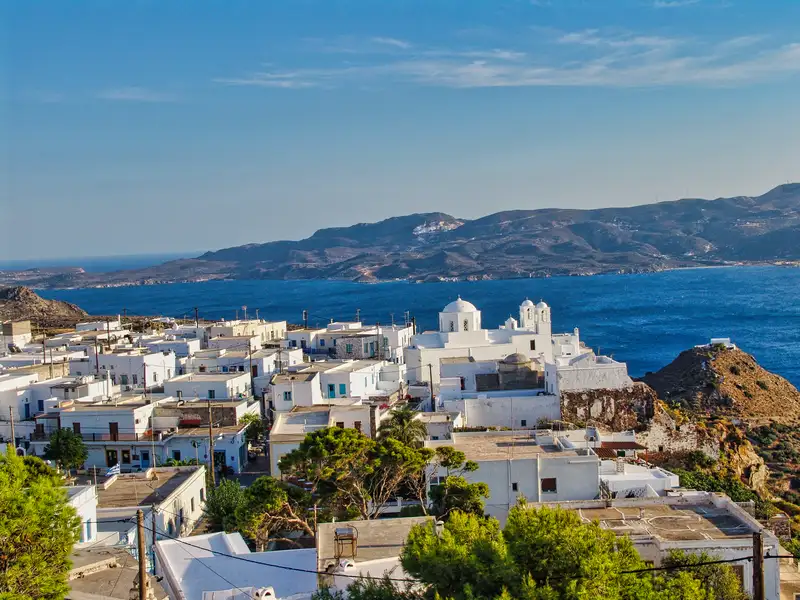
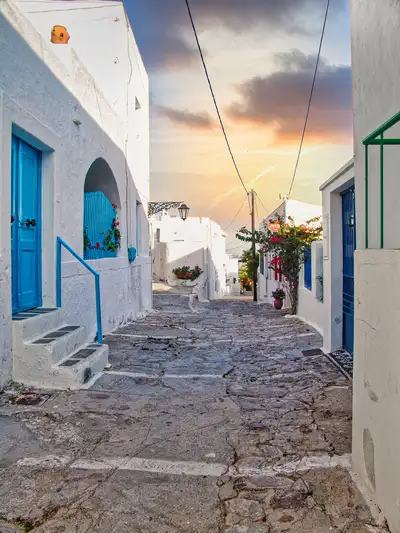
Plaka is the capital of Milos island, and it’s perched high above the main bay on a little hill. The streets are narrow and paved with stone, the houses are whitewashed, and every few steps you open up onto a view of the Aegean.
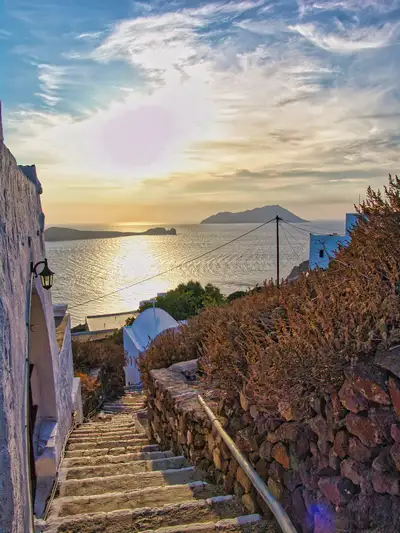
At sunset, the village glows. An old Venetian castle on top, built in the thirteenth century, is one of the best sunset points in all of the Cyclades. There’s a small archaeological museum here, too. It’s worth a visit, even if you only have time for a stopover.
The fishing hamlet of Klima
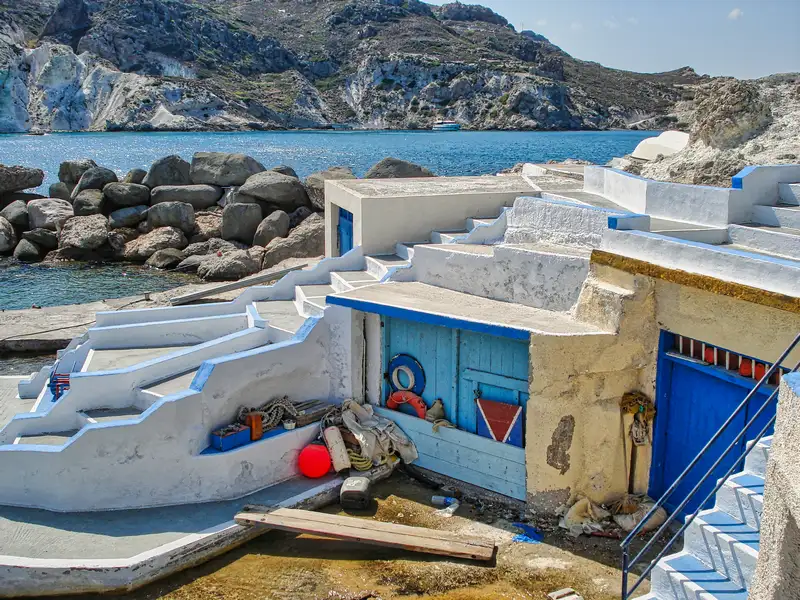
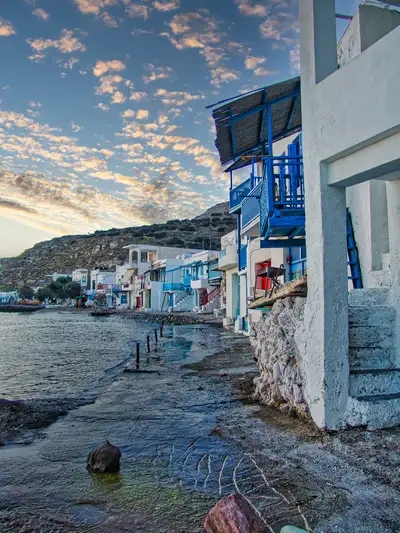
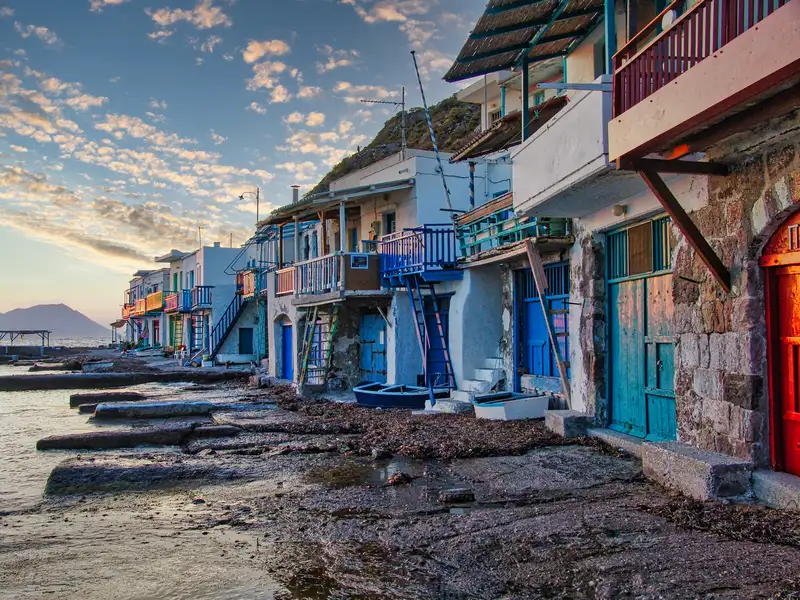
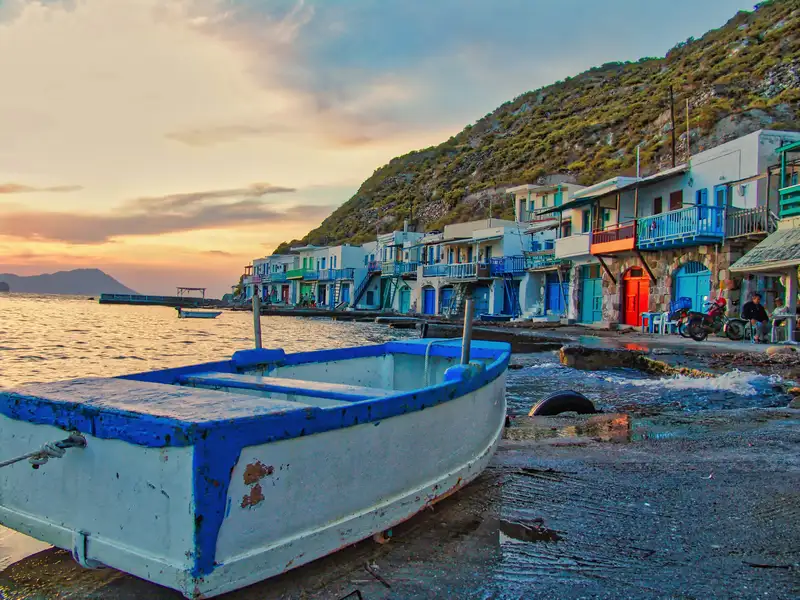
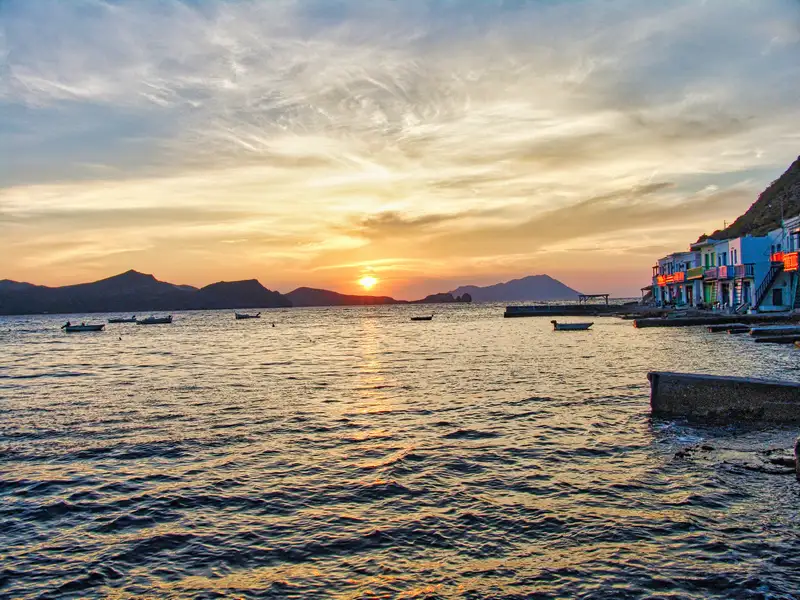
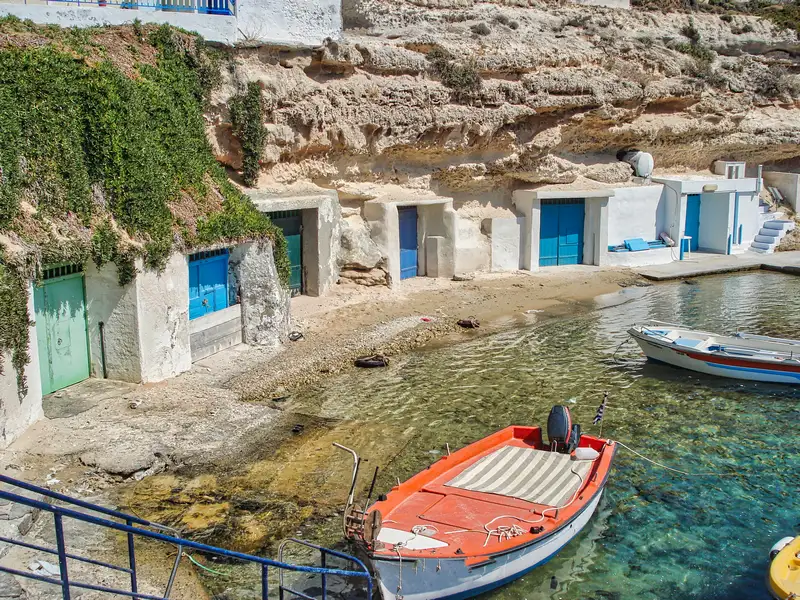
Klima is the most photographed village on Milos island, and for good reason. The whole place is built right at the edge of the sea, a row of tiny two-story houses with brightly colored doors and balconies. They’re called syrmata.
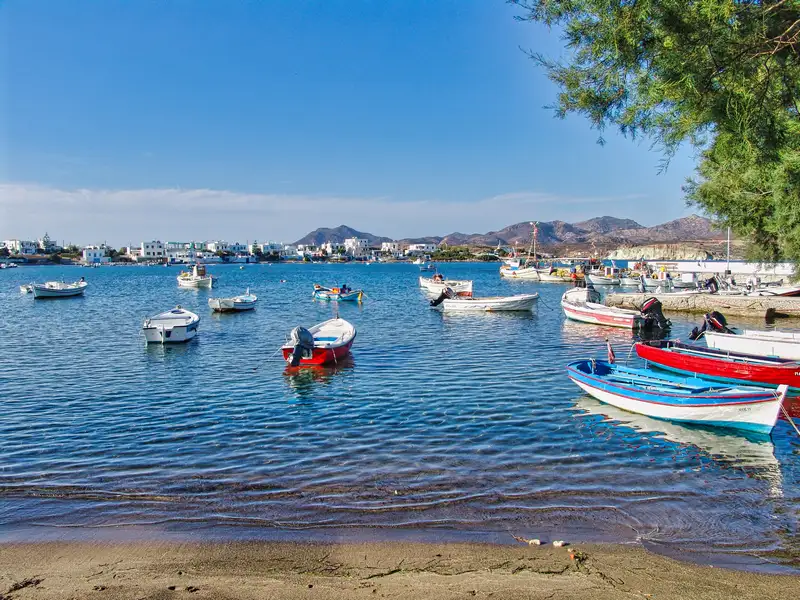
Fishermen used to use the lower floors as garages for their boats and lived on the upper floor. Many of these little houses have been converted into holiday homes, though some still belong to fishing families. Visit in the afternoon, stay for the sunset, and have dinner at the little taverna by the water.
The quiet coves of Mandrakia and Firopotamos
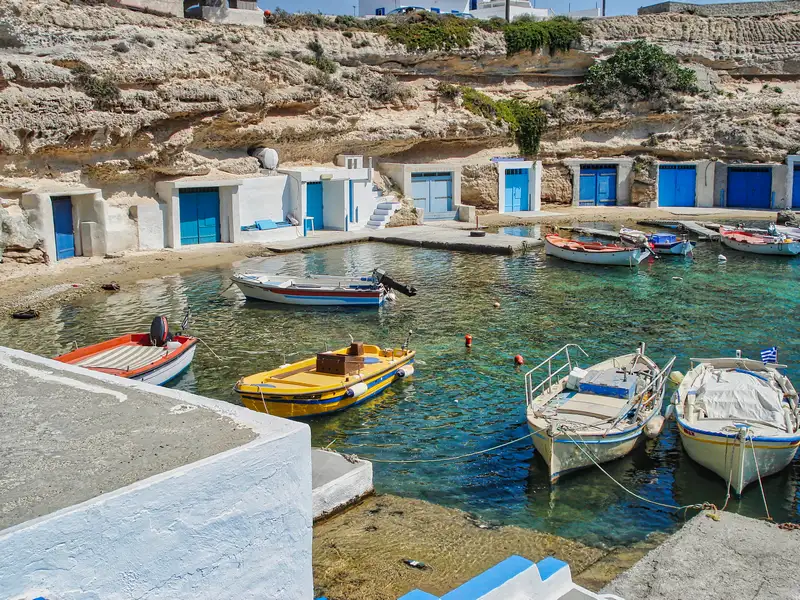
Mandrakia and Firopotamos are two small fishing villages on the northern coast. They’re less visited than Klima but just as beautiful. Mandrakia has colorful boat garages, a tiny stone church, and one of the best seafood tavernas on the island. Firopotamos has a calm cove with clear water, a whitewashed chapel, and the feeling of being slightly lost in time. Spend a morning in one and a late afternoon in the other.
The slow evenings of Pollonia
Pollonia is a seaside village on the northeastern tip of Milos island, facing the nearby island of Kimolos. It is quieter than Adamas, more lived-in than Klima, and full of good tavernas. Many travelers choose Pollonia as their base, and I understand why. The evenings here are unhurried. People eat late, linger over wine, and walk slowly along the waterfront. There is a small winery in the village, too, built into a cave.
The catacombs and the lost Venus
Below the village of Tripiti lie the early Christian catacombs of Milos, one of the most important sites of their kind in the Mediterranean. They are carved into the soft volcanic rock, and a short guided tour walks you through a few of the chambers.
Nearby is the ancient theater of Milos, and the exact spot where, in 1820, a local farmer found the marble statue now known as the Venus de Milo. The statue is in the Louvre in Paris today, not here. That has always felt, to me, like a small wound in the island's history.
I will be writing a dedicated guide to the best things to do in Milos soon, where each place gets the space it deserves.
Milos and its many beaches, each one its own place
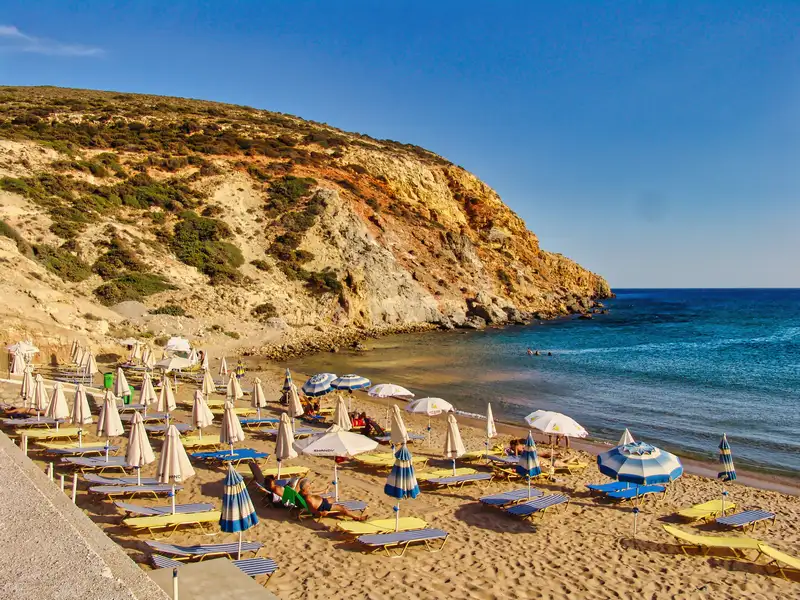
Beaches are the primary draw for most visitors, and there are over seventy of them around the island’s coastline. Their appeal is in their variety. Some beaches have soft white sand. Others have round pebbles, or black volcanic grit, or red or pink cliffs plunging into the sea.
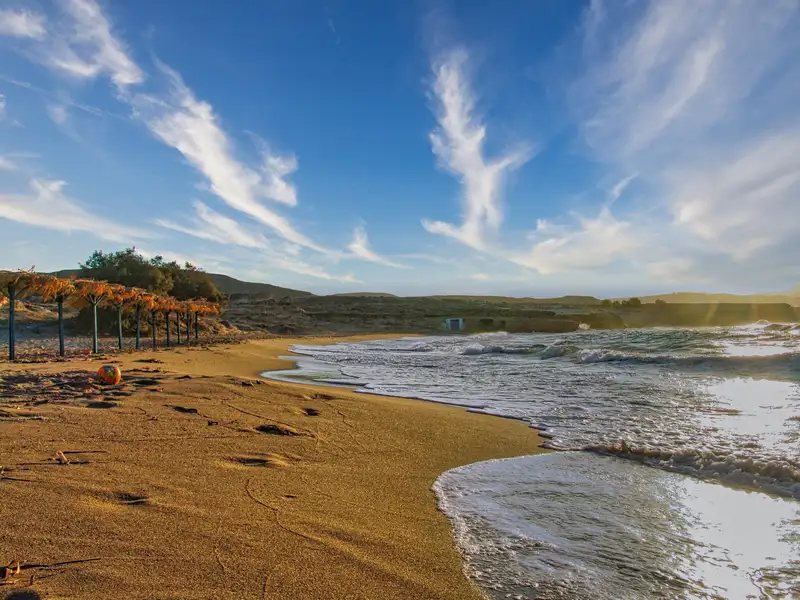
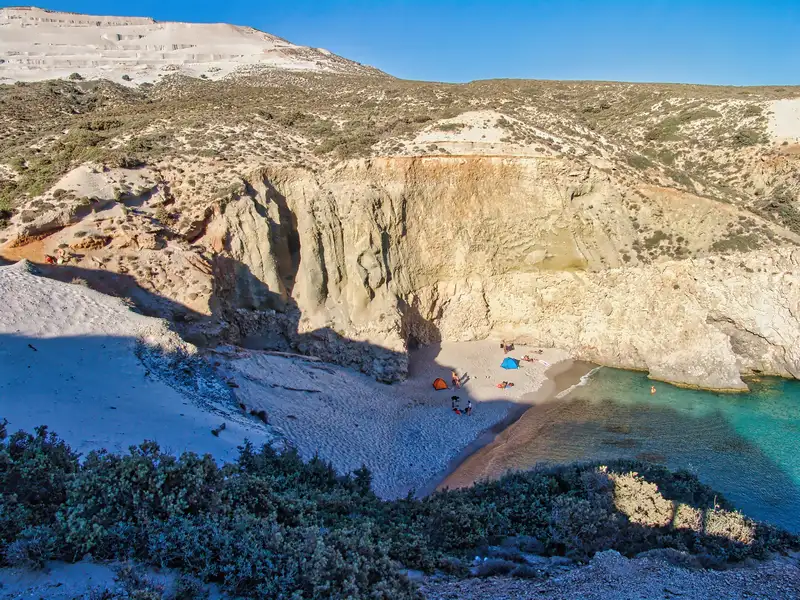
Sarakiniko has white moon-rock and turquoise sea. Firiplaka, on the south coast, has towering cliffs streaked with orange and pink, and a long expanse of warm sand. Tsigrado is a tiny hidden cove accessed only by a climb down a rope and a wooden ladder, as adventurous as Greek beaches get. Paliochori has a taverna that cooks food in the hot volcanic sand. Agia Kiriaki is calm, clear, and almost empty. Plathiena is gentle and family-friendly. Papafragas is a little beach that squeezes itself between towering rocks. It’s beautiful from above, but not easy to reach from below.
Read my full article on the beaches of Milos island. For now, take this: no matter how long you stay, you will not see them all. Pick three or four, and spend a slow day at each. Leave the rest for next time.
The small villages that give Milos its soul
The villages of Milos island are small, white, and quiet, each with its own character. Adamas, the port town, is where your ferry will arrive, and it is the liveliest settlement on the island, with most of the island's shops, rental agencies, and restaurants, and a pleasant waterfront to stroll along in the evening.
Plaka, the island's capital, is on a hill above Adamas and is the best place to watch the sunset. Pollonia, on the island's northeastern coast, is my favorite haunt of those who prefer a seaside base, with good food and a slow pace of life.
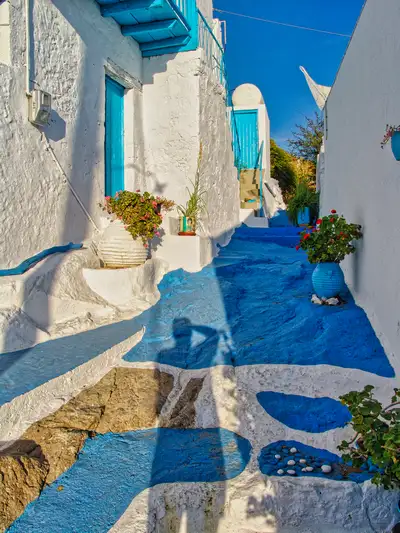
Klima, Firopotamos, and Mandrakia are the three old fishing villages where time stands still, and they are my personal favorites to explore in the afternoon light. There are also smaller hamlets that are worth seeking out. Tripiti and Triovasalos are known for their meat tavernas and hushed, sleepy atmosphere - both are just a short drive from Plaka.
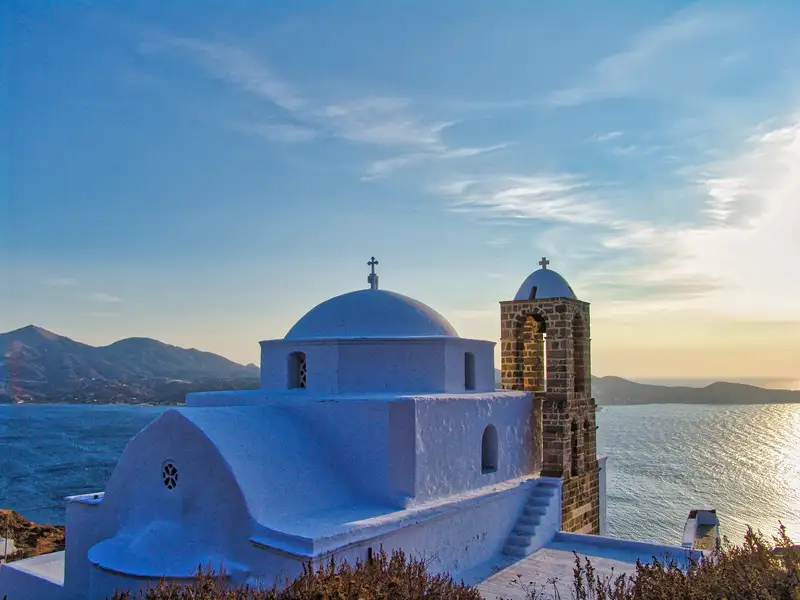
Fourkovouni is a tiny collection of boathouses, often missed by travelers. Zefiria is an almost-abandoned old capital, with a single, beautiful church. This island rewards those who wander.
Where to stay in Milos
Where to stay on Milos island depends on the kind of holiday you're after.
For port proximity and close proximity to everything else, Adamas is your base. It has the most hotels, restaurants, rental cars, and agencies, and is the most practical place to stay. For sunsets and village charm, Plaka is hard to beat. The bay views are unforgettable, the little streets fun to stroll on at day's end, but you'll need a car to get to the beaches.
For the quietest, slowest version of Milos, go to Pollonia. This is where I usually stay. It's small, the food is excellent, and the pace is more in keeping with the island itself. For a bit of the unusual, rent a syrma in Klima or Firopotamos, one of the old fishermen's houses built at the water's edge. You'll sleep with the sea a few steps from your door. If you like even more isolation, there are also small guesthouses near beaches like Provatas and Agia Kiriaki that feel worlds away from everything.
Book well in advance for July and August. The island is becoming popular, and the best places are snapped up months in advance.
The taste of Milos, plate by plate
The food on Milos island is simple, honest, and deeply tied to the place.
The island has its own specialties that you won't find elsewhere in Greece. Karpouzopita is a sweet pie made from watermelon, flour, honey, and sesame seeds, baked until the edges are crisp. It sounds unusual, and it is. Try it once, and you will understand. Koufeto is a dessert made from the local white pumpkin, honey, and almonds, usually served with a glass of cold water. It is traditional at weddings, but many shops sell it year-round.
For cheese, the island produces mileiko, a hard cheese brushed with olive oil and aged in caves for at least six months. There is also xinomizithra, a soft, tangy cheese that pairs well with salads or spreads well on bread. Pitarakia are small cheese pies fried in oil and served as a meze. Seafood is everywhere, especially in Pollonia and Firopotamos, where the fish comes in from the morning boats. The meat tavernas of Tripiti and Triovasalos are the places to go if you are looking for slow-cooked lamb, goat, or wild rabbit.
And yes, the Greek salads here are better than the ones you will get anywhere outside of Greece. The tomatoes taste like they have remembered the sun. The olive oil is local. The feta is kept in a separate bowl, the way it should be.
Milos or Santorini, two volcanic islands, and two different feelings
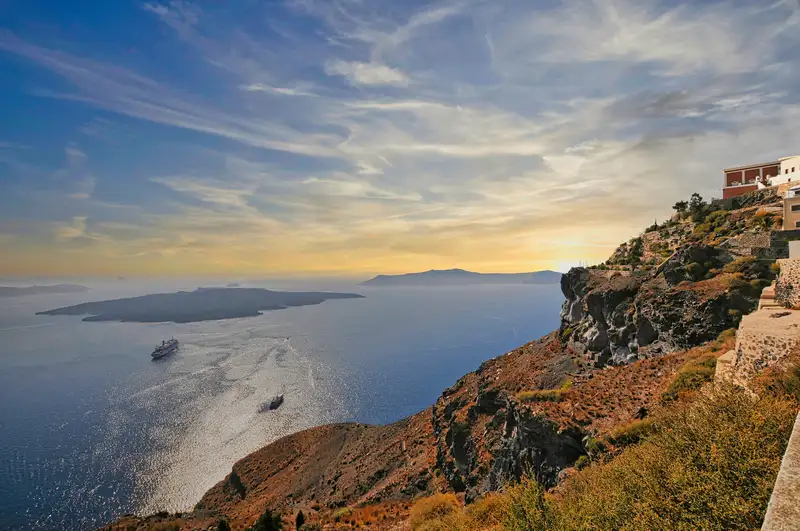
Milos and Santorini are both volcanic Cycladic islands, but with very different vibes. Santorini is the more dramatic, with its famous caldera, its red and black beaches, and its white and blue cliff-top villages. It is also busier, more expensive, and more visited. During the summer season, cruise ships dump thousands of visitors into Oia and Fira’s narrow streets every day. The sunsets are world-famous, but you won’t be watching them in peace.
Milos is quieter, more varied, and far less crowded. The beaches are better. The food is cheaper. The pace is slower. The trade-off is the drama of the caldera and the pure spectacle of Santorini’s cliffs. The island does have its own kind of drama, but it’s a quieter one. Santorini has been a tourist hotspot for decades. Milos has only recently begun to see serious tourism, so it has retained much of the atmosphere of the Cyclades before the crowds arrived.
If this is your first visit to Greece, Santorini is unforgettable and deserves to be on your list. If you have been before, or if you want to visit a place that still feels like yours, choose Milos. Better yet, do both. The two islands are only a short ferry ride apart, so combining the two makes for a great week-long itinerary.
What to know before you go to Milos
A few points of information before you book your ferry. They are all quite simple. They are the little details of a trip that, when put together, form the difference between a smooth ride and a stressful one. I have learned them little by little, over the years, and my many returns to Milos.
How to get to Milos from Athens
The most practical way to reach Milos island is by ferry from Piraeus, Athens. There is a regular service that runs year-round.
You can catch the ferries at gates E6, E7, and E9 at Piraeus, depending on the day and vessel. High-speed ferries operated by companies such as Seajets and Aegean Sea Lines take about 2.5 to 3 hours to reach Milos. Conventional ferries with companies like Blue Star and Minoan Lines, and fast ferries, take between 4 and 7 hours, depending on the stops en route. Prices start at 40 to 50 euros for a basic seat and increase from there for vehicles, cabins, or premium options.
A second option is to take a ferry from Lavrio port, near Athens airport, but it runs only once a week and takes around 15 hours. Most visitors don’t opt for this route unless they are traveling with a vehicle and seeking a cheaper ticket.
If you prefer to fly, Milos has a small national airport that gets daily flights from Athens in the summer. The flight takes about thirty-five minutes. It is fast and pleasant, but also more expensive than the ferry.
From other Greek islands, you can reach Milos by ferry from Santorini, Mykonos, Naxos, Paros, Sifnos, Serifos, Folegandros, Ios, and Crete. The Cyclades are linked by sea, and Milos is a natural stop on any island-hopping itinerary through the southern part of the group.
When to visit Milos, and when to stay away
The best time to visit Milos island is between May and October, with late May, June, and September being the most pleasant.
In May, the island is just waking up. The tavernas are open, the sea is cool but swimmable for the devoted, and the hills are green from winter rain. Prices are lower, the crowds are thin, and the light is soft. This is my favorite time to come.
In June, the water is warm. The fields are turning gold. The first travelers arrive, but the island is still spacious and calm. July and August are the high season, when Athenians escape the city heat, and foreign travelers fill the beaches. The days are hot, the evenings long, and the wind can be strong, especially during the meltemi winds that roar through the Cyclades in August.
September is another sweet spot. The sea is at its warmest, the crowds are beginning to thin, and there is a softness in the air that belongs only to the end of summer. October is quieter still, though some tavernas and hotels begin to shutter in the second half of the month.
Between November and April, Milos is almost closed. The wind is sharp, many restaurants and hotels shutter for the season, and the ferries run on reduced schedules. For most travelers, this is not the season to come. For a lucky few who want to see the island at its most bare, it has its own strange beauty.
How long to stay
Spend four nights at a minimum, and five or seven at best. The most popular itineraries in the Cyclades stop in Milos for two or three nights before moving on to the next island. I know, it is tempting to do that, but you are better off taking a wrong turn. Milos has over seventy beaches, a handful of villages to wander, a boat trip that is worth a day on its own, and a slower rhythm that requires at least two days to find its pace.
With four nights, you can cover the main beaches, visit Kleftiko by boat, lose yourself in the villages of Plaka and Pollonia, and still have a day off. In a week, you can dig deeper. You can sleep in a fishing village, have lunch at the same taverna twice, and start to feel the island rather than visit it. This is always my advice when traveling: spend a little longer than you think is necessary.
How to get around Milos
Renting a car or an ATV is the best way to get around Milos island and reach the beaches and villages that the bus does not serve.
Milos is bigger than it appears on the map, and the good beaches are scattered all over the south, east, and west coasts. The western half of the island is partly unpaved and often requires a four-wheel drive. A small rental car is perfect for the rest. ATVs and quads are popular with couples and younger travelers, offering a sense of freedom that no car can provide. Be aware that under Greek law, you now need an international driver's license to rent any vehicle, and a motorbike license to rent scooters over fifty cc.
Milos has a local bus network that connects Adamas with Plaka, Pollonia, and a few main beaches, including Sarakiniko and Paliochori. It is a reliable service, but limited, and if you are staying more than two days, I strongly recommend you have your own wheels.
Taxis are few and far between, and fares can rise significantly in high season. Book them in advance when you can.
Small questions, honest answers
Is Milos Island safe?
Yes. In my opinion, Milos is one of the safest islands in Greece. Crime is low, and people are friendly. Just take the usual precautions you would in any city, and you will be fine.
Can you go to Milos for a day trip?
Not really. The ferry from Athens is too time-consuming, and flights are too expensive. You can do day trips from Santorini in summer, but they are not that good. I would not recommend them. Milos is worth staying for at least a few nights.
Is Milos good for families?
Yes, it is, but only if you have older children who like beaches, boat trips, and relaxed exploration. Nightlife is extremely limited on Milos, and the whole island is quite slow. The best is for relaxed family holidays.
Is Milos good for couples?
Very much so. In my opinion, Pollonia, Klima, and Plaka have some of the most romantic beaches in Greece. The sunsets, the tavernas by the sea, and the syrmata fishermen's houses make Milos the perfect destination for couples.
Is it expensive?
Milos is moderately priced. It is cheaper than Santorini and Mykonos but more expensive than the quieter small islands like Folegandros, Sikinos, or Anafi. Food prices are mid-range, and accommodation is moderately priced in the summer.
What is Milos famous for?
Milos is famous for its volcanic landscape, its over seventy beaches, the Venus de Milo statue, the lunar rock of Sarakiniko, the pirate caves of Kleftiko, and its authentic Cycladic villages.
Is Milos better than Mykonos?
It depends on what you are looking for. Mykonos is known for its nightlife, its luxury hotels, and its carefree, slightly hedonistic social scene. Milos is quieter, cheaper, and more varied. If you are looking for a calmer, more beautiful, more authentic island, Milos is better. If you are looking for glamour and partying, Mykonos is the winner.
A final thought
I left the island of Milos once on a morning ferry, as the lavender dawn turned to blue. The sea was like glass, and the wind was still. The white rocks of Sarakiniko glowed as the ferry pulled away from Adamas. I drank coffee and sat on the deck and watched the shoreline shrink until it was only a pale line between sea and sky.
Milos is not an island that shouts. It does not call out to you. It does not chase. It has been around for many millions of years, made by fire and sea, and it will be here long after we are gone. That is part of what I love about it. It forces you to slow down. It makes you notice the color of the water, the taste of a tomato, the smell of thyme on a hillside in June. It makes you understand that beauty does not always shout.
If you go, go with open eyes and a slow heart. Stay a little longer than you think you should. Eat a second lunch. Swim at a beach whose name you can’t pronounce. Watch the sun set from Plaka at least once. And when you go, take only memories. This island gives you those in spades.
The first time I left Ios, I promised myself I would return. I have kept that promise more times than I can remember. And every time I return, the light is still there, falling the same way across the same white walls, as if the island has been waiting.