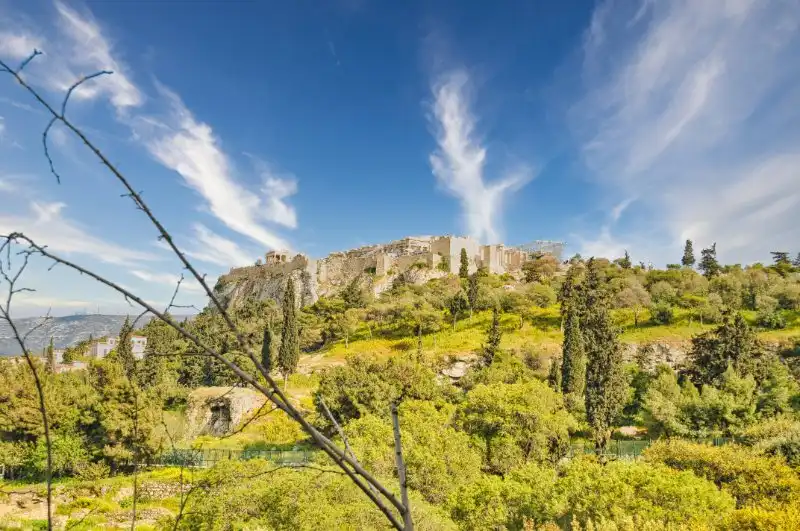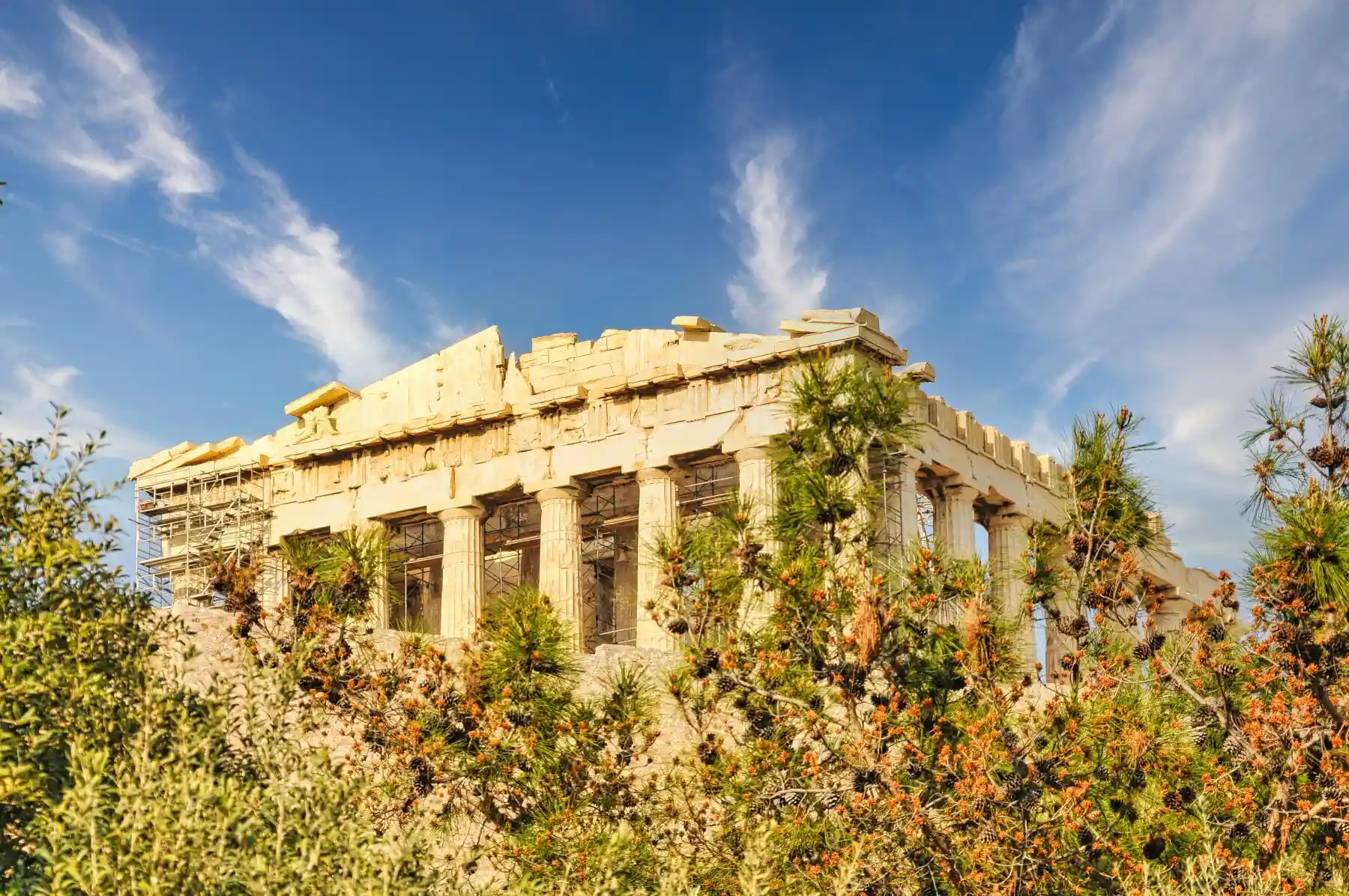
I remember the first time I made the climb up the ancient path to this place. My dad taught me how to visit Acropolis Athens when I was seven years old. He told me stories about the gods of Greece, mythological creatures, and famous heroes as we walked up those marble steps together. Yes, I was a Heracles fan, too! I came as a child, and many years later, I come back, passing through with an old camera around my neck.
The Acropolis is always watching over Athens, the sacred rock that looks down on the city like it's the guardian from another age.
I will tell you what I have learned here, not like a guidebook, but as if it were home, and I am introducing you to an old friend.
Table of Contents
Before the climb, a few thoughts about the Acropolis of Athens age
What you see here was built around 447 BC. The sacred hill used to have buildings on it for centuries before that. In that year, Pericles decided to make everything new, to rebuild everything the Persians had destroyed in 480 BC. The Athenians did not create temples; they created a statement, an argument, a new kind of monument that said without words that Athens had become something different in human history.
The Parthenon was not so much a temple to Athena as a symbol, a work of art, an architecture of the impossible that pushed the human relationship with stone in new directions.
Who was Pericles
 Who was Pericles
 He was the ruler of Athens during its Golden Age, between approximately 461 and 429 BC. He was born into the aristocracy, yet became democracy’s greatest champion.
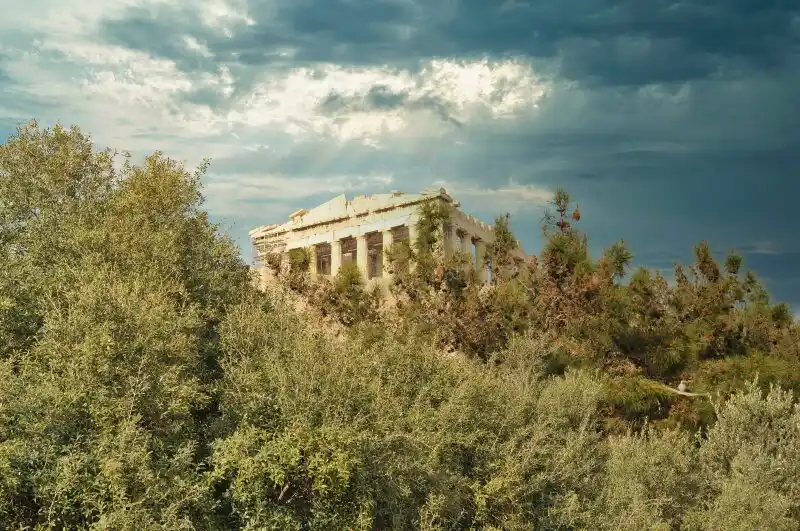
The architects Iktinos and Kallikrates worked with the sculptor Phidias to design and build the Parthenon and to add optical tricks that disguised imperfections.
They created illusions to make the Parthenon appear perfect. Columns curve ever so slightly so that the human eye thinks they are perfectly straight. The floor actually rises in the middle so that the human eye sees it as level. Nothing is perfectly straight or level because successive lines appear to sag to the human eye.
Exploring the sacred hill: Ruins that still breathe
Athens' Acropolis is not a place you take in all at once, not even close. It takes time, a few steps at a time, to take in everything the place has to give. In between the iconic silhouettes that come to mind when someone mentions "the Acropolis" are the small details most people gloss over. Worn marble steps smoothed by centuries of footfalls. Broken columns at rest in the sunlight. Inscriptions, shadows, and glimpses of the sea when the air is just right.
As you cross the hill, your perspective shifts again and again. Temples come into view from new angles. The city below moves in and out of view.
Propylaea: Passing through the gates of time
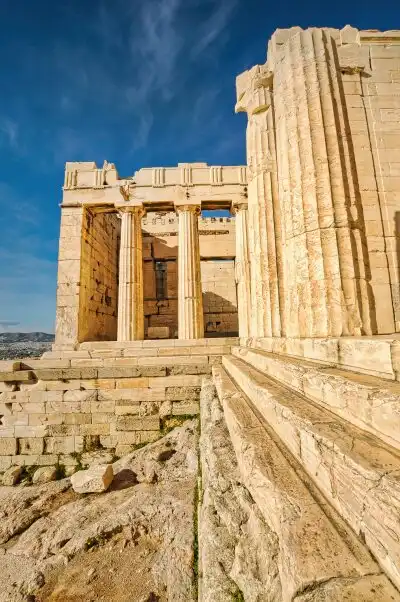
The gateway to the Acropolis hits you even before you reach the summit. The enormous columns of the Propylaea frame the entrance, and they make you feel as if you are walking through a doorway between worlds. You walk through the columns. You step from the sloped walkway onto the plaza with the Parthenon rising before you. Time feels warped.
I was there once with a friend who had studied History without ever visiting the site. He walked through the gates and looked at the temple. Being in a place you have only read about, where the temple is solid and real and still standing after everything history has thrown at it, makes the temple do something to you.
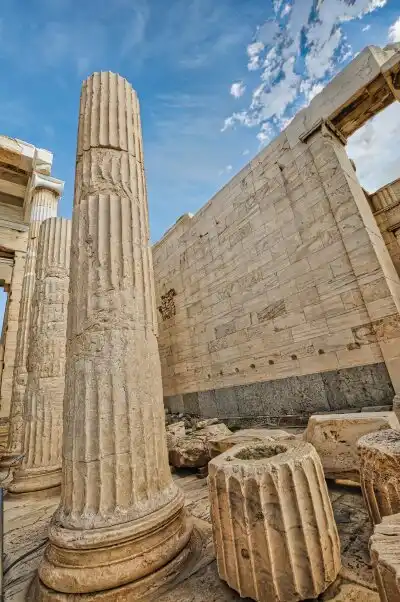
The Temple of Athena Nike: Where victory took wing
The Parthenon itself commands your attention immediately, but don't let that close your eyes to everything else on the hill. The small Temple of Athena Nike sits on your right-hand side as you enter the site, fragile and perfectly formed, like a jewel box with a view of the city below. I often sit near it when I want to be alone, because everyone rushes past it on their way to the larger temple.
The temple is my favorite building on the hill. Four Ionic columns stand on each end of the temple. The columns look thin and light, like they are floating. The entire building is 8 meters long and 5 meters wide, and it just feels in balance. Classical architects built this sanctuary around 420 BC in honor of Athena as the bringer of victory.
The position looks out to the corner and guards the entrance; it watches approaches. It looks out to Salamis, where the Athenians beat the Persians at sea.
A statue of Athena once stood inside. Athena holds a pomegranate and a helmet, but her wings are missing despite the name Nike (victory). The story says that the Athenians made her wingless deliberately so that victory could never fly away from their city. I don't know if that story is true, but I love the anxiety it reveals.
Who was Athena ?
 Who was Athena ?
 Athena was the goddess of wisdom, intelligence, and courage. Not the war-hungry kind of strength but the quiet kind. The kind that builds cities, inspires art, and protects without destruction. Her father was Zeus. But she had no mother. Legend has it that Zeus devoured Metis, the Titaness, when he learned that her child might overthrow him. Not long after, the king of the gods suffered a splitting headache. Hephaestus, the god of fire and metalworking, cleaved Zeus’s skull with an axe. And then, Athena burst forth from his head, a grown woman, fully armored and ready to face the world.
Erechtheion, where myths, stone, and silence meet
The Erechtheion, tucked away on the side of the Acropolis plateau, deserves more time than most visitors give it. The marble monument gives you a more complex experience.
The architects built it between 421 and 406 BC, after the main Parthenon was completed. They faced a challenge. They had to fit sacred spots on the ground at different levels, but the bedrock was not even. The sacred spots could not move because they had been holy for centuries before any temple ever stood on the rock.
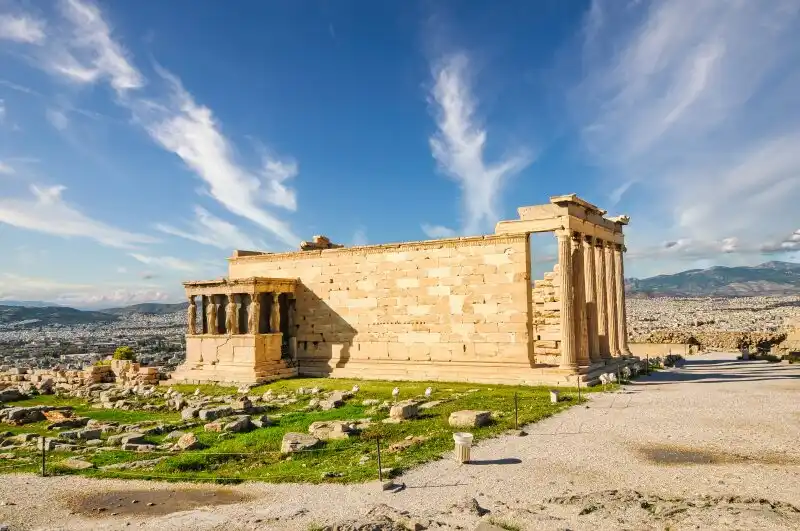
This is the place where Athena and Poseidon fought for the favor of the city. Poseidon drove his trident into the rock. Created a saltwater spring. Athena planted an olive tree. The Athenians chose the olive tree, and the city became the Athens of Athena. Marks of that contest, real or imagined, remain inside the temple. I love that the building twists around mythology and forces it to fit.
On the northern porch, there are holes in the roof and the floor that the ancient builders intentionally left, supposedly to mark where Poseidon's trident pierced the bedrock. Whether you believe the myth or not, the fact that they built the entire structure to honor that story matters. It shows that they took these stories seriously, that the line between god and human was blurred in ways we struggle to understand.
The Caryatids: Eternal bearers of stone and sky
These classical female figures tell a story that moves me every time I visit. Look at the Caryatids' faces and postures, and at how their clothing cascades in folds. One leg of these sculptural columns is slightly bent; the other is straight. That creates a slight weight shift, a pressure that gives the Caryatids life even as they bear literal tons of marble on their heads.
Each statue is a little different, even though they all look identical at first glance. Hairstyles change in tiny ways. The braids cascade in subtly different ways. The order of the locks is different. The folds of the peplos cloth on each figure follow the same basic pattern but cast different shadows and lines. The sculptor, whoever the sculptor was, Alkamenes? Kallimachos? History is not certain, knew that real beauty comes from difference, not repetition.
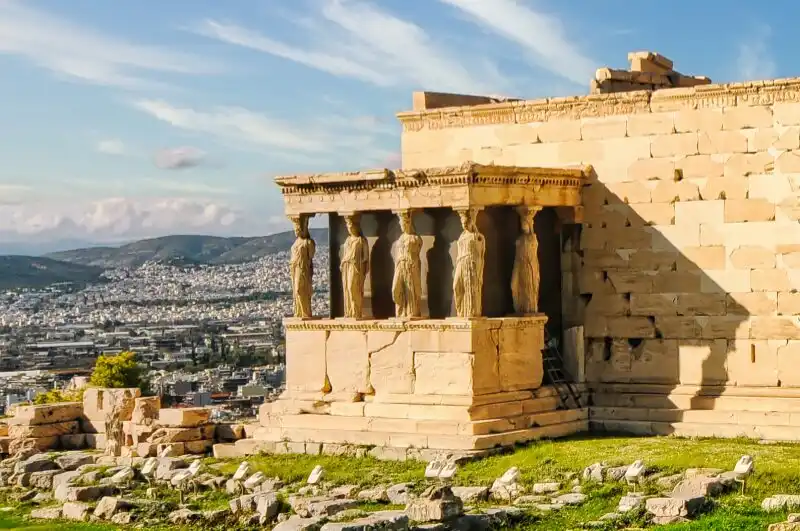
I have stood in front of these figures in every light, in every season. In the morning sun, shadows emphasize the carved fabric's depth. In the late-day light, their faces seem almost animated, as if they will speak to you.
When it rains, the water cascades down the channels in their clothing like the folds were designed for it, which perhaps they were. The ancient builders thought of everything, even how the weather would affect stone.
Parthenon: The eternal temple of Athena
When you walk through the gateway, the Parthenon stands before you. Everything else recedes into the background. Walk around the goddess's shrine slowly, if the crowds let you. Watch how this sacred sanctuary changes from every angle. Watch how the columns create rhythms depending on where you stand.
I have photographed this temple a hundred times and never captured what I see with my eyes. The way it naturally sits on the bedrock feels as if it grew there rather than being built.
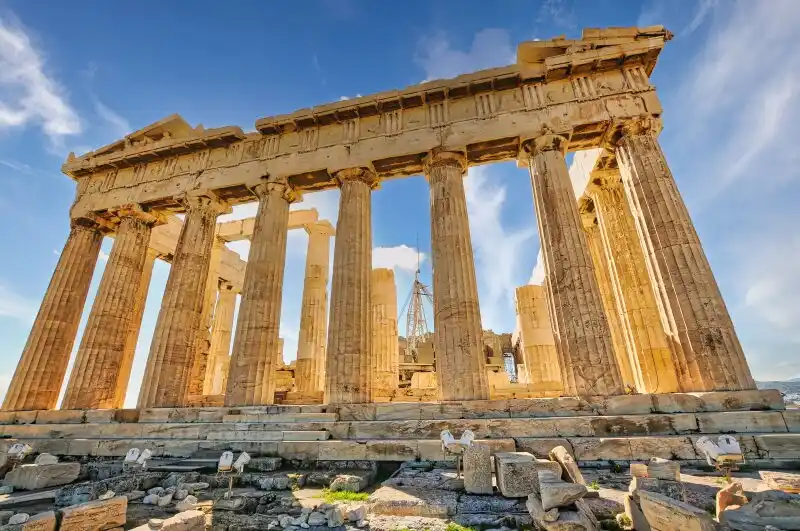
The sanctuary of Athena was constructed between 447 and 432 BC, during the rule of Pericles. Architects Iktinos and Kallikrates designed this Doric masterpiece. Once inside, there was a gold-and-ivory statue of Athena, but that is gone now. The statue was melted down and stolen centuries ago.
What remains after destruction
The classical structure featured pedimental figures that told the story of Athena's birth. Most of those pieces now sit in museums all over the world. Many of those pieces were destroyed in the 1687 explosion, when Venetian forces struck a gunpowder magazine.
But somehow, even ruined, it still works. It still makes you stop, still creates that sense of awe and connection to something larger than yourself. That's the real genius; they built something whose beauty could survive the loss of almost everything they had created.
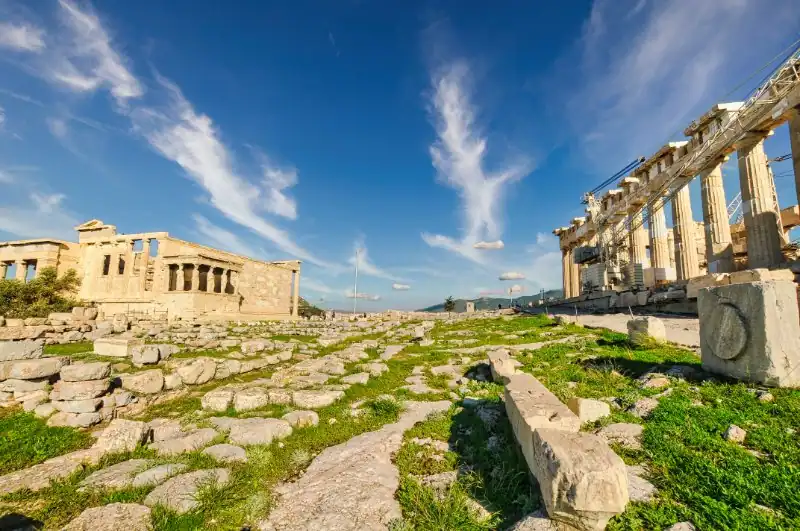
Know before you go
I have watched thousands of people climb the hill, and I can tell who planned their visit and who didn't. The people slip-sliding in their flip-flops on the polished marble stairs, the ones gasping for breath in the hot sun because they left their water bottle in the hotel room, the ones gaping in confusion at the base of the hill, wondering where the entrance is, they're not having the valuable and necessary information.
Two gates, two different arrivals
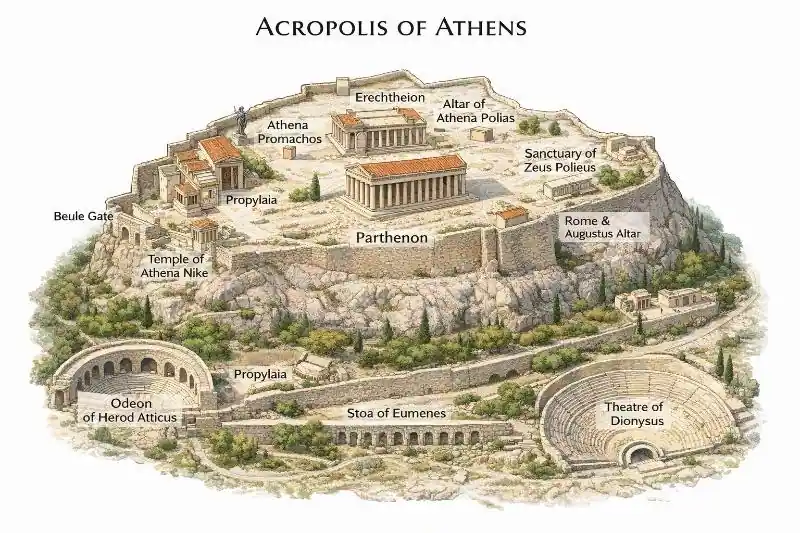
There are two ways up to the Acropolis. This is important to know because it affects the way you experience it. The main entrance, on the western side of the hill, is where most people come in. It is the traditional entrance, approached through the Propylaea as visitors did in antiquity.
The other entrance, on the southeastern slope of the hill near the Theater of Dionysus, is a smaller and often less crowded gate. I go through this onesometimes to avoid the long lines that form at the main entrance during peak tourist season. It also funnels you up a different path, so you see the monuments in a different order.
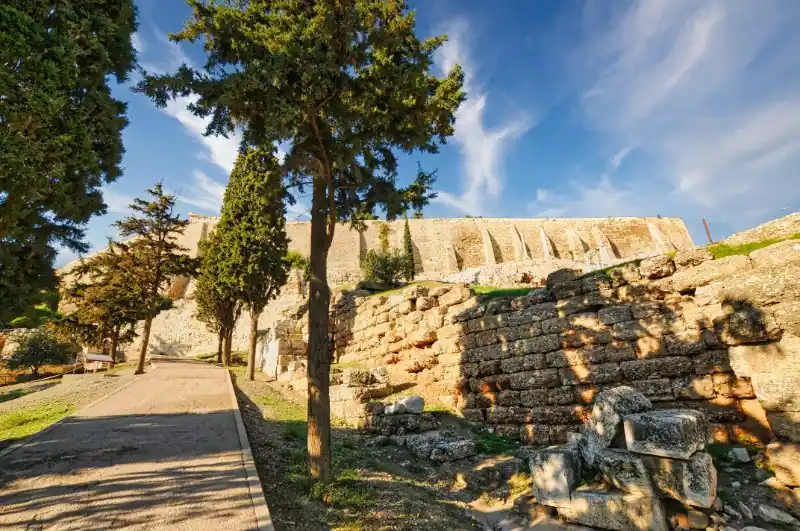
What to wear and what to bring
The marble steps and paths are slippery, polished over the centuries by countless feet. You need shoes with traction, shoes you can comfortably walk for an hour or more on uneven surfaces. Sneakers. Walking shoes. Nothing fancy, just functional.
Bring water, plenty of water. More than you think you will need. The heat and the sun's glare on the white marble are dehydrating. Steps on marble surfaces magnify the effect. There is nowhere to buy water or any other refreshment. All you have is what you brought.
The best time to visit the site
The gates open at eight in the morning in the summer months. If you ask me when to go, I will say this. Arrive when they open, or in the afternoon. I learned this the hard way. Tour groups and I sweltered in the hot midday sun. Noisy guides shouted over their clients so the groups could hear the stories. I couldn't even hear my own thoughts. There is a different feel in the morning hours. The night's coolness is still in the air.
For a time, you might have the Parthenon to yourself. I sat on the outcrop near the temple just after sunrise. I watched the marble change in the light from pink to gold as the city below began to wake. No photograph I took will ever capture what I felt in that moment.
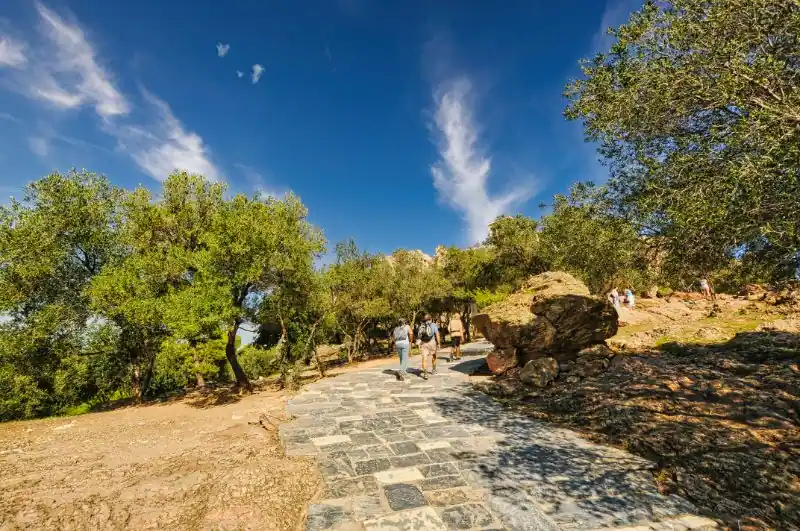
How to visit Acropolis Athens without getting lost
Visitors always ask me how to get to the site, and I can't blame them. It is harder to avoid seeing the Acropolis than it is to find it. This massive limestone hilltop dominates the skyline from almost any point in the central area of the city.
The metro will get you the closest to the top of the hill. Get off at the Akropoli station on the red line, and you will be at the base. I recommend this method to visitors because it is the easiest and air-conditioned, and the A/C is more important than it sounds when it is 38 degrees Celsius outside.
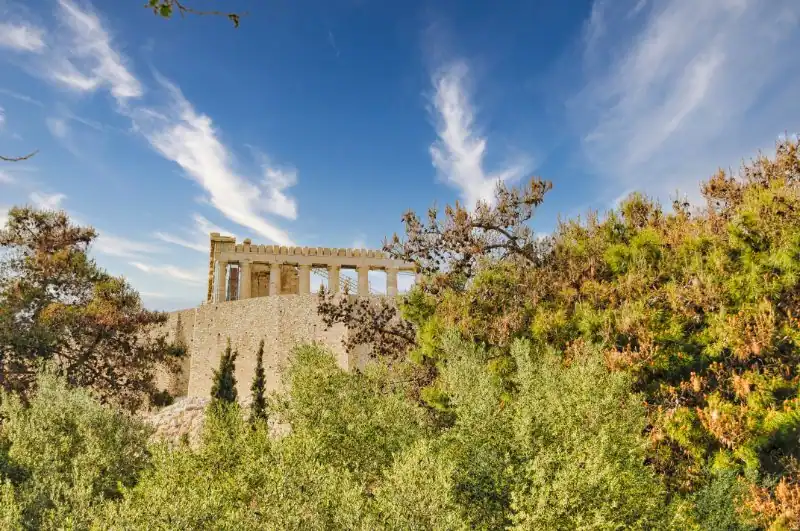
But that is what I do when I want to get to the sacred hill. I put on my sneakers, take a bottle of water, and prepare for a long walk through the big labyrinth of Plaka. This is the old neighborhood at the base of the northern slope. It is a medieval village with cobblestone alleyways, classical-style houses, and bougainvillea spilling over their walls.
This route is a time machine. You take the transition from the modern world to the old world. This route isn't hurrying you to the gate; it's getting you ready for what you will experience. You do not need any map or GPS; just get lost in the narrow streets of Plaka, and if you are afraid you are lost, look up, and you'll be sure to see the Acropolis and follow it like a compass.
You can walk up through the Roman Market and Hadrian's Library from Monastiraki Square and approach the site from the northwest. This is a longer route but more true to the ancient Panathenaic way.
Where ancient Athens continues below
The holy rock is not a place that exists on its own, and your visit should not be either. The hillsides around the hill are full of histories that complete the story, and the neighborhoods crowded around its base protect an aspect of ancient Athens that modern Athens has largely swallowed.
To the northwest of the hill, the Ancient Agora is an important archaeological area that was once the civic and commercial heart of classical Athens. Democracy, not as a metaphor, but as a daily reality, happened there.
South of the summit, "carved out" of the slope itself, is the Theater of Dionysus. Its role in the development of drama is hard to exaggerate. It was here that Greek tragedy and comedy (as we know it, at least) were invented.
Nearby and almost invisible if you don't know to look for it, is the Odeon of Herodes Atticus. Perched on the western slope of the hill, it was built in 161 AD as a monument to his wife by a wealthy Roman-Greek. It is not classical Greek, but Roman-period.
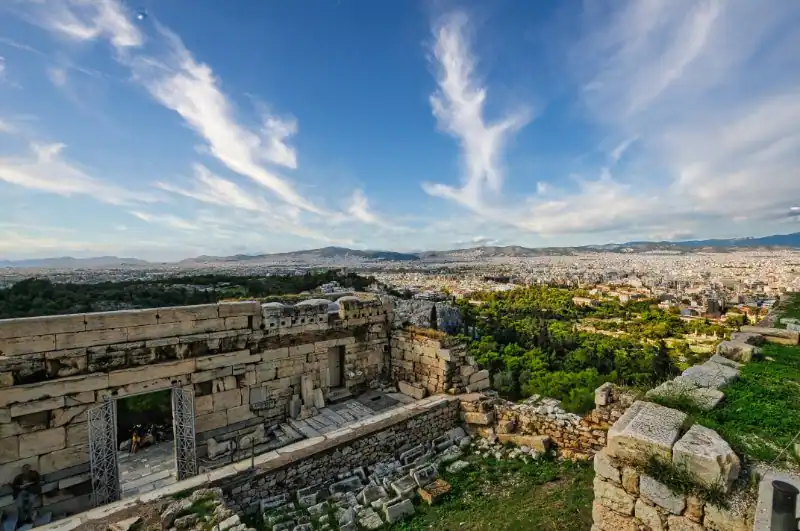
The Areopagus itself looms as a rocky rise just to the northwest of the summit entrance. It's easy to miss if you are focused on just making it to the top of the hill. Most visitors simply pass by it. I always stop. Sometimes for a few minutes. Sometimes for an hour or more.
Philopappos Hill rises on the southwest side, covered in pine trees and a world away. It is my sanctuary when I need to get away from crowds, when I need green and shade and the sound of wind in leaves rather than marble and tour groups.
The Acropolis Museum at the foot of the southern slope is impossible to miss, a giant cube of modernist glass and concrete. I have memories of the previous museum on top of the hill, the Caryatids squeezed into their dark room with little natural light and too many cramped antiquities around them. This new building is the exact opposite of that: spacious, well-lit, and climate-controlled, everything curated to tell a clear story of the site and its history.
The Temple of Olympian Zeus is southeast of the sacred hill, perhaps a 15-minute walk from the summit. It’s visible from up top, those huge columns emerging from the ground like the fingers of a giant reaching for the heavens.
Panathenaic Stadium, further east, is a 25-minute walk, and it was here that the first modern Olympic Games were held in 1896.
Questions I hear all the time
Is the Acropolis of Athens free?
No, you have to pay a ticket, but there are some days of the year when the entrance is free.
How much is the ticket?
The standard ticket costs 30 euros for adults, but there are various types available; you can see them in my ultimate guide to tickets for archaeological sites.
Are the Acropolis and the Parthenon the same?
No, the first one is the entire sacred hill, and the second one is the temple dedicated to Athena.
Why was the Acropolis built?
At first, it was a natural fortress due to its height; it became a religious place with its temples, and by the fifth century BC, Pericles made it a symbol of pride.
How long does it take to walk up the Acropolis?
It takes about 10 to 15 minutes, but when it is crowded, it can take twice as long.
Carrying the sacred rock with you
That monumental archaeological site will be here long after we are all gone. I have climbed that hill more times than I can remember over the years, and I have never come away with less. Every visit reveals another layer, deepens my understanding, connects me to something old, and will be forever.
You will leave the site a different person than you were when you entered. Some leave quiet and contemplative. Some leave vibrating with excitement and energy. Some leave weighted with the gravity of history. All of them honor the history and power of the place.