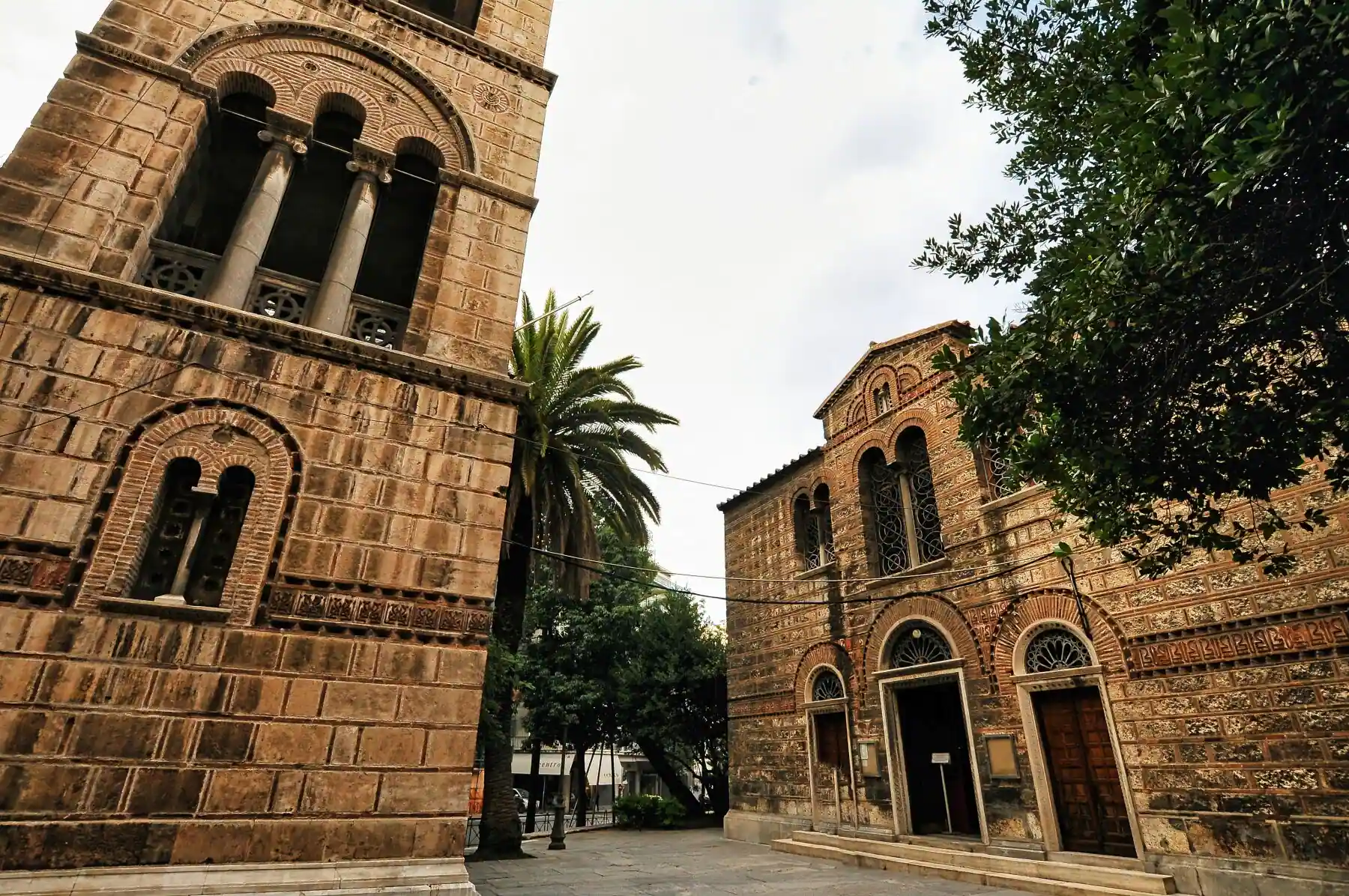
There is a church in downtown Athens that most tourists and locals alike walk right past without ever noticing. Nestled quietly on Fillellinon street, just a stone's throw away from Syntagma Square and lost behind some trees and the hustle and bustle of city life, is the Athens Russian Church. Also known as Sotira Lykodimou Church, it's one of the city's oldest and most historically rich churches. And yet, it's also one of the least known.
The day I decided to enter the church for the first time—lift the heavy wooden door on its hinges and fully immerse myself in the unknown—I couldn't believe I took so long to do it. I froze once I got inside. It was cool. It was quiet. The lighting was dim. I felt like I had stepped back in time.
This was the moment that shifted my perspective on Athens. Yes, it's the place that gave us ancient ruins and monuments that you have to see to believe. But it's also the place that holds some of its greatest gems in the unspoken corners. Sotira Lykodimou is one of those hidden gems.
Table of Contents
A church built by Greeks, saved by Russians
The Russian Church of Athens is a Byzantine church built over 160 years ago as the official church for Russians living in Greece. Officially known as Sotira Lykodimou, or something to that effect, the church's name basically means "Holy Savior of the People of Lykodimos," Lykodimos being an Athenian family who originally funded the church.
The church was not originally Russian-built. That's one of the biggest misconceptions I hear when talking to tourists about the church. The building dates back to Byzantine times. Specifically, the structure itself was built during the Middle Byzantine period in the 11th century. However, around the 1850s, the Russian government bought the church from Greece and refurbished it to become the official church of Russia's Orthodox followers living in Athens.
Keep that in mind when listening to people refer to it as the "Russian Church." It is both Russian and Greek: a piece of medieval Greece that has been standing for centuries, hosting Byzantine parishioners and a modern link to the Russian Orthodox religion.
What is the history of the Sotira Lykodimou Church?
This church's history is miraculous. Constructed when Athens was a small but notable Byzantine town, the city was filled with churches and monasteries. Sotira Lykodimou was one of the larger churches, meaning it must have played an important role in the religious community.
What role did the church play during Ottoman rule?
After the Ottoman Empire captured Athens in the mid-15th century, mosques sprang up, and churches were razed or left to crumble. Sotira Lykodimou miraculously remained but was damaged over the years by various wars. Life as an Orthodox Christian under Ottoman rule was difficult. Those churches that were allowed to stay open became places of silent congregation. They maintained the worship of Orthodox Christianity throughout centuries of oppression.
That is beautiful if you think about it. Empires came and went as people worshipped within these walls. Individuals prayed and lit candles, finding comfort in the Stone though so much changed around it. That resiliency is something that makes this church great.
How did the church become connected to Russia?
Athens became the capital of Greece after it won independence from the Ottoman Empire in the 1820s. The city received particular attention from foreign governments interested in gaining influence over Greece. Russia, France, and Britain all scrambled to insert themselves into the fledgling Greek state. Greece and Russia are both Orthodox Christians, which gave Russia a special affinity for Greece.
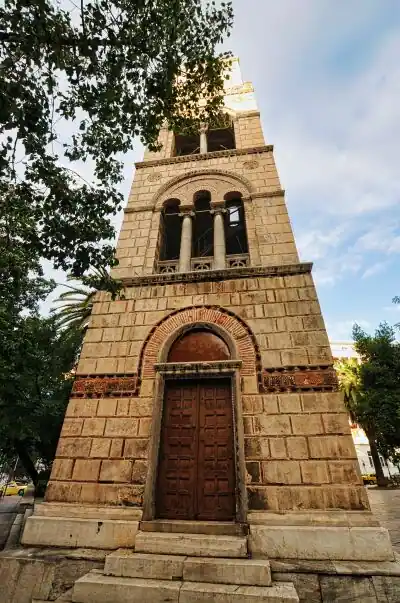
The Russian government bought the church in 1847 and commissioned an extensive renovation. Restoration of the church was finished in the 1850s under the direction of the Bavarian architect Theophil Hansen. (Hansen would later design many of Athens' notable neoclassical buildings.) Hansen repaired the dome, added a bell tower, and otherwise returned the building to usable condition while preserving its Byzantine character.
The church was then used to serve the Russian Orthodox population in Athens and officially became the Russian Orthodox Church of Athens, which it remains today.
The Russians brought their own traditions with them, meaning that the church follows Russian Orthodoxy, which is slightly different from Greek Orthodoxy, which follows its own set of holidays, and worship happens slightly differently.
To outsiders, this can cause some confusion. Walk into the church, and it looks and feels like every other Byzantine church in Athens. But instead of Greek icons, there are Russian ones. Instead of Greek chanting, there is Russian. It doesn't have the same feel as the other nearby churches. But that's because it is both things at once: a medieval Greek church that still functions as a Russian Orthodox church.
Why is the Byzantine church important?
To historians, it's a unique remnant of a large middle Byzantine church that remains standing in Athens. Most Byzantine-era churches in Athens are small. Sotira Lykodimou, with its broad dome and relatively spacious interior, defies the norm and lets modern viewers peer into 11th-century Athens like no other structure can.
To Russian communities in Greece, it's their church. For generations, Russian families, diplomats, and travelers have been coming here to worship. It's a piece of Mother Russia set into the Greek area, and it means something incredibly personal to those who attend.
To Athens, it's a reminder that this city has long been a hub of cultural exchange. Greeks, Romans, Byzantines, Ottomans, and eventually Europeans have all poured into this city and left their mark. The Russian Church of Athens is just one piece of that rich, millennia-old tapestry.
And to me, who's spent an entire lifetime wandering around these neighborhoods, it's proof that there's always more to discover, even if you think you know a city inside and out.
What makes the architecture of Sotira Lykodimou unique?
The building itself is laid out in the cross-in-square plan, typical of Byzantine architecture. Without getting too technical, this means that the building is shaped like a cross from a bird's-eye view, with a dome over the center where the arms of the cross meet. Four columns support the dome, with smaller rooms filling the space in the four corners, creating an outline that is close to a square.
Sotira Lykodimou is different from most of the Byzantine churches of Athens in scale. While most of the city's Byzantine churches are small and cozy, this one feels larger and more open, with a higher dome. It doesn't feel as hidden or secretive as many of the other churches around the city.
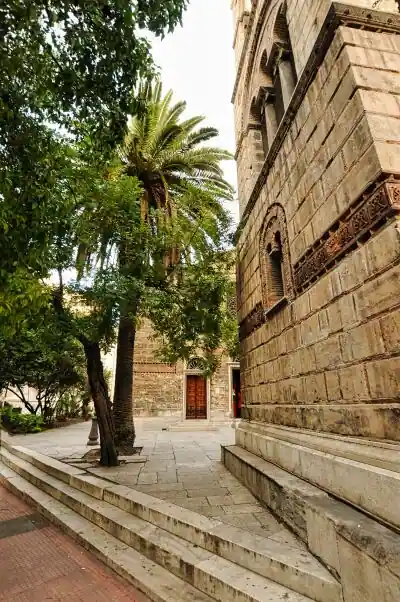
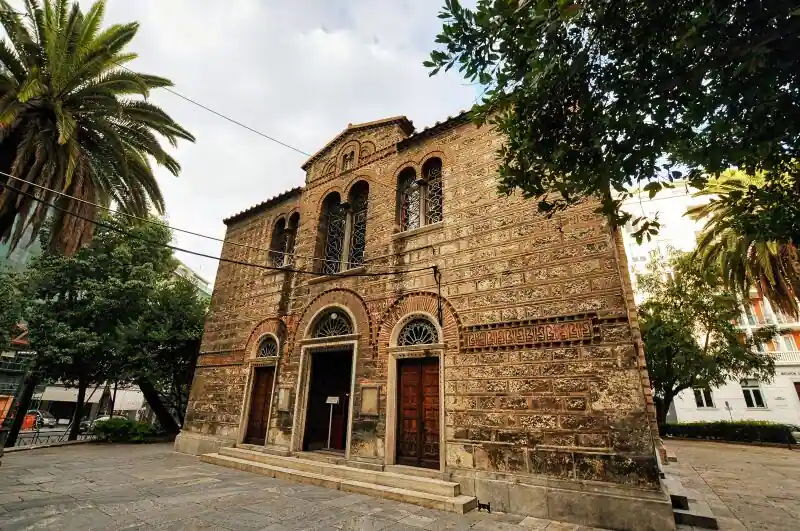
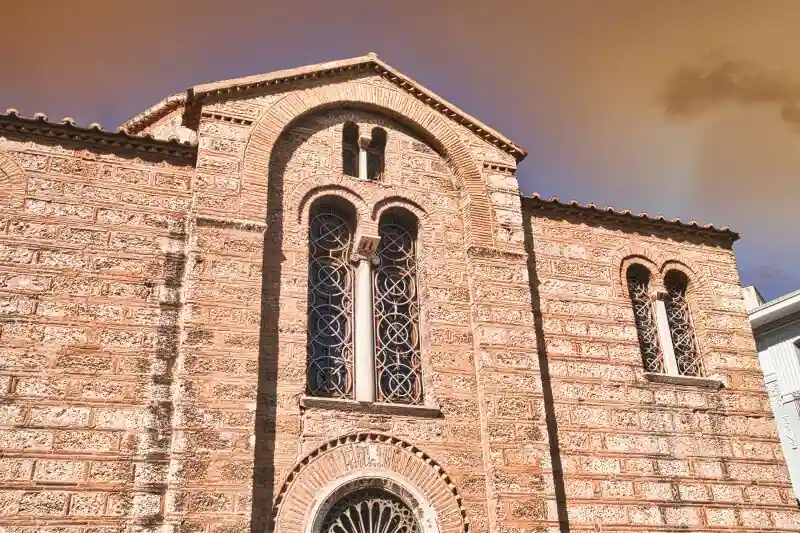
Take a moment to examine the exterior stone. The different levels of stone and brick are visible; you can see the way Byzantine architects built with sliding rows of stone and brick. They laid stones in one row, then bricks in another. You can see patches of the original Byzantine structure, built entirely of stone, which has miraculously survived through the 19th-century restoration.
The feel of the church inside is entirely different. Icons cover the walls, many of them imported from Russia during the restoration, but some were added in subsequent years. The iconostasis is Russian, not Greek. Orthodox icons are rich with gold and deep, saturated colors. Light shines through small windows, casting everything in a warm, hushed glow.
It isn't the biggest church you will ever step inside. But there's something to be said for its symmetry. The ratio between the stone and the emptiness and the light is peaceful. It feels like something built to contain the holy, rather than to be the holy itself.
Where is the Orthodox Church located?
You will find it on Fillellinon Street, right in the historic center of Athens, between Syntagma Square and the National Garden. It is close to major attractions, including the Temple of Zeus, which is only a short walk south, and the Panathenaic Stadium, which lies just beyond.
The location is easy to reach on foot from almost anywhere in downtown Athens. If you are exploring Plaka, the old town beneath the Acropolis of Athens, you are already nearby. The church is also close to the Roman Agora and within walking distance of the Herodes Atticus Theatre, making it a natural stop during a day of sightseeing.
What I love about its location is the contrast. You step off a busy central avenue, away from traffic and tourists heading toward Syntagma, and suddenly you are standing in front of a stone building that has been here since the Middle Ages. The city moves fast around it, but the church stays still.
Can you visit it today?
Yes! In fact, I encourage you to do so. The church is still active, with regular worship services according to the Russian Orthodox church calendar. Visitors who are not Orthodox are permitted to enter the church (though they should respect the space and any service occurring).
Entrance is free. Visit any time the church is open, usually during service times. I recommend going in the morning, when the light is best, and there are fewer people.
Behind the heavy wooden door: what waits inside
Walk in and leave the outside world behind. It is dark inside, illuminated only by candles and small windows letting light trickle through. Rich colors and elaborate details decorate the Orthodox icons on the walls and the iconostasis. Often, you'll smell incense when you walk in. Incense is typical of Orthodox churches, but it's always smelled like home to me.
You won't be sharing your visit with many people. This isn't the typical tourist spot in Athens. That's one of the things I love about it. You can enjoy a piece of Orthodox history in the heart of Athens without the lines, without purchasing a ticket, without feeling rushed.
What lies beneath: the catacombs of Sotira Lykodimou?
Few visitors know that there's a whole world beneath their feet. Downstairs, accessed by a staircase hidden under the church's stone floor, is a labyrinthine complex of underground rooms that contain echoes of nearly every era of the city's history.
The first time I descended into the catacombs, I noticed the air shifted as soon as I walked downstairs. It got cool and moist. The noises of Fillellinon street were replaced by… nothing. Silence pressed down on us from every side. It's the kind of silence that speaks of years of decay, centuries piled up on top of each other.
The catacombs are layers. At the lowest level are the remnants of an ancient Roman bathhouse. You can still make out portions of the hypocaust, the underfloor heating system the Romans built to keep their baths temperate. This ruin dates back to Hadrian's era, when this area of Athens was dotted with public structures and flushed with water. There was even a tributary of the Eridanos river that ran past the baths. Parts of its ancient water channels are still in the walls around you.
The ground may even have served another purpose before that. Many scholars think this plot was once connected to the Lyceum of Apollo, the ancient Athenian school and gymnasium where Aristotle gave classes. It may or may not be true. Either way, walking around down there with that possibility in mind lends a gravity to your surroundings that seems difficult to deny.
Above the Roman level are the crypts of the Lykodomos, the 11th-century Byzantine Monastery that founded the church on top. This was where monks would be laid to rest after death.
Layers still. Tunnels and ancient wells, plus an expansive network of underground galleries that, some say, stretch out from this room in every direction, all the way to Syntagma Square. No one knows for sure how far those tunnels extend. But with Athens, the notion that an entire undiscovered underground city might exist just beneath the tourist restaurants of Psiri and Ermou feels right.
Visiting the catacombs usually isn't part of a normal visit to the church. Normally, you have to make a special request for access through the priest, often after Sunday's service. The tours cost about 8 euros a head, but they're well worth it. Someone will come down with you and explain everything as you go, pointing out details from Ancient Greece to Imperial Rome to the Byzantine era to Orthodox traditions.
It's an incredibly atmospheric excursion through central Athens, and almost no one knows it exists. If the church above grounds gives you that feeling of discovering something secret, that's nothing compared to what awaits downstairs. Down there, you feel like you're not just stepping through history, you're stepping through time itself, from layer to layer, from Greece to Rome to Byzantium to today. You won't find many places in Athens that can offer you an experience like that.
Frequently Asked Questions
Is it free?
Yes.
How long does a visit take?
It takes about 20-30 minutes to visit inside.
Is photography allowed inside?
It depends on whether a service is happening. It is best to ask before taking photos.
Is Sotira Lykodimou the oldest church in Athens?
It is among the oldest churches in Athens, built in the 11th century, but the oldest is the Church of Panagia Gorgoepikoos or Little Metropolis.
Does the church follow Greek or Russian Orthodox traditions?
It follows the Russian Orthodox tradition, including its calendar and style of worship.
Why does this holy place stay with me?
I have been to hundreds of churches all over Greece. Mountain chapels made of stone perched on a windy cliff. White-washed churches on islands with blue domes. Massive cathedrals brimming with gold and chanting priests. All of them impacted me in some way. Left a piece of themselves behind for me to keep, except for Sotira Lykodimou. She takes nothing from you. Instead, she allows you to sit with what's already inside.
If you come to Athens and want to see the Acropolis, check out the old temples, and visit the busy marketplaces. You should, there is so much to see! But if you also want to experience something more still, something holy and more personal. Walk down Fillellinon Street and look for the stone church with a bell tower. Push open the door. Step inside. Allow yourself a few minutes to sit with whatever comes.
You may not remember the details of your time there. But you will remember how it felt. And really, sometimes that's all any place can give you.