
There is a moment, somewhere between the ancient marble and the modern chaos, when Athens whispers a secret. You are free to go. The sea is calling. I grew up knowing this secret. When the city became too crowded, too smelly, too sweaty in those long summer days where sunshine turned the concrete sidewalks into frying pans, my grandmother would say to me, “The water is waiting.” And she was right. There are beaches near Athens that are easily reachable. If you live here, they are your salvation. Your place to breathe and get cool.
When friends come visit me in Athens, they always ask me, “Can we really reach the sea today?” “Of course!” I reply. “Are there beaches near Athens?” they ask. “The best!” I say. Some beaches near Athens, Greece are twenty minutes away by car. Others take a little longer to reach, but reward you with softer sands and turquoise waters. Here I will try to give you a list of some of my favourite beaches that I visit often in the summer.
Table of Contents
The Athenian relationship with the sea
The sea means everything. Allow me to explain where you should go. First, let me explain why you should go there.
Athens is not a coastal city. Not in the way that you might think of Lisbon or Los Angeles as coastal cities. We don’t define ourselves by the seaside. We are a mountain city. We build our fortunes upward. But Athens has always been tied to water. The water gave us trade and travel, and treasure. The water helped our small city grow into an empire. The water is where we come to escape when Athens becomes too crowded, too polluted, too chaotic. Every Athenian knows at least one hidden beach. We cherish our spots by the water and return to them year after year, swimming in the same blue-green seas that our parents did before us.
If you come to Athens, you can do this too. Sure, you can take a day trip to another island. Sure, you can spend a week swimming off the coast of Santorini. But there are beaches near Athens that are underrated and under-appreciated simply because they are ours. You deserve to know them.
The Athens Riviera: Follow the tram until you see blue
If you want to know how to get to the beach from Athens, take the tram. Athens’s yellow line makes its way all along this stretch of coastline. You can hop on at Syntagma Square and ride until you feel like getting off. As you pass through the various areas, I promise something magical will happen. Slowly but surely, the buildings will start to shrink, and after a few minutes, you will start seeing blue.
Alimos: Where the city lets go
The first taste of blue belongs to Alimos. Heading down south on the tram from the city center, this was the first stop where I could hop off and run into the Aegean. For that reason alone, I’ll always remember it fondly.
Twenty minutes outside of downtown, and suddenly there was sand. Here, the coast stretches out long, with certain areas filled with sunbeds and umbrellas. Others are open and free to whoever can lug a towel.
Glyfada: Where the city hits the beach
Glyfada beach is perhaps the most famous coastal destination on this stretch. I have mixed feelings about it, the way you might about a popular restaurant that used to be your secret. It’s crowded. It’s developed. There are cafes and shops lining the paved pedestrian walkway behind the beach. But people aren’t going to Glyfada by accident. The sand is golden and manicured. The water is clear. And there’s an authenticity here I respect; Glyfada doesn’t try to be what it’s not.
What I love about Glyfada is that this is where Athens plays. Teens make out by the volleyball courts. Parents with young children scoop sand with their toddlers, building castles. Groups of friends congregate after work at beachside taverns for ouzo and drinks.
If you’re looking for a free beach near Athens with amenities, easy transportation, and a sense of lively energy, Glyfada has it all. Hop on the tram and get off at Glyfada. Walk toward the ocean and let the crowd take you where you need to go.

Voula: The gentle middle ground
Between Glyfada's buzz and Kavouri's quiet pines lies Voula beach, and I think of it as the place where everything balances. Not too crowded, not too empty. Not too developed, not too wild. Just right, in the way that certain places manage to be without trying.
The tram ends here, which means Voula marks a threshold. Beyond this point, you need a bus, a car, or your own two feet. But Voula itself rewards those who step off at the final stop. The coastal stretch divides into sections: some organized with sunbeds and cafes, others free and open, just sand meeting water, as it has for centuries.
Beyond the tram lines: shores worth the drive
Kavouri: The peninsula of pines and memories
Just down south of Voula is Kavouri beach, and that is where I left my heart. Kavouri is in its own world. Tall pine trees brush up against the shoreline. The air tastes different here. Fresher. Saltier. Older somehow.
Kavouri beach has both organized and non-organized areas. The organized spaces have places to rent sunbeds and umbrellas, changing rooms, and snack bars. However, if you venture further down a quieter path, away from the crowds, there are sections of beach where you can pitch your towel down on the rocks and have large areas of the sea all to yourself. The water is also exceptionally clear due to the rock formations on the sea floor and the passing currents that run around the peninsula.
Kavouri is one of the secret beaches near Athens. Secret, not in the sense that nobody knows about it, but because you have to make a little more effort to get here. The tram doesn’t go all the way. You will need to catch a bus, drive, or be willing to hoof it. But when you arrive, it’s like you have discovered something truly special. Few tourists venture this far out, and so Kavouri has a secretive vibe about it even on busy days.
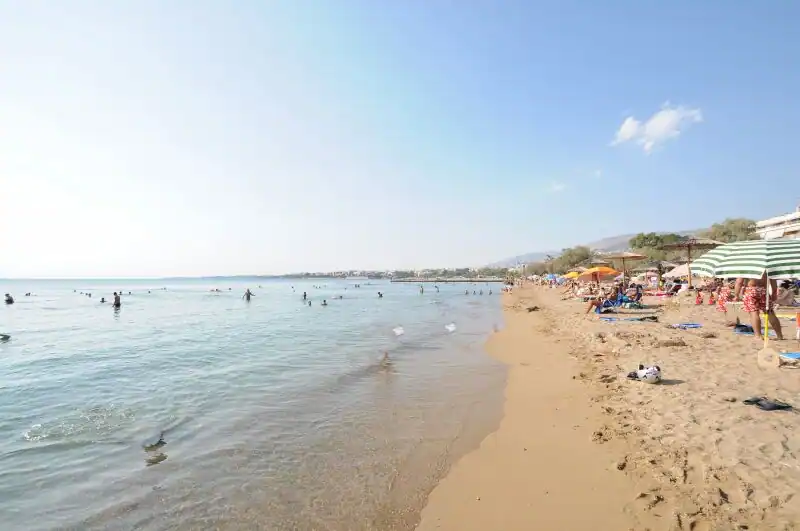
Vouliagmeni and its healing waters
Beyond Kavouri, the road bends around pine trees and open hills until suddenly it feels like you’ve left Athens completely. Vouliagmeni. You’ll understand why they named it “sunken” in Greek when you look deeper into what lies beneath…but for me, it means something else. To me, Vouliagmeni is where Athens catches its breath. It’s where rushing city streets begin to slow and make way for something ancient.
Nested on this petite peninsula is one cool dual-feature. A natural thermal lake sourced from underground springs and a beach that will rival anything you’ll find on the Greek islands. Split your time between both. You’ll thank me later.
The lake of Vouliagmeni: Water that remembers
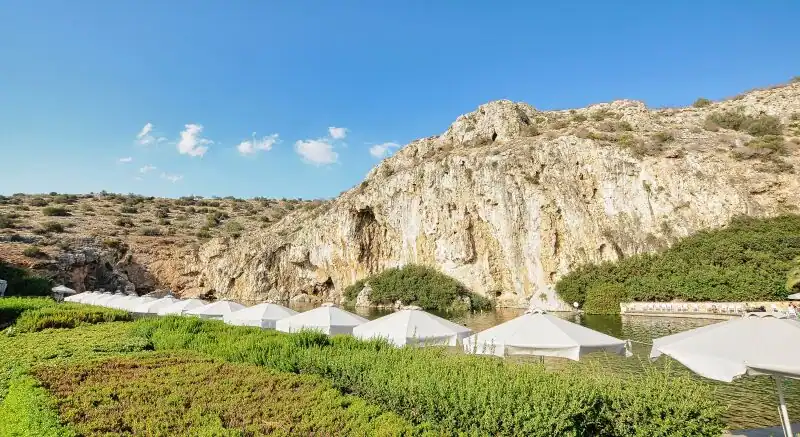
The first time I swam in Lake Vouliagmeni, I knew why people talked about it like holy water. It’s warm. Really warm. Thermally heated by springs that gush forth from deep beneath the earth. Come winter, steam pours off its surface like soup from a pot. Come summer, the temperature never varies. Around 24 degrees Celsius, no hotter, no colder, just warm, oddly comforting, womb-like.
Perched inside a cave that collapsed long ago, limestone walls plummet down into the water on one side and ascend to meet the sky on the other. The water is deceivingly shallow. Along the sides, you can easily stand in chest-high water and touch the bottom.
Generations of locals have bathed in these mineral-rich waters, hoping to cure their skin diseases, arthritis, and life weariness. Ask them about how the salts and minerals affect your body on a cellular level, and they’ll give you a look that says there’s simply no use in explaining magic. I won’t pretend to know anything about science. But what I will tell you is that when you close your eyes and float in that lake, encased by rock and pine and sky, you feel something loosen in your chest. Was it the minerals working their magic, or actual magic itself? I’ve never been able to determine which.
They charge an admission fee, and sunbeds are available for rent. They even have a cafe and changing rooms. Spend your time here when the light is gentle, and there are fewer people.
Vouliagmeni beach: The Athenian Riviera at its finest
On the other side of the lake, Vouliagmeni’s coastline consists of pocket beaches and stretches of sand that rank among Athens’s best. Astir Beach, on the south end, backs up to a resort that has, at various times, catered to Greek royalty and international celebrities.
The peninsula here creates a natural shelter from wind and currents. The water is calm, nearly still. Clear enough to see fish darting around rocks ten meters away. White sand and smooth rocks blanket the seabed, warm and gentle on bare feet—ideal conditions for snorkeling. On mornings with no wind, the water forms a perfect mirror.
Varkiza: where families gather, and summers are made
Head south again, past Vouliagmeni. The road will take you to Varkiza, which sits on the sea unabashedly. There are no hidden beaches or boutique hotels here. Varkiza beach is broad, sandy, and way too popular.
Saronida: The quiet one between
Drive ten minutes past Varkiza and the coastline shifts again. The development thins. The hills press closer to the road. And then, curling around a bend, there’s Saronida beach, and time seems to do the same.
Nestled into a natural bay, Saronida is partially sheltered from winds that can make other areas of this coast choppy. The result is water that is calm most days, warm and clear, and forgiving. The sandy bottom also slopes gently, so one can wade out very far before the depth forces actual swimming. Children can play safely here. So can adults who are more interested in floating than fighting waves.
The town behind the shore has built up over the years, but still feels like a village in a way that the more developed areas have long since lost. Small supermarkets with owners who know the regulars. Taverns with menus written in hand and cats dozing under the tables. A way of life that does not feel rushed, even at the height of summer. This is not a place through which people are passing on their way to somewhere else. This is a place that those who know about it set out to visit.
Anavissos: Where the road ends and the blue deepens
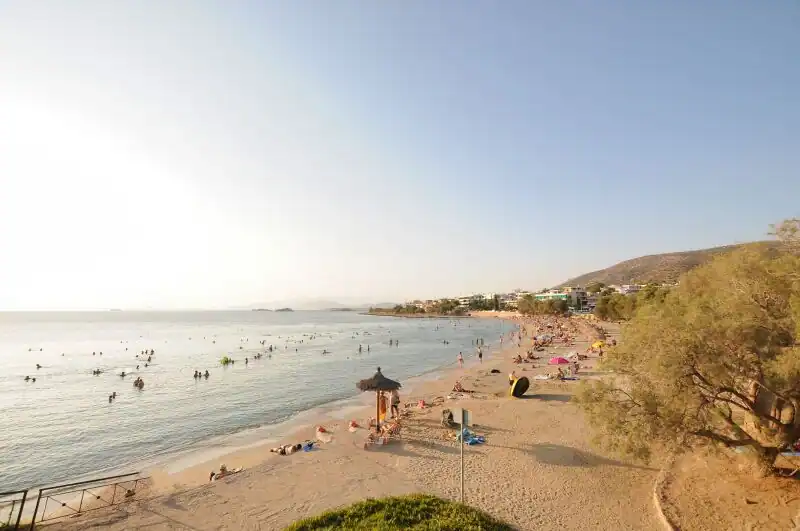
If you drive forty minutes south of Athens, beyond Varkiza, you come to Anavissos beach. Whenever I need to vanish into thin air, this is where I come. Small and sleepy, Anavissos is a town where fishermen still mend their nets and older men play backgammon under their balconies.
Anavissos’ main beach is long and expansive, curling gently along the bay. The sea remains shallow for quite a distance, making it ideal for kids. There are some beach bars and tavernas, but everyone is kept in good spirits without trying too hard. No one is here to impress anyone else.
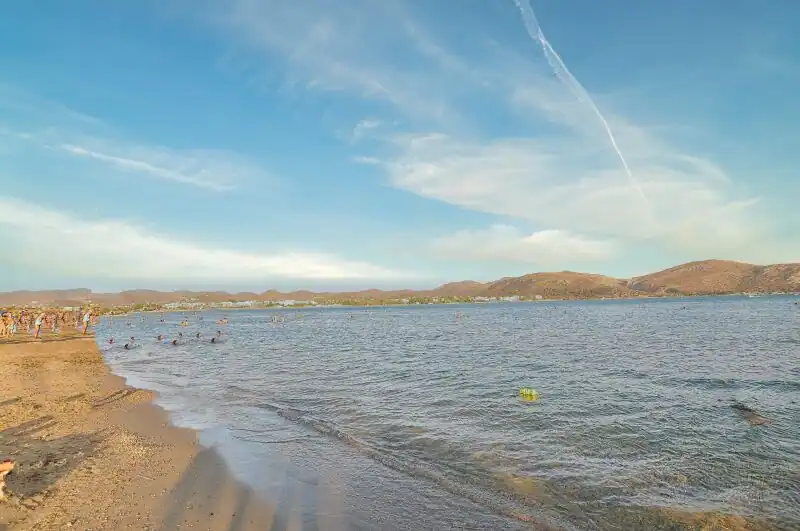
The eastern coast: a different character
Loutsa and the long sandy stretch
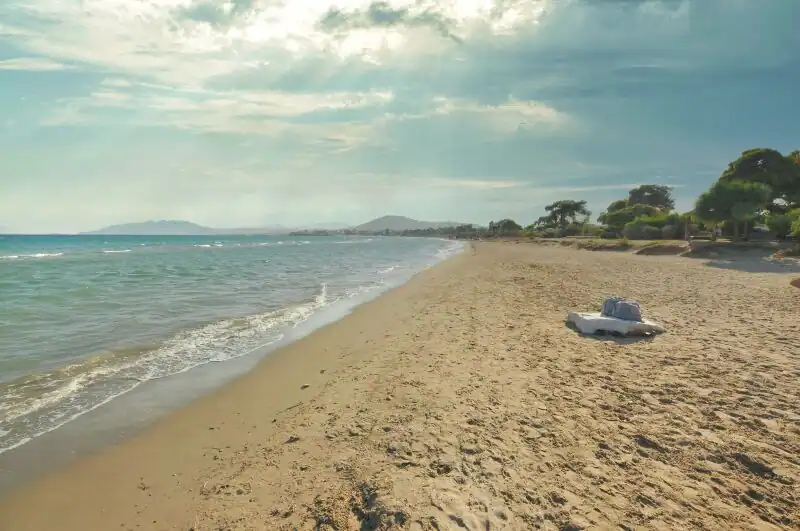
Loutsa beach (also known as Artemida) is one of my favorite spots on this side of Athens. The beach stretches for kilometers. You can walk thirty minutes and not see the end. The water is shallow, and the waves, when there is wind, are ideal for bodysurfing or playing like a kid.
Another thing I love about Loutsa is that there is no hype. This is where Athenians who can’t afford holidays to more popular islands go for summer weekends. The beach tavernas are basic. Prices are affordable.
Things are relaxed in a way that many trendier spots struggle to replicate. If you want to enjoy beaches near Athens like a local, without the guidebooks and Instagrammers getting in the way, Loutsa is it.
Speaking of locals, there is also history here. Up the road in Vravrona was the sanctuary of Artemis, where young Athenian women would perform religious rites. The museum is small but worth your time. Spend the morning digging into history and the afternoon swimming.
Porto Rafti and the sheltered bay
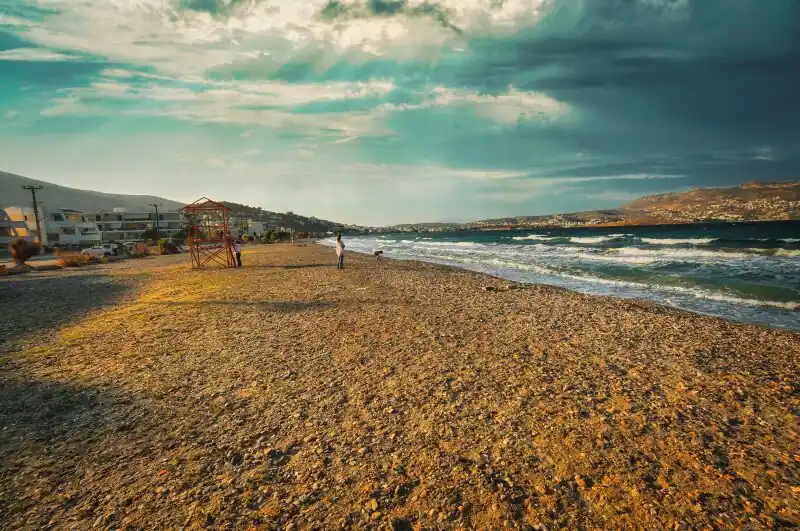
Porto Rafti lies slightly further south on the east coast. The whole vibe is completely different here. The bay is almost completely sheltered, thanks to hills bordering it on almost all sides. The lack of wind and waves means you’ll find yourself swimming in water as still as a lake. Families with young kids come here. People who don’t mind their swim being super tranquil flock here.
Development has slowly crept into the area over the years, so you’ll find restaurants and cafes along with tavernas dotting the coastline. Despite this, Porto Rafti maintains that Greek seaside village charm. You know the one. The place where everyone greets everyone, and time ticks by at the same pace as the waves lapping up against the shore.
Frequently asked questions
How far are the closest beaches from the Athens city center?
The beaches closest to Athens are only about 20-30 minutes from the city center. You don't even need a car to reach them because you can take the tram all the way from Syntagma Square.
Are there free beaches near Athens?
Yes, there are many free beaches near Athens. While some coastal areas have organized facilities that charge entrance fees, most shores along the Athens Riviera and eastern coast have free public sections. Glyfada, Kavouri, Loutsa, and Anavissos all offer free access to the water.
When is the best time to visit the beaches near Athens?
June to September is swim season, and during July and August, you'll find the warmest water. The busiest months to visit beaches are July and August, so if you're looking to avoid crowds, September is the perfect option. Water temperatures will still be warm, the weather fantastic, and there will be fewer people around. Visit on a weekday, and go early in the morning or later in the afternoon before the majority of tourists arrive.
How do I get to beaches near Athens without a car?
Tram Line 5 goes from Syntagma all the way to Voula, passing by Glyfada and other popular Riviera beaches. There are also buses that reach Kavouri, Vouliagmeni, and the east coast beaches. If you're looking to reach more remote beaches like Anavissos, getting around by car or taxi is easier.
Final thoughts: More than just sand and sea
As I write about each of these shores, I find myself coming back to a thought that I’ve known for years but have never been able to articulate quite like this. The beaches near Athens are not an extension of the city. They are part of Athens.
Without the sea, Athens would be another traffic-jammed capital clinging desperately to the past. With it, there right there for the taking, Athens becomes something else. A living city. A city that sweats.
When you travel to Athens, if you go at all, don’t touch just the thousand-year-old stones. Seek out the sea. Visit any of the beaches listed above, or seek out your own. Swim until your arms get tired. Eat something salty at a tiny taverna as the sea air marinates your skin.