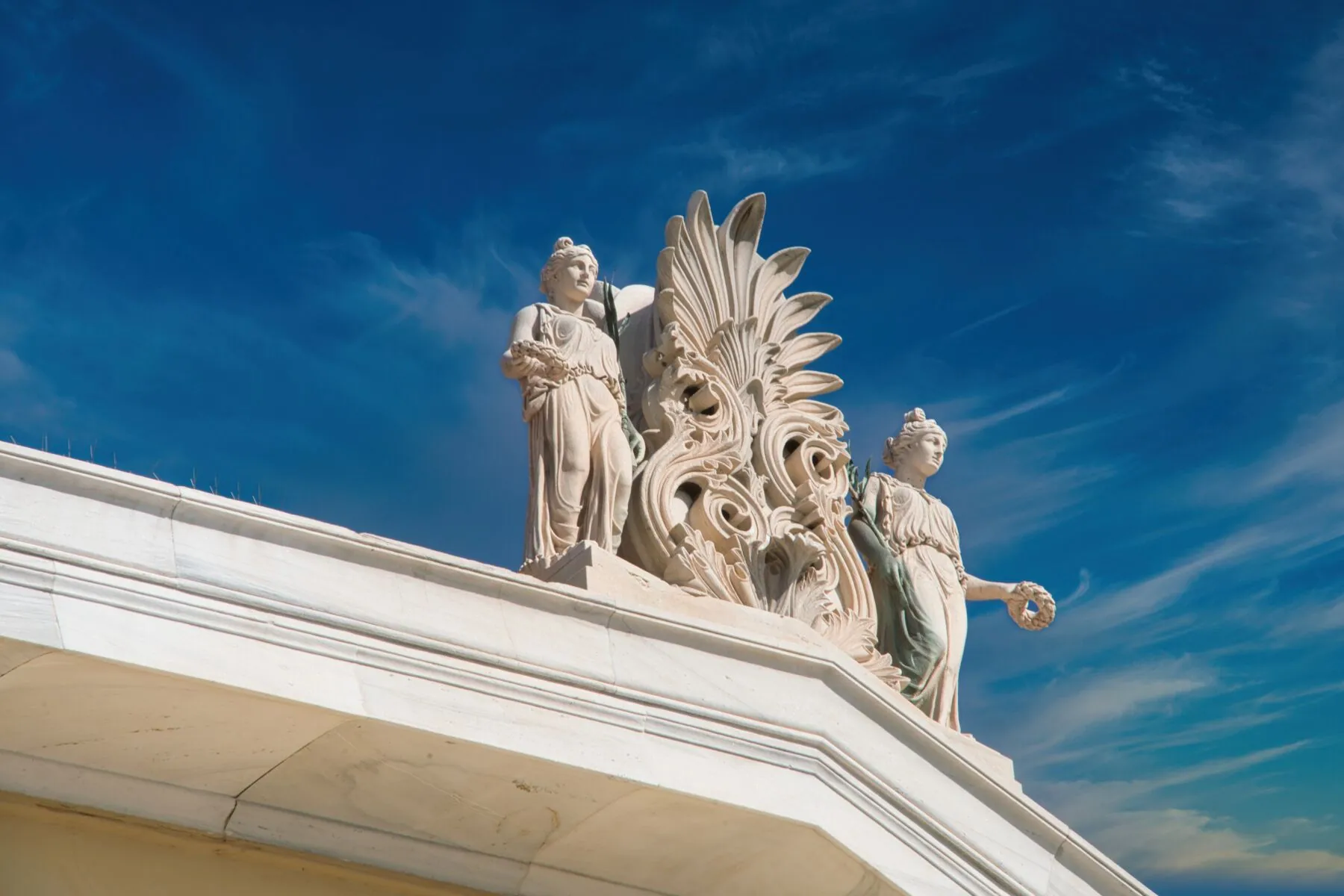
Stepping into one of the best museums in Athens, or into a gallery, always feels a little different. There’s something about looking at objects behind glass in a quiet space in this city that can’t be matched elsewhere. This is because, for once, those artifacts are not so much objects. They are part of the same story of lives past that still walk and talk down the street outside.
Asking me what to do in Athens that you shouldn’t miss is always a difficult question. The answer, so often, is to go into a museum. Yes, of course, the Acropolis is a thing of sunlit beauty. Yes, ancient ruins pepper the city like lines of open-air poetry. But inside those walls and collections is where you will find Athens’ soul. The objects of daily life that have traveled through time to us, the intricate jewelry, the painted pottery, the faded photographs, and the ancient instruments that once brought music into homes.
This guide to Athens’ museums is the product of my own wanderings around those halls on lazy afternoons or long, slow days when I felt like a creature out of time. There is something here for every interest: from ancient history to Byzantine gold, to modern art and folk culture, there is a space for each in Athens that will quietly stop your heart and tug on your soul. Come with me and take a look, one collection at a time.
Table of Contents
Where civilizations still speak: Ancient history collections
Athens is the beating heart of the ancient world. Philosophers walked its streets. Artists built their temples. And now the grandeur of their lives is kept in some of the finest archaeological collections on the planet. These are not dusty rooms of forgotten objects. Here you will find living connections to the people and the time that still shape everything we know.
National Archaeological Museum: The greatest story ever preserved
I was young when I first visited the National Archaeological Museum. And I didn’t understand it all at the time. But I remember the golden mask of Agamemnon, haloed by soft light. I remember looking at it and feeling something shift inside me.
This historical landmark contains the largest collection of Greek antiquities in the world. And walking through the galleries is like reading humanity’s oldest diary.
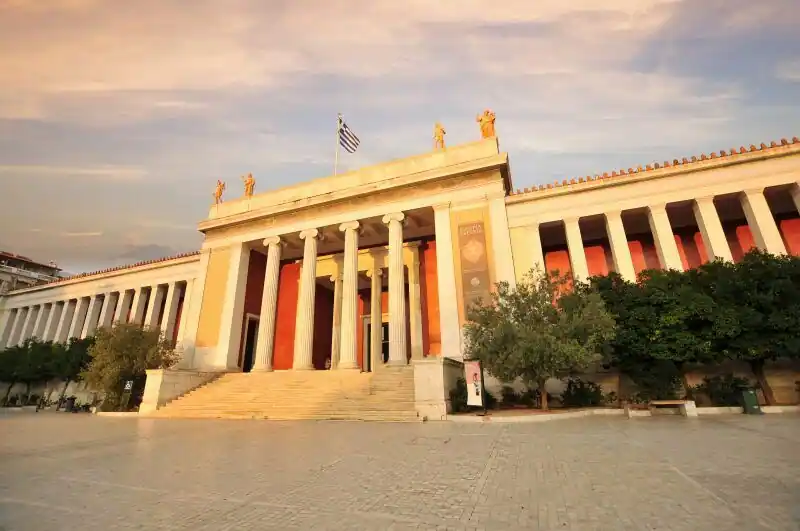
The building is a grand presence on Patission Avenue. Once inside, you will see Mycenaean gold, Cycladic figurines with their mesmerizing, minimalist forms, and sculptures that show the human from archaic stiffness into classical perfection.
You’ll want to give yourself at least three hours. There are some tourists who speed through, but this is a place for slow looking. Stand before the bronze Poseidon (or Zeus? There is some debate) and watch how the muscles tense in his body, in preparation for a throw that will never happen. That frozen moment has waited nearly 2,500 years for your attention.
If you are looking to visit every gallery and nook of the museum, read my full guide for the National Archaeological Museum.
Did You Know?
 Did You Know?
The National Archaeological Museum houses the famous Antikythera Mechanism, considered the world’s first analog computer.
Acropolis Museum: Light, glass, and sacred beauty
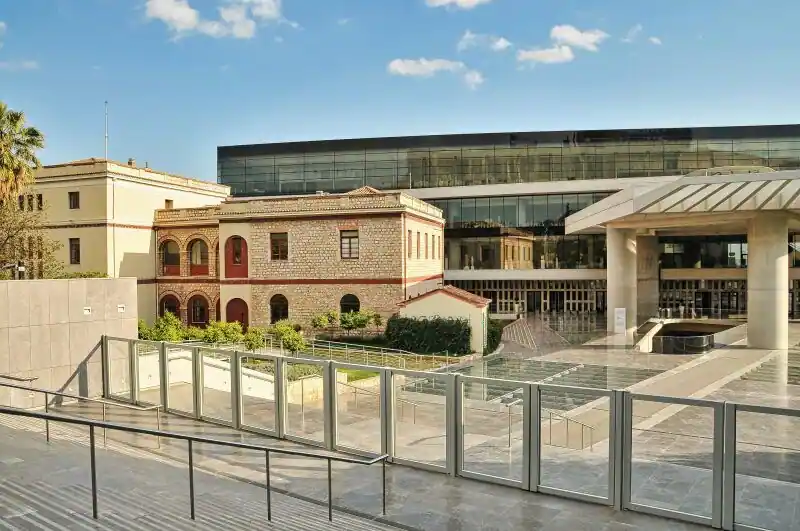
Nothing was the same once the Acropolis Museum opened in 2009. A soaring structure by Bernard Tschumi appears to hover over the archaeological site below. Glass floors peer down into the ancient ruins. Natural light pours through the galleries. The Parthenon sculptures at last had a home befitting their elegance.
Here you see the caryatids, those original maidens who once supported the Erechtheion porch, all standing together like sisters in a long line awaiting some event. You see the fragments of the Parthenon frieze, that procession of gods and mortals that once circled the temple.
The top floor is precisely aligned with the Parthenon beyond it. To stand there at sunset and watch the golden light streaming over both the ancient sculptures and the temple on the hill is a very special thing to do in Athens. It’s not only education. It’s communion.
I’ve written a comprehensive post on the Acropolis Museum that has everything you need to know to plan your visit.
Museum of Cycladic Art: The beauty of simplicity
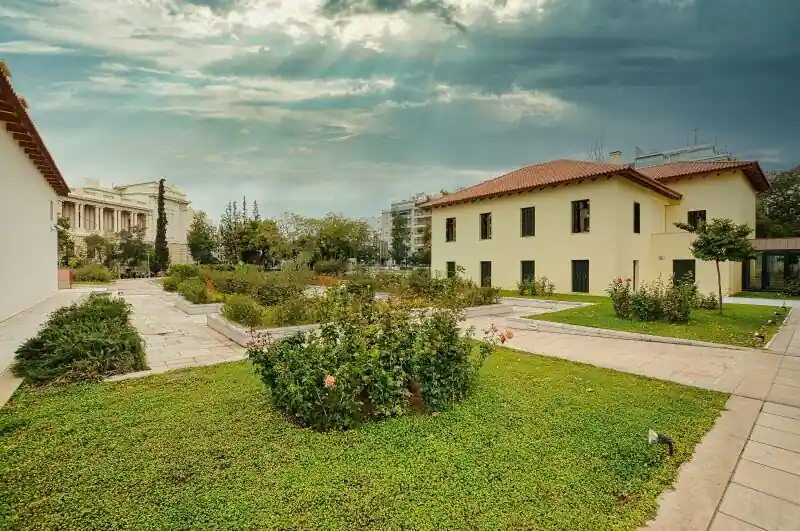
In the neighborhood of Kolonaki, the Museum of Cycladic Art has one thing you might not expect. Marble figurines found on the Cycladic islands are nearly 5,000 years old, and their clean, abstract shapes appear startlingly modern.
The collection sprang from the private passion of Dolly Goulandris, and the love she had for these artworks still animates the space. The white figurines emerge against a dark background; their crossed arms and tilted heads full of mystery. Who are they? What do they mean? No one can say for certain, and the silence around their original purpose is part of their power.
If you’re looking for museums in Athens that explore how ancient art can speak to modern eyes, this is one of the best.
I wrote more about these intriguing ancient figures in my article about the Museum of Cycladic Art.
Echoes of later ages: Historical collections
Athens did not end with antiquity. There are chapters of the city’s history that followed. Empires were built and fell on these hills. Byzantium sprinkled its gold here. War hammered the modern state into shape. These institutions hold those pages, and they are worth your time.
Byzantine and Christian Museum: A thousand years of gold and faith
The Byzantine era spanned a thousand years, and this collection, in a beautiful neo-Byzantine building, attests to the importance of that history. Icons stare with solemn faces. Mosaics bloom in an unearthly blue. Liturgical vessels shimmer with holy artistry.
I find calm in these galleries. The art is not meant to dazzle with its technique, though it certainly can. It is intended to open a door between worlds. The gold backgrounds are not mere ornamentation. They are the light of heaven. Stand before a 12th-century icon of Christ, and you know why people prayed before these images for centuries.
A garden courtyard offers a place to rest between galleries. Bring a book. Stay a while. Let the centuries wash over you.
I explored the world of golden icons and holy relics in more detail in my full guide to the Byzantine and Christian Museum.
War Museum: The price of freedom
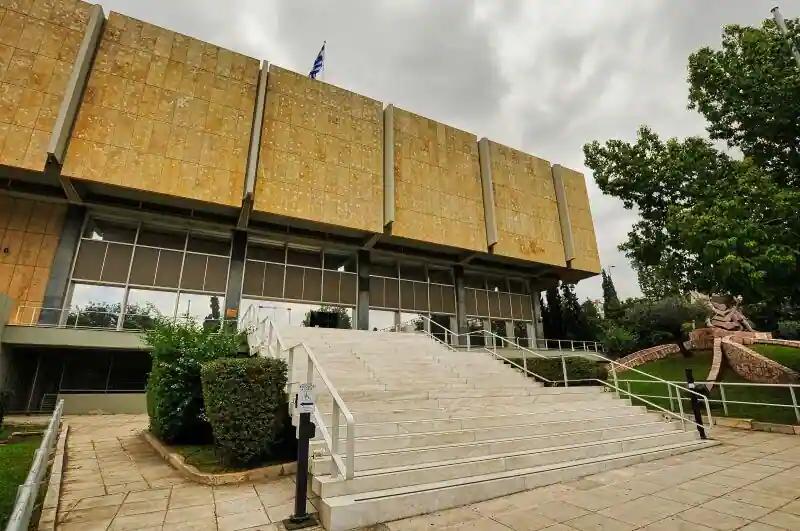
The modern history of Greece is a tale of occupation, resistance, and bravery that should never be forgotten. The War Museum, on Vasilissis Sofias Avenue, tells these stories without flinching. Military equipment, uniforms, weapons, and documents chronicle conflicts from ancient times through World War II and the Greek Civil War.
Some rooms will be difficult to see. The German occupation exhibit displays photographs and artifacts that bring the past rushing back. But it’s necessary. Every nation must be reminded of what freedom costs. I leave this museum grateful and hushed.
I wrote more about Greece’s struggle to become free in my complete guide to the War Museum of Athens.
National Historical Museum: The birth of a nation
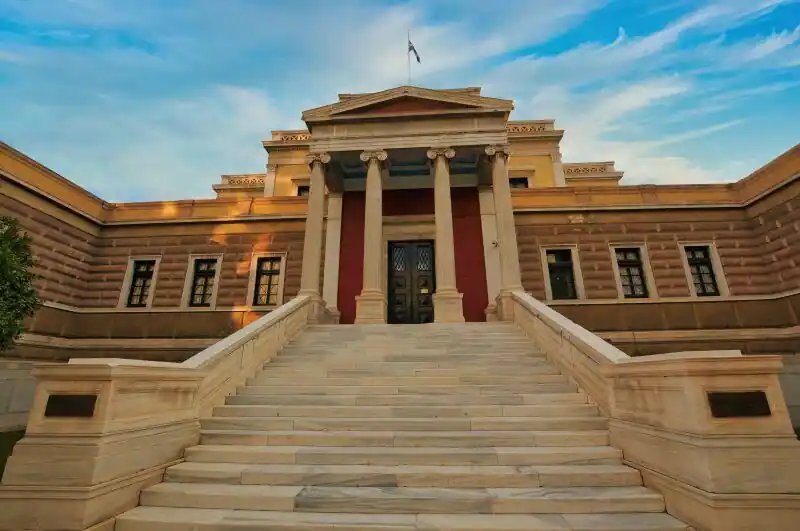
Occupying the Old Parliament building on Stadiou Street, this museum recounts the history of Greece as it transitioned from Ottoman occupation to independence. Personal effects of revolutionary leaders, weapons from the War of Independence, and the desk upon which the first Greek constitution was signed all have their place here.
The building itself is a repository of history. Standing in a room where the Greek parliament resonates in the mind. This is where modern Greece began to conjure itself.
In my full article about the National Historical Museum, I took you on a journey through the birth of modern Greece.
The soul of the people: Folk and cultural heritage
Beyond the empires and the wars, of course, are small stories. How did a typical Athenian live? What did they wear? Cook? Believe? All of these are contained within these cultural spaces, but it’s the intangible details that help a civilization feel lived in.
Museum of Greek Folk Musical Instruments: Songs in wood and string
In a neoclassical mansion a few blocks from the Roman Agora, a collection of instruments once filled the air of Greek villages with music. Lyres and lutes, drums and clarinets, bagpipes from region to region, each has its own voice. Musicologist Fivos Anoyanakis began amassing this collection when he was just 14, and by the time he died, it was the largest in the world. It’s not hard to see why.
Plug in a pair of headphones and the sound of each instrument comes to life in your ears. It’s so easy to close your eyes and imagine yourself at a village wedding, a religious festival, or a lonely shepherd taking a break in the afternoon. Music, it turns out, is memory.
Museum of Greek Folk Art and Tradition: Daily life made beautiful
Greek folk art isn’t primitive. It’s sophisticated, symbolic, and often breathtakingly beautiful. Spread across several buildings, including a lovely one in Plaka, this collection features embroidery, woodcarving, ceramics, and traditional costumes from around the country.
I love the carnival masks and shadow puppet theater pieces. They remind me that Greek culture has always known how to celebrate, how to laugh, how to transform the ordinary into something magical.
Benaki Museum: One family's gift to a nation
Antonis Benakis collected with passion and discernment, and his family home on Vasilissis Sofias Avenue became one of the most beloved cultural institutions in the city. The main building traces Greek culture from prehistory to the 20th century. Icons, folk art, and historical artifacts are arranged in a chronological journey through the soul of a nation.
What makes this cultural place special is how personal it feels. You sense the collector’s eye in every room. Byzantine jewelry sits near revolutionary flags. Ottoman era costumes hang beside paintings of modern Athens. The story of Greece unfolds not as dry history, but as lived experience passed down through generations.
Jewish Museum of Greece: A community's memory
The Holocaust Museum is smaller and less well-known than some of its more famous counterparts around the world, but it offers visitors an intimate experience no less. Crowded into a low-ceilinged block in the narrow streets of the Plaka, the history of Greek Jews from the third century BC up until the present day is traced through the rich traditions of the Romaniote Jewish community, one of the oldest in Europe. Textiles, ritual objects, and photographs fill the rooms, and in their simple dignity, they tell their own quiet story.
The final room of the museum is always difficult to get through. Thessaloniki was once known as the Jerusalem of the Balkans, and upwards of 90% of the city’s Jews were killed. In Athens, the percentage of Jewish survivors was higher, in no small part due to the Greeks who risked their lives to shelter their neighbors. In this simple but evocative collection, the memory of the dead is kept alive alongside that of the righteous.
Museum of Islamic Art: Where East meets West
In a restored mansion compound in Kerameikos, Athens’s Islamic Art collection delights the visitor who least expects to find such riches here. Persian ceramics, Egyptian textiles, gold-inlaid weapons, and manuscripts where the calligraphy swirls like water. These artifacts have a way of reminding you that cultures have never stopped borrowing, trading, and inspiring each other.
The building itself overlooks the ruins of an ancient cemetery, a jarring and beautiful conversation between two worlds. Tilework with its Geometric patterns can call to mind the mathematical questing of Greek thinking. On the rooftop terrace, at sunset, you can partake of one of those secret Athens moments that’s worth seeking out – to sit and watch the light change over the city while holding a warm cup of Greek coffee in your hands.
When canvas speaks: Art galleries and visual collections
Athens also has a lively contemporary art scene, but it also takes its more canonical collections of established masters very seriously. If you find painting and sculpture speak to you, they will answer back in colors, shapes, and feelings.
National Gallery: Greek art finds its home
The National Gallery has just reopened after years of renovation to make more space for the collection and better light for it. Here you can see Greek painting from the post-Byzantine period to the 20th century, and there is a room dedicated to El Greco as a reminder that Domenikos Theotokopoulos was born in Crete before becoming the great master of Toledo.
Paintings from the 19th-century academic style show a Greece seen through European romantic and mythologized eyes. The galleries of 20th-century art feel a bit more real, the artists wrestling with the experience of war and poverty, poverty of spirit, and questions of identity.
Wonder for young eyes: Family-friendly exhibitions
Athens is a family-friendly city, and there are a few sites that are geared towards families with inquisitive children. These are not second-rate experiences. They are open invitations to a lifetime of curiosity.
Museum of Illusions: Play with perception
A few blocks from Monastiraki is the Museum of Illusions. It’s filled with interactive exhibits that challenge your eyes and your brain. Upside-down rooms. Holograms. Infinity mirrors. It’s popular with kids, and the laughter of children can be heard in each room as they discover a new piece of magic.
And yes, I will be honest with you, I love this museum too. It’s nice to feel that sense of wonder, without the need to be cynical about it. After seeing so many ancient relics, it’s a relief to walk into a room and take pictures that make you appear to shrink or grow to impossible heights.
Herakleidon Museum: Science meets art
A short walk in the less touristy area of Thissio, this museum is where art meets science and logic dances with creativity. Exhibits have focused on subjects from the math behind M.C. Escher’s impossible creations to the science of ancient Greek inventions.
Children can touch and ask questions. Adults are reminded that there is always more to know. This is one of those museums that reminds us that learning is supposed to be fun.
Goulandris Natural History Museum: Where nature tells its story
The Goulandris Natural History Museum is in Kifissia, one of Athens’s more leafy suburbs. And it also holds treasures, although not treasures in the human sense. They never gleamed in royal crowns, were never secreted away in a tomb, and their brilliance is not the work of artisans. They grew in forests, swam in seas, and crossed continents. It is here that children learn that the world itself is as enchanted as any legend.
Animals, minerals, and plants are on display in light, airy galleries. Taxidermied specimens from Greece and other parts of the world are in recreated habitats.
What I love most about the museum is how it engages children. I’ve watched their noses pressed against the glass of display cases as they examine butterfly wings or are thrilled by the colors of a coral reef. The gift shop offers nature guides and toys designed to stimulate their interest and imagination, while the gardens provide plenty of space to run off energy after all that indoor looking.
The Goulandris Natural History Museum is one of the best things to do in Athens with kids, although most tourists never see it. Kifissia is a long way from the Acropolis, and this part of Athens, with its village green atmosphere, is a world away from the city.
Hidden gems worth your time
In addition to the major museums in Athens, there are numerous smaller, specialized collections.
Numismatic Museum: The history of money
Located in the beautiful former home of Heinrich Schliemann (the archaeologist who discovered Troy), this is the museum of currency and coins. It traces money through the ages from early coins to modern banknotes. The building is worth a visit in itself, with its mosaic floors and painted ceilings.
Theatre Museum: The memory of drama
The Greeks gave the world the theater, and this small collection in the Plaka is dedicated to costumes, set designs, photographs, and memorabilia from the history of the Greek stage. If you are a fan of drama, be sure to visit this little gem.
Museum of the City of Athens: The place where the kingdom began
In the house where King Otto, Greece's first king, lived during his early years on the throne, this museum is housed. It displays furniture, paintings, and personal objects from the early days of the young Greek state. The rooms are more intimate, even domestic. History comes alive.
Frequently Asked Questions
What is the best museum in Athens to visit first?
The Acropolis Museum is ideal for first-time visitors. It will help put the ancient sites you'll visit in context, plus it's one of the world's most-visited museums due to its world-class architecture and view of the Parthenon. If you must pick a second-most-essential museum, it would be the National Archaeological Museum, which contains more than just the Parthenon marbles.
How many days do I need to see the top museums?
If you want to see all the major cultural institutions at a reasonable pace, plan for three to four days. Allow a full day each for the Acropolis Museum and National Archaeological Museum. Use your second day to visit the museums containing Byzantine and folk heritage. Save some time for art galleries and special-interest museums.
Are there free admission days for museums in Athens?
Yes, most state museums are free on March 6 (Melina Mercouri Day), the first Sunday of every month (Nov. to March), and some public holidays. Check the websites for exact details before your visit.
A city that keeps its memory alive
Sometimes I pass by these buildings without ever entering. I have groceries to buy, places to be, the rest, and the routine of life in a big city. But then one day it rains and I have nothing to do, and suddenly I find myself mounting the stairs to an art gallery I haven’t set foot in for months. And each time I do, Athens astonishes me anew.
This is what I want you to know about the best museums in Athens. They aren’t things you must do. They are opportunities. Some will call you more than others. Some will alter you in ways you may not even recognize until later, when a sudden recollection conjures a visage in marble, a thread of gold, the sound of an ancient lyre.
This city has been collecting stories for three millennia. Empires and conflicts, artists and the simple folk, the happy and the heartbroken, and everything in between. The exhibitions I bring you to in this article are but repositories of the fragments of all those lives. Pieced together lovingly and on display for whoever has the curiosity to care.
The past is not something consigned to the shadows here. It is not something you go to Athens to escape. The past awaits in this city, patiently and benevolently, for those who seek to hear it. The next time you walk down one of these streets, remember: every street leads to somewhere.
The most famous landmarks are famous for a reason. But the quieter spaces. The galleries in which you find yourself alone, quietly in awe of something wonderful. It is in these places that travel transforms from motion to meaning. It is in these spaces that you begin to feel what this city has to give. I hope you find your favorites among these. I hope you stay longer than you mean to. And I hope, when you go, that you walk away with something that makes the world feel just a little bit bigger than when you arrived.