Most travelers will never experience the real Athens. You don’t find it in marble and old stones but in rustling plane trees, aromatic herbs, and pine tree-covered hills. If you’re looking for the best parks in Athens, let me take you to where I escape when the city gets too hectic, too crowded, too grey.
In this guide, you will find the best parks and gardens of the city, the hills with stunning views, and helpful info on how to visit them. If you’re visiting Athens for the first time or if you think you know it like the back of your hand, I hope you’ll find something that makes you feel anything but expected.
Table of Contents
The best parks in Athens
Athens isn’t blessed with a great number of parks. The ones we have, however, matter. Some are more than a century old, and their trees have seen Athens rise around them. Others are more recent additions to give residents some space to breathe.
I’ve walked in all of them in all seasons and in every mood. Some serve me solitude when I seek it. Others make me feel connected when I need it most. These are Athens’ parks and gardens that mean the most to me, where I would bring you if I were walking with you.
National Garden: A green world behind the parliament
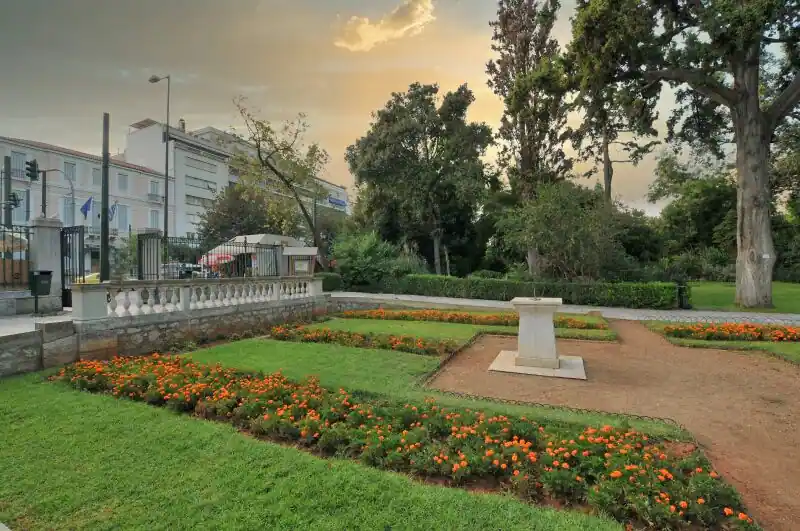
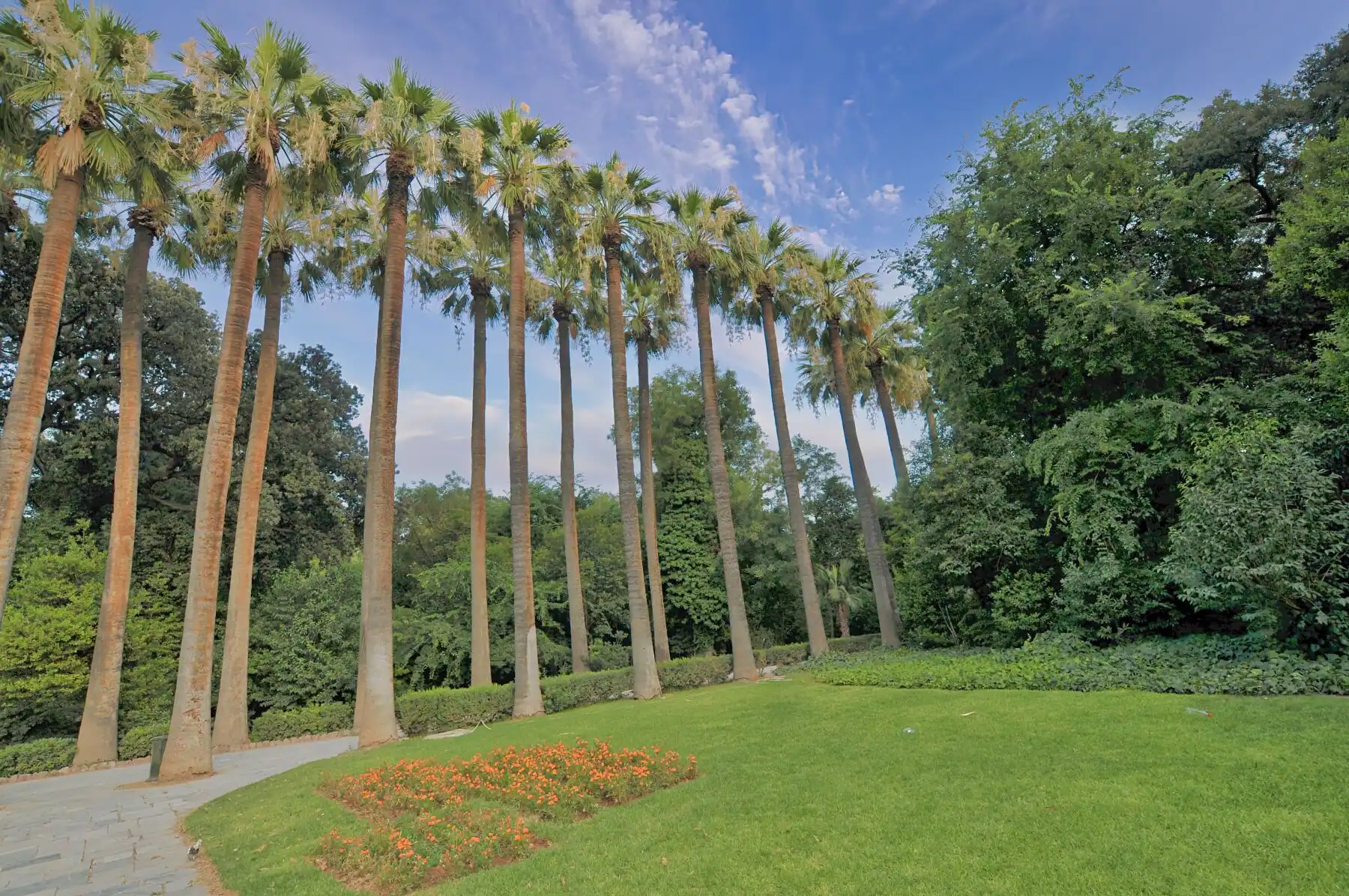
The National Garden is Athens’ 15 hectares of greenery located at the center of Athens, behind the Greek Parliament in Syntagma Square. It was built as the royal garden in the 1830s and was opened for public enjoyment in 1923. Walking around, you feel like you’re in a different world. The shaded paths lead under canopies of tall trees, many of them over a century old.
A duck pond, a mini zoo for kids to enjoy, and shaded benches tucked away in quiet nooks are perfect for hours of reading. It is one of the shadiest parks in Athens. And in the summer months, it can save your life. Once the temperature rises over 35°Celsius you can find shade and coolness under the trees here in this garden.
There is a nice cafe tucked inside the garden in the Zappeion section. Dogs are allowed in this park as well as most parks throughout Athens, but they must be kept on leash. You can easily spend 30 minutes to an hour here, depending on how slowly you walk.You can read more about this garden in my full guide to the National Garden of Athens.
Zappeion Garden: The elegant garden next door
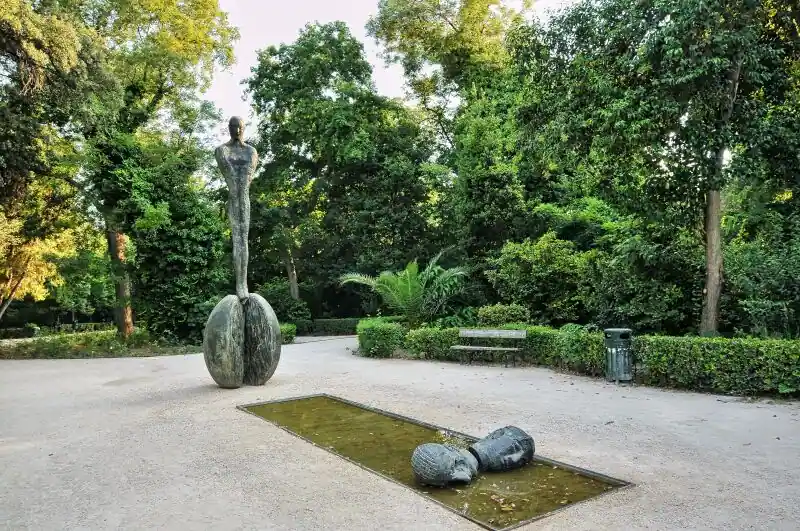
The Zappeion Garden surrounds the neoclassical Zappeion Hall and links the National Garden with the area around the Temple of Zeus and Panathenaic Stadium. It is much more open and formal than the National Garden. There are wider paths, manicured flower beds, and an air of old Athenian glamour.
I enjoy visiting this garden early in the morning when the light is soft, and there are only joggers and dog walkers. There is a lovely cafe overlooking the Zappeion Hall that has been there for decades. Order a coffee and sit amongst tall palm trees.
Great place for photographers. The symmetry of the paths leading to the columns of the Zappeion building, with the Temple of Zeus columns in the background make for perfect scenes.

Pedion tou Areos: The park that belongs to the locals
Pedion tou Areos, which means “Field of Mars,” is Athens’ largest public park in its central region. This green space is located next to the Exarcheia neighborhood and across from the National Archaeological Museum.
It’s worth noting that this is not manicured for tourists. This is a park where locals go. Parents with young kids. Elderly men playing cards. Students are napping on the lawn with a book. A long central walkway is lined with marble busts of heroes from Greece’s War of Independence, and overall, the park has a nice, tranquil feeling.
Pedion tou Areos tends to be less populated than other parks in Athens during weekday mornings. If you’re looking to see a normal side of the city that locals enjoy, visit here.
Stavros Niarchos Park: Where modern Athens comes to breathe
This urban park spans 21 hectares and features an open lawn, a Mediterranean-style garden, a running track, a playground, and a small canal for water activities. It is designed so you can easily lose track of time, spending a whole afternoon there.
My favorite thing about this park is how vibrant it is. There are daily free activities/events, open movie nights during summer, yoga classes, and concerts. You can lie on a blanket on the grass with your family, ride your bike around the paths with friends, and during nice summer nights, the whole park buzzes with people just enjoying each other's company.
The only downside is that it's a little way out from the historical center. It's about a 20-minute bus ride, but it's so worth the trip! If you’re spending any time in Athens during the summer months, this open space with the sea breeze is one of the most comfortable spots outside in the city.
The best hills in Athens
Athens was a city of hills long before they started building on top of them. It still is, if you know where to look. These are spots where the city sprawls around you and lets you see it whole. Each hill has its own personality. One gifts you the Parthenon right in front of you; another elevates you above everything, so you can see the whole city painted out before you. Here are the hills that gave me those moments.
Philopappos Hill: A walk through wildflowers and history
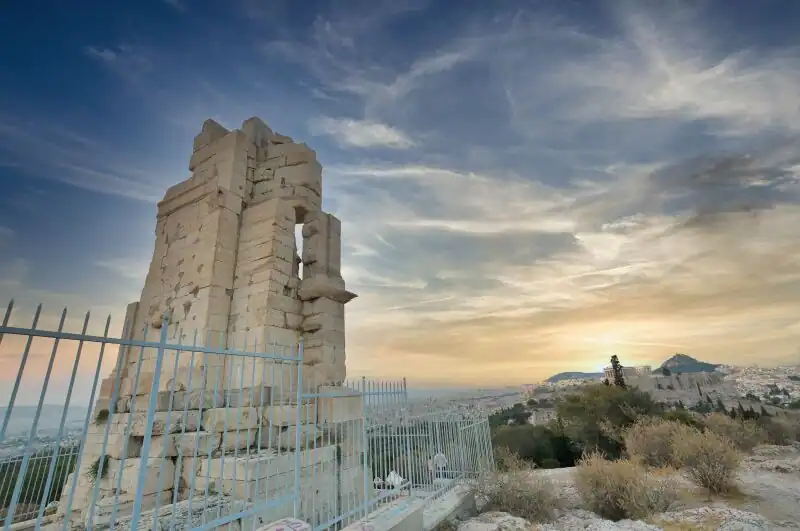
Philopappos Hill is located southwest of the Acropolis and happens to be one of my favorite spots in Athens. It’s lush with pine trees and wildflowers, and all the walking paths are gradual hills. You’ll find the Philopappos Monument at the top of the hill. It’s actually a Roman-era marble tomb dating back to the 2nd century AD.
However, you visit Philopappos mainly for the view. Standing on top, you face the Acropolis straight on from an angle that feels intimate, even secluded. The Parthenon looms over you nearby, close enough to examine its columns and far enough away that you can trace its silhouette against the sky.
Philopappos also contains the Pnyx, where Athenians gathered as citizens to discuss and shape the future of democracy. You can feel the gravity of that standing among the rocks.
There is so much more to say about this hill. I have put it all together in my guide to Philopappos Hill.
Areopagus Hill: The rock where everyone falls silent
Areopagus Hill, also known as Mars Hill, is located just below the entrance to the Acropolis. It is small and rocky, but nothing compared to the view that awaits you there.
From atop the flat rock, you gaze directly at the Acropolis from one side and down at the ancient agora from the other. In the distance, you can see the port of Piraeus and the Saronic Gulf.
This historical hill is where the ancient Athenian council sat in judgment over homicide and other serious crimes. It’s also where, according to the Bible, the Apostle Paul spread the word of God. You don’t have to be religious to enjoy spending some time on this hill, but either of those stories is probably why many people make the trip.
Sure, standing on a rock up high is cool no matter where you do it, but there’s something about sitting on a warm rock perched above a city that’s been bustling with life for thousands of years that will take root in your soul.
It’s the easiest hill to climb in Athens and will only take you a few minutes. Admission is free, like almost every park and hill in the city. Just watch your step on the smooth rock surface. It can also be slick in the morning when moisture from the night lingers on the rocks. Wear shoes with tread on the bottom.
This is a popular place to watch the sunset in Athens, so if you decide to go during the evening hours, be prepared to share the view with a crowd. Early morning or late afternoon weekdays are best if you want to avoid crowds.
If you want to know more about this special place, I have written a separate guide for Areopagus Hill.
Lycabettus Hill: The highest point, the longest view
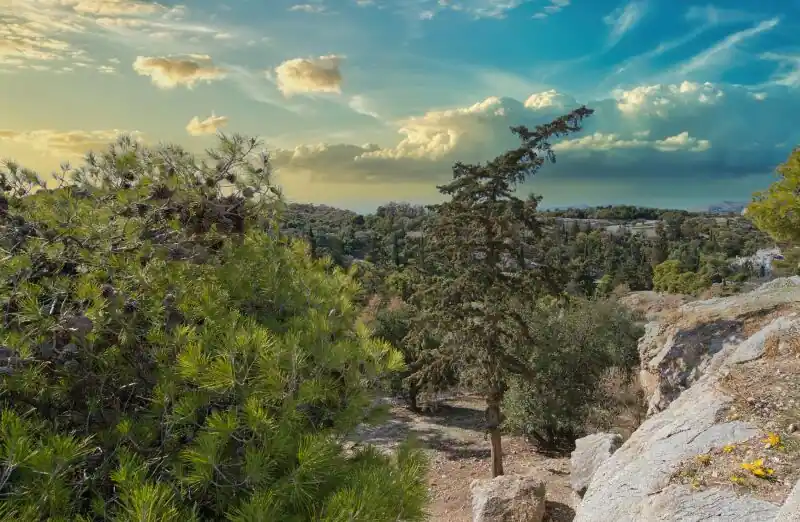
Mount Lycabettus is the highest point in central Athens at 277 metres. The view from its summit offers a panoramic 360-degree vista, from the city to the sea. You can reach the summit via a circular trail from bottom to top through pine forest (takes around 30-45 minutes), by teleferic from Kolonaki, or by car.
The trail is recommended for its rewarding, shaded route, and as you ascend, the city noise becomes very faint. At the top, there is a white chapel, the Chapel of St. George, and a cafe boasting one of the best terraces in Athens. It is best visited in the late afternoon, when the light begins to soften on the city, and towards sunset, everything glows with a golden hue.
Mount Lycabettus is one of those hills with views over Athens that you won't forget easily. If you don't fancy walking up steep hills, there is also access via a funicular. The ride takes 3 minutes and leaves every half hour.
I have written a full guide about this Lycabettus hill, with everything you need to know before you go
Strefi Hill: A quiet rock above a loud neighborhood
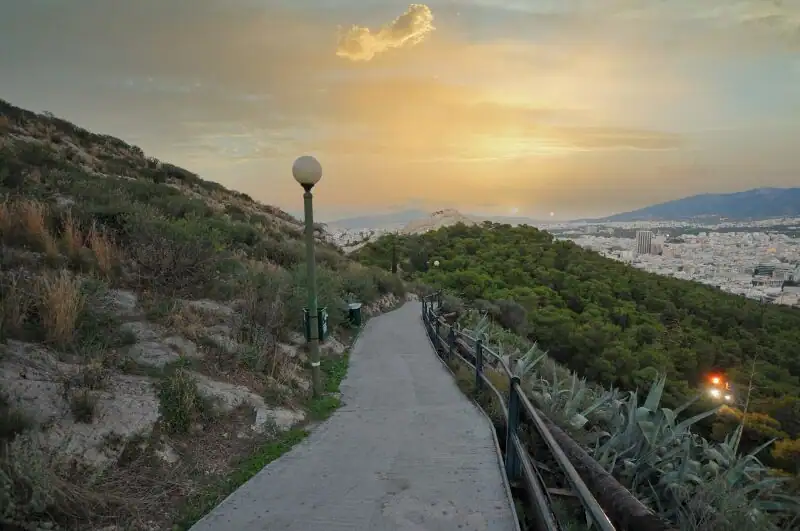
The hill that most people stumble past. Nestled within Exarcheia, one of the most raw and misunderstood neighborhoods in Athens. Strefi doesn’t try too hard to impress you. There are no monuments atop its hill. No cafe. No manicured pathway. Just rock. Dry grass. A few pine trees. And a view that sneaks up on you.
The ascent is quick. Ten minutes at most from the busy streets below and winding, uneven paths. But when you reach the top and turn around, the city is right there. The Acropolis. Lycabettus. Rooftops, antennas, and just about everything in between. Nothing obstructs your view.
I like Strefi because it feels genuine. It lacks fences and signs dictating where you can stand. You sit on a rock, you admire the view. Families come here. Locals come here to talk, to think, to walk their dogs. On summer nights, locals sometimes organize makeshift cinema screenings or concerts up on the hill. To me, those nights have a comfortable quality that's hard to put into words.
If you’re looking for a hill that no one talks about, that evades tourists, one that won’t make you worry about getting that perfect shot for Instagram, look no further. Go in the late afternoon. Find yourself a spot facing west. And wait. You’ll have the sunset to yourself.
Small things that are good to know
You don’t need directions to find green in Athens. Parks and gardens are nearby; most are only a few minutes' walk from where you already are. They wedge between monuments and metro stations, behind parliament buildings and beneath ancient hills. Some are sprawling and wide open, designed for long, slow strolls. Others are tiny and shaded, perfect for sitting on a bench and losing track of time. Athens has both kinds, and it gives them to you gratis.
Which parks are best for relaxing and walking?
If all you ask from a park is to chill out slowly, sit in greenery, and forget you are in one of Europe’s busiest capitals, then I would suggest the National Garden. Lush trees arch over narrow paths lined with bushes of bright flowers, and you’ll forget you are downtown after taking ten steps past its entrance. The garden that connects it, Zappeion, is open and more elegant. They’re great for an relaxing morning walk.
Parks in Athens are safe for tourists during the day and even at night. Again, the same goes for any touristy, central area. Use your common sense when out late, though.
Which hills offer the best views?
Athens is a city that’s better appreciated from above. Stand on one of its hills and look around: you’ll get its scale. Mount Lycabettus affords you the highest and broadest view. It’s the tallest hill right in the center, and looking out from the peak, Athens sprawls in every direction. It’s my favorite spot to admire the sunset and the panoramic view.
Are parks and hills free to visit?
Yes! Every park, garden, and hill I’ve mentioned in this article is 100% free. No tickets, no reservations, no entry fees whatsoever. Athens knows how to give back. Some of its most scenic outdoor attractions are absolutely free.
The only potential cost would be taking the teleferic up to the top of Lycabettus Hill. This will set you back a couple of euros (about €7 for a return ticket in 2025). Alternatively, you can hike up for free.
Can you visit them year-round?
Yes, of course! Athens parks and hills are open 365 days a year. Athens enjoys Mediterranean weather, which means even on winter days, you rarely experience temperatures around 8-10°C. You can stroll around the National Garden in January and enjoy lush green leaves and birds chirping.
Spring is ideal if you want to explore Athens parks and gardens. March-May is when wildflowers bloom on Philopappos Hill, the gardens are carpeted with jasmine and orange blossoms, and temperatures are pleasant, not sweltering. Fall is also gorgeous, with softer sunlight and cool evenings.
Summer in Athens is HOT. There’s no getting around that. However, Athens' green spaces that are shaded, such as parks and gardens, especially the National Garden, are very nice during July and August too. For the hills, either hit them in the morning or later in the afternoon to beat the midday heat.
Frequently asked questions
What are the best parks in Athens for families?
My opinion is that the National Garden is ideal for children, as it features a small zoo and is completely safe.
Can you see the Acropolis from any park or hill?
Yes. You can see the Acropolis Museum and Parthenon from Philopappos Hill, Areopagus Hill, Mount Lycabettus, and parts of Zappeion Garden. The view from Philopappos Hill is closest and most impressive.
How long does it take to visit an Athens park or hill?
Plan to spend 30 minutes to an hour visiting an Athens park. Expect to hike for 15-30 minutes up Philopappos or Areopagus Hill. Allow 30-45 minutes to hike up Mount Lycabettus. You can visit several on a half-day walking tour of Athens.
Are there cafes inside Athens parks or hills?
Yes. Zappeion Garden has a historic cafe inside. Mount Lycabettus has a cafe at the top. Stavros Niarchos Park has several drink and food carts. Near the entrance to the National Garden, right outside the Zappeion, is a small cafe.
Is it safe to visit them?
During the day and early evening are totally safe; I would suggest avoiding them at night.
Some last thoughts
Don’t expect these parks to be famous. They aren’t on the front of postcards. They aren’t listed on TripAdvisor as a “must-see”. But these are the places that made me fall in love with my city; The hill where I saw my first sunset with a view of the Acropolis.
Athens is ancient. Thousands of years weighing down on its streets and buildings. But when you’re in one of its many parks or on top of a hill, it feels weightless. The trees don’t care about fallen empires. The rocks don’t remember who sat on them before you. It’s just simple up there. Sky. Stone. Wind. And the city below is living its best life.