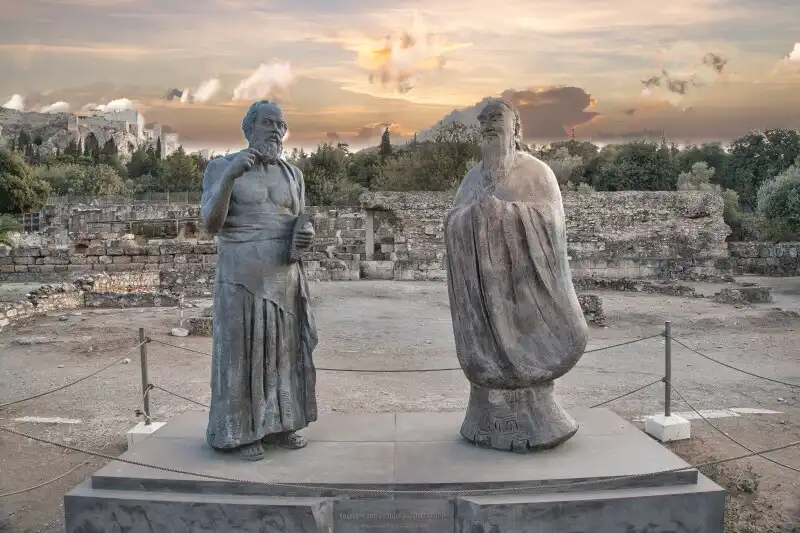
What is the ancient agora of Athens? It’s a place where you can almost hear Socrates and Plato discussing things under the olive trees, and you can look down and see that the stones are old. Really, really, old. These stones and olive trees once stood before Socrates, Plato, Sophocles, and Euripides, the minds that shaped Western civilization.
I have lived in Athens for many years, and every time I walk through the ancient Agora, it’s like something catches in my throat. Walking the Acropolis is different; the immensity there is overwhelming, almost all at once. By contrast, the Agora’s effect comes slowly and unassumingly, like an old friend, a long story told over coffee. This personal connection leads me to reflect on what makes the Agora so unique.
Table of Contents
What was the agora used for in ancient Greece?
Agora was the central public space in ancient Athens, the place where Athenians would go, especially for the market of goods but also for the market for ideas.
It wasn’t just a marketplace. Imagine going to the Agora to buy breakfast fish, arguing philosophy all day, voting on issues, and ending the evening at the theater—an average day just over 2500 years ago.
So when you wonder what this historic place was, you can answer: it is where democracy was practiced, not just created. Philosophy and civic engagement were for all citizens, who actively shaped their society. Walking through the Agora, I can still hear echoes of that time.
The stories these stones hold
What is the Ancient Agora of Athens? It’s more than ruins. It’s more than a sea of columns and piles of rubble. It’s where the philosophers of the world discussed ideas under the shade of overhanging trees, where the citizens of the ancient city gathered to vote on issues of war and peace, and where merchants sold their olive oil and potters displayed their wares. Every step here has a story behind it. I want to share a few of my favorites with you.
Philosophers in the shade
One of my favorite facts about the Ancient Agora of Athens is that Socrates spent most of his days right here. Not in some ivory tower but among fishmongers and potters and everyday Athenians. He would stop people in their tracks and ask questions that made them rethink everything.
“What is justice?” he would ask a general.
“What is beauty?” he would ask an artist.
“What is a good life?” he would wonder aloud to anyone who’d listen.
Most of them were probably just trying to buy their vegetables in peace. But some stopped. Some listened. Some had their minds changed forever.
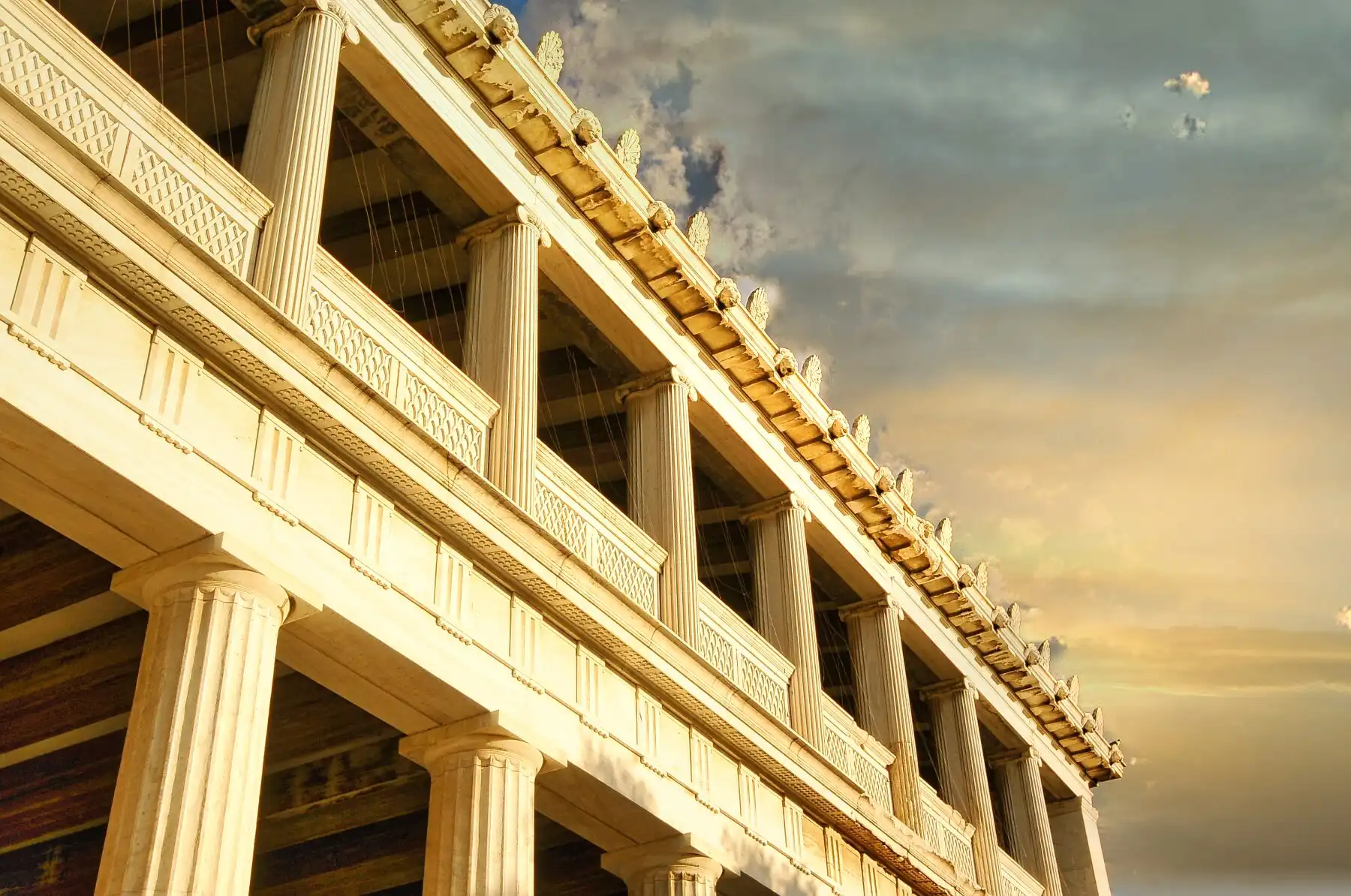
The Stoa of Attalos, which I’ll go into later, was one of the covered walkways that hosted some of these conversations. The word “stoic” comes from the word “stoa,” which is these columned porches. An entire philosophy was born from the people talking in the shade here.
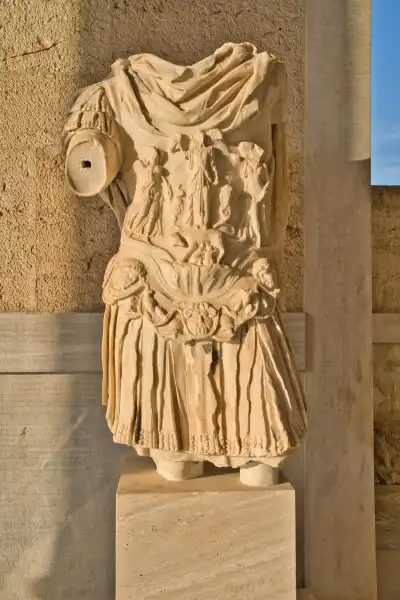
Where democracy found its voice
On the western edge of the ancient Athenian marketplace, the Bouleuterion stands. This is where a council of 500 citizens met and decided what to do with the city. Adjacent to this was the Tholos, a round building where 50 representatives would live and eat together for a month at a time, always ready to respond to city emergencies.
Stop and think about that for a moment. Regular citizens, not the wealthy or the wellborn, not chosen by their great connections or influence, but chosen by lot, running their city. Making decisions that affected the entire community. This wasn’t a theory. This was the authentic democracy.
I find myself standing near the foundations of these buildings often and think about how radical it must have seemed. In a world of kings and tyrants, here was a city saying, “No. The people can govern themselves.”
It didn’t last forever, and it wasn’t perfect (women, slaves, and foreigners were all excluded), but the seed was planted here, right here, in this soil I’m standing on.
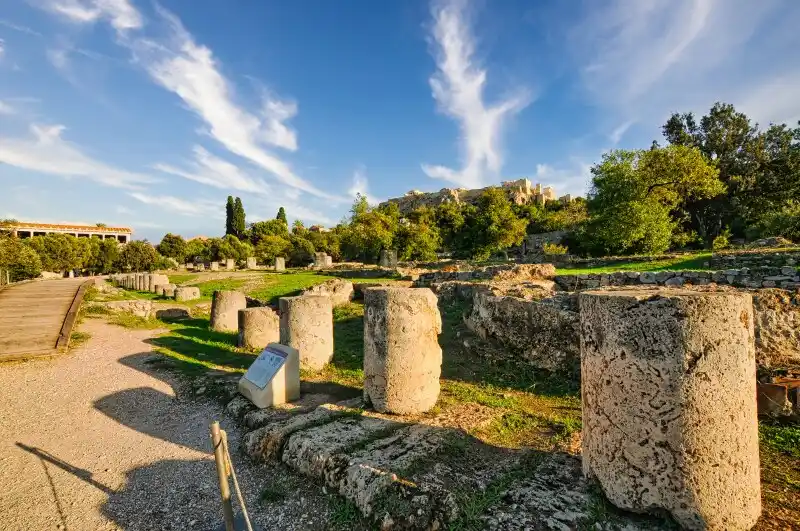
Walking through time: What you'll see today
Walking here is a gradual process of discovery. There’s no big monument to stop at on your tour of the site. There’s no one photo spot that you see everyone else posing by. Instead, you slowly walk from one ruin to the next, picking up layers of history as you roam the green grounds. Here’s what you can expect to see and what you should know about each piece.
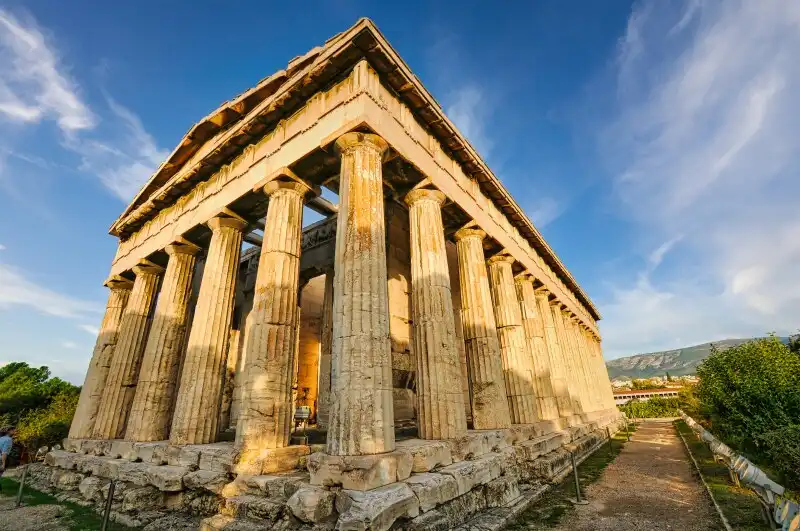
The Temple of Hephaestus: Still standing after 2,500 years
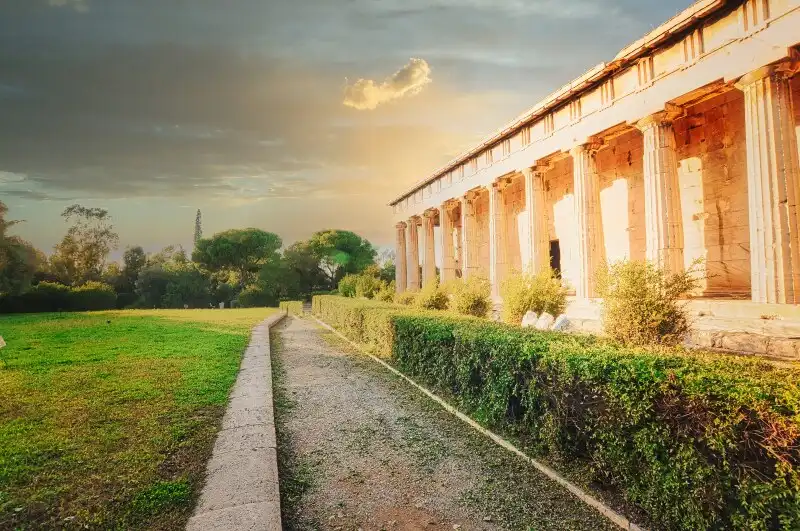
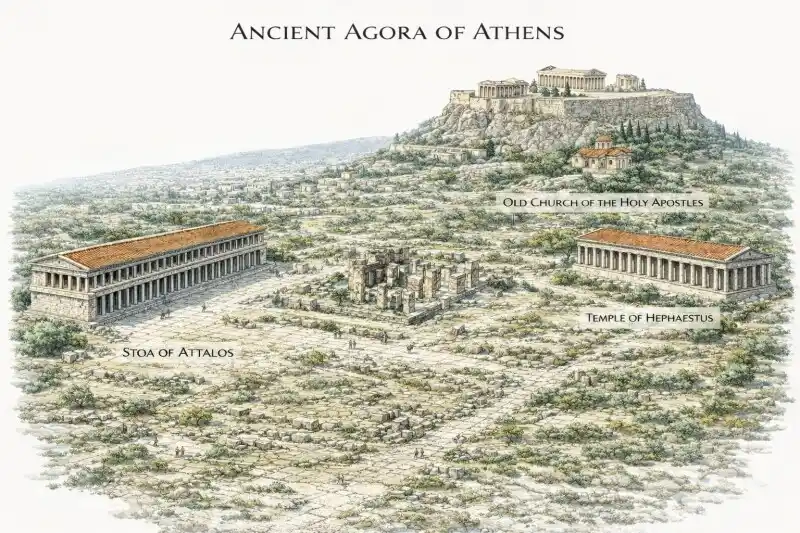
The first thing you see if you enter from the north is the Temple of Hephaestus. It’s built on a little rise, a small knoll known as Agoraios Kolonos.
It’s the most well-preserved ancient Greek temple in the world. And it’s gorgeous. I mean, just look at it. It takes your breath away.
Hephaestus was the god of fire, metal, and craftsmanship. Makes sense that his temple would have overlooked the spot where blacksmiths and metalworkers had their workshops and shops. The gods even had their own neighborhoods.
I love to sit on the grass below the temple in the late afternoon, when the light turns golden and the tourists thin out. The columns seem to glow. The marble seems to be warm. For a few minutes, the centuries fall away.
The Stoa of Attalos: A gift from across millennia
Who built the Ancient Agora of Athens? Countless people. Over countless centuries.
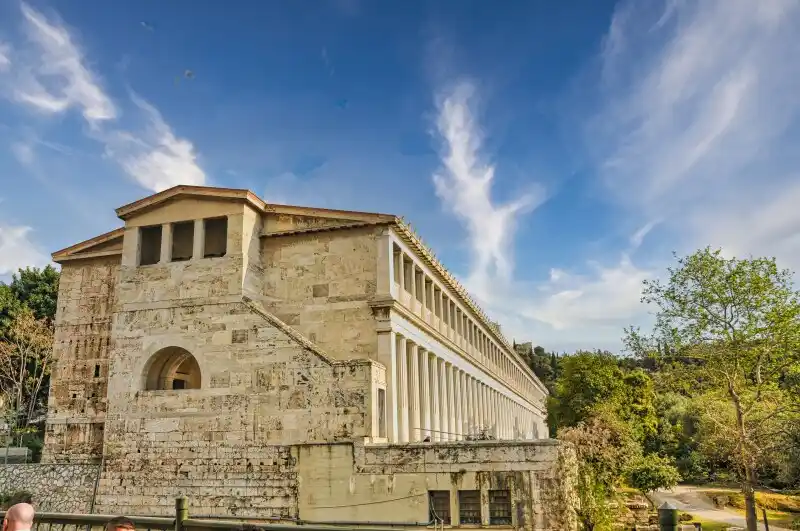
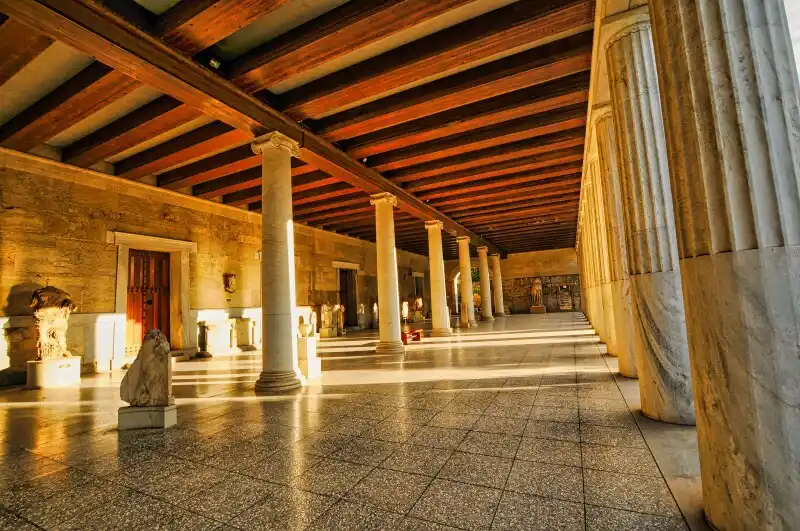
But the most striking building you see today, the Stoa of Attalos, was a gift from King Attalos II of Pergamon, about 150 BC.
The original was destroyed. But in the 1950s, the American School of Classical Studies rebuilt it brick by brick, using ancient materials and techniques. I know some people feel weird about reconstructions. I get it. I do. But when you walk through those cool marble columns on a hot summer day, I think you’re grateful. It lets you understand what it was like to walk through a stoa, to feel why philosophers loved these shaded walkways.
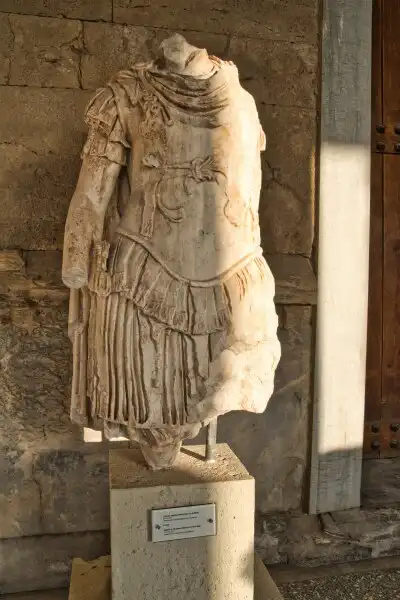
And inside the stoa today, you’ll find the Museum of the Ancient Agora. It’s small but lovely. You’ll see shards of pottery used as voting ballots (voters would scratch a name on a piece of broken pot to cast their vote), bronze ballots for jury duty, and household objects that make the ancient Athenians seem suddenly, shockingly real.
A child’s toy. A woman’s jewelry. A merchant’s scale for measuring grain. These were not myths. These were people.
The old church of the Holy Apostles
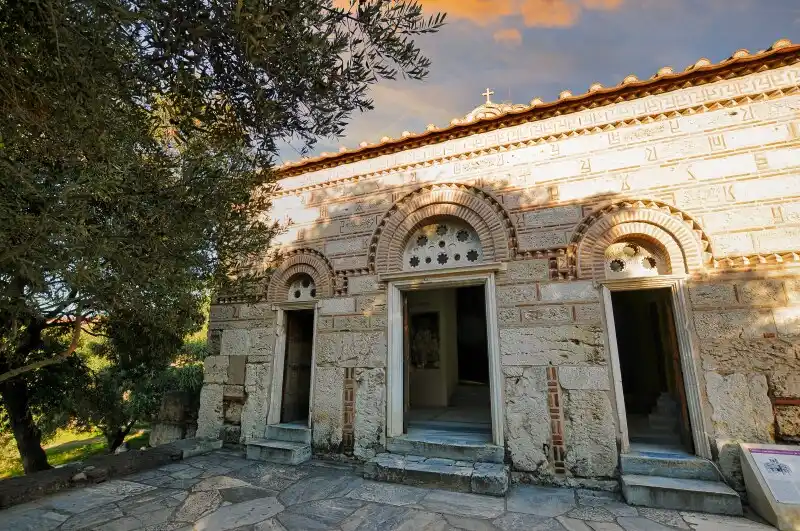
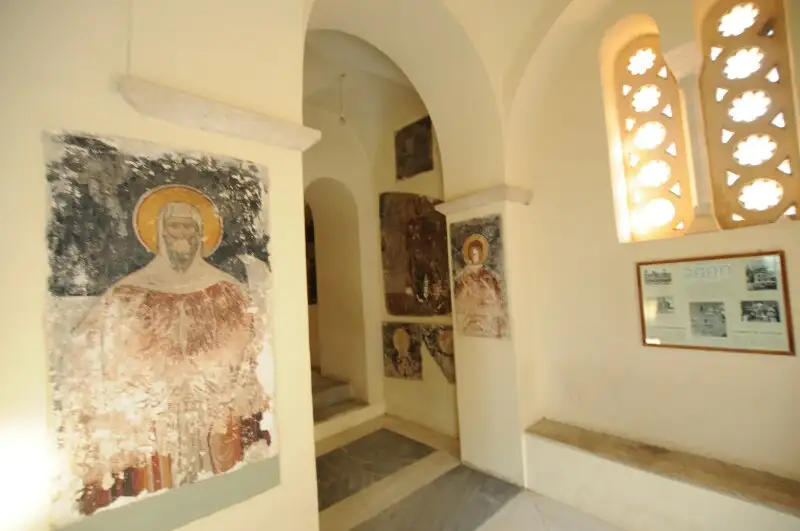
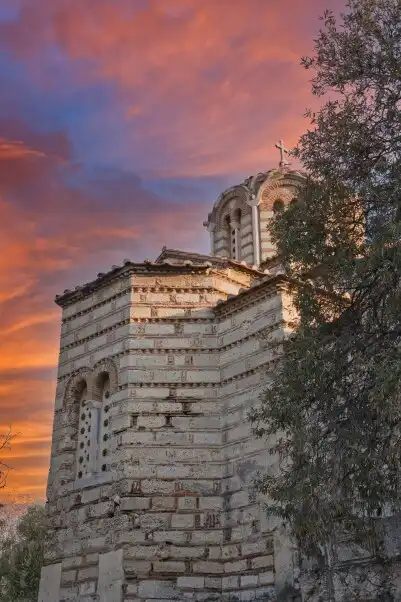
Near the eastern edge of the site is a small Byzantine church, an anomaly. The Church of the Holy Apostles dates from the 11th century, so it’s about a thousand years old. But here in the Agora, it’s practically modern compared to everything around it.
I love that it’s here. It’s a reminder that this site was never not sacred ground. That people kept coming here and kept building and kept praying, over religions and empires and centuries. The agora absorbed it all.
The Odeon of Agrippa and other fragments
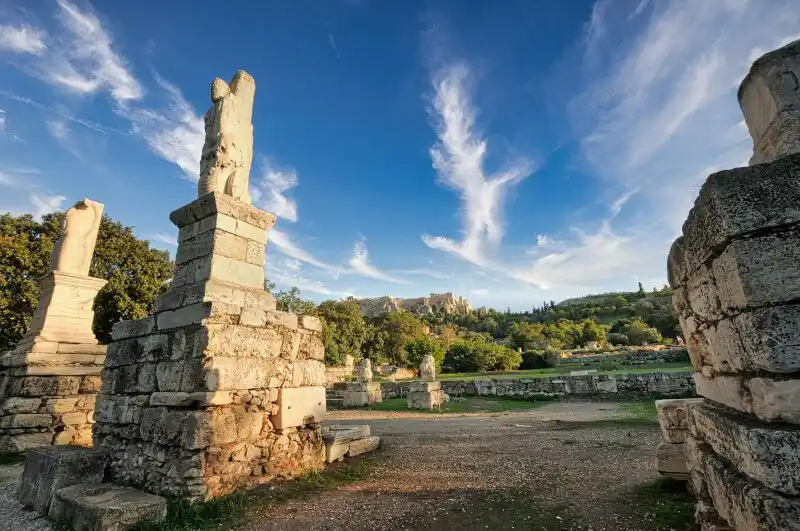
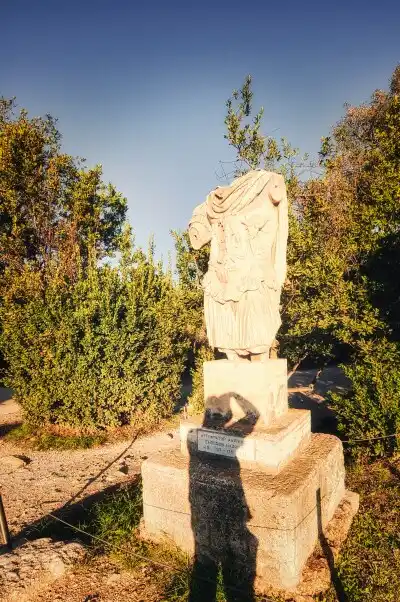
As you stroll, you'll see foundations and remnants galore. The Odeon of Agrippa was once a large concert hall. It was a gift to the city from the Roman general Marcus Agrippa. There are only three enormous statues (Tritons and Giants) to mark its location. But they are so impressive, you will stop and admire them.
There's also the Middle Stoa, the South Stoa, remnants of fountain houses, law courts, and shops. It's a lot to absorb. Trust me. My advice? Don't try to see it all. Just walk slowly. Get lost. It's small enough that you can't get lost for long.
Useful guidelines on how to visit the Ancient Agora
How to get there, where to enter, what time they open, and how long it will take. The little things that will make all the difference between a hurried stroll and a meaningful experience.
Reaching the archaeological site with ease
The archaeological site is located right below the Acropolis, just north of the rock in the Monastiraki neighborhood.
Take the metro to Monastiraki station (either the green or the blue line), and it’s a five-minute walk from there. Walk towards Adrianou Street, one of the main pedestrian streets, and follow the signs.
You can also reach it by walking from Thissio station (green line). It will take you to the western entrance, by the Temple of Hephaestus.
I usually come from Monastiraki. I always pass through the flea market first, to let the bustle of modern Athens slowly fade, and ease into ancient quietude.
Choosing the right entrance
There are two entrances to the ancient marketplace. The main entrance is located on Adrianou Street, close to Monastiraki Square. The back entrance is on Apostolou Pavlou Street, closer to Thissio. From both entrances, you will make your way to the ticket booth.
How long does it take to visit the site?
Well, that depends on you. If you are a history nerd and want to read every single sign and go to the museum, then estimate two to three hours. But if you are in a rush and still want to take it all in, then an hour and a half will be enough.
In my humble opinion, this place deserves at least 2 hours. Not just to “rush” through it, but to sit down. To breathe. To let it seep into your bones.
The grounds are beautiful, with lots of olive trees, pomegranates, and wildflowers in the spring. This is also one of the greenest sites in the city center, so bring some water and maybe a snack. Sit on one of the benches in the shade. Watch the light dance on the stones.
Other ancient footsteps worth following
The Ancient Agora is one of the many stories Athens has to tell. If you’re touched by this site, there are others within walking distance that will help round out your picture of this long-lost place.
Walk a few minutes east to the Roman Agora. It’s a smaller market built centuries later, when these lands were under Roman rule. It’s quieter and smaller. The Tower of the Winds is reason enough to see it.
Head northwest of where you are in the quiet Kerameikos cemetery. It’s the ancient cemetery of Athens, and until fairly recently, it was where Athenians buried their dead and came to pay their respects.
For an entirely different experience, walk to the Panathenaic Stadium. It’s the only stadium in the world to be built entirely of marble. It’s where the first modern Olympics were held in 1896, and when you stand on those seats and think about that, you get chills.
Head back towards the Acropolis for Hadrian’s Library, the biggest and most beautiful library in Athens in its day. It was built by a Roman emperor who was madly in love with all things Greek. All that remains are the ruins, but that’s enough to give you a sense of what once was here.
If you have an entire day to give, you might make a side trip to the Temple of Poseidon at Cape Sounion, perched on a cliff that overlooks the Aegean Sea about two hours outside of Athens. You never forget a sunset there.
Near the center of town is the Temple of Zeus, also called the Olympieion. It’s an exercise in scale that’s almost incomprehensible. Just fifteen of the original columns remain from the largest temple in Greece, and if you wander among those columns, you will have an up-close experience with the power of something that makes you feel very, very small.
And then there’s the south slope of the Acropolis, where theater first found an audience. The Theater of Dionysus was where the great tragedies of Sophocles and Euripides were first performed. Right next door, the Herodes Atticus Theatre, which is still in use today, and whose stone steps are filled with music on summer nights.
A few more things you should know
Is the Ancient Agora of Athens free?
No, you have to pay a ticket, but there are some days of the year when the entrance is free.
How much is the ticket?
The standard ticket costs 10 euros for adults, but there are various types available; you can see them in my ultimate guide to tickets for archaeological sites.
How long does it take to visit the ancient place?
It takes about 1.5 hours to visit everything, including the museum and the Temple of Hephaestus.
Is the ancient market worth visiting?
Of course, yes, it was the heart of the daily life of the Athenians, and you can understand a lot about their life and habits.
Why this place stays with me
I’ve walked in the agora dozens of times by now. And yet. It still moves me. I imagine Socrates walking these stone paths, and Plato setting up a school right here, teaching early versions of these dialogues before founding the Academy. That ordinary Athenian men and women, whose names will never be remembered in history, would have stood in this spot and voted on important matters that would decide the fate of their city.
Or perhaps it’s less intellectual. Perhaps it’s simply the serenity of the place. The olive trees. The birdsong. The sight of the Temple of Hephaestus at sunset, quiet and patient and still standing after all these centuries.
Athens is a city of layers. Cafes built during our own time sit on Roman foundations built during theirs, which sit on Classical ruins built during theirs, which sit on even older things still. But it’s in the agora where you feel those layers most acutely. Where the past isn’t dead but alive, walking with you, whispering in your ear.
When you go, take your time. Sit down somewhere. Close your eyes. Listen. The philosophers may still have something to teach us.