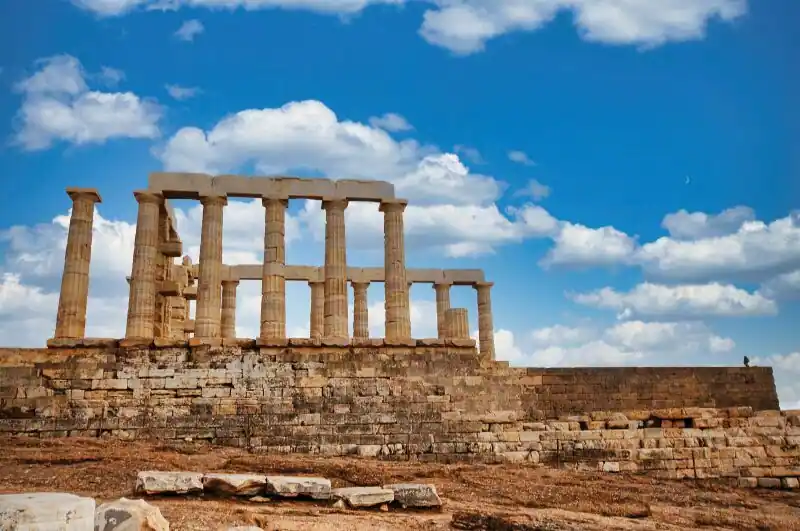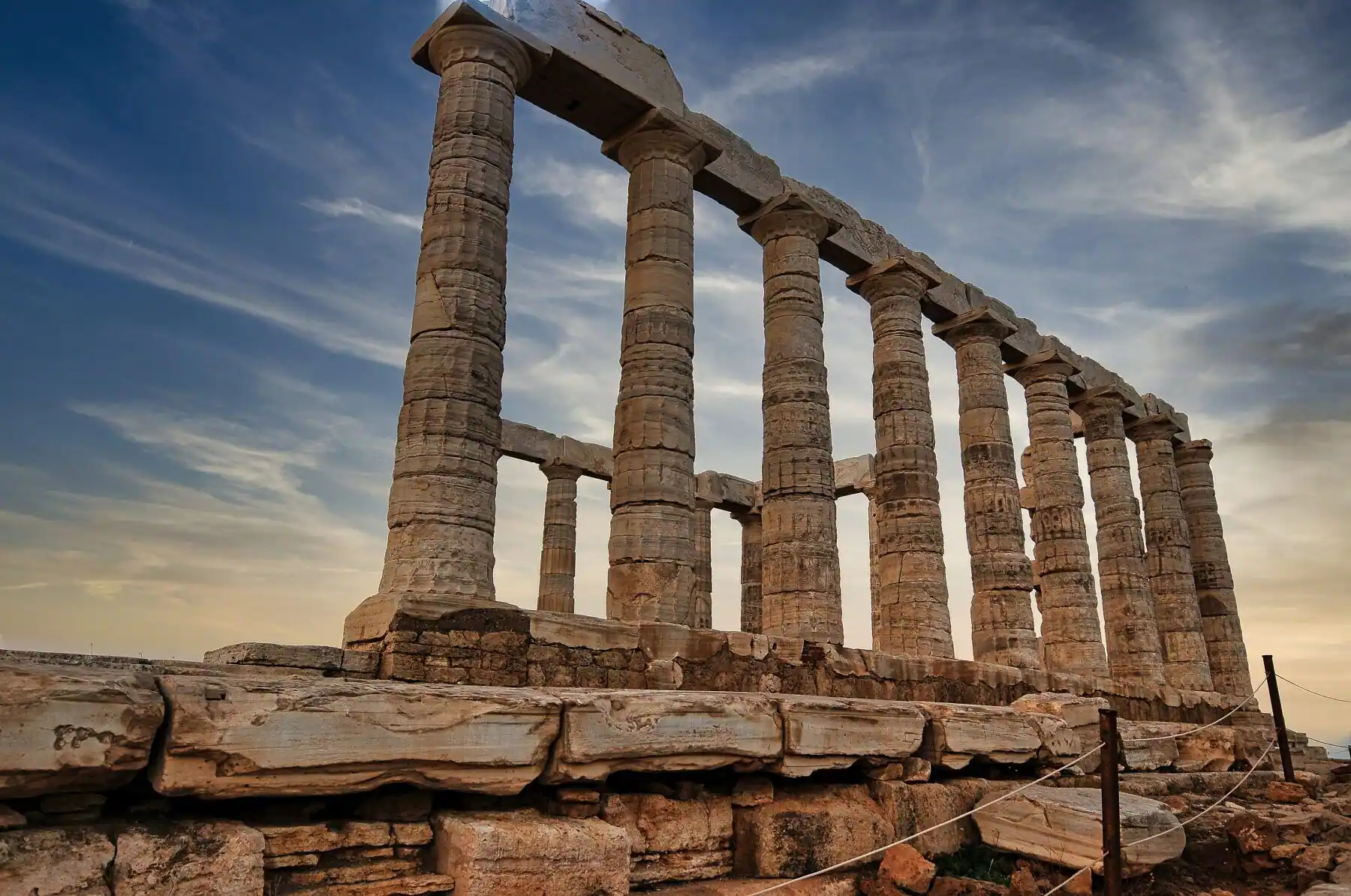
Is the Temple of Poseidon worth visiting? I’ve lost count of the number of times I’ve visited Cape Sounio over the years. Sunsets over the Aegean Sea seen through those columns of white marble are truly magical, and it’s a spot that I know I’ll never tire of returning to. In fact, I know of a few places in the world that make me feel as close to my core as the Temple of Poseidon. It’s one of Greece’s most visited archaeological sites for a reason!
The temple perches 60 meters above the Aegean on a cliff’s edge, where the imposing ruins dramatically meet the bluest of blues at the waters’ edge. When I first saw that stretch of sea backlit by the setting sun in front of a marble temple, all of time and space seemed to stop for a moment. It really is a special place.
Table of Contents
The story behind the sacred cliff
The history of this ancient Greek religious site dates back to when the Greeks first navigated these shores. They believed that the God of the sea guided their ships in safety and sheltered them from storms. This headland was his holy place, a rocky cliff that stretched out over the Aegean at Cape Sounio. Sailors could land here to honour and pay respect to the lord of the seas.
The building you see today was constructed around 444 BC in the Age of Pericles. But the temple was built on the site of an earlier sanctuary. The first temple was destroyed when the Persians invaded Greece in 480 BC. It was rebuilt by the Athenians from local marble at a grander scale than before. To show that their trust in the Sea God was never broken.
The Greek legend has it that King Aegeus jumped from these cliffs when he spotted his son Theseus’s ship approaching the island with black sails. Theseus had not changed them to white as he had promised, and his father thought he was lost at sea fighting the Minotaur. He threw himself into the water below, and the Aegean Sea was named in his honour. Fact or fiction, the story adds a note of beauty and tragedy to this place.
Who was Poseidon
 Who was Poseidon
Before you go, it might be useful to know a little bit about the god to whom this sanctuary was dedicated. Poseidon was one of the twelve Olympian gods, brother of Zeus and Hades. The ancient Greeks considered him a strong, sometimes temperamental god who could either calm the waves with his trident or create huge, destructive storms.
When Poseidon was born
In Greek mythology, Poseidon was the son of the Titans Cronus and Rhea. His father swallowed each of his children at birth in order to prevent a prophecy that one of them would overthrow him, and Poseidon was no exception. He was eventually freed by Zeus, who led the revolt against their father. Zeus, Hades, and Poseidon then divided the world between them, Poseidon receiving the sea. From then on, he ruled over the oceans and all their creatures.
Why was Poseidon important to Ancient Greece?
The ancient Greeks relied on the sea, and if Poseidon was in a good mood, their lives would be made much easier. Sailors prayed to him before embarking on long journeys, fishermen asked for abundant catches and favorable conditions, and even cities in the interior were in fear of his earthquakes.
Festivals and temples were held in his honor. The most important of these was the sanctuary at Sounio, on the southern tip of Attica, which every ship entering or leaving Athens would have seen.
Walking through ancient stones
The road leading up to the temple is short. But still, it is a road worth taking. For each step you take along it, you follow in the footsteps of your ancestors. This is how the people of ancient Athens approached Poseidon, each one of them with offerings in their hands and prayers in their hearts.
Sailors who had been tossed and turned on the high seas came to offer their thanks. Families prayed for the safe journey of sons and husbands who had to leave home and cross the seas. Merchants prayed that their ships would return safely with grain and olive oil.
Why is the Temple of Poseidon important?
As important as it is from the religious aspect, it is also an architectural marvel of classic Greek architecture. The material used was the white marble of Agrilesa, a few kilometers away. The columns have fewer flutes due to erosion from the salty sea wind.
The rise and fall of sacred marble
The temple was not destroyed by an invading army in a single moment. A change in belief slowly turned this once-great building into a ruin. As Christianity spread through Greece in the Roman period, the ancient temples began to be seen as a waste of time and effort, and without regular worship in the temple, the structure began to fall apart.
Pieces of marble were taken away to use as building materials for other structures, and a few columns may have fallen during an earthquake. Marble was weathered away by the wind from the Aegean and the salt in the air. By the 19th century, when Europeans "rediscovered" the temple, only a few columns were still standing.
What remains today is only a fraction of the original building. Perhaps a third remains. But even in its diminished state, it is an impressive structure. The temple, those 15 columns defying the sky for almost 2,500 years, speaks to us of the power of this place, and of the genius of the men who built it.
Beyond the Temple: Discovering Cape Sounio
A bit of poking around the archaeological site will reveal a deeper layer of history behind the column on the hill. It’s easy to get distracted by the view and miss it, so do try to follow our cues and take a closer look at the landscape…
The Temple of Athena Sounias
Start by heading northeast, towards the sea, about 500 meters from the main sanctuary. What you’ll find there are the foundations of another, smaller temple, also dedicated to Athena. She was not the goddess of the Parthenon, however, but Athena in her more local, rustic form: Athena Sounias.
While no columns stand here today, that temple also once had its own columns and sacred enclosure. The ruins are more prosaic, but their logic is no less fascinating for showing how the Greeks of antiquity conceptualized their sacred topography.
The Fortification Walls
You can also pick out the outline of another human intervention in the landscape: the remains of a fortification wall that once looped around the entire sanctuary. These are no isolated walls, but a defensive wall that once ran from coast to coast.
It was the Athenians who built this wall during the Peloponnesian War, around 412 BC, in order to protect their grain ships from pirate attacks as they passed by the cape. Walking on the foundations, one has an idea of how imperiled and besieged Athens must have felt during these long and troubled years.
The Ancient Ship Sheds
Just off the shore, down from the temple, archaeologists discovered remains of ancient ship sheds. Warships were kept in these sheds to help guard Athenian interests at this crucial chokepoint.
There is not much to see today, but it is helpful to know that this area was a place where soldiers carried out their daily business, instead of being just a sacred place of worship.
The cape at Promachon, with all its defenses, gives you a better sense of how the Athenians were able to maintain their position for as long as they did.
Small Museum and Site Features
Near the entrance to the site is a small information area with some artifacts and explanations about the history of the place. It is not nearly as extensive or impressive as the larger museums of Athens, but it is worth a few minutes before you begin exploring.
There is also a pleasant cafe with nice views in the direction of the sea, should you want to get a coffee after your visit.
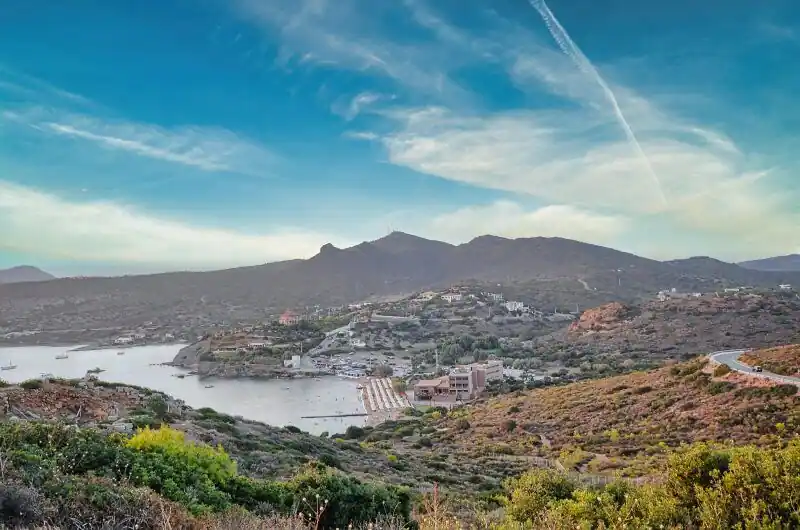
The golden hour: Historic site at Cape Sounion at sunset
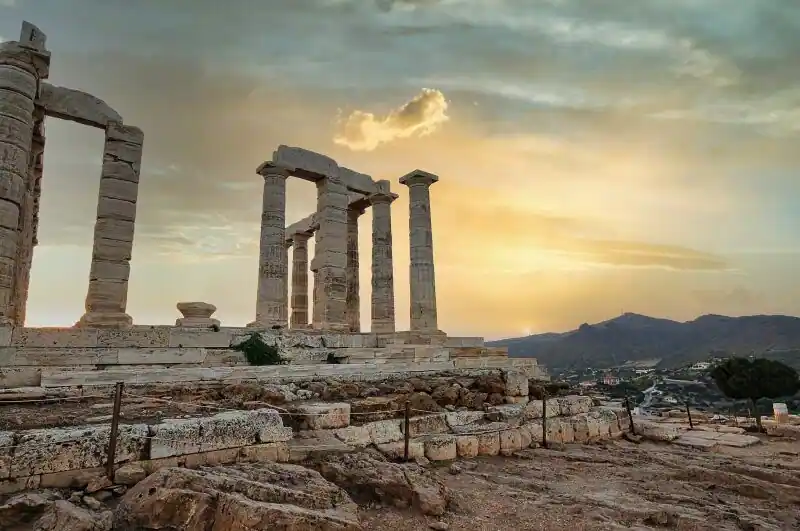
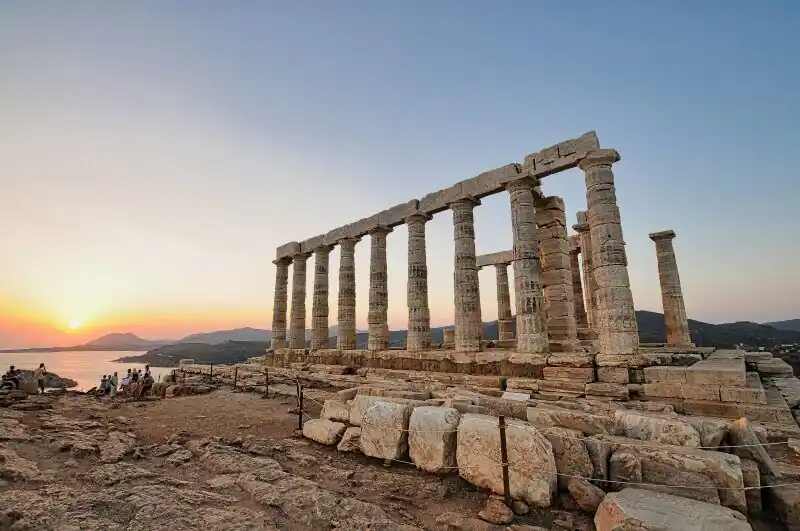
As with so many things in Athens, if you ask any Athenian when the best time to visit Sounio is, they will answer with one word: sunset. Seeing the temple of Poseidon at sunset is one of those must-see-before-you-die sights that live up to their billing.
As the sun sinks towards the horizon, the white marble turns gold, then orange, then pink. The columns cast long shadows. The sea far below mirrors the changing colors. Everything feels ancient and timeless.
I have watched this sunset dozens of times, but it never fails to take my breath away. The secret is to get there at least an hour before the actual sunset. This gives you plenty of time to visit the site when it is not so busy, scope out the best spot, and settle in.
Grab a light jacket and hang around until the very last light has gone. The drive back to Athens, with the night slowly closing in on you and memories still fresh in your mind, is part of the ritual.
Where is the Temple of Poseidon located?
This Doric-style Greek temple is situated at Cape Sounio, the southernmost tip of the Attica peninsula. It is located at the edge of a rocky outcrop overlooking the Aegean Sea.
Cape Sounio was a highly strategic location: this was the first landmark sailors would see when approaching Athens, and the last thing they saw when sailing away.
Cape Sounio is located about 70 kilometers southeast of the center of Athens, about a one-hour drive, following one of the most scenic coastal routes in all of Greece. The sanctuary is located at the highest point of the cape, offering a clear view of the sea and surrounding islands. On a clear day, you can see the islands of Kea and Kythnos in the distance, and even the Cyclades.
How to get to the temple from Athens?
By car
Driving is the easiest and most enjoyable way to visit the monument. You can take the coastal road along the Athenian Riviera, which passes by beaches, seaside tavernas, and several spectacular viewpoints. Allow 90 minutes or so, depending on your stops along the way.
By public bus
If you want to use public transportation, then the Ktel bus is your option. The main departure point is the Mavromateon bus terminal, near Pedion Areos park in the center of Athens. The route takes approximately 2 hours. The last bus back to Athens leaves around sunset, so plan your return accordingly if you wish to stay for the evening light.
By organized tour
Half-day tours to Sounio are run by many companies. These usually depart in the afternoon in order to reach Sounio in time for sunset.
Frequently Asked Questions
Is the Temple of Poseidon free?
No, the archaeological site has an entrance fee. But there are some days during the year when it is free.
How much does it cost to visit it?
The entrance costs 20 euros.
Is the temple Greek or Roman?
It is 100% Greek. It was constructed in the classical period, around 444 BC, a long time before the Romans arrived in Greece. Many Roman religious cults and gods were later “borrowed” from the Greeks, but this sanctuary was originally built and dedicated to the Greek sea god Poseidon.
Can you swim at the Temple of Poseidon?
You can’t swim right next to the temple at Sounio, but there are several beaches where you can swim nearby. A small cove with a pebble beach is located just below the cape, and you can access it by road.
The story does not end at Sounio
If the Temple of Poseidon has inspired you, there is plenty more ancient Athens to explore on foot. I usually start at the Acropolis, the "sacred rock" that looms over the city and is home to the Parthenon. Cut into the rock below it is the Theater of Dionysus, where the first Greek tragedies and comedies were performed under the open sky. Over in the other part of the city, the open-air Herodes Atticus theatre still hosts concerts on balmy summer evenings.
From there, you can head to the Ancient Agora, the bustling public space of classical Athens. A short walk away is the Roman Agora, which tells another chapter in Athens' long history. This one was built many centuries later, when Rome was the superpower that ruled Greece.
Make sure to check out Hadrian's Library, a serene ruin where thousands of scrolls were once kept, and the ancient equivalent of a campus common room offered a place to think and study in peace.
For the contemplative, the Kerameikos cemetery is a moving experience, to stroll among ancient graves where marble monuments still stand for people who lived and loved millennia ago. If you want to work up an appetite, the Panathenaic Stadium is an impressive marble arena where the first modern Olympics were held, built on the site of an ancient track.
And finally, to bring all of these stories together, spend some time in the best Athens museums, which feature artifacts from these and many other sites, which help you to understand the world that made them.
My final thoughts on this sacred place
So, is the Temple of Poseidon worth visiting? For me, that question has an easy answer. It’s not that Poseidon’s temple is important or historically significant. It’s not because it’s beautiful. It’s because when you visit this site, something happens to you. It’s because Poseidon’s temple is nature and civilization, living and dead. It’s both ruined and real, and it’s a rare thing to see something so grounded.
The temple of Poseidon facts will tell you about columns and dates. Standing here will tell you about people. It will tell you about us and our need to try to make sense in beautiful places.
Poseidon’s temple has watched over this water since before any of us were born. Ancient sailors climbed these cliffs and stared up at these columns, looking for hope. Poets stood where you’re standing, thinking words that have echoed for centuries. The sun sank over this sea three thousand years ago. It will do it again on the evening of your visit. Some things tie us to the past. Some things tie us to ourselves. Cape Sounio gives you both.