The first sound I heard in Krakow was a trumpet, and then nothing. It broke off halfway through a note, as it has for centuries, from a window high on St Mary's tower. I stood in the middle of the Main Market Square at seven in the morning, before the cafes had opened, when the stone was still cold with the night.
If you've found this page, you are probably asking yourself whether Krakow is worth visiting, and I will not keep you waiting for an answer. It is. What I want to do here is to tell you why, and what to expect when you go, from someone who walked these streets slowly and didn't want to leave.
Table of Contents
Is Krakow worth visiting?
I want to be fair to you because I think you deserve it. Some people come back from Rome and call it overrated, and I am not judging. Summer can be harsh. The lines get long, the piazzas get full, and the roads by the train station have none of the things you came to see. If you go looking for peace and order, the city will not provide it, and it will not apologize.
The prices are gentle on your wallet. A good meal is cheaper than you would think, and a coffee in a square that looks like a film set will not ruin your day. People are kind once you pass the first polite distance. And the city is small enough to feel in a few days, but deep enough that you will leave with a list of things you missed. I left with such a list. I am still keeping it.
A short history and the legends behind it
Krakow has a long history. You can feel it before you read a word of it. The city grew, uphill from the Vistula river. It became the seat of Polish kings. It was the royal capital for more than five hundred years. The long-run importance is why so much of it is grand. The other reason is that so much of it survived.
How a small town became the heart of Poland
Krakow was the capital of Polandfor its grandest centuries. Trade routes crossed here. The money that passed through the city paid for the churches and the great square you walk through today. Kings were crowned on the hill and buried beneath it.
Even after the capital moved to Warsaw, the city kept its place as the heart of the country. Coronations and funerals still happened there. When the last war came, the old center was left alone to the bombs that ruined so many other cities. That is the reason it stands almost whole today. I will leave that part there plainly, because it needs no decoration.
The dragon that still breathes beneath Wawel
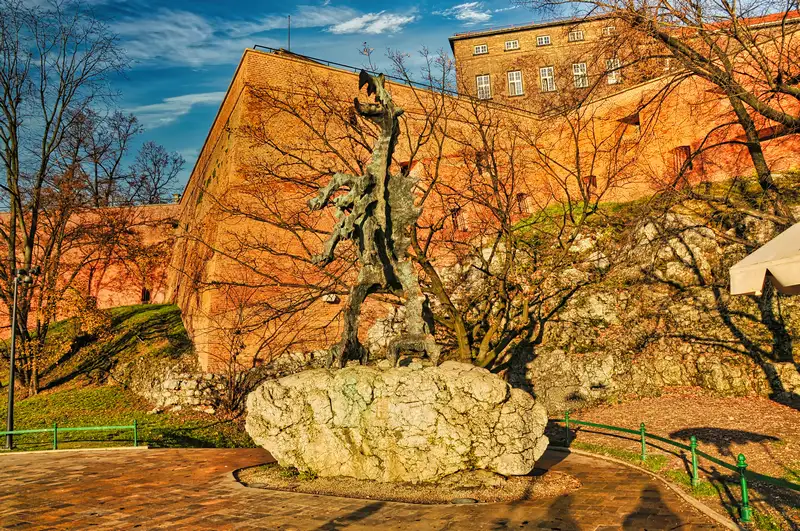
Every child in Poland knows the dragon of Wawel. Legend has it that a dragon once lived in a cave under the hill and terrified the town until a clever boy fed it a sheep stuffed with sulfur. The beast went and drank from the river until it burst.
Today, a metal dragon by the cave mouth by the water breathes real fire every few minutes. It is silly and lovely, and the children who were gathered around it were the happiest faces I saw in the city.
A trumpet call that never reaches its end
That trumpet call from my first morning there has its own legend. They say a watchman once blew it to warn the city of an attack and was shot in the throat by an arrow before he could finish. So the tune still breaks off at the same point every hour, played live from the tower. It is a small thing. It moved me more than I expected.
The calm that lives in Krakow's streets
What is different about Krakow is that it made me stop. Some cities shove you from attraction to attraction until your feet hurt and your recollections become a fuzzy blur. This one coaxed me into a chair, and I sat. Sometimes for the whole afternoon.
The feel of the place
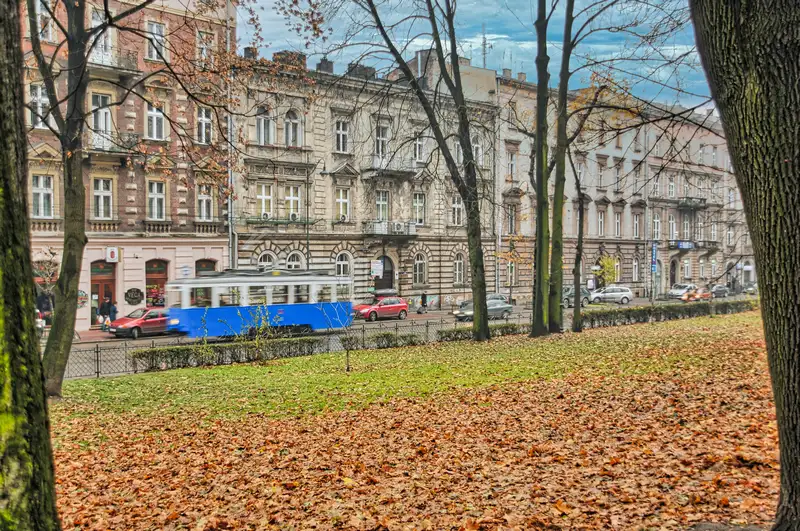
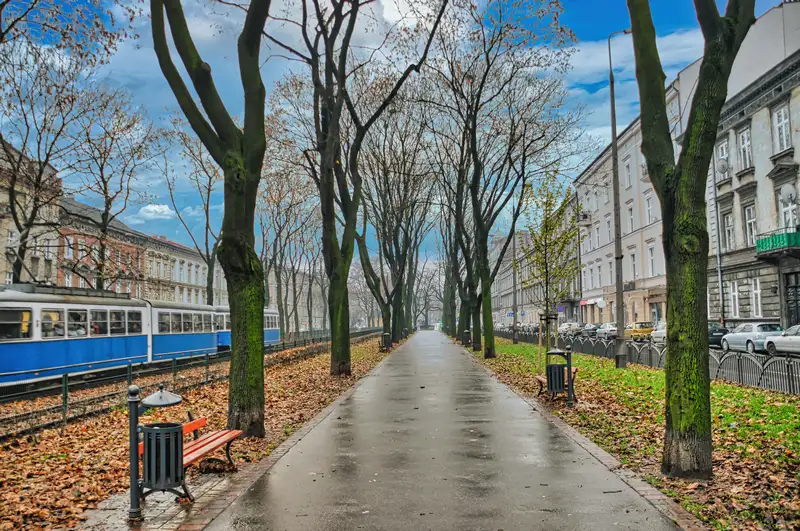
The atmosphere in Krakow is relaxed, even when the place is busy. The Old Town is free of cars, so the loudest noises are footsteps, pigeons, and the screech of a tram disappearing somewhere past the park. Cafes are full of students, as the university here is one of the oldest in Europe and still jam-packed with young people.
There are courtyards you stumble across by mistake, the quiet ones, with a single tree and a couple of bicycles propped against ancient brick. I kept stumbling across these. I kept stopping.
The Old Town and the Main Square
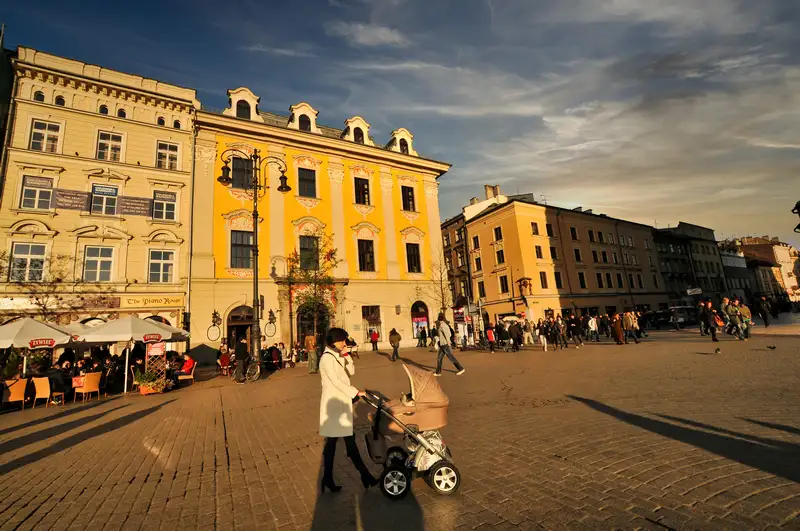
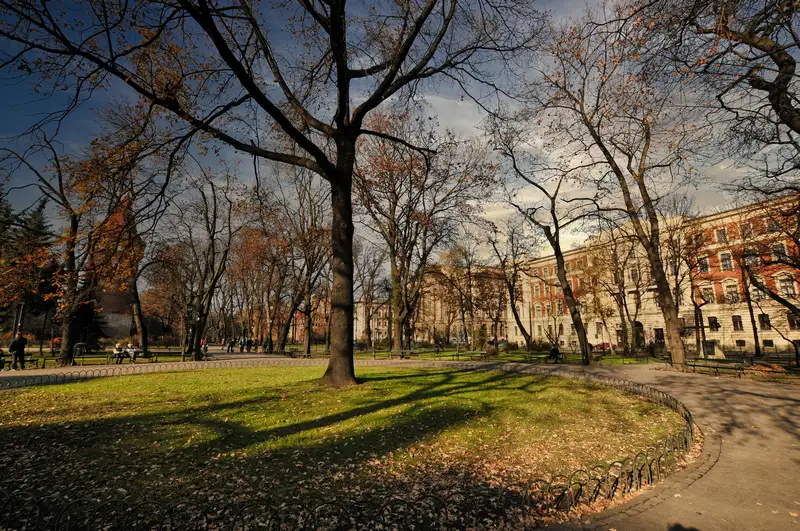
I would have told you to start in the Old Town. It is the oldest part of Krakow, walled by a narrow green park called the Planty, which traces the old walls. In the center is the Main Market Square, Rynek Glowny, the largest medieval square in Europe, where I returned every single day.
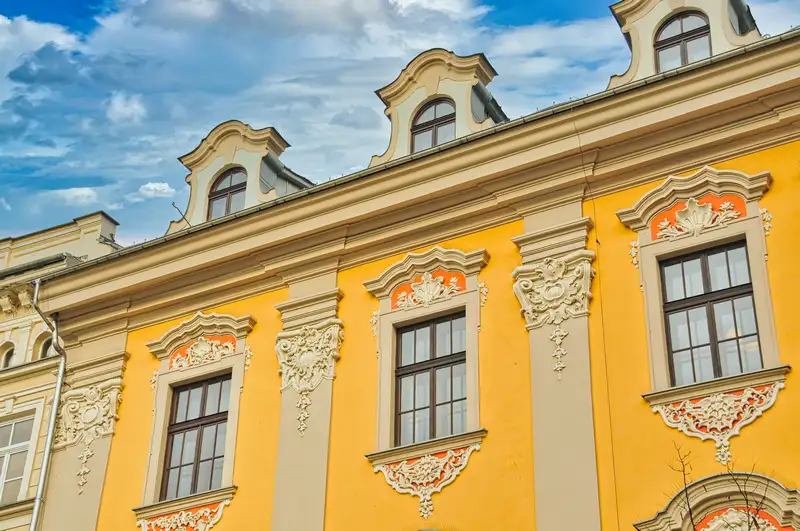
The square is enormous and somehow still warm. A church on one side, rows of old townhouses on the others, their cafes set under stone arches. A long yellow building runs down the middle, a market for seven hundred years. Horse carriages wait at the edges. You could spend a morning here doing nothing and call it a good morning.
St Mary's Basilica and the trumpet call
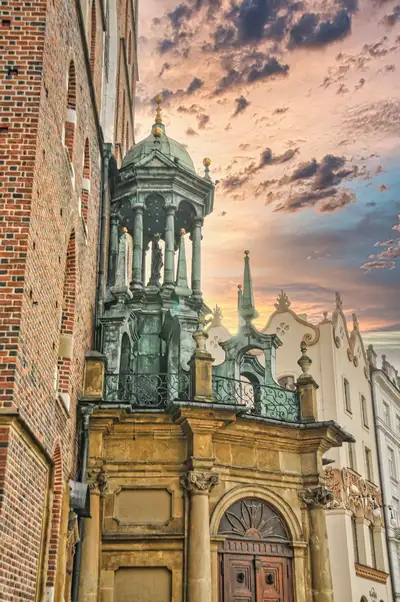
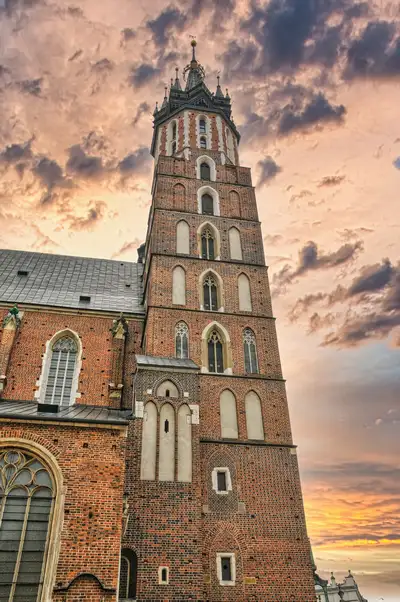
St Mary's Basilica is the brick church on the east side of the square, with the two mismatched towers. St Mary's is the one you'll inadvertently photograph.
It's darker and more sumptuous on the inside than you'd imagine. The ceiling is midnight blue and studded with gold stars. A high altar made of carved wood took a German sculptor twelve years to complete. You pay a few coins to enter, and it is money well spent. I sat for a time in a back pew with no intention of praying, and I'm glad I did.
The Hejnal trumpet call
The Hejnal is the hourly trumpet blast from the taller tower, the one that cuts off in the middle of the note. Stand in front of the tower at the top of the hour and look up. A trumpeter plays the same short melody in four directions, then waves to the crowd looking up. It's the little rituals like that that make a place feel lived in rather than museumified.
The Cloth Hall, a market of seven centuries
The Cloth Hall is the long building in the middle of the square. It has sold stuff since the Middle Ages. The ground floor is now a warren of stalls, selling amber, wool, carved wood, and the obligatory souvenirs. But it's the building itself that is the attraction.
If you want, there is a gallery of Polish painting upstairs. Down below, beneath the cobbles, a museum tells the story of the medieval town and leaves the old foundations in place. I spent a rainy afternoon down there and lost two hours without noticing.
Kazimierz, the old Jewish Quarter
Kazimierz is the historic Jewish Quarter, a short walk to the south of the Old Town. It was my favorite part of Krakow, with its quiet streets, delicious food, and more bars per square foot than anywhere else in the city.
Kazimierz was a separate town for centuries and was the center of Jewish life in Krakow. Today it's a neighborhood of low, old buildings, crumbling squares, small synagogues, vintage shops, and the best food and quietest bars I found.
Streets that ask you to wander
Kazimierz is the part of the city that most rewards aimless wandering. The streets are haphazard and a little threadbare. They are full of vintage shops, galleries tucked into old courtyards, and cafes that look like someone's living room.
At the center of Plac Nowy, the round market square, is a squat building where you buy zapiekanka late into the night. I wandered here without a map most evenings, and never once felt like I was wasting time.
A history that asks for your quiet attention
Kazimierz has a sobering past, and the city does not obscure it. The Jewish community in Kazimierz was destroyed in the war, and the neighborhood was emptied. You will pass the remains of old synagogues, some now museums, on your walks, and it's impossible not to understand how that loss has shaped the place. I won't dress it up. Walk it with that knowledge and let the quiet of the older corners speak for itself.
Wawel, the hill that holds Poland's story
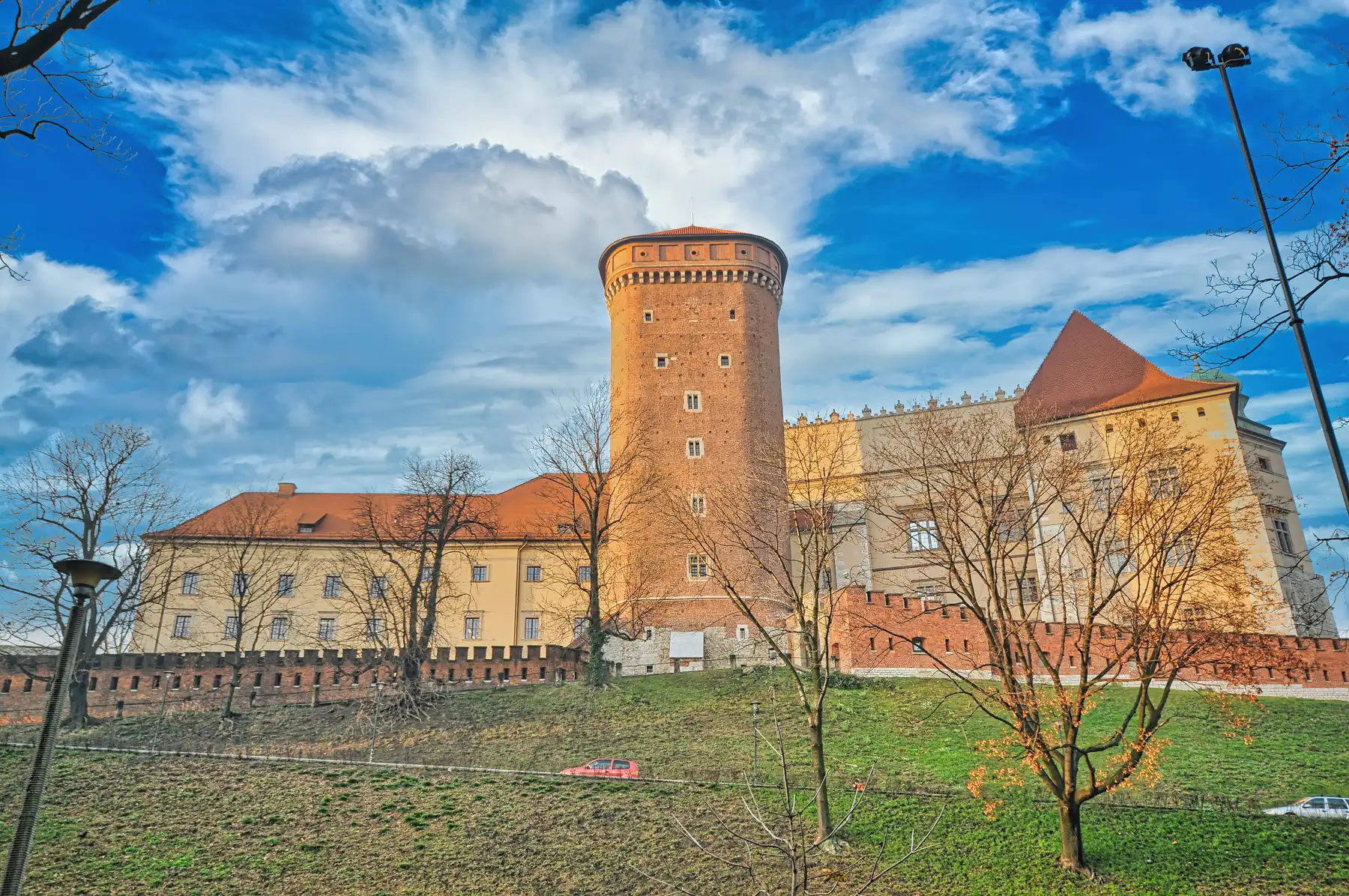
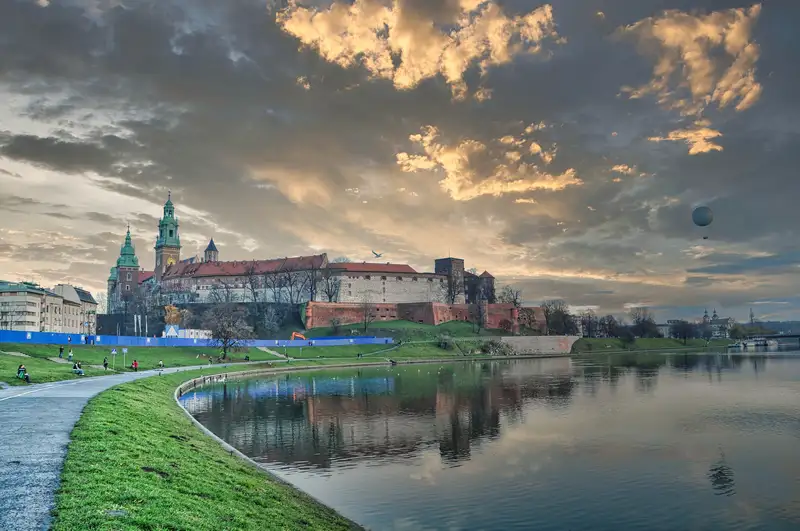
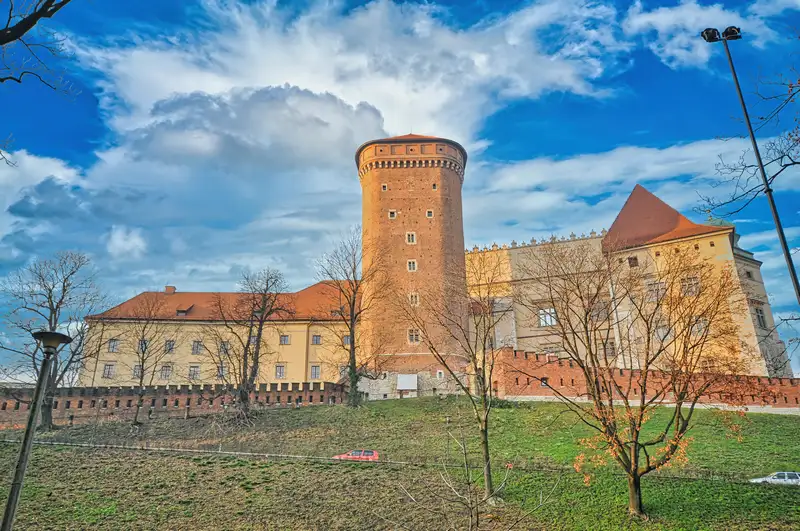
The cathedral and castle at the Wawel are on the hill on the southern, river-facing edge of the Old Town. The Wawel is the heart of Poland's story. Here the kings of Poland were crowned; here most of them are buried. It is almost sacred ground for Poles.
Within the walls of Wawel
The castle complex on the hillside is a collection of different buildings, styles and bits tacked on over the centuries: grand rooms, period furnishings and an impressive treasury of crowns and swords. The cathedral next door is where the actual coronations took place and is similarly crammed with chapels and royal tombs, as well as a giant bell you can climb up to.
Tickets are per building, and in the summer months, the popular ones are often sold out by late morning. If you can, buy your tickets the day before.

The view from the hill
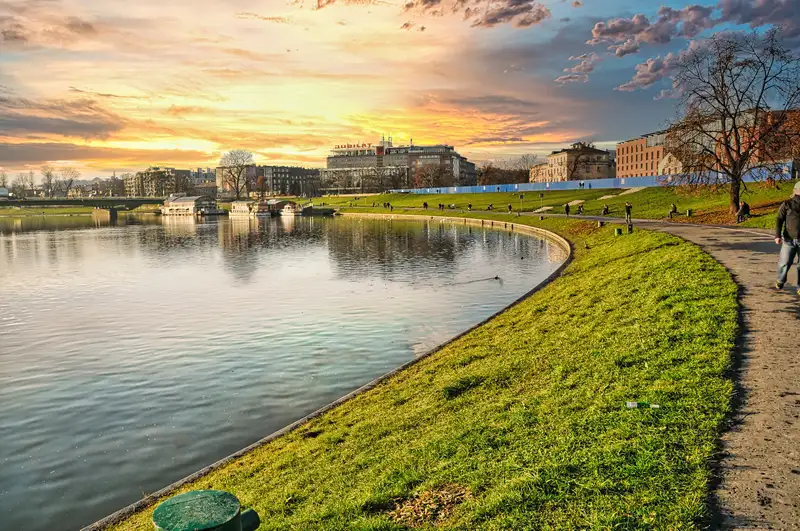
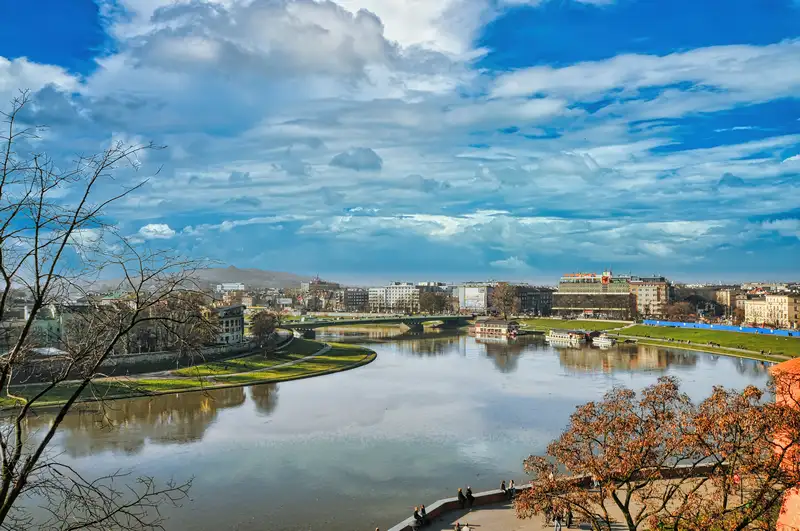
The view from Wawel is one of the easiest prizes in Krakow. Out over the Vistula, the rooftops, and at the foot of the hill, by the river, the fire-breathing dragon I mentioned at the start. Try to come at the end of the day. The light on the river turns soft and gold, the crowds evaporate and for a little while the hill is yours.

Where Krakow hides its quiet corners
Krakow's quiet corners are hidden just beyond the postcard's edges. Some of my best hours were spent in them. If you're not rushed for time, leave the Old Town behind for an afternoon.
Zakrzowek and the mounds
Zakrzowek is an old flooded quarry at the edge of the city. This is a lagoon of startling blue-green water, ringed by pale cliffs. Locals come here to walk and to swim in the summer. Kraków also has some strange grass mounds, like Krakus Mound, with a short path leading up to a wide view of the towers. I watched the sun go down from one of them, with almost no one else around.
Nowa Huta, strange, quiet, and real
Nowa Huta is a planned socialist town on Krakow's eastern side. It was built in the 1950s around a steelworks, but it feels nothing like the Old Town. Wide avenues and stern grey blocks set around a central square. It is strange and quiet and very real. A tram takes you there in half an hour, and walking it gave me a different sense of the city's last century.
What to eat in Krakow
The savory plates
Try pierogi first. They are soft dumplings filled with potato and cheese, or meat, or mushroom and cabbage, boiled or fried in butter. I ate them at lunch and again from a stall an hour later, without regret. Also seek out zurek, a sour rye soup served in a hollowed loaf of bread, and bigos, a slow hunter's stew of cabbage and meat that tastes like winter itself.
Street food and milk bars
For cheap, honest food, look for a milk bar. These are old canteens left over from communist times, places that are plain and a little gruff, where a full plate costs very little. In the street, the thing to eat is zapiekanka, a long open baguette with mushrooms and cheese, served hot from the round building on Plac Nowy. And buy an obwarzanek, the ring of bread sold from blue carts on nearly every corner.
Something sweet
Save room for a sweet ending. Polish cakes are good, and the cafes around the squares know it. I sat with a slice of cheesecake and a coffee in the late afternoon more than once, watching the square fill and empty.
Trips beyond the city, easy and worth it
There are two day trips that almost everyone who comes to Krakow will take and, for good measure, they're both easy to reach.
Wieliczka, a hidden city of salt
The Wieliczka Salt Mine is a giant old mine just outside the city, and it was more surprising than almost anything else I saw here. You descend into cool tunnels on wooden stairs and walk through chambers entirely carved from salt, past underground lakes and a full chapel with chandeliers, all of it hewn from the rock by miners across centuries.
It takes a couple of hours on a guided tour and is a workout for your legs. You should book ahead in summer and bring a layer, because it stays chilly down below.
Auschwitz-Birkenau, a place that asks for silence
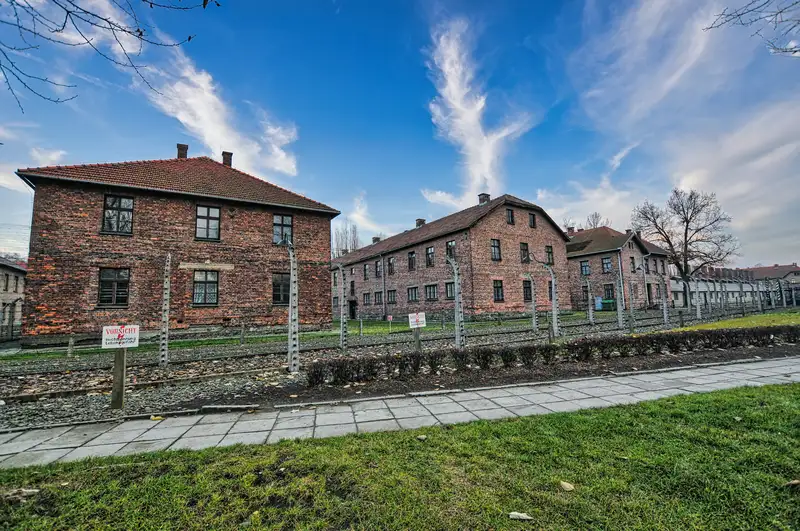
Auschwitz-Birkenau lies about an hour west of Krakow and is the site of the largest Nazi concentration and death camp. Many people come to the region in part to visit it. A trip there is not sightseeing. It requires time, quiet, and respect. Entry is free for individual visitors but must be reserved in advance, and most people go with a guide or an organized tour. You must go if you are able, and the place will say the rest.
All you need to plan your days in Krakow
Krakow is one of the easier cities to plan. It's small and compact, it's cheap, and it's easy to walk around. Here's what you need to know.
How to get to Krakow
Krakow is well connected. The John Paul II airport is a short ride from the center, and a train and a bus will deposit you in the heart of the city for very little money. Many budget airlines fly here from across Europe.
Fast trains connect Krakow with Warsaw in two and a half hours, and from there with the rest of the country, should you wish to continue your Polish adventure. Krakow Glowny, the main station, is right beside the Old Town, and buses come from other Polish and European cities as well. No matter how you get there, you will probably end up walking to your hotel.
When is the best time to visit Krakow?
The best are late spring and early autumn, when the weather is mild, the days are long, and the squares are full but not too crowded. May, June and September are the golden months. Summer is warm, lively, full of festivals and long evenings, but more crowded.
Winter is cold, and often grey, but the Old Town covered in snow, with a Christmas market in the square, has a kind of silent beauty that might make you forget about the cold. There is no bad time to visit. I enjoyed it when it was warm, but I would happily go back and experience it in the snow too.
How many days do you need?
You need three days in Krakow to see it without feeling rushed, and four if you're looking to fit in a day trip. Two days is enough to cover the Old Town, the square, the castle, and a poke around Kazimierz, but that leaves no room for the salt mine or the memorial.
Three or four days lets you work in one of those, while still keeping some slow mornings in the cafes. I stayed longer than I intended and would gladly have stayed longer still.
Getting around
You will walk almost everywhere in Krakow. The Old Town is closed to most traffic, and the main sights sit close together inside or near the green ring of the Planty. For longer hops, to Kazimierz, to Nowa Huta, to the station, the trams are cheap and simple, and you buy tickets from machines at the stops or on board. Taxis and ride apps work fine, and cost little. I used almost nothing but my feet most days, and I suspect you will do the same. This was a city made for walking long before cars existed.
Where to stay
Stay in the Old Town or Kazimierz for your first visit to Krakow. The Old Town puts you steps from the square and the main sights, which is lovely, though it can be a bit noisy at night near the bars.
Kazimierz is quieter, full of character, and has good food, with an easy walk into the city center. This was where I felt most at home.
Podgorze, just across the river, is calmer still, and a little cheaper. Whichever you choose, central Krakow is small enough that you will never be far from anything.
Common questions before you go
Is Krakow safe?
Krakow is a safe city for visitors. I walked it alone, at night, in the Old Town and in Kazimierz, and never felt unsafe. Normal precautions apply: watch your bag in crowds and near busy bars late at night, but serious trouble is very rare, and the center is well-lit and full of people. It is one of the easiest cities in Europe to feel comfortable in.
Is Krakow cheap?
Krakow is one of the better-value cities in Europe. Meals, drinks, museums and transport all cost less than in western Europe, often much less. You can eat a full plate in a milk bar for the price of a coffee elsewhere. It is not as rock-bottom cheap as it used to be a few years ago, but your money still stretches here, and that sense of ease is part of the pleasure.
Is Krakow worth visiting in winter?
Krakow is worth visiting in winter, if you dress for it. The days are short and grey, and the temperature drops well below freezing, but the Old Town covered in snow is a sight, and the Christmas market on the square fills the air with mulled wine and grilled sausage. Fewer tourists means quieter churches and easier tables. Dress warm, and it hands you a different city.

A last word, and a quiet wish to go back
I find myself thinking of Krakow more often than I anticipated. It was not the most raucous city I have visited, or the most impressive, but it has stayed with me in a way that quiet places do. The trumpet going silent mid-note in an empty square. The chill of the salt deep underground. There was an afternoon in a courtyard in Kazimierz, and a coffee, and no plan, and the rare sensation that I had no place that I needed to be. The light on the river from the castle walls at the end of a long day is the image I return to again and again.
So if you are still wondering if Krakow is worth visiting, here is the most straightforward answer I can offer. Go. Walk slowly. Give it more days than you think you will need. It gave me a list of things I missed and a quiet hope of going back, and I cannot imagine a better reason to send you there.