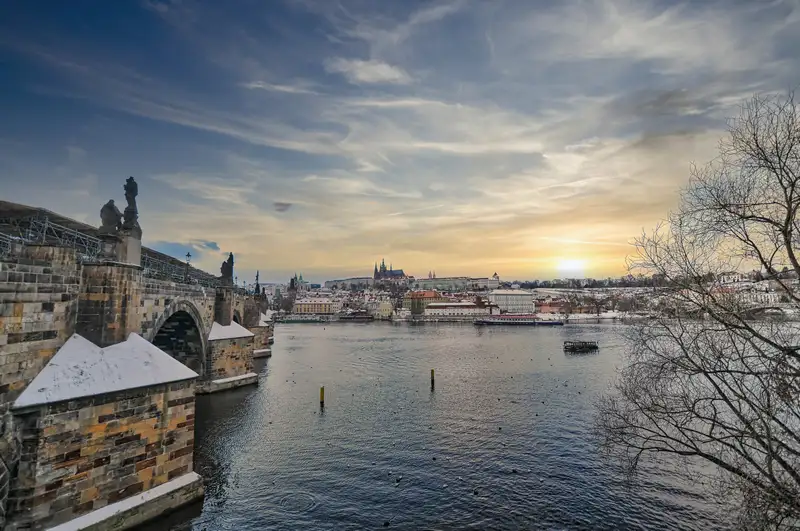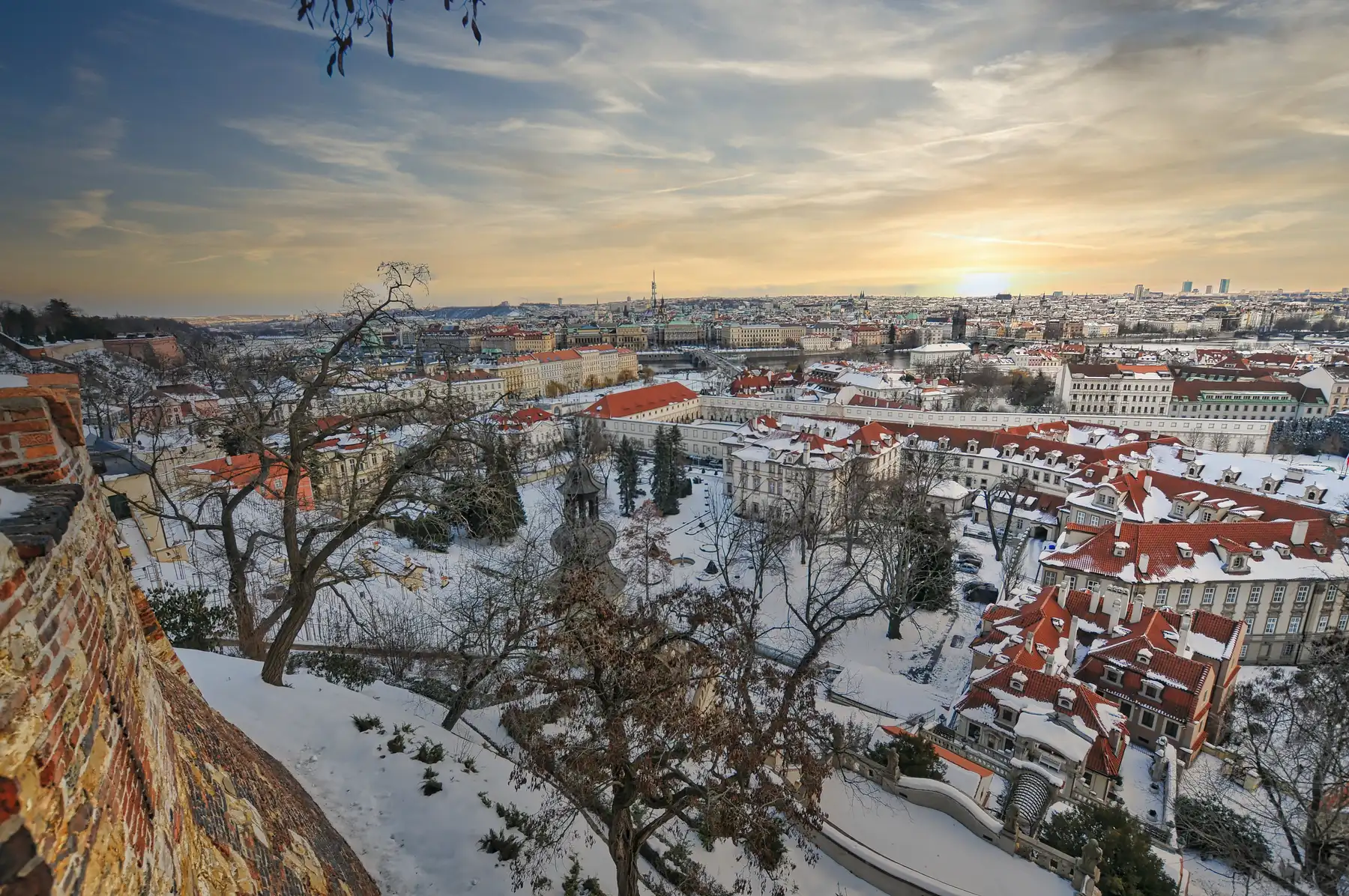
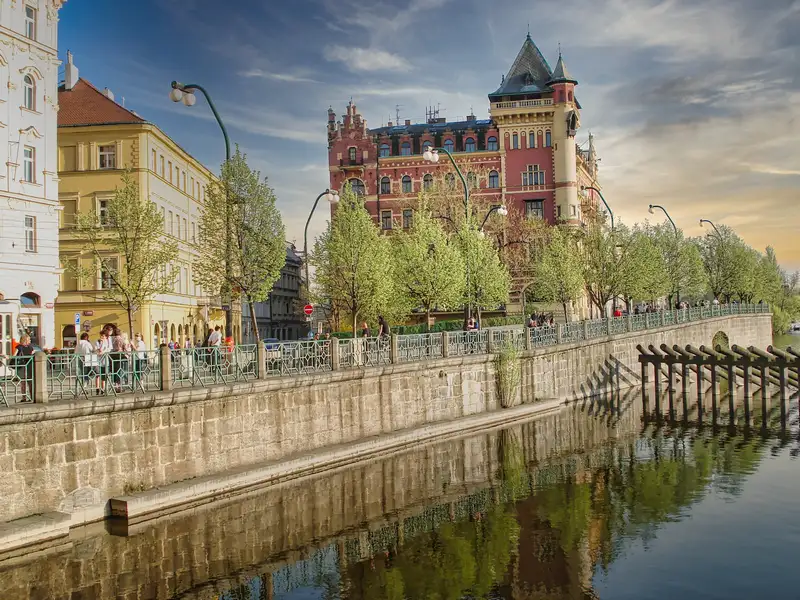
Prague does not care to wow you. The river speaks for itself, the languid green Vltava that has borne its reflection a thousand years. Above the water, the spires ascend, more than you can count without effort, which is how the place got its ancient sobriquet as the city of a hundred towers. The streets below them twist and turn back on themselves, paved in stones smooth to the touch from centuries of feet.
Is Prague worth visiting? I've been more than once, and my honest answer is a quiet yes. The famous sights are very fine, though these are rarely the things that stay with you. What stays is smaller—the smell of coffee and old wood in a cafe near Wenceslas Square. A tram rounding a corner late at night. Afternoon light in November, when the whole city turns the color of weak tea, and you suddenly realize you do not want to be anywhere else.
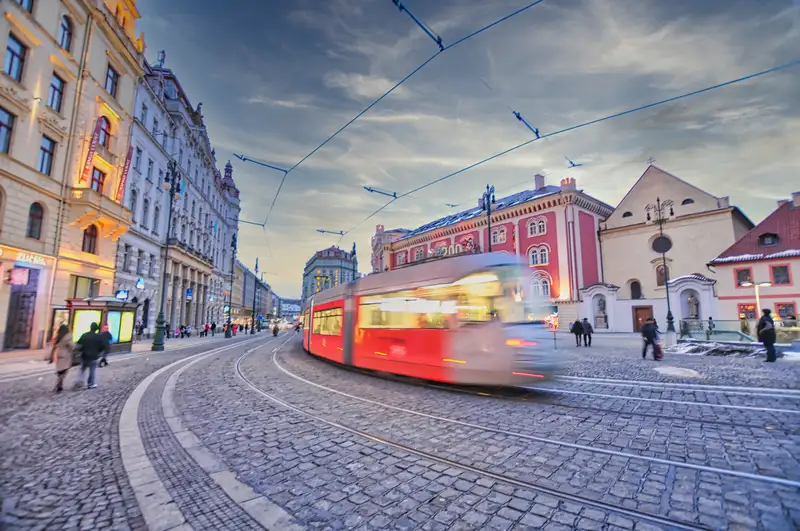
Table of Contents
First impressions of Prague
Prague is the sort of city inCzech Republic that approaches you. You do not need to seek it out. You step off the metro at Můstek or Staroměstská, and the city is already pushing up against your eyes, your ears, the soles of your shoes.
The first thing I noticed was the quiet. Not actually quiet, because trams rattle and crowds murmur. But no horns. No mopeds screaming through alleys. The sound is of a different texture. Like a film with the volume turned just a little bit down. Coming from Athens, the silence felt almost staged.
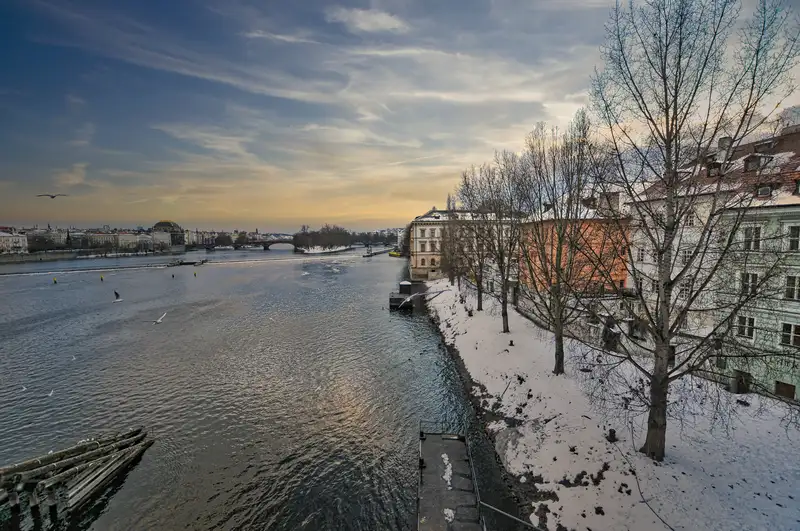
The second thing I noticed was the light. Prague is a northern city, and the sun there moves at a different angle. It does not spill into the streets the way the Aegean sun does. It slides along the rooftops, slow and amber, and makes the spires look as if someone had painted them in honey.
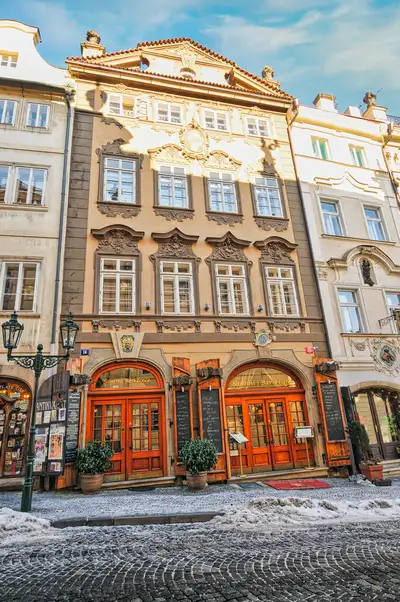
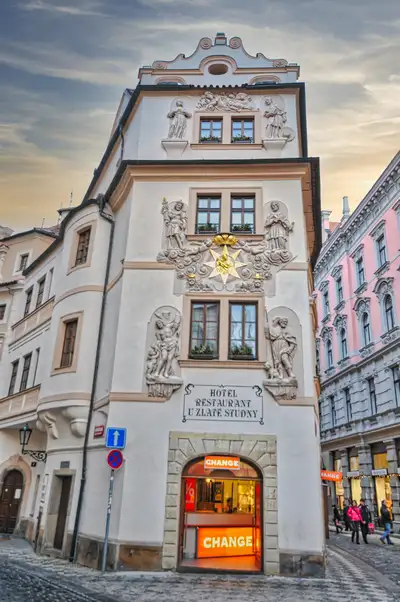
The third thing I noticed was that I could not stop staring up. Every building has a story carved into its forehead. A saint. A flower. A face with a copper crown. Prague refuses to be wallpaper.
The history of Prague and the myths that shaped it
In Prague, history and myth are not sorted into separate drawers—the legends about this city's founding course through the cobblestones like a second Vltava. When you're here, it helps to know who came first and what they believed in.
The legend of Princess Libuše
Before there were spires, there was a princess. Libuše perched atop the rock of Vyšehrad, gazed over the river, and uttered a prophecy. She saw the shining towers of a great city and spoke of glory that would reach to the stars. Find me, she told her people, the place where you discover a man carving a doorstep – a "práh" in old Slavic.
From that word, "Prague" came to be. I stood on that very rock, myself, on my second day. The wind was bitter, the view vertiginous, and I understood – for a moment – how someone might have believed.
A Slavic settlement that became Bohemia
The first actual Prague emerged in the ninth century. That's when the Přemyslid dynasty erected a wooden fort on the castle hill. The river brought traders. The hills brought safety. And the wooden walls became stone.
Charles IV and the golden age
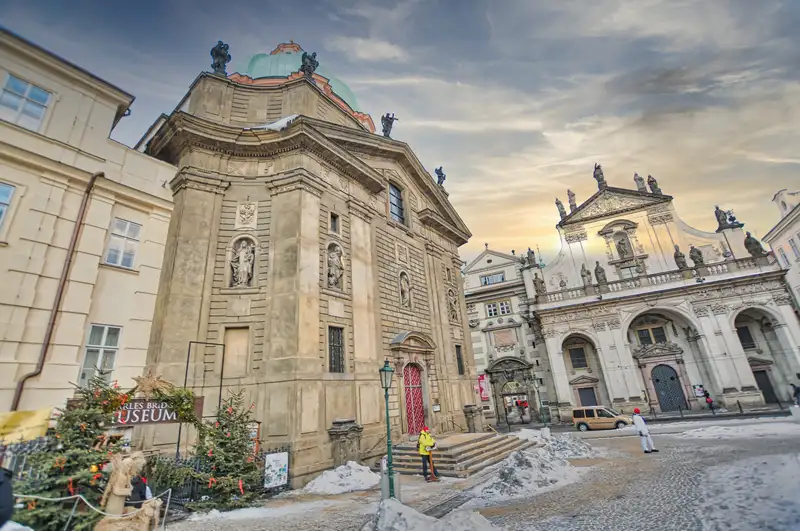
If you fall in love with Prague, you fall in love with the work of Charles IV. In the fourteenth century, he made it the capital of the Holy Roman Empire and ordered the construction of the Charles Bridge, the New Town, and the rebuilding of St Vitus Cathedral. Walk across his bridge today, and you walk on six hundred and fifty years of footsteps.
The Golem and the whispers of Josefov
In the sixteenth century, a rabbi named Judah Loew is said to have shaped a man from clay to protect the Jewish Quarter. The Golem is folklore. The fear that birthed it was not. Some places remember more than others.
From the Habsburgs to the Velvet Revolution
Prague passed from the Habsburgs to the Nazis to the Soviets. In 1989, the people filled Wenceslas Square, jingled their keys, and ended forty years of communism without a single shot. Czechs, I have learned, prefer to change things with patience.
The sights that left a mark on me
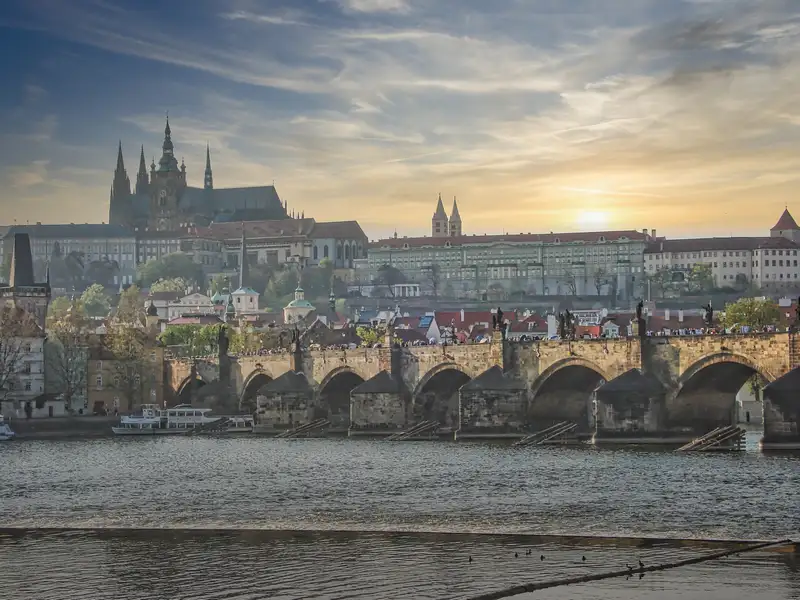
Go before the city wakes. Five in the morning in summer, six in autumn. The bridge will be empty, save for a photographer or two and the thirty Baroque saints that stand in the half-light. The Vltava beneath you is glassy and slow.
Behind you, the Old Town Bridge Tower glows like a lantern. Touch the bronze plaque on the statue of St. John of Nepomuk if you like; the locals say it will bring you back to Prague one day. I touched it without meaning to.
Prague Castle
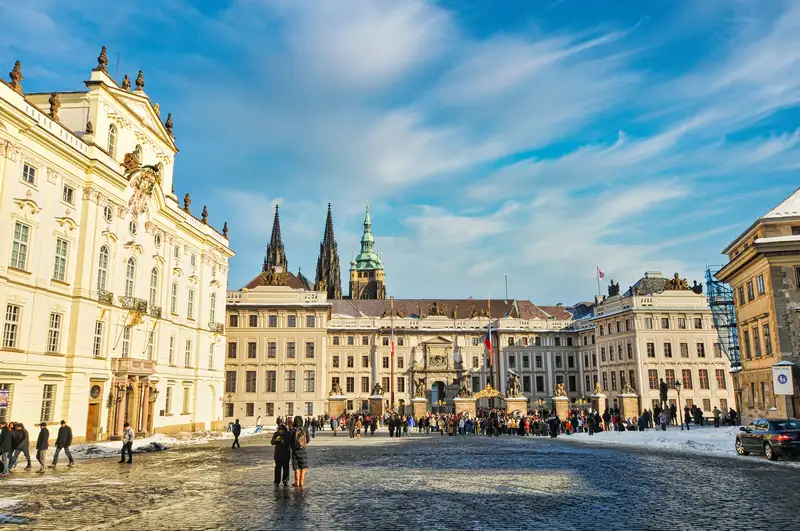
Prague Castle is the largest ancient castle complex in the country. You can walk a good part of it without buying a ticket.
Walking the castle grounds
The grounds are open to anyone. You pass through a security check, and from there, the courtyards, the gardens, and the outer terraces are free to roam. Go at dusk if you want them almost empty. The view of the city from the southern walls is one of the best in Europe.
Golden Lane
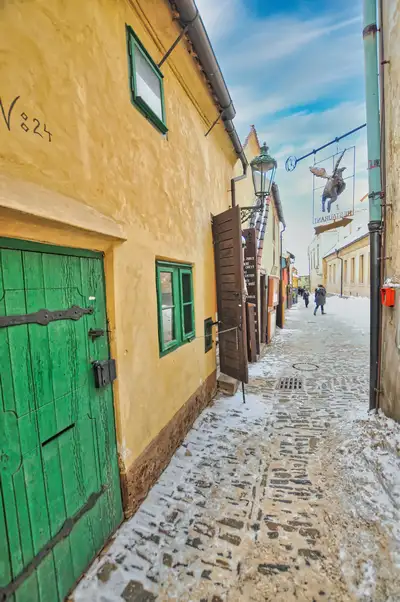
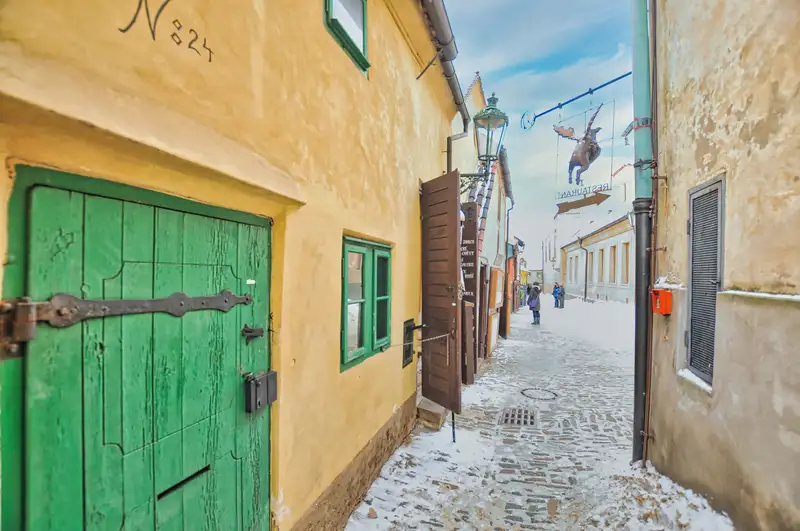
Golden Lane is a row of small brightly colored cottages inside the Prague Castle walls. Formerly the residences of castle guards and goldsmiths, and later writers such as Franz Kafka, the low doorways and crooked houses are like something out of a fairy tale. Get there early, before the line gets long on the narrow path.
St. Vitus Cathedral
The cathedral itself is the moment. One of the stained-glass windows was designed by the Czech Art Nouveau master Alphonse Mucha. It floods the stone floor with colors at sunrise, as if spilled jewels. Budget half a day for the entire complex. Visit first thing or close to closing to dodge the biggest crowds.

Old Town Square and the Astronomical Clock
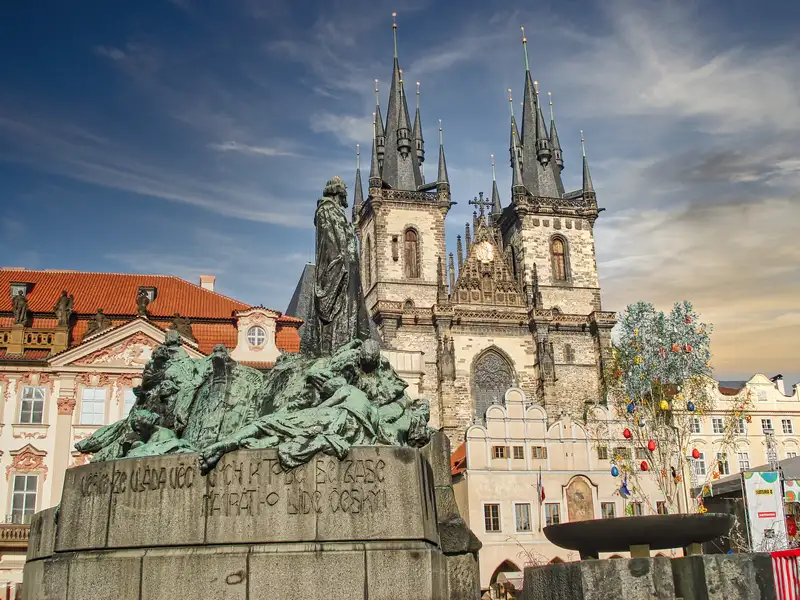
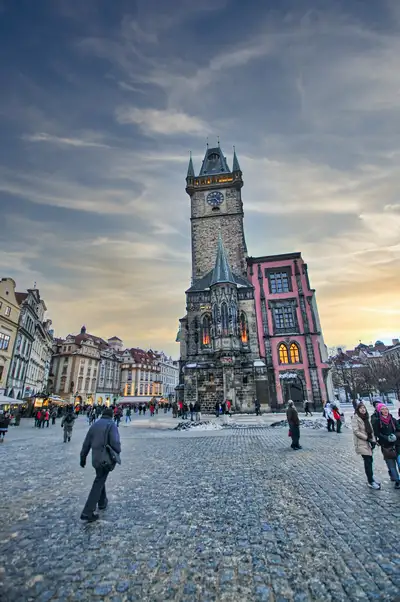
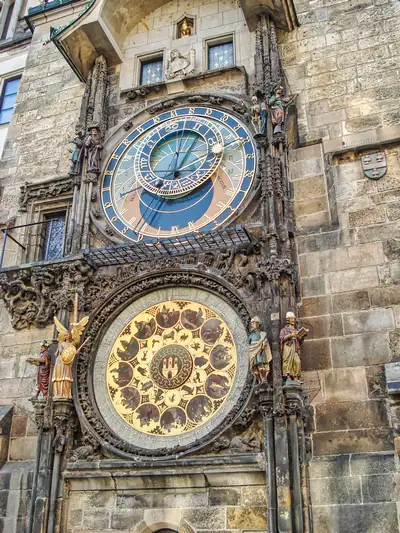
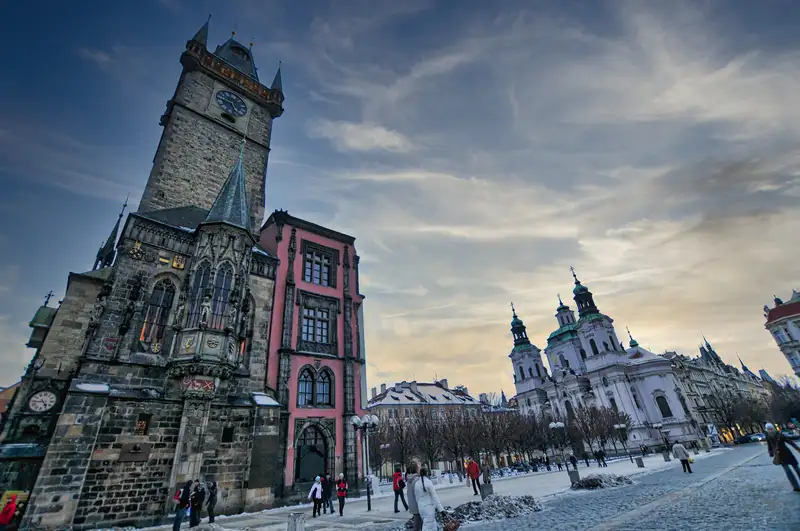
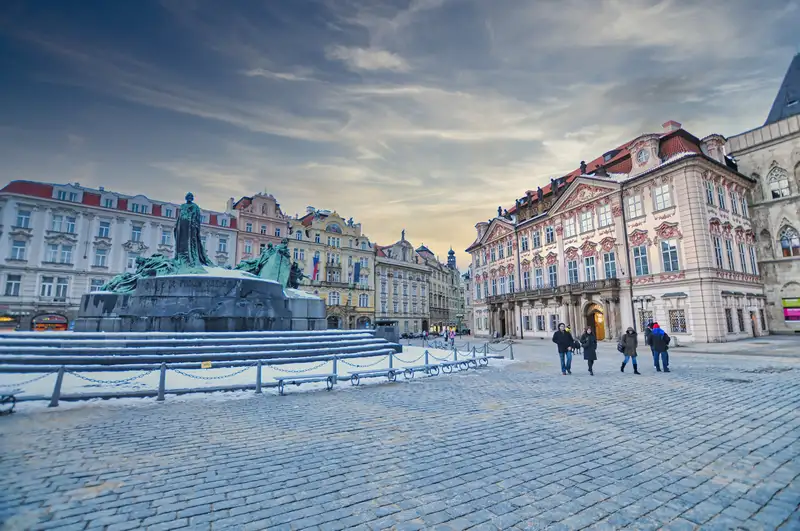
The square is crowded. There's no way around that. It's also one of the great public spaces in Europe, framed by all those colored facades, the leaning towers of Týn Church, and the famous Orloj. Every hour, the clock puts on its little mechanical theater.
Most travelers will find it anticlimactic. I found it strangely moving, because the man who built it in the fifteenth century, legend has it, was blinded as punishment, so he would never build another like it. Prague is full of stories like this. They hang on the stones.
The Jewish Quarter
Josefov is small, but heavy. The Old-New Synagogue is the oldest still in use in all of Europe. The Old Jewish Cemetery is piled up, twelve deep, with weathered tombstones. That's because for centuries, the community was forbidden to bury its dead anywhere else. Walking through it in the soft afternoon light, I thought of the cemeteries in Athens, and of how every old city bears its grief in stone.
Petřín Hill
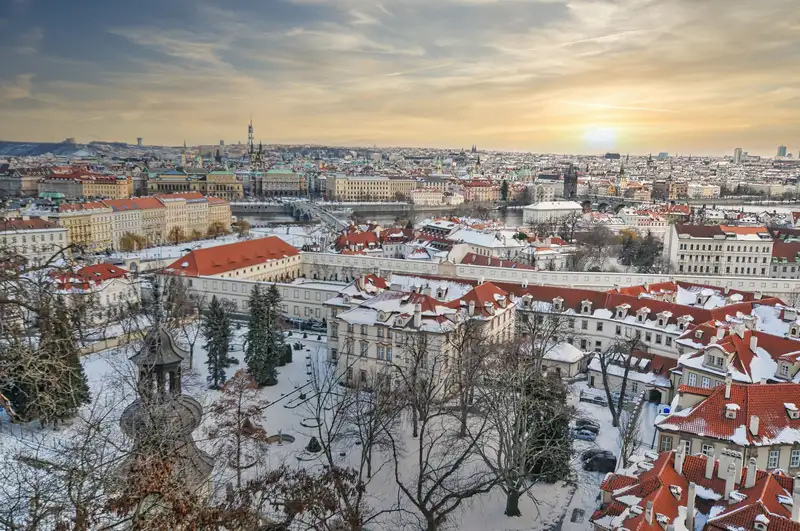
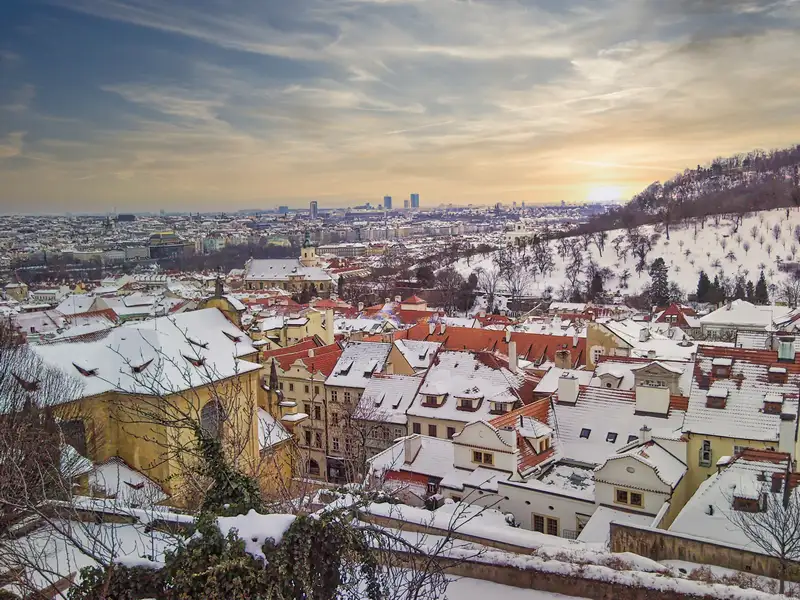
If you climb only one hill in Prague, climb Petřín. It rises behind Malá Strana, and the path winds through gardens and orchards. At the top is a small tower that looks like the Eiffel's younger, leaner cousin. From it, you can see the whole of Prague, all one hundred spires of it. I went at golden hour. I sat there for forty minutes without saying a word.
Prague beyond the postcard
The Prague that dominates Instagram exists. It's real, it's beautiful, but there's another Prague, too. Quieter, less photographed, and in some ways better. It's where I went when I needed to escape the hordes.
Vyšehrad, the older hill
Legend has it that the story of Princess Libuše began here. At the top of the hill is the cathedral of Saints Peter and Paul, and next to it is a cemetery with the graves of Czech writers and composers, including Dvořák himself. The views from the ramparts are wider than those from the castle, and there are almost no tourists. Take a coffee. Stay a while.

Vinohrady, the leafy neighborhood
Vinohrady is the Czech word for "vineyards", and the area was, indeed, that at one time. Today, it is Prague's most pleasant residential area, with cafes, bookshops, and small wine bars. Sit in Riegrovy Sady at sunset and watch the castle in the distance over a glass of Moravian red, and you'll understand why people who move to Prague rarely leave.
Letná Park and its beer garden
On the other side of the river from the Old Town, Letná Park has the best view in the city. And a beer garden loved by locals for generations. Long wooden tables. Pilsner in plastic cups. The whole city spread out beneath you. I went on a Tuesday evening in May. By the time the sun had gone down, I'd made three friends and lost my voice from laughing.
Nový Svět, the street time forgot
A narrow lane on the back slope of the castle hill, Nový Svět, is a reminder of what Prague used to be before tourism found it—faded baroque doorways, painted cottages. Almost no one walks here—ten minutes from the castle gates, and yet a different century. Go in the morning.
Karlín, the new heart
Once a working-class district blighted by the 2002 floods, Karlín has become Prague's most exciting neighborhood. Old factories now house bakeries, cocktail bars, and design studios. The food scene is the equal of any I've tasted in central Europe.
Czech food and beer, you have to try
Czech cuisine is big, slow, and made for cold weather. It's not subtle, and it doesn't pretend to be. After a day of exploring on your feet in the November wind, it's exactly what you want.
Food that will warm you for hours
Svíčková, marinated beef in a creamy root vegetable sauce, with bread dumplings and a spoonful of cranberry sauce. The national dish, and even Czechs, will fight over whose grandmother makes it best. A no-brainer second choice is goulash, deeper and darker than the Hungarian version.
Order it with knedlíky, steamed dumplings that sop up sauce the way a Greek pita soaks up tzatziki. For lighter fare, try chlebíček, open-faced sandwiches that look like small edible postcards. For sweeter fare, the famous trdelník, a rolled chimney cake, is best warm with cinnamon dusted on top.
Beer, why Czech beer is different
Czechs drink more beer per person than any other nation on the planet. They've been making pilsner since 1842, when it was invented in the nearby town of Plzeň. A pint of fresh Pilsner Urquell poured slowly with a thick foam crown will set you back around two euros.
The foam is part of the beverage. Let it dissolve as you sip. The best beer is in long wooden halls like Lokál Dlouhááá, where you sit elbow to elbow with strangers and order one more pint than you intended. That, in Prague, is part of the visit.
Day trips worth taking from Prague
If you've got a fourth or fifth day, give it to Bohemia. The trains are clean and cheap, and the connections are easy. Prague is a great base for some of the loveliest small towns in central Europe.
Český Krumlov
A two-and-a-half-hour train ride south of Prague, Český Krumlov is a UNESCO-listed medieval town built around a bend in the Vltava. The castle is the country's second-largest. The streets have a half-imagined feel. Stay the night if you can; the town empties of day-trippers after six, and the evening light on the river is something you take home.
Kutná Hora
An hour east of Prague, Kutná Hora was once the kingdom's silver capital and second only to Prague in wealth. It is best known today for the Sedlec Ossuary, a small chapel where the walls, floors, and ceilings are decorated with the bones of around forty thousand people. It sounds macabre. It is also, somehow, strangely peaceful.
Karlštejn Castle
The closest of the three, Karlštejn, is a forty-minute train ride from Prague's main station. Built by Charles IV in the fourteenth century to protect the imperial crown jewels, the imperial palace sits amid forested hills that make for a pleasant half-day walk.
Planning your trip to Prague
Once you have determined that Prague is a city you would like to visit, the next questions that come up is: When? How long? Where to stay? Here is what I found through research and trial and error.
When is the best time to visit Prague?
The best time to visit Prague is from the end of April through the beginning of June, or from mid-September through October. In these windows, the weather is mild, there are fewer people, and the light is gentle, which suits the city very well.
Summer is vibrant but crowded, and the bridge is shoulder to shoulder with people. Winter is harsher but more magical, with Christmas markets and mulled wine, and snow on the spires.
If I had to pick one month, I would pick May, when the chestnut trees are in bloom, and the beer gardens open up.
How many days do you need in Prague?
You need three days in Prague to enjoy the city without feeling rushed. Two days are just enough for the Old Town and the Castle, and a bit more.
Four days give you a chance to breathe, wander, and squeeze in a day trip. I stayed five days and regretted not staying seven, because Prague continues to reveal itself as you stay longer.
If it is one of several stops on your itinerary, three full days should be enough. If Prague is the main reason you are going, five days is a good choice.
Where to stay in Prague
If it is your first time in Prague, stay in the Old Town within steps from the clock, the bridge, and the main squares. For something quieter and more romantic, book a hotel in Malá Strana between the river and the hill of the castle. For everyday life, check leafy Vinohrady or younger, edgier Karlín. I split my stay between Vinohrady and Malá Strana, and the contrast between the two taught me more than any guide.
Frequently asked questions about visiting Prague
Is Prague expensive for tourists?
Prague is one of Europe's more affordable capital cities. A pint of beer is two euros, a filling main dish is ten euros, and a central hotel room in the shoulder season is eighty to a hundred euros. Tourist traps near Old Town Square double that, so walk a single street away.
Is Prague safe at night?
Yes. Prague is statistically one of Europe's safest large cities. The historic center is well-lit, well-patrolled, and bustling until late. Exercise normal precautions against pickpockets on the trams and the bridge, and you'll be fine.
Do people in Prague speak English?
Yes, at least among younger Czechs and in hotels, restaurants, and shops. English proficiency outside the center and among older residents dissipates quickly, but a smile and a "děkuju" (thank you) go a long way.
What is Prague famous for?
Prague is famous for its largely intact medieval and Baroque architecture, its hundred spires, its beer culture, its Charles Bridge, its Prague Castle, and its Astronomical Clock. It is also famous for being the birthplace of Franz Kafka and as one of Central Europe's cultural centers.
Is Prague worth visiting in the end?
So is Prague worth it? Yes. Yes, a thousand times yes.
It's worth it for the moment the river holds the city upside down at dusk. For the slow chime of the Astronomical Clock and the little theater of saints, it performs every hour. For the smell of warm pilsner in a wooden pub on a cold afternoon. For that moment, on Petřín Hill, when you realize you can see every spire at once.
It's worth it for the silence of Nový Svět in the morning, and the murmur of Karlín at night. For the candlelit churches with their old Mozart, and the leaning tombstones of Josefov that remember what most cities have forgotten.
I came to Prague from a city built on different stone, under a different sun, with different gods. I left a little softer than I had arrived. I think Prague does that to people. It doesn't shout. It hums. And weeks after you fly home, the hum is still there.
Pack your warmest coat, your best walking shoes, and a little patience for cobblestones. Then go. The city is waiting where it has always waited, where the river bends, and the spires rise, on the rock that Libuše once stood on and saw all of this coming.